
Gràcia
Gràcia: the town that rang the bell
Three hours in the village that declared war on Barcelona, with an actor for a guide
Most walking tours of Barcelona take you down the same four streets of the Gothic Quarter, thirty or forty of you at a time, following an umbrella. This one goes north, into a neighbourhood that spent most of the nineteenth century as a separate town with its own mayor, its own factories and a documented habit of rioting.
Gràcia became a municipality in its own right in 1850. By 1877 it had 33,000 inhabitants. When Barcelona finally absorbed it on 20 April 1897, by royal decree, there were nearly 62,000 people living here and the annexation was not popular.
What we do with that is not a lecture. This is a guided walk — no costume, no character — but the guide is David Magaña, a working actor with a Barcelona theatre company, and that shows in the telling rather than in any dressing up. You get the argument the neighbourhood was having, in the square where it happened, at the foot of the tower whose bell they rang, held together by somebody who does this for a living. If you want a tour that is genuinely performed, there is exactly one and it is the Gaudí walk at the Sagrada Família.
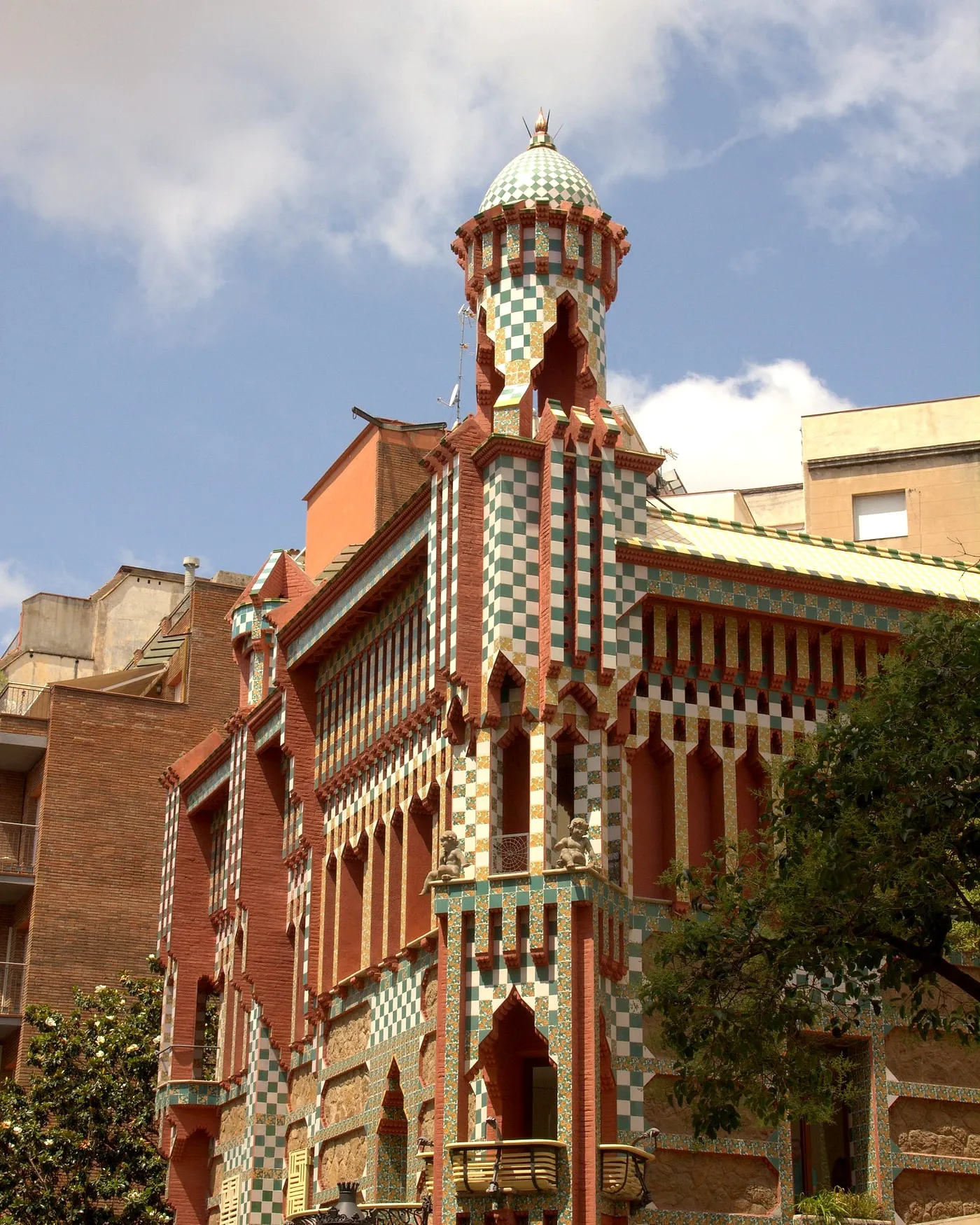
Halfway round we stop under Casa Vicens, which is the reason a lot of people book this walk in the first place. It is Gaudí’s first house, finished in 1885 when he was still an unknown, and it is a ten-minute walk from the meeting point. We look at it from the street; the museum sells its own ticket separately.
It finishes with vermouth from the barrel, which is what people in Gràcia do on a Sunday, and which is also the point: you are not being shown a neighbourhood, you are spending an afternoon in one.
Doing Barcelona properly? The Gothic Quarter walking tour is the other half of the argument — that one is about how much of the old city was built in the twentieth century — and the Gaudí walking tour at the Sagrada Família picks him up forty years after Casa Vicens.
What you see, in order
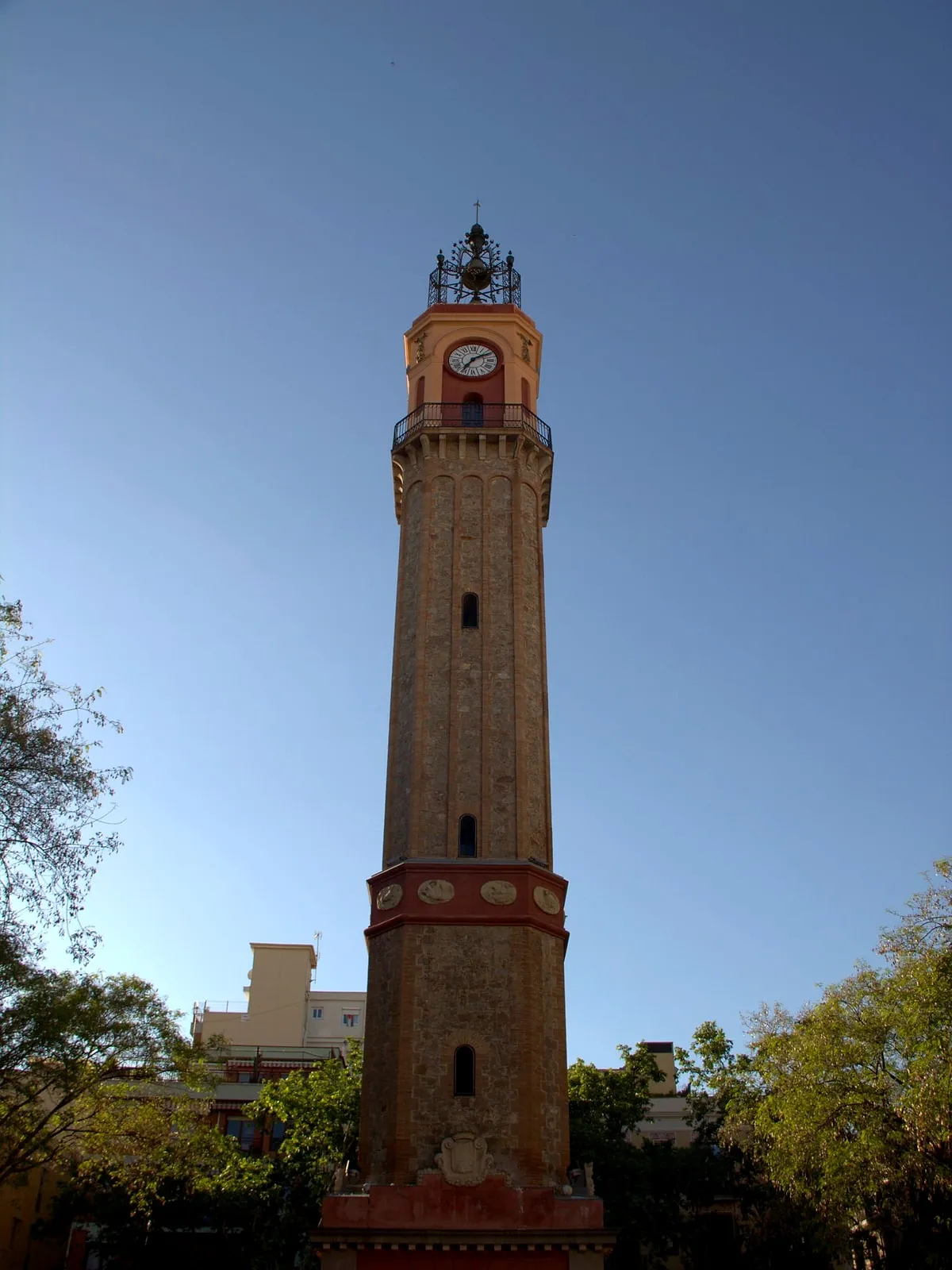
The bell that would not stop
Plaça de la Vila de Gràcia
On 4 April 1870 the lottery for military conscription was drawn, and the bell of this tower — everyone called her la Marieta — rang the alarm. Gràcia rose. The army answered with artillery from Montjuïc. A shell cracked the bell and she carried on ringing anyway. Six weeks later a Barcelona weekly launched under the name La Campana de Gràcia. We start here because everything else in the neighbourhood is downstream of this.
Gaudí, before he was Gaudí
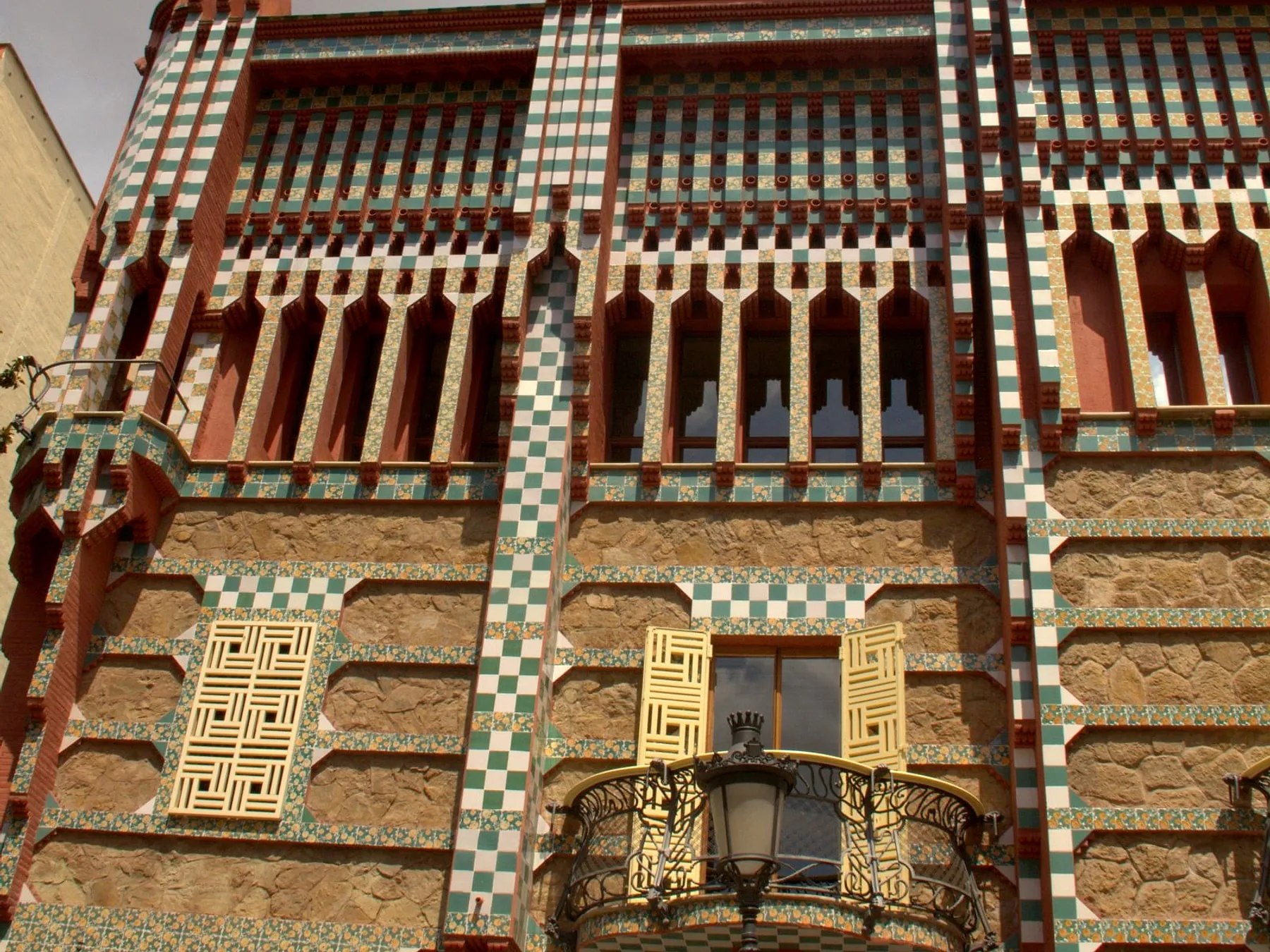
Casa Vicens, Carrer de les Carolines
A tile manufacturer commissioned a summer house from a 31-year-old architect nobody had heard of. What went up between 1883 and 1885 is green and white chequerboard, marigolds in ceramic, and a turret that has no business being there. It was Gaudí's first house. Standing under it you can see him working out, in public, what he was going to do for the next forty years.
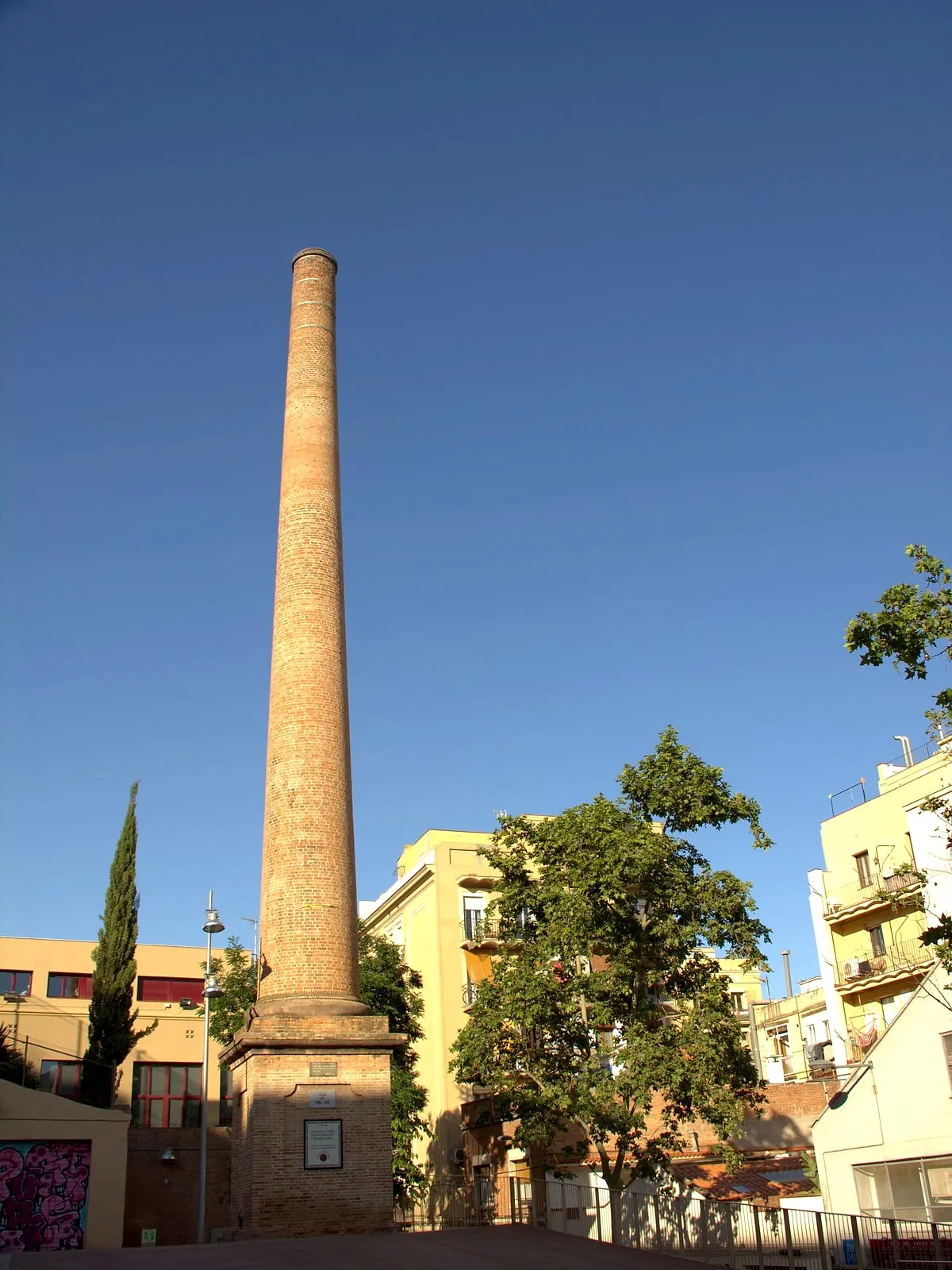
The chimney with nothing attached
The old factory quarter
Gràcia was a factory town, and what happened inside these blocks was textiles, spinning and dyeing — one mill here had five hundred workers in 1861. The factories are flats now. The city's heritage catalogue lists a single surviving chimney in the whole district and calls it the only remaining indicator of that industrial zone: brick, cylindrical, with nothing attached to it, standing where everything else came down to open a square.
Squares built for arguing in
Plaça de la Virreina and Plaça del Sol
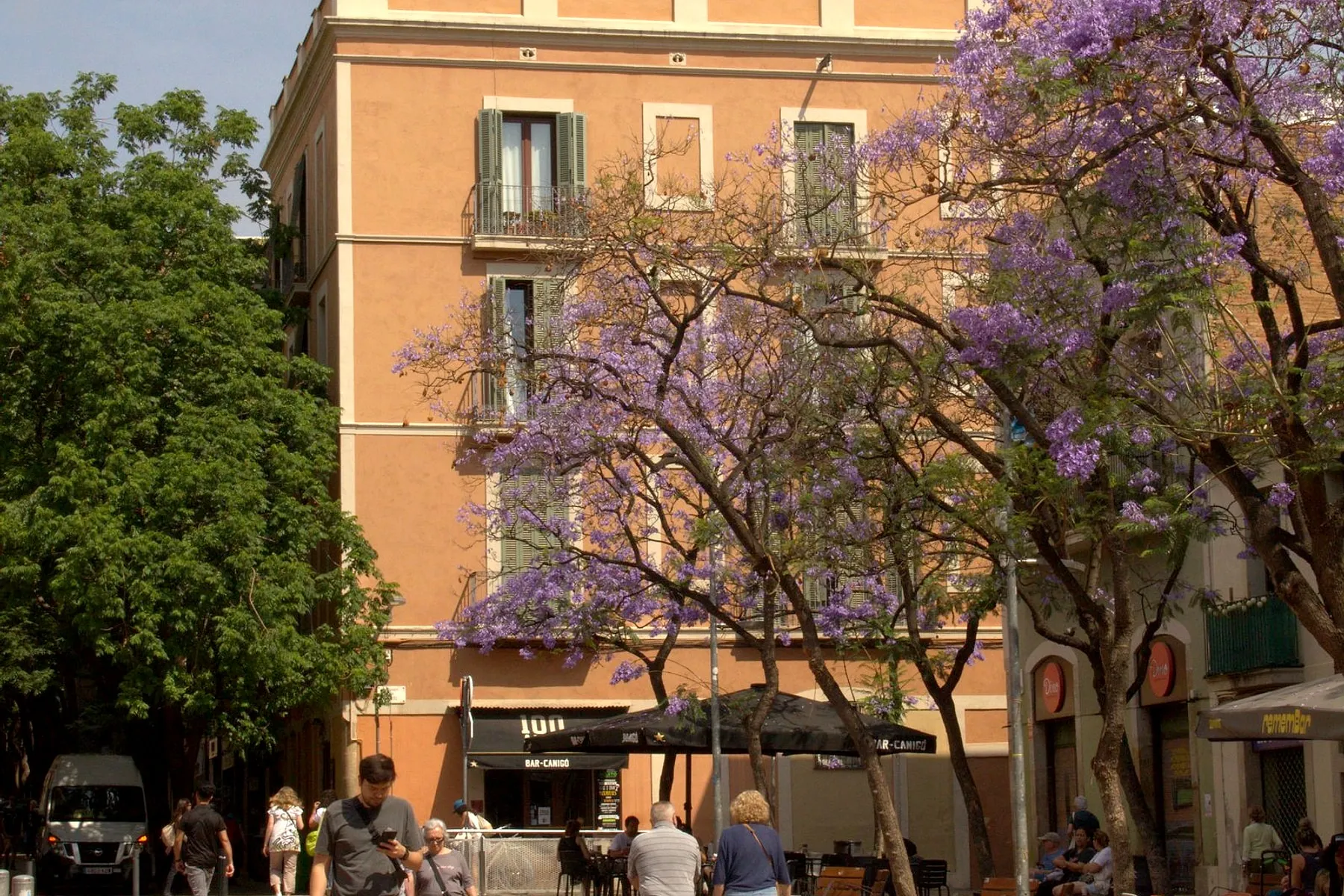
Gràcia has more squares per square kilometre than anywhere else in the city, and none of them are grand. They were built as places to meet, complain and organise. They still work: this is where the neighbourhood turns up when it wants something.
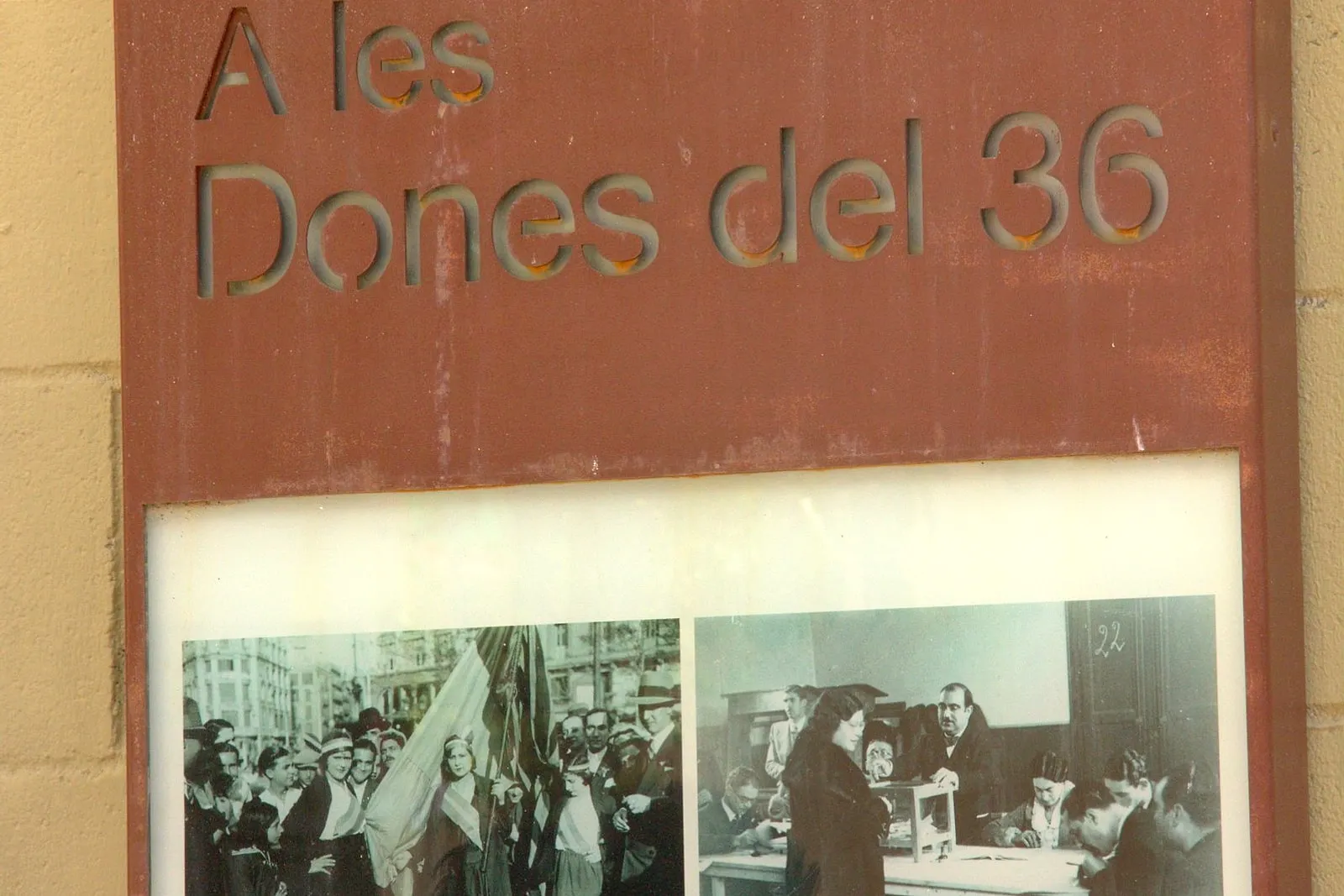
A les Dones del 36
Carrer Gran de Gràcia
A plaque, a photograph of women at a table, and a story about 1936 that is not the one usually told on a Barcelona walking tour.
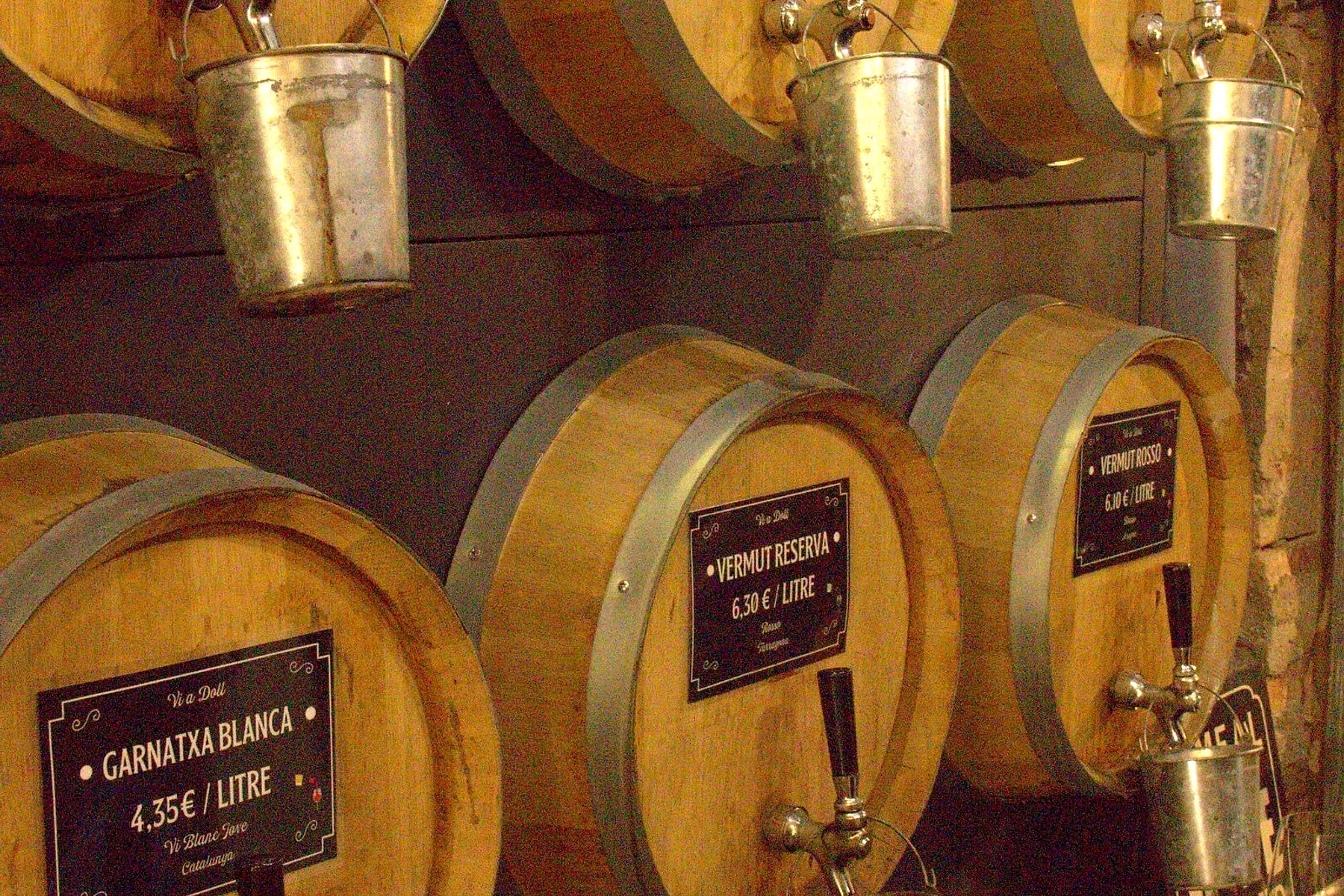
Vermouth, from the barrel
A cellar in Gràcia
The tour ends where a Gràcia Sunday ends: standing at a long table with a glass of vermouth drawn straight from the cask, olives and crisps in front of you, arguing about what you have just heard. This part is included.
Included
- A working actor for a guide — told, not read off a clipboard
- A glass of vermouth from the barrel and something to eat with it
- Ten people maximum on a public departure
- Adult from 12 · child 3-12 · under-3s free
- Free cancellation up to 24 hours before
Never more than 10 people
10 is our own ceiling, not the council’s. The legal limit for a guided group applies in Ciutat Vella and this tour is outside it — we cap it anyway, because thirty people cannot hear a scene.
Before you book
What time does it run?
In English: 10:30 every day, 18:00 Monday to Saturday, and 16:00 on Sundays — every day except 25 December and 1 January, when there are no walks at all. In Spanish there is one a day, at 10:30. Those are the slots that exist in the diary the guide actually works from — the one the agencies see too — so what you pick here is what he has that afternoon, not a request.
Is this suitable if I do not speak Spanish or Catalan?
Yes. Pick English when you book and the whole thing is in English. It is not a Spanish tour with translation on top: the English version is written for someone who landed this week.
Do we go inside Casa Vicens?
No. We stand in front of it and take it apart from the pavement, which is where the chequerboard and the turret actually read. The museum sells its own ticket and it is not included here — plenty of people do both, the tour first.
Is Casa Vicens worth seeing if I have already done Park Güell?
It is the one people skip and then wish they had not. It is Gaudí at 31, before the style was a style, and it sits in an ordinary Gràcia street rather than behind a queue. Ten minutes from where the tour starts.
How much walking is there?
About 3 km over three hours, all flat, on pavement, with several stops where you are standing still for ten minutes or so.
Can I come with children?
Yes. The adult fare starts at 12, the child fare covers 3 to 12, and under-3s go free. Bear in mind the last stop is a bar.
What happens if it rains?
The tour runs. Barcelona rain is usually brief and the cellar at the end is indoors. If the weather is genuinely dangerous we move you to another date or refund you in full.
Where exactly does it start?
At the Jardinets de Gràcia, the strip of garden at the top of Passeig de Gràcia, beside the La Lectura monument. Metro Diagonal (L3, L5) comes out about a minute away. Look for the orange umbrella; we wait ten minutes past the hour and no longer, because the group has a cellar booked.
Is it wheelchair accessible?
The route is flat and on pavement, but there are cobbled stretches and a few high kerbs. Write to us beforehand and we adapt the itinerary.
Do I need to book, or can I just turn up?
Book. Ten places go, and they are usually gone before the day.