
How it works
How to choose a Barcelona walking tour without picking the wrong format
Free tours are a legitimate way to see Barcelona, and often a good one. We sell paid tours, so that goes first.
Free tours are a legitimate way to see Barcelona, and often a good one. That goes first because whoever writes this page sells paid tours, and there is no honest way to open it otherwise.
The case for the free tour, made properly
You risk nothing. You book online in a minute, you turn up, and if ten minutes in the guide is not working for you, you leave having lost ten minutes. No other format offers that.
The incentive is real too. The guide is paid only if you decide to pay at the end, so they have to hold two hours of your attention or go home empty-handed. That system selects for people who can tell a story, which is why there are free-tour guides on these streets who narrate better than plenty of licensed professionals.
For a first morning in a city you do not know, being oriented by somebody who shows you where everything is and why is hard to beat. The format wins there.
Where it stops working
Free-tour economics push towards large groups. On most platforms the guide pays a fee for every person who signs up, whether or not that person tips, so volume is what makes the numbers work. Forty booked and fifteen paying is an ordinary day.
Forty people in the Gothic Quarter creates two problems, and one of them is legal. In the Ciutat Vella district, since 2023, a group accompanied by a guide may not exceed twenty people, under a decree issued by the district itself, with fines up to 1,500 euros and 3,000 for a repeat offence; the decree runs to 2028. In the first half of 2024, municipal officers counted 3,828 groups in the area, averaging thirteen people, with 114 over the limit.
The second problem is physical. Above twelve or fifteen people the ones at the back stop hearing, start talking to each other, and the guide raises their voice — which they are not allowed to amplify, since the same decree bans loudspeakers and megaphones and encourages radio-guides instead. Big group, no headsets, and half of it is hearing nothing.
There is a third and subtler effect: the format rewards breadth over depth. Two hours to cover the whole Gothic Quarter means two minutes a stop. You come out knowing where everything is and not having understood any of it properly — which is exactly what you want on day one and exactly what you do not want on day three. If you would rather do the breadth yourself and pay for the depth, the free version of the breadth is what to see in the Gothic Quarter.
The four formats, and what each one costs beyond money
Free tour. Real cost: the tip, plus the discomfort of deciding it in public. Upside: zero risk, good orientation. Downside: large group, thin coverage, and the last half hour is usually spent setting up the envelope moment.
Agency or OTA group tour. Fixed published price, medium group, tested itinerary. Upside: you know what you are paying and there are no surprises. Downside: the guide is often a different freelancer each day hired through the platform, so the glowing review you read may describe somebody else. Check whether the operator has a name of its own or only a platform badge.
Private guide. Upside: you can ask, stop, skip and match the pace of whoever walks slowest. From four people up, the per-head price approaches a group tour. Downside: alone or as a pair, it rarely adds up.
Audio guide or self-guided. Upside: the best price and complete freedom. Downside: nobody answers questions, and half of what makes a city interesting is the questions that occur to you while looking at something.
The rules worth knowing before you book
Anyone may guide in the street. Guiding is liberalised in Catalonia: Llei 13/2002, the Catalan tourism act, states that publicly accessible streets and spaces are always areas of free provision for guiding services. Somebody not being an “official guide” does not mean they are doing anything irregular.
Inside certain monuments, they may not. Generalitat accreditation is compulsory inside monuments listed as Bé Cultural d’Interès Nacional and inside museums on the Catalan register. Park Güell is one of them: it requires an accredited guide, defines an organised group as between 8 and 30 people, and bans loudspeakers and megaphones.
The Sagrada Família sets its own conditions: groups of 10 to 30, booked fifteen days ahead, and only officially accredited guides may explain anything inside. If somebody sells you a “guided” visit that in practice hands you a ticket at the door, that is not necessarily a scam — but it is better read beforehand than discovered on the pavement.
Organised drinking routes are banned in Ciutat Vella between 11 p.m. and 7 a.m., with fines up to 900 euros. If somebody offers you a night-time pub crawl through the Gothic Quarter, that is the rule they are stepping on.
Five questions that settle almost everything before you book
- What is the maximum group size? If the number is not published, the number is “however many sign up”.
- Who runs it? A name and a face, or a platform badge. These are not the same thing.
- Does it go inside anything, or is it all street? It changes the price, the timing and whether you need a separate ticket.
- Are there headsets? If the group is over twelve and the answer is no, somebody is not going to hear.
- What happens if it rains? The honest answer is “it runs, unless there is a weather warning”. Anything vaguer is a cancellation waiting to happen.
And what we do, so it is on the record
We sell walking tours led by a working actor — four of them guided, one, the Gaudí walk, performed in character — with the price published up front and a cap of ten people on the Gràcia tour. Ten is not a legal requirement: Gràcia sits outside the Ciutat Vella decree and we could legally walk thirty. It is that above a certain size the people at the back stop hearing and the group stops being a group.
If what you want is to get your bearings on day one and see a lot quickly, a free tour will serve you better than we will. If you have already seen the obvious things and want an afternoon inside a neighbourhood, that is where we compete.
One test you can run on any operator before you book, incidentally, is to check a fact. Eleven of the ones you will hear on a Gaudí tour in this city do not survive opening the paperwork, and they are listed, with sources, in things you will be told about Gaudí that are not true.
There is a companion to this page for the other kind of reader: the one who has decided in advance that guided tours are not for them. Everything you hate about guided tours is real is that list, including the parts that are our fault.
Where this comes from
- Comença el control dels grups turístics a Ciutat Vella (3-3-2023)Ajuntament de Barcelona · Sala de premsaWhat the Ciutat Vella decree actually bans — loudspeakers, not radio guides — the twenty-person cap, and the fines. It is the rule most often quoted wrongly at you.
Everything above that carries a date, a figure or a name is checked against these before it is published. Where we could not find a source, the page says so.
Quick answers
- How many people can a guided group have in Barcelona?
- In the Ciutat Vella district — the Gothic Quarter, Raval, Born and Barceloneta — a group accompanied by a guide may not exceed twenty people, under a district decree, with fines of up to 1,500 euros. Outside Ciutat Vella there is no municipal cap, but individual sites have their own: Park Güell defines an organised group as 8 to 30 people, and the Sagrada Família basilica requires groups of 10 to 30 booked in advance.
- Does a guide have to be officially licensed in Barcelona?
- Not in the street. Llei 13/2002, the Catalan tourism act, states that public streets and open spaces are always free-provision areas for guiding. Generalitat accreditation is compulsory only inside monuments listed as Bé Cultural d'Interès Nacional and inside museums on the Catalan register.
- Why do some guides use headsets and others don't?
- Loudspeakers and megaphones are banned in Ciutat Vella and the city council actively encourages radio-guide systems. Above ten or twelve people it is hard for everyone to hear on a street with traffic without one.
- Is a free tour actually free?
- For you, until the end. For the guide, usually not: on most platforms they pay a fee for every person who signs up, tip or no tip. That is why free-tour groups tend to be large.
- Is a private guide worth it?
- For four people or more the per-head price often lands close to a group tour, and it changes the whole rhythm — you can ask, stop and skip. Travelling alone, it rarely adds up.
The tours this piece is about
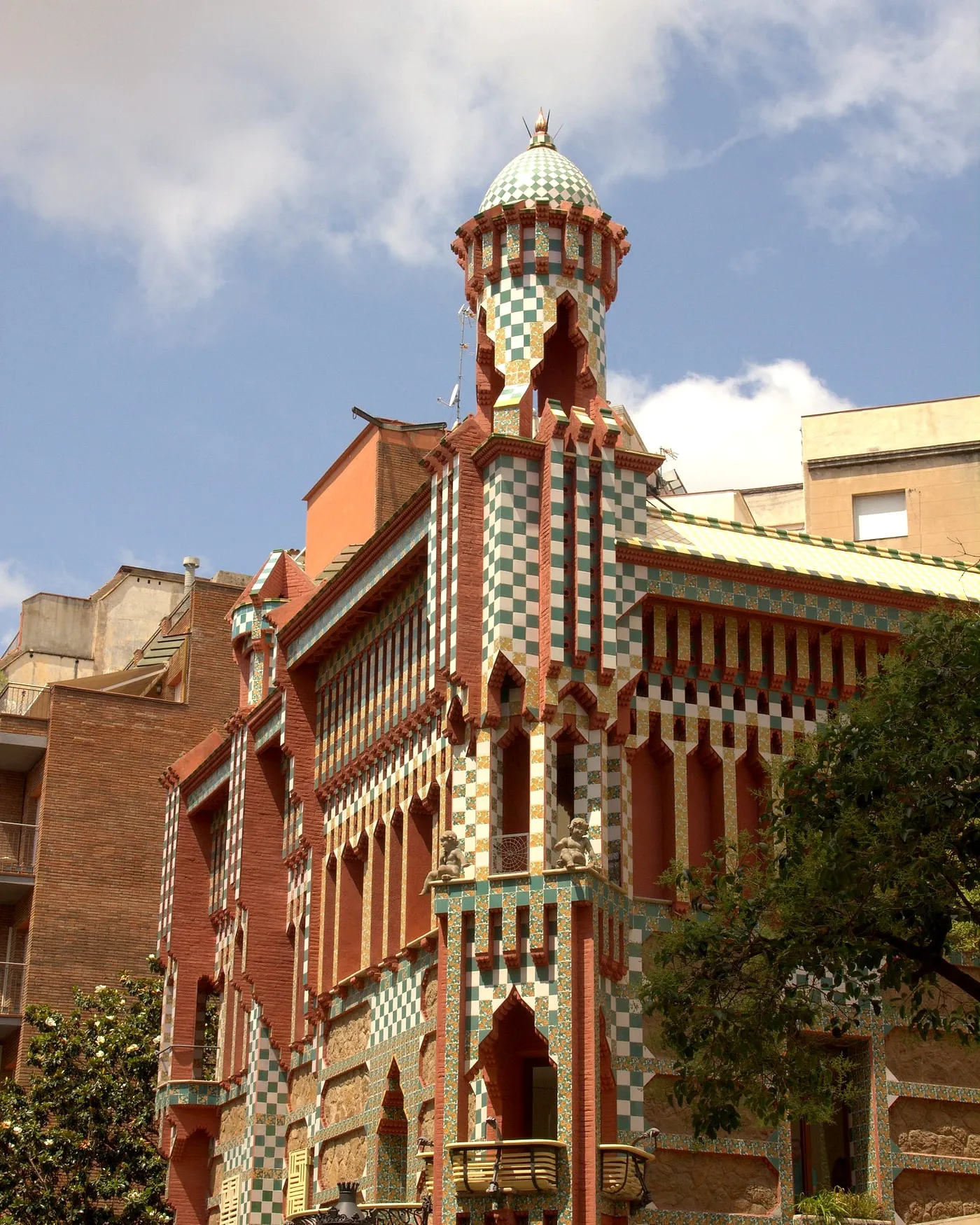
Gràcia: the town that rang the bell
A bell, a bombardment, and a vermouth at the end of it.
- How long it lasts
- 3 h
- Runs in
- EN · ES
- Price
- 36 €
Never more than 10 people
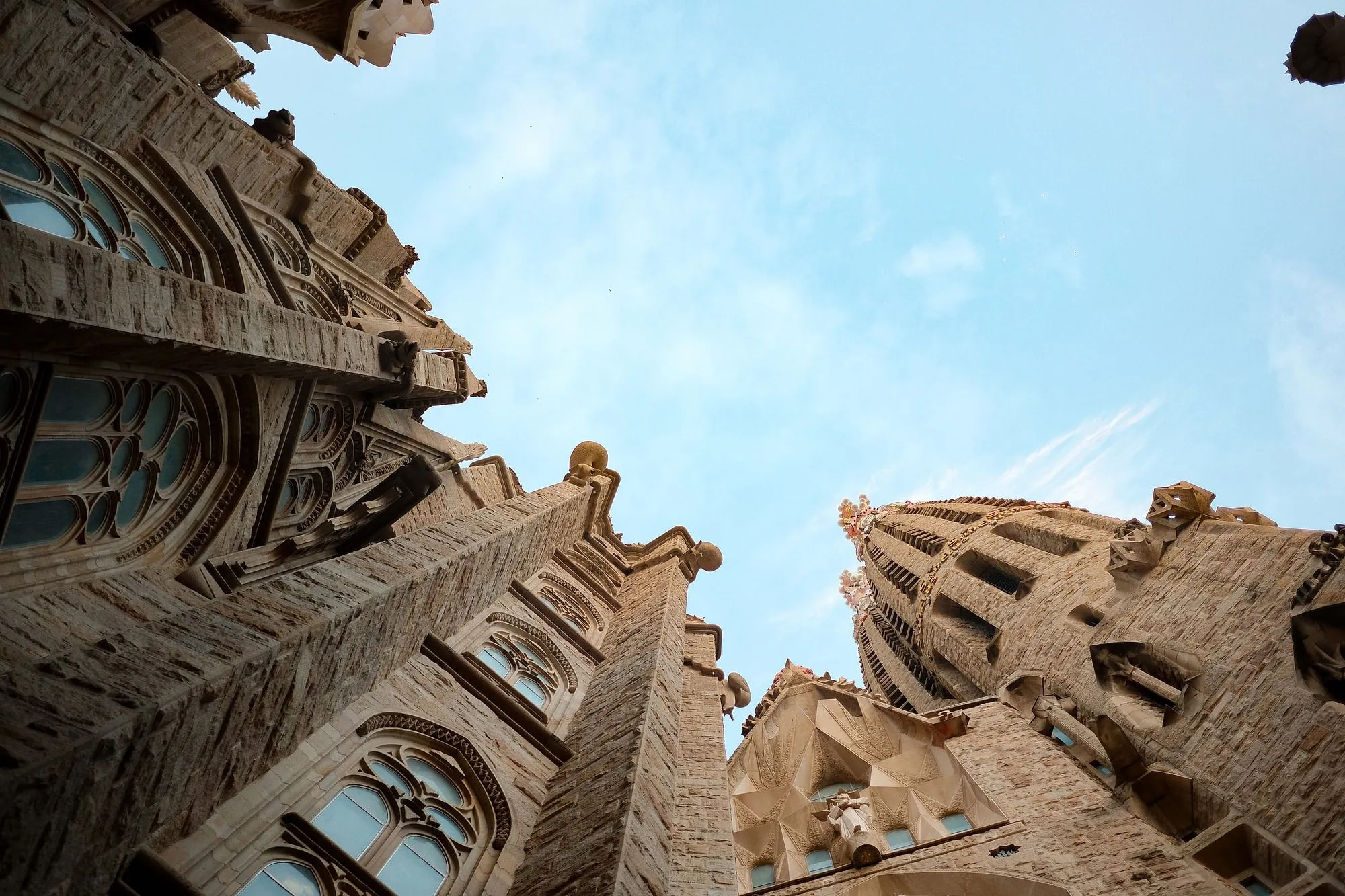
Gaudí comes alive
You will recognise the guide because he will be Antoni Gaudí.
- How long it lasts
- 1 h 30
- Runs in
- EN · ES · CA
- Price
- 30 €
Never more than 15 people
More in the journal