
Montjuïc
Montjuïc: the hill with two names
Two and a half hours on the hill Barcelona used for burying, for watching, and for showing off
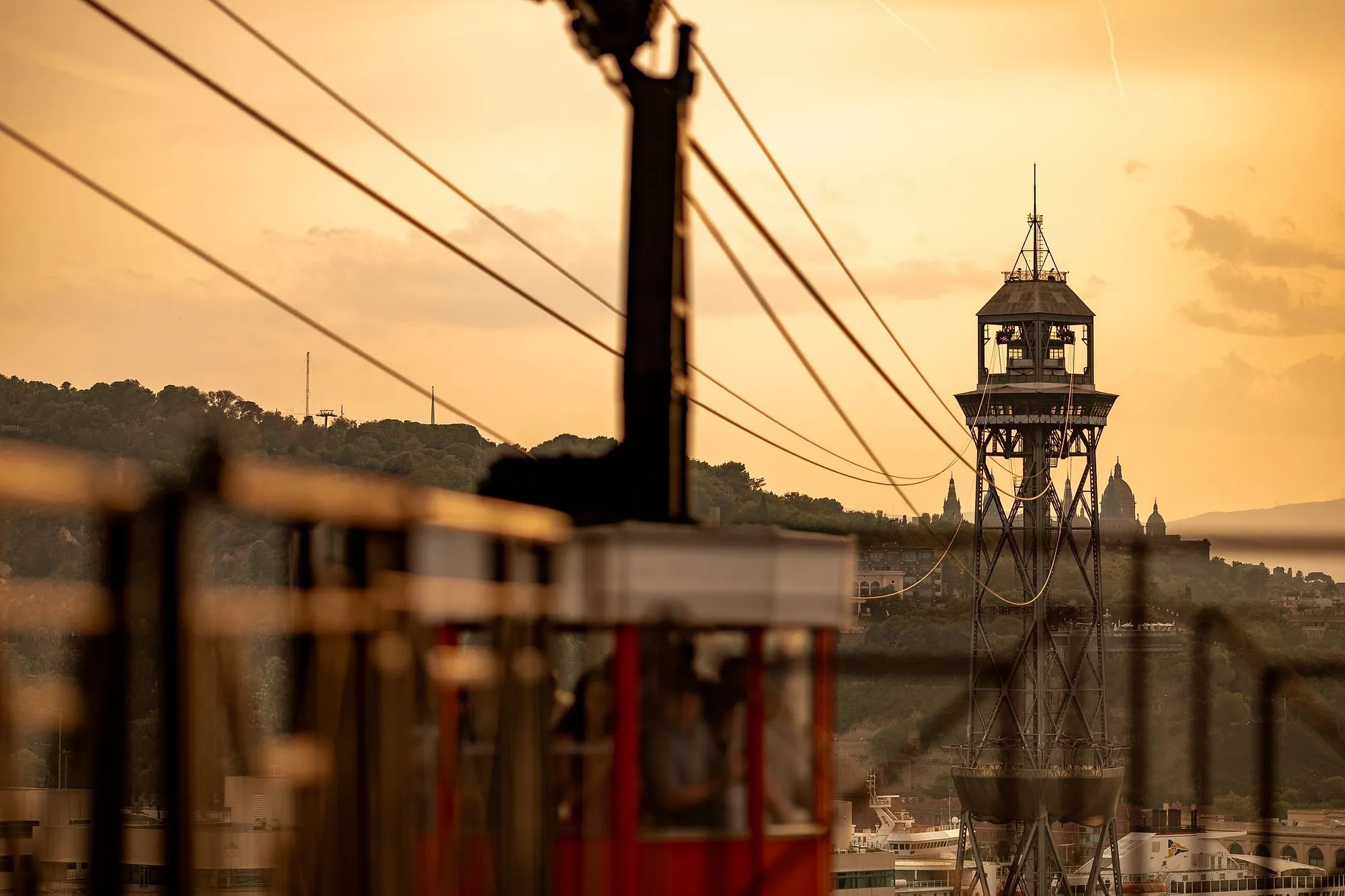
Montjuïc is the hill where Barcelona has left everything that would not fit in the city: a cemetery, a fortress, a world’s fair, an Olympic Games and a mass grave.
This walk takes them in that order and does not separate the handsome from the uncomfortable, because they are fifteen minutes apart on foot. It is a guided walk and the guide is an actor, which on this hill matters less for any performance than for knowing when to stop talking. Nobody plays a character here; the one tour that is performed in character is the Gaudí walk.
It is one of the routes most often named in the reviews and until August 2026 there was no way to sell it: the day was full and the only gap started before eight in the morning. It now runs Tuesdays and Thursdays at 14:00 — €15 adults, €6 children, up to twenty.
For the same century seen from the other side of the city, the Gothic Quarter walking tour covers what Barcelona built for that same 1929 Exposition down in the old town.
What you see, in order
Two etymologies, neither settled
Plaça d'Espanya
Two names, and only one of them is in the documents. Antiquarians long proposed "Mons Iovis", Jupiter's hill — but the Gran Enciclopèdia Catalana points out that the paperwork about this mountain, preserved from 878 onwards, calls it invariably Mons Judaicus, mount of the Jews, after the medieval Jewish burial ground on this slope. The Generalitat's listing decree says the cemetery gives the mountain its name. Starting with a name that had to be corrected sets the tone.
A city built to last six months
Avinguda de la Reina Maria Cristina
In 1929 Barcelona put an entire international exposition up here. Almost all of it was built to stand for half a year. What survived is not what anyone expected to survive.
The castle facing inwards
Castell de Montjuïc
A fortress usually points its guns at the sea. These were turned on Barcelona and fired: in December 1842, for twelve unbroken hours; through the autumn of 1843; and again in 1856. It served as a prison and as a torture centre for political prisoners, and that is the part that does not make the postcards.
The moat, 15 October
The castle moat
On 15 October 1940, at six in the morning, Franco's regime shot Lluís Companys here, in the Santa Eulàlia moat. He was the president of the Catalan government, and the court martial that condemned him the day before lasted, by the city's own account, less than an hour.
The quarry
Fossar de la Pedrera
A disused quarry used as a common grave until 1979: the destitute, the dead of the air raids on Barcelona, and the more than 1,700 people — 1,706 men and 11 women, in the municipal cemetery service's own count — executed in the city between 1939 and 1952. Companys lay in an unmarked niche until 1985 and has rested here since. It is the quietest place in Barcelona and almost nobody climbs up to it.
Included
- A working actor for a guide — told, not read off a clipboard
- Never more than 20 people
- Free cancellation up to 24 hours before
Never more than 20 people
20 is our own ceiling, not the council’s. The legal limit for a guided group applies in Ciutat Vella and this tour is outside it — we cap it anyway, because thirty people cannot hear a scene.
Before you book
Do we go inside the castle?
The route is outside. Admission to the castle grounds is paid separately and is not included.
Where exactly does it start?
Plaça d'Espanya, at the foot of the two brick towers that copy the campanile in Venice, on the Montjuïc side of the roundabout. Metro Espanya (L1, L3) and the FGC come out into it.
How much walking is there?
This is the one route of ours with a hill in it: from Plaça d'Espanya to the castle you gain the best part of a hundred and seventy metres, and the walk runs to about four kilometres over two and a half hours. The escalators and the funicular take out the worst of the climb — say so when you book and we route it that way.
What happens if it rains?
It runs, but this is the walk where weather actually matters: it is exposed, it is high, and the last stop is an open quarry. If the forecast is bad we would rather move you than have you remember the rain instead of the place.
Is it suitable for children?
The repression is told without sugar-coating but without wallowing. From about 12 it works. Child fare 3 to 12, under-3s free.
When does it run?
Tuesdays and Thursdays at 14:00, booked and paid for here. It ends around 16:30 at the Fossar de la Pedrera, which is up the hill: coming back down to Plaça d'Espanya is a bus ride or a good twenty minutes on foot. Worth knowing if you have something at five.