
Montjuïc
Barcelona is knocking down three cruise terminals, and the mayor called it the first limit in history
A signed protocol with a demolition schedule, an investment figure and a year for each step — and one number about cruise passengers we are deliberately not printing.
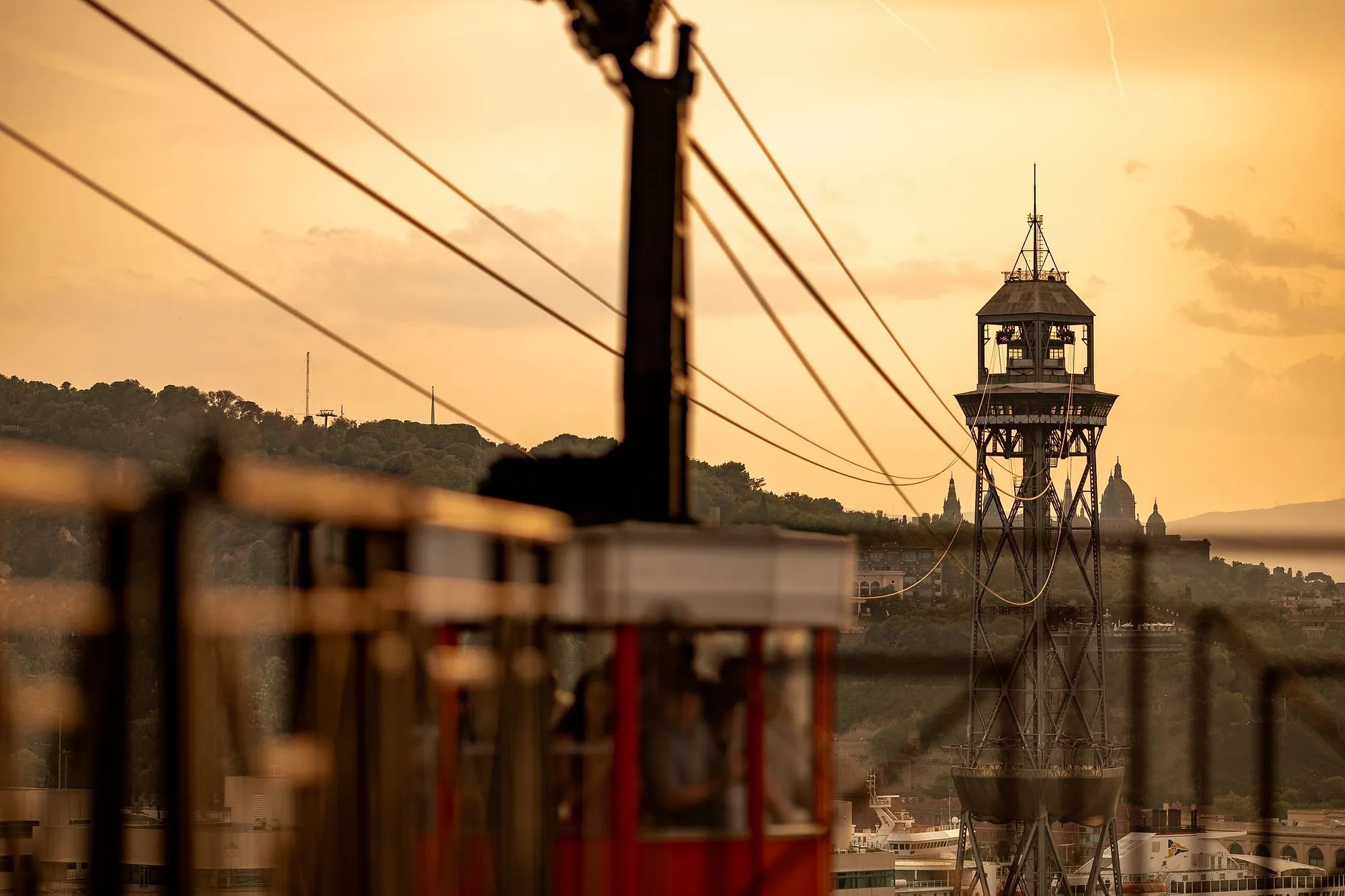
Cruise ships are the argument about tourism in Barcelona that generates the most heat and the least documentation. Everyone has a number. Almost nobody can say where it came from.
There is, however, a signed document with a demolition schedule in it, and that is worth reading instead.
What the protocol actually does
In July 2025 the Ajuntament and the Port de Barcelona signed a protocol to reorder cruise activity. Its central point:
the reduction of the number of cruise terminals from 7 to 5, as a result of the demolition of the current terminals A, B and C, and the construction of a new terminal where the last of these is now located.
The Moll Adossat ends up with four private terminals — D, E, G and H — and one public one, the new C.
Public here means something specific: open to general use, and with capacity to serve 7,000 passengers at a time. It will give priority to home-port calls — voyages that start and end in Barcelona, which the Port says bring more added value to the city and better air connectivity — and small ships.
Alongside it: 610 metres of quay rehabilitated for 50 million euros, and the electrical infrastructure to let ships plug in and shut their engines down.
The calendar, which is the part people never see
The protocol publishes years, and years are how you tell a policy from a press release.
- 2026 — the Moll de Barcelona Sud terminal closes at the end of the year. Terminal C is demolished at the end of the year.
- 2027 — construction of the new public terminal begins. Terminal G, already under construction under the 2018 agreement, opens. Work starts on doubling the Porta d’Europa bridge. The cruise mobility study is carried out.
- 2028 — the new terminal C enters service. Terminals A and B are demolished in the second half of the year, and the rehabilitation of that stretch of quay begins, with the shore-power system.
- 2029 — the urban corridor along the Montjuïc seafront enters service.
- 2030 — terminal C fully operational at its maximum capacity.
Total public-private investment: 185 million euros, on top of 265 million under the 2018 agreement — which the Port says it has fulfilled almost entirely, by moving activity off the Drassanes and Barcelona Nord quays and opening them to the city.
The sentence the mayor wanted quoted
For the first time in history a limit is put on the growth of cruises in the city.
That is Jaume Collboni, published on the Port’s own site. He also gave the reason it was needed: from 2018 to 2024 the number of cruise passengers rose by 20 %, because the previous protocol did not establish limits on capacity.
Whether a terminal count is a limit on passengers is a fair question and not one we can settle. But the document does contain a demolition order for three buildings, which is more than most tourism policy contains.
The bit that changes Montjuïc
Buried in the mobility section is the piece that matters most to anyone walking this hill:
the construction of an urban corridor along the Montjuïc seafront for public transport, taxis, VTC, bicycles and pedestrians, which will connect plaça de les Drassanes with the Marina del Prat Vermell and the Zona Franca.
About 10 million euros, in service 2029. The Port’s stated reasoning is that it will connect residents on both sides of the mountain and channel southbound passenger flows with minimal impact on the surrounding urban fabric.
Montjuïc has spent a century with its seaward foot occupied by port infrastructure. The hill and the harbour are one system and have been since the Iberians used the bay on the far side of it. This is the first serious attempt in a long time to let people walk between them.
And one small, telling detail about crowd management
The protocol also foresees information screens in every terminal showing, in real time, how busy the main tourist points of the city are, so that people can be distributed better and the most saturated areas decongested — in line with the policies deployed in the Espais de Gran Afluència.
Sixteen of those high-attendance spaces have been defined in Barcelona, eight of them touristic. It is the same policy logic as the play sessions the city funds in the squares tourism monopolises: not fewer visitors, but visitors elsewhere.
The number we are not printing, and why
⚠️ You will see a figure of roughly four million cruise passengers a year for Barcelona. We are not going to publish a passenger count on this page.
The reason is not squeamishness. It is that a cruise passenger figure can count movements — a person who arrives, disembarks, reboards and leaves can appear more than once — or it can count people who set foot in the city, and the two are very different numbers presented in the same shape. The Port’s own cruise statistics pages that we tried while writing this returned an error page rather than data.
So we quote what is on a live institutional page and attributed to a named person: up 20 % between 2018 and 2024. When we can open a page that publishes the absolute figure and says which of the two things it measures, we will put it here with the link.
This site has published twenty false facts and retracted them. A missing number is a smaller failure than a confident wrong one.
What it means for a visit
Nothing, in the short term. Ships will keep arriving; terminals will come down one at a time between 2026 and 2028.
Something, if you are on the hill. Between now and 2029 the seaward foot of Montjuïc is a construction site turning into a corridor. Check the ground before planning a walk along it.
And a piece of context worth carrying. In 1992 the port took in more than ten cruise ships to make up for the city’s lack of hotel places. Barcelona did not have cruise tourism imposed on it; it went and got it, for the Olympics, and then kept it for thirty years. The perception survey shows what residents now think about that.
Where this sits on the hill
The cruise quays are what you are looking at from the Mirador de l’Alcalde and from the castle. The lighthouse above them is the reason ships can find the place at all.
Our Montjuïc walk runs Tuesday and Thursday afternoons, in a group of no more than twenty. We are closed on 25 December and 1 January.
Where this comes from
- Ajuntament i Port de Barcelona signen un protocol per reduir les terminals de creuers i millorar la mobilitatPort de BarcelonaThat the protocol reduces cruise terminals «de 7 a 5, fruit de l'enderrocament de les actuals terminals A, B i C, i la construcció d'una nova terminal on ara s'ubica aquesta última»; that the new terminal will be public «amb capacitat per donar servei a 7.000 passatgers a la vegada» and will prioritise home-port calls and small ships; that the Moll Adossat will end up with four private terminals (D, E, G, H) and one public one; that 610 metres of quay will be rehabilitated at a cost of 50 million euros; that the quay works facilitate onshore power supply «per connectar els vaixells a la xarxa elèctrica»; that the Porta d'Europa bridge will be doubled at a cost of 90 million euros; that a «corredor urbà pel front litoral de Montjuïc» for public transport, taxis, VTC, bikes and pedestrians will connect «la plaça de les Drassanes amb la Marina del Prat Vermell i la Zona Franca» for about 10 million euros; that a mobility study will support a plan including shuttle services and information screens in all terminals showing real-time crowding at the main tourist points, «en línia amb les polítiques desplegades als Espais de Gran Afluència (EGA)»; that total public-private investment is 185 million euros, on top of 265 million under the 2018 agreement, which the Port says it has fulfilled almost entirely by moving activity from the Drassanes and Barcelona Nord quays to Adossat; the year-by-year calendar for 2026, 2027, 2028, 2029 and 2030; and the mayor's statements «Per primera vegada en la història es posa límit al creixement dels creuers a la ciutat» and that from 2018 to 2024 cruise passenger numbers rose 20 % because the earlier protocol «no establia límits a la capacitat».
- Coneix el Port — HistòriaPort de BarcelonaThat in 1992 the port took in more than ten cruise ships «per suplir la manca de places hoteleres de la ciutat».
Everything above that carries a date, a figure or a name is checked against these before it is published. Where we could not find a source, the page says so.
Quick answers
- Is Barcelona reducing the number of cruise terminals?
- Yes. The protocol signed by the Ajuntament and the Port de Barcelona reduces the cruise terminals on the Moll Adossat «de 7 a 5, fruit de l'enderrocament de les actuals terminals A, B i C, i la construcció d'una nova terminal on ara s'ubica aquesta última». The result is four private terminals — D, E, G and H — and one new public one.
- How big is the new terminal?
- The Port says it will be public, «és a dir, oberta a l'ús general i amb capacitat per donar servei a 7.000 passatgers a la vegada», and that it will give priority to home-port calls and small ships. Note what the figure measures: passengers served at one time in one building, not passengers per year.
- When does all this happen?
- The protocol publishes a calendar. 2026: the Moll de Barcelona Sud terminal closes and terminal C is demolished. 2027: construction of the new public terminal begins, terminal G opens, and work starts on doubling the Porta d'Europa bridge. 2028: the new terminal C enters service and terminals A and B are demolished in the second half of the year. 2029: the urban corridor enters service. 2030: terminal C fully operational.
- What did the mayor say about it?
- Jaume Collboni's published words are «Per primera vegada en la història es posa límit al creixement dels creuers a la ciutat». He also noted that from 2018 to 2024 the number of cruise passengers rose by 20 %, because the previous protocol «no establia límits a la capacitat».
- Does the protocol affect Montjuïc?
- Directly. It includes «la construcció d'un corredor urbà pel front litoral de Montjuïc destinat al transport públic, taxis, VTC, bicicletes i vianants, que connectarà la plaça de les Drassanes amb la Marina del Prat Vermell i la Zona Franca», with a projected investment of around 10 million euros and entry into service in 2029.
- How many cruise passengers does Barcelona get?
- We are not going to give you a number, and the reason is the useful part. The figures that circulate mix passenger movements with people, and the Port's own cruise statistics pages we tried do not resolve. What we can source is the relative change the mayor quoted: up 20 % between 2018 and 2024. If we find a live institutional page with the absolute figure, we will publish it and say where it came from.
- Will cruise ships stop polluting at the quay?
- That is the intention and it has an infrastructure attached. The protocol says rehabilitating the quay makes it easier to install onshore power supply systems «per connectar els vaixells a la xarxa elèctrica, subministrant-los energia verda per apagar els seus motors i eliminar les emissions de la seva operativa». Whether it works is a question for after 2028.
The tours this piece is about
More in the journal
Montjuïc
- Formula One raced through this park four times, and no institution in Barcelona records how it stopped
- The Magic Fountain was switched off for two and a half years, and the city's own spec sheet still describes a machine that no longer exists
- The most influential building in Barcelona stood for about a year, and the one you can visit is legally a new building
- A modernista cotton mill that spent longer as a police barracks than as a factory
- They put a lighthouse on the mountain because the old one was at sea level
- Barcelona had no natural harbour, so it spent five hundred years building one