
Gothic Quarter
The square is called Royal because of a monument that was never put up
One of the four squares where Barcelona now runs council-funded play sessions to give the space back to residents. It is worth knowing what is under it, and what the encyclopaedia actually says about the lamps.
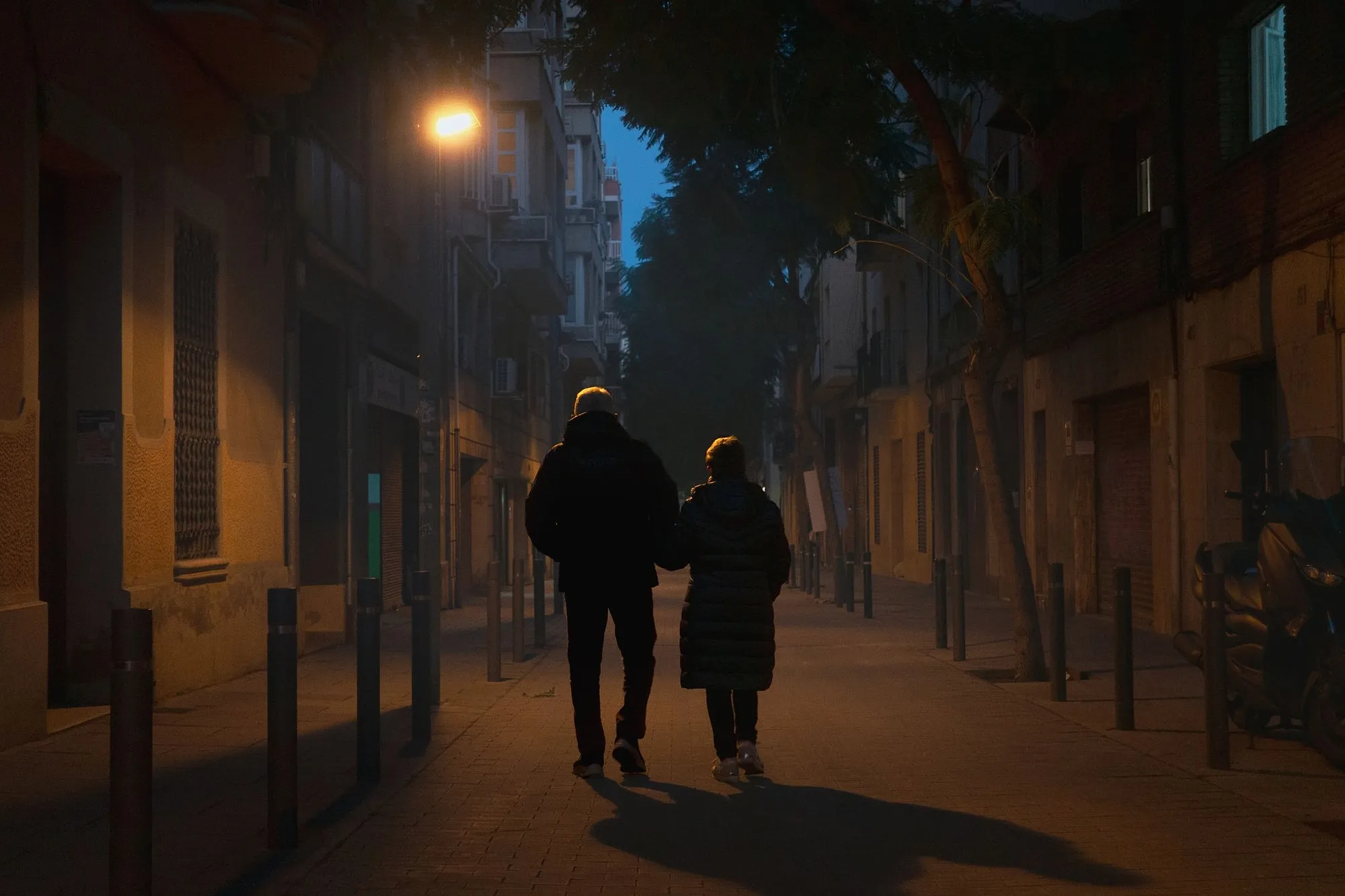
Plaça Reial is the one square in the old city that looks like it was designed all at once, because it was. Four straight arcaded sides, a fountain, palm trees, and two lamp standards that people cross the square to photograph.
Three things are worth knowing before you stand in it, and all three are in municipal or encyclopaedic sources rather than in the version you will be told.
It is a convent-shaped hole
The Ajuntament’s street register:
Built on the site occupied by the old Capuchin convent, built in 1718 and demolished in 1848.
That is the whole nineteenth century of this city in one line. A religious building comes down; a piece of speculative urbanism goes up on the plot; the result is now the thing everyone thinks is old.
It happened to the convent of Sant Josep, where the Boqueria is. It happened all down La Rambla, which is why a promenade that was a watercourse ended up lined with a market, an opera house and a square. Plaça Reial is the same operation with better proportions.
Note the dates, though. That convent stood for a hundred and thirty years — it went up in 1718, four years after the city fell and the Bourbon reordering began. It is not a medieval building. It is roughly as old, when it was knocked down, as the Eixample is now.
The name is a monument that was never built
Here is the fact this page exists for.
It was called this because Isabel II laid the first stone of what was to be a monument to Ferdinand the Catholic (not erected).
The parenthesis is the register’s own.
A queen came, a stone went into the ground, the monument was never made, and the square has been called Royal ever since — for a statue that nobody has ever seen, of a king who died in 1516, commemorated by a monarch who would be deposed in 1868.
If you want one object that explains how Barcelona’s street names work, it is this. The Gothic Quarter is named after a style it was largely given later; the Council of a Hundred kept its name for four centuries after it stopped having a hundred members; and this square is named after an absence.
And the name has moved with the politics. The register lists Real before 1850, then Francisco Maciá from 26 August 1931 — the president of the Generalitat, during the Republic — then Real again, with the current Catalan spelling approved on 7 March 1939. Same square, same paving, three regimes.
The lamps, and what the encyclopaedia actually says
There are four Gaudí lamps in Barcelona, in two very different pairs, and the municipal art catalogue has opinions about what happened to the second pair.
You will be told a number about the lampposts and you will be told a superlative. Here is the sentence.
The Gran Enciclopèdia Catalana, describing Gaudí’s first period — from 1878, the year he qualified, to 1882 — says he
designed lamps — such as the two in the Plaça Reial — and a flower stall with a kiosk and a urinal
Two. Not six, not a set. Two, and mentioned in the same breath as a flower stall with a public toilet attached.
That is not a debunking; it is a better story than the one it replaces. Look at what the encyclopaedia puts around them. The whole period is characterised, in its words, by the architect’s communion with the cooperativist ideal, and all the works of those years are urban and social in character: the collaboration with Josep Fontserè on the Ciutadella park, the street furniture, and the factory and two housing blocks he built for the workers’ cooperative L’Obrera Mataronense.
Before he was the architect of expiatory temples and rich men’s houses, Gaudí was doing municipal ironmongery and workers’ housing. The money arrived later, and it changed the work.
⚠️ What we cannot tell you. The encyclopaedia gives no separate date for the lamps beyond the 1878–1882 window, and does not call them his first public commission. That claim is everywhere and we have not found an institution making it, so we are not making it either. We have had to retract enough Gaudí facts already.
What the square is now, on the council’s own numbers
Barcelona has a programme called Juguem a les places — play sessions for local residents in squares that, in the commissioner’s published words, tourism tends to monopolise, recovered with specific, programmed and funded neighbourhood uses.
It is paid for entirely out of the tourist tax and its municipal surcharge, which is a piece of policy design worth noticing: visitors fund the effort to give the square back to the people who live around it.
In 2026 it ran 108 sessions between May and November in four squares. Two of them are on our own route: Plaça Reial, and Plaça Nova, where our Gothic Quarter walk begins. The budget went up 57 % on the first year, when it ran 61 sessions in three spaces.
So the honest description of Plaça Reial today is not «hidden gem» and not «tourist trap». It is: a beautiful nineteenth-century square that the city has formally identified as one it is trying to win back, and is spending tourist money to do it.
That fits the wider measurement. In the 2025 perception survey, 57.6 % of residents said tourism had made them stop going somewhere, and «el Gòtic, el Raval and the old town» is the fourth most named area in the city.
How to use it
Go in the morning. The arcades face four ways and the light gets into the square early; the ground floor has not woken up yet and the proportions are the whole point.
Look up, then look down. Up for the lamps and the arcade cornice. Down at the paving, because you are standing on the floor plan of a convent that stood here for a hundred and thirty years and left nothing else.
Do not eat in the square unless you have specifically chosen a place for a reason. Every terrace here is paying square-facing rent and you are paying it for them. Two streets in any direction is a different economy.
And come back at night, which is when the square is at its best and its worst simultaneously — the lamps lit, the arcades working exactly as designed, and the noise. The old city after dark is a different neighbourhood and this square is the clearest example of it.
Where it sits on a walk
Plaça Reial opens off La Rambla, three minutes from the Boqueria and five from Plaça de Sant Jaume. It is on the edge of the Gothic Quarter rather than in the middle of it, which is why the walkable order matters more here than a list of sights.
Our Gothic Quarter walk runs Monday and Wednesday afternoons and starts at Plaça Nova; the after-dark version is Friday and Saturday nights. We are closed on 25 December and 1 January.
Where this comes from
- Plaça ReialAjuntament de Barcelona · Nomenclàtor de les vies públiquesThat the square was «construïda en el lloc que ocupava l'antic convent dels caputxins, construït el 1718 i enderrocat el 1848»; that «s'anomenà així perquè Isabel II col·locà la primera pedra del que havia de ser monument a Ferran el Catòlic (no erigit)»; that the present name was approved on 07/03/1939; and the list of former names — Real, Francisco Maciá (26/08/1931) and Real before 1850.
- Antoni Gaudí i CornetGran Enciclopèdia CatalanaThat Gaudí's first period runs «des del 1878 —any que es titulà— fins al 1882» and «és marcada per la comunió de l'arquitecte amb l'ideari cooperativista: totes les obres d'aquells anys són de caire urbà i social»; that in those years he collaborated with Josep Fontserè on the Ciutadella park, «projectà fanals —com els dos de la plaça Reial— i una parada de flors amb quiosc i urinari», and built the factory and two housing blocks of the cooperative L'Obrera Mataronense. The entry gives no separate date for the lamps and calls them two.
- Barcelona amplia el programa 'Juguem a les places' als espais d'afluència turística (16/05/2026)Ajuntament de Barcelona · Servei de PremsaThat between 16 May and 15 November 2026 the council ran 108 sessions in «plaça de la Sagrada Família, plaça Reial, plaça de la Gardunya i plaça Nova», with a budget of 113,000 euros, up 57 % on the previous year; that in its first year it ran 61 sessions in three spaces — Sagrada Família, Plaça Reial and the jardins de les Voltes d'en Cirés — on a budget of about 72,000 euros; that the programme «se sufraga a través de l'Impost d'Estades en Establiments Turístics (IEET) i el recàrrec municipal»; and the commissioner's statement that «les places que el turisme tendeix a monopolitzar es recuperen amb usos veïnals concrets, programats i finançats».
- Enquesta de percepció del turisme a Barcelona 2025 (PDF)Ajuntament de Barcelona · Oficina Municipal de Dades, Departament d'Estudis d'OpinióThat 57.6 % of the 1,732 residents surveyed had stopped visiting some part of the city because of tourism, and that among the 999 who named a place, «el Gòtic - el Raval - el casc Antic» scored 25.5 % and La Rambla 27.1 %.
Everything above that carries a date, a figure or a name is checked against these before it is published. Where we could not find a source, the page says so.
Quick answers
- Why is Plaça Reial called that?
- Because of a statue that does not exist. The Ajuntament's street register says the square «s'anomenà així perquè Isabel II col·locà la primera pedra del que havia de ser monument a Ferran el Catòlic (no erigit)». The first stone was laid, the monument was never erected, and the name stuck.
- What was here before the square?
- A convent. The register says the square was «construïda en el lloc que ocupava l'antic convent dels caputxins, construït el 1718 i enderrocat el 1848». It is the same operation that produced La Rambla's markets and squares: a religious building comes down and a piece of nineteenth-century city goes up in its place.
- Are the lampposts in Plaça Reial by Gaudí?
- The Gran Enciclopèdia Catalana says he designed lamps, «com els dos de la plaça Reial», during his first period — from 1878, the year he qualified, to 1882. Note the wording: two. It places them among his urban and social work of those years, alongside his collaboration with Josep Fontserè on the Ciutadella park and a flower stall with a kiosk and a urinal.
- Were they Gaudí's first commission?
- The encyclopaedia does not say that, and neither will we. What it does say is that they belong to his earliest phase, which it characterises by his commitment to the cooperativist ideal — the same years in which he built the factory and two housing blocks for the workers' cooperative L'Obrera Mataronense. That is a more interesting thing to know than a superlative.
- Has the square always had this name?
- No. The register lists Real before 1850, then Francisco Maciá from 26 August 1931, then Real again, with the present Catalan form approved on 7 March 1939. Barcelona renamed the square after the president of the Generalitat during the Republic and unrenamed it afterwards.
- Is Plaça Reial worth going to?
- It is a genuinely handsome piece of nineteenth-century urbanism and it is completely surrounded by places that want your money. Go, look up at the arcades and the lamps, and be clear-eyed about the ground floor. The council itself classes it as a space where crowding is managed.
- What is the council doing about the crowds there?
- In 2026 Plaça Reial was one of four squares — with Sagrada Família, the Gardunya and Plaça Nova — where the Ajuntament ran «Juguem a les places», 108 sessions of play activities for local residents between May and November, funded entirely from the tourist tax and its municipal surcharge. The commissioner's phrasing: «les places que el turisme tendeix a monopolitzar es recuperen amb usos veïnals concrets, programats i finançats».
The tours this piece is about
The Gothic Quarter: a neighbourhood that invented itself
Barcelona's most photographed bridge dates from 1928.
- How long it lasts
- 2 h
- Runs in
- EN · ES · CA
- Price
- 15 €
Never more than 20 people
The Gothic Quarter after dark
By day it is a crowded stage set. By night it is a narrow city.
- How long it lasts
- 2 h
- Runs in
- EN · ES · CA
- Price
- 18 €
Never more than 20 people
More in the journal
The Gothic Quarter
- El Call: four streets, a stone that is a copy, and an argument about one building
- Asked which visitors they would like more of, Barcelona picked the ones who come to learn something
- It was a watercourse with a city wall on one side and convents on the other
- The city counted 1,322 shelters, and says the people dug most of them themselves
- Barcelona has the first documented giant in Europe, and almost everything that walks today was carved after 1987
- The engineer everyone credits with the Barceloneta designed a neighbourhood that was never built