
Gothic Quarter
Asked which visitors they would like more of, Barcelona picked the ones who come to learn something
There is a published list of the places Barcelona residents have stopped going to because of tourism, and it is not the list people assume. There is also a published list of the kinds of visitor they would like more of, and that one is genuinely surprising.
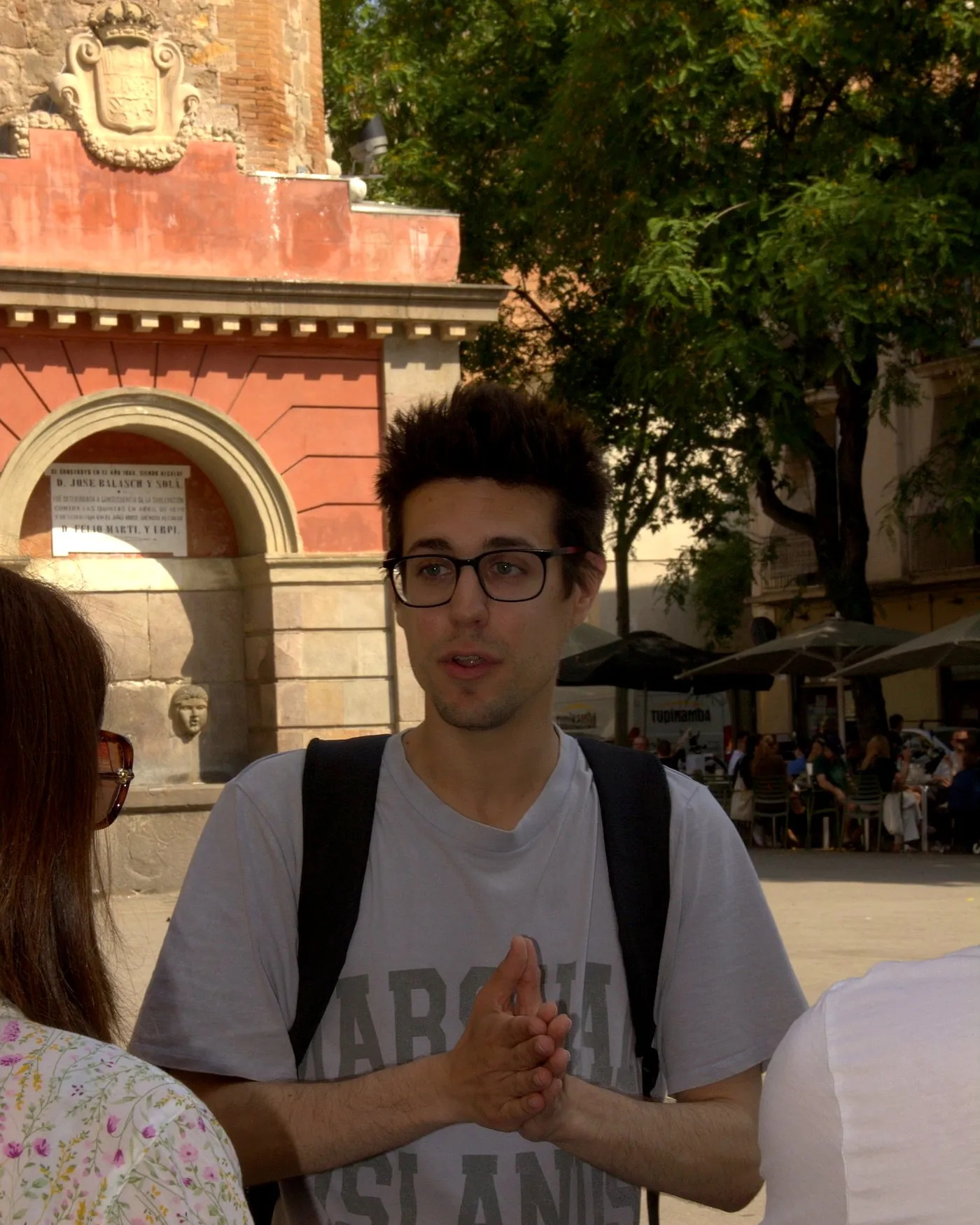
Barcelona asks its own residents what they think of the people who come here. It has done it every year since 2016, it publishes the questionnaire and the sample size, and it puts the whole thing online as a PDF.
Most articles about this quote two numbers from it. We quote two of them ourselves, in the piece about when to come, because they are the two that matter for choosing a month.
This page is about the other tables, which almost nobody reads, and which are more interesting than the headline.
The list of places
The survey asks whether tourism has made you stop visiting somewhere in the city. 57.6 % say yes. Then it asks where, and 999 people answer.
| Place | Share of those who avoid somewhere |
|---|---|
| La Rambla | 27.1 % |
| Plaça de Catalunya – Passeig de Gràcia | 26.8 % |
| The seafront | 26.3 % |
| El Gòtic – El Raval – the old town | 25.5 % |
| «The centre», unspecified | 22.6 % |
| The Sagrada Família area | 17.4 % |
| Park Güell | 14.6 % |
| El Born | 7.4 % |
| The Sagrada Família itself | 7.1 % |
| The cathedral and Santa Maria del Mar | 3.9 % |
| Gràcia | 2.9 % |
| Montjuïc and Plaça d’Espanya | 2.1 % |
Read the top and the bottom of that table together, because they are the same neighbourhood.
La Rambla is first at 27.1 %. The cathedral and Santa Maria del Mar are eleventh at 3.9 %. You can walk between them in eight minutes. The Born, which is the same medieval city on the other side of Via Laietana, is at 7.4 %.
Whatever is being avoided, it is not the old town. It is a specific corridor: the promenade, the boulevard, the beach, the block around one basilica. Four honeypots and the streets that funnel into them.
That is a much more usable fact than «locals avoid the centre», and it is the city’s own data saying it.
The bottom of the table is a Montjuïc story
Montjuïc and Plaça d’Espanya: 2.1 %. Lower than Gràcia. Lower than everything.
Barcelona’s second-biggest concentration of museums, its 1929 exposition grounds, its Olympic ring, its castle and its cemetery — and residents have not written it off. We have argued before that Montjuïc is where people who live here go, and this is the closest thing to a measurement of it that exists.
The tourism observatory’s other survey says the same thing from the visitor side: the share of tourists who go up the hill fell from 65.0 % in 2022 to 55.3 % in 2025, and it is the one major destination in the city that residents are not walking away from at the same time.
The question that gets worse the closer it gets
The survey asks whether tourism is beneficial or harmful three times, at three distances. Same respondents, same afternoon.
| Beneficial or harmful for… | Beneficial | Harmful |
|---|---|---|
| Barcelona | 59.6 % | 33.1 % |
| Their own neighbourhood | 50.1 % | 36.0 % |
| Them, personally | 41.0 % | 41.4 % |
Zoom in and the majority evaporates. By the third row it has gone: the personal answer is a dead heat, with harmful very slightly ahead.
Now the same three questions, asked only of people who live in a neighbourhood the survey classes as touristic — which is the neighbourhood this page is about:
| Beneficial or harmful for… | Beneficial | Harmful |
|---|---|---|
| Barcelona | 49.1 % | 41.3 % |
| Their neighbourhood | 38.1 % | 55.0 % |
| Them, personally | 29.2 % | 54.7 % |
It does not just narrow. It inverts.
People living inside the tourist city say, by better than five to four, that the thing is harmful to the streets they live on and to them. And they are the ones you will walk past.
The number we did not expect
Then there is a table nobody quotes, and it is the reason we wrote this page.
The survey reads out five kinds of visitor and asks whether Barcelona should encourage more of them, leave things as they are, or limit them.
| Kind of visitor | Encourage | Limit |
|---|---|---|
| Coming for education or training | 87.9 % | 6.3 % |
| Professional — fairs, congresses, meetings | 77.9 % | 14.6 % |
| Sporting or cultural events | 68.4 % | 21.7 % |
| Holidays | 30.3 % | 59.1 % |
| Cruise passengers | 23.0 % | 66.7 % |
Two thirds of the city would limit cruise passengers, and in July 2025 the city and the port signed a protocol that demolishes three terminals. Nearly six in ten would limit holiday tourism. The survey’s own summary notes that the position on holiday tourism has moved 24.5 points since 2021 and on cruises 17.4 points.
And at the top of the same table, with the highest score of anything asked, 87.9 % would encourage people who come to learn something. Fourteen to one in favour.
We are not going to pretend that answer was about walking tours. Most respondents were probably picturing students and conferences. But it is the only category in the survey with a fourteen-to-one margin, and it is the one thing this city says out loud that it still wants more of.
What we do with that, honestly
We sell a two-hour walk through the neighbourhood at the top of the avoidance table. There is no version of this page where we are outside the problem.
So the useful part is the shape of the numbers rather than a slogan.
The corridor is the problem, not the district. 27.1 % against 3.9 %, eight minutes apart. Everything we run in the old city is built on the streets in the second figure, and that is not a marketing decision — it is where the interesting things are anyway. The Gothic Quarter walk starts in Plaça Nova at the Roman gate and never uses La Rambla as anything but a boundary to cross, which is also what La Rambla actually is.
The hour does more than the route. The after-dark version exists because the same streets at half past nine at night hold a fraction of the people, and because that is when the neighbourhood is any good.
And Montjuïc is at 2.1 %. The Montjuïc walk goes to the one large piece of visitable Barcelona that the people who live here have not given up on, which is a strange thing to be able to say with a citation.
A note on what this survey is and is not
It interviews 1,732 residents. It is an opinion survey, it says so, and the percentages carry the usual sampling error — the smaller the sub-group, the wobblier the figure. The 999 who named a place are a sub-sample of a sub-sample, and the low end of that table is built on small numbers.
It also does not measure crowding. Nothing here counts a single person on La Rambla; there is no official footfall figure for that street at all, which is worth knowing the next time you read one. This measures what residents say they do, which is a different and in some ways more honest thing.
What it does support, and what we would stand behind: the avoidance is specific, it is getting more common every year, and the part of the city being avoided is smaller and better defined than the phrase «the Gothic Quarter» suggests.
If you want the rest of the argument, whether the neighbourhood earns your afternoon and whether it is safe are the two pages next to this one, and what to see, in an order that does not double back is the one with the map in it.
Where this comes from
- Enquesta de percepció del turisme a Barcelona 2025 (PDF)Ajuntament de Barcelona · Oficina Municipal de Dades, Departament d'Estudis d'OpinióQuestion P2, on a sample of 1,732 residents: tourism is «més aviat beneficiós» for Barcelona for 59.6 % and «perjudicial» for 33.1 %; for their own neighbourhood 50.1 % against 36.0 %; and for the person interviewed 41.0 % against 41.4 %. Broken down by residence in a tourist neighbourhood, the same question gives 38.1 % / 55.0 % for the neighbourhood and 29.2 % / 54.7 % personally. Question P7: 76.7 % agree Barcelona «està arribant al límit / ja ha arribat al límit en la capacitat de rebre turistes» against 21.5 % who say it must keep attracting more, with the series running 55.9 % in 2022, 61.5 % in 2023, 74.4 % in 2024 and 76.7 % in 2025, and 65.6 % agreement among respondents who work in the tourism sector. Question P12: 57.6 % have stopped visiting some area because of tourism, rising from 49.5 % in 2023 and 54.0 % in 2024, and reaching 60.9 % among residents of tourist neighbourhoods and 61.8 % among women against 52.8 % among men. Question P13, on the 999 who answered yes: La Rambla 27.1 %, Plaça Catalunya–Passeig de Gràcia 26.8 %, Front Marítim 26.3 %, «el Gòtic - el Raval - el casc Antic» 25.5 %, «el centre (no especifica)» 22.6 %, Sagrada Família area 17.4 %, Park Güell 14.6 %, El Born 7.4 %, the Sagrada Família temple itself 7.1 %, «Catedral - Santa Maria del Mar» 3.9 %, Gràcia 2.9 %, «Montjuïc - Plaça Espanya» 2.1 %. Question P17, on visitor types: 87.9 % would encourage visitors coming «per motius educatius o de formació» against 6.3 % who would limit them, 77.9 % professional visitors, 68.4 % sporting or cultural events, while 59.1 % would limit holiday tourism and 66.7 % cruise passengers — rising to 68.3 % and 73.7 % among residents of tourist neighbourhoods. And the report's own summary that opposition to holiday tourism has moved 24.5 points since 2021 and to cruise tourism 17.4 points.
- Documentació — informes de turismeAjuntament de Barcelona · TurismeThe page from which every edition of the perception survey and of the annual tourism activity report is published, back to 2016 — which is what lets anyone check that the series above is a series and not a headline.
- Informe de resultats: perfil i hàbits dels turistes a Barcelona ciutat 2025 (PDF)Observatori del Turisme a BarcelonaQuestion P26, places visited, asked to half the Barcelona-city sample: La Rambla falls from 85.0 % in 2022 to 77.2 % in 2025, the Gothic Quarter from 73.5 % to 65.3 %, and «Montjuïc, fonts i plaça Espanya» from 65.0 % to 55.3 %, while the Sagrada Família holds at 80.6 % and the Turó de la Rovira rises from 12.2 % to 15.7 %.
Everything above that carries a date, a figure or a name is checked against these before it is published. Where we could not find a source, the page says so.
Quick answers
- Which parts of Barcelona do locals avoid?
- The city publishes the list. Among the 999 residents who said tourism had made them stop visiting somewhere, in 2025: La Rambla 27.1 %, Plaça de Catalunya and Passeig de Gràcia 26.8 %, the seafront 26.3 %, «el Gòtic, el Raval and the old town» 25.5 %, «the centre» unspecified 22.6 %, the Sagrada Família area 17.4 %, Park Güell 14.6 %, El Born 7.4 %. At the bottom: the cathedral and Santa Maria del Mar 3.9 %, Gràcia 2.9 %, Montjuïc and Plaça d'Espanya 2.1 %.
- Do people in Barcelona hate tourists?
- The survey does not support that word, and it does support something more specific. Asked whether tourism is good or bad for Barcelona, 59.6 % say beneficial against 33.1 % harmful. Asked about their own neighbourhood: 50.1 % against 36.0 %. Asked about themselves personally: 41.0 % beneficial, 41.4 % harmful. The judgement gets worse the closer the question gets to the person answering it.
- Is it different if you live in a tourist neighbourhood?
- It inverts completely. Among residents of neighbourhoods the survey classes as touristic — which includes the Gothic Quarter — 55.0 % say tourism is harmful for their neighbourhood against 38.1 % beneficial, and 54.7 % say it is harmful to them personally against 29.2 %. That is the reverse of the city-wide answer, from people living a few hundred metres from where most visitors spend their afternoon.
- What kind of tourism would Barcelona limit?
- Holiday tourism and cruise passengers, and by clear majorities: 59.1 % would limit visitors coming on holiday and 66.7 % would limit cruise passengers. Among residents of tourist neighbourhoods those figures rise to 68.3 % and 73.7 %.
- What kind of visitors does Barcelona actually want?
- Ones who come to learn something. The highest score in the whole table is for visitors coming «per motius educatius o de formació» — 87.9 % would encourage them, against 6.3 % who would limit them. Professional visitors are second at 77.9 %, and sporting or cultural events third at 68.4 %. Those are the only three categories where the balance is positive.
- Do people who work in tourism agree the city is at its limit?
- Most of them do. The survey breaks the answer down by whether the respondent works in the tourism sector, and 65.6 % of those who do still agree that Barcelona is reaching or has reached the limit of its capacity to receive tourists. The city-wide figure is 76.7 %. The sector is less convinced than everyone else and still, by two to one, on the same side.
- Does avoiding La Rambla mean I should skip the Gothic Quarter?
- No, and the numbers argue against it. The most avoided entries are all corridors and honeypots — La Rambla, Passeig de Gràcia, the seafront, the Sagrada Família block. The cathedral and Santa Maria del Mar together score 3.9 %, and they are inside the same neighbourhood as La Rambla. The avoidance is much more specific than «the old city».
The tours this piece is about
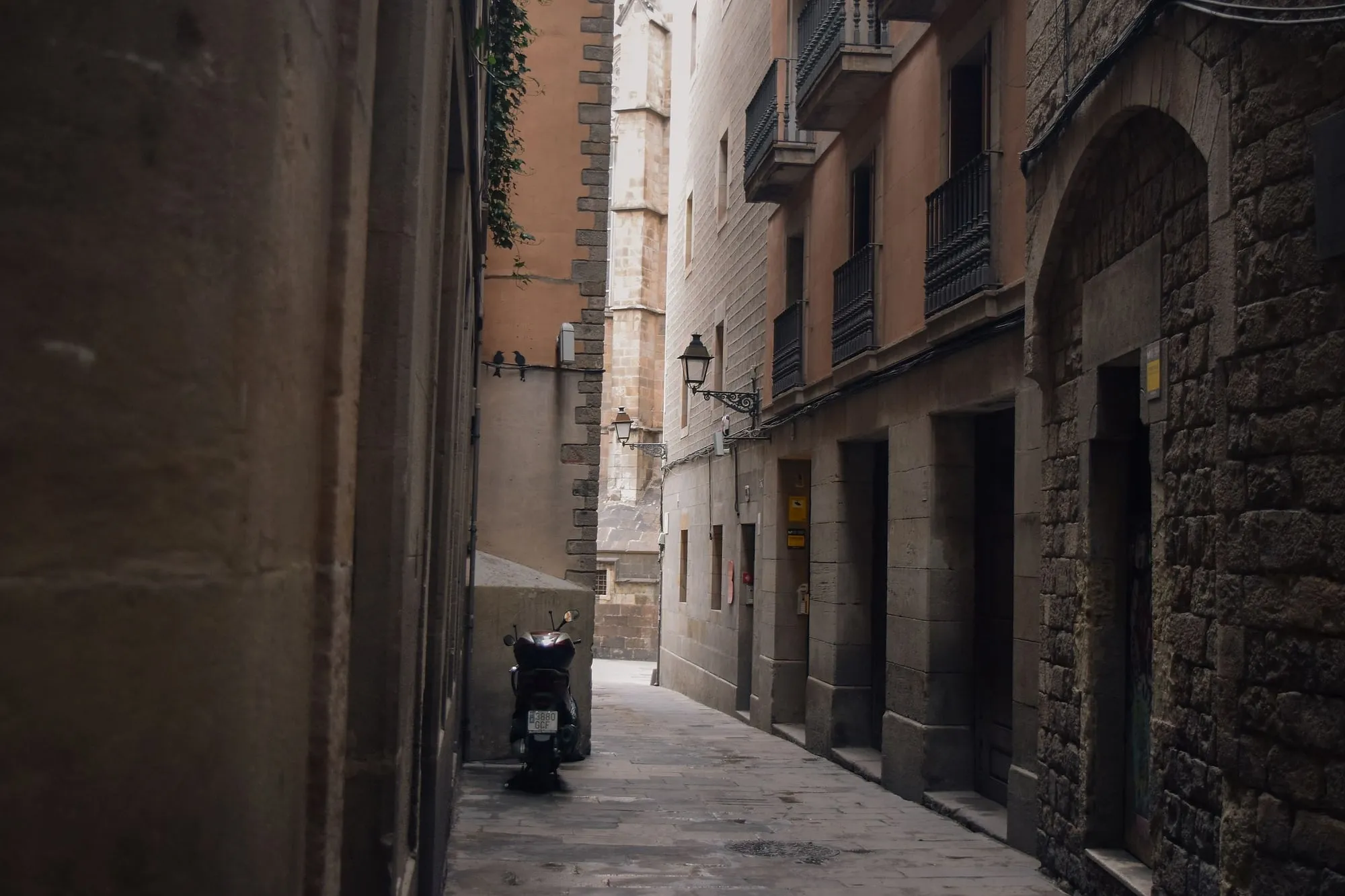
The Gothic Quarter: a neighbourhood that invented itself
Barcelona's most photographed bridge dates from 1928.
- How long it lasts
- 2 h
- Runs in
- EN · ES · CA
- Price
- 15 €
Never more than 20 people
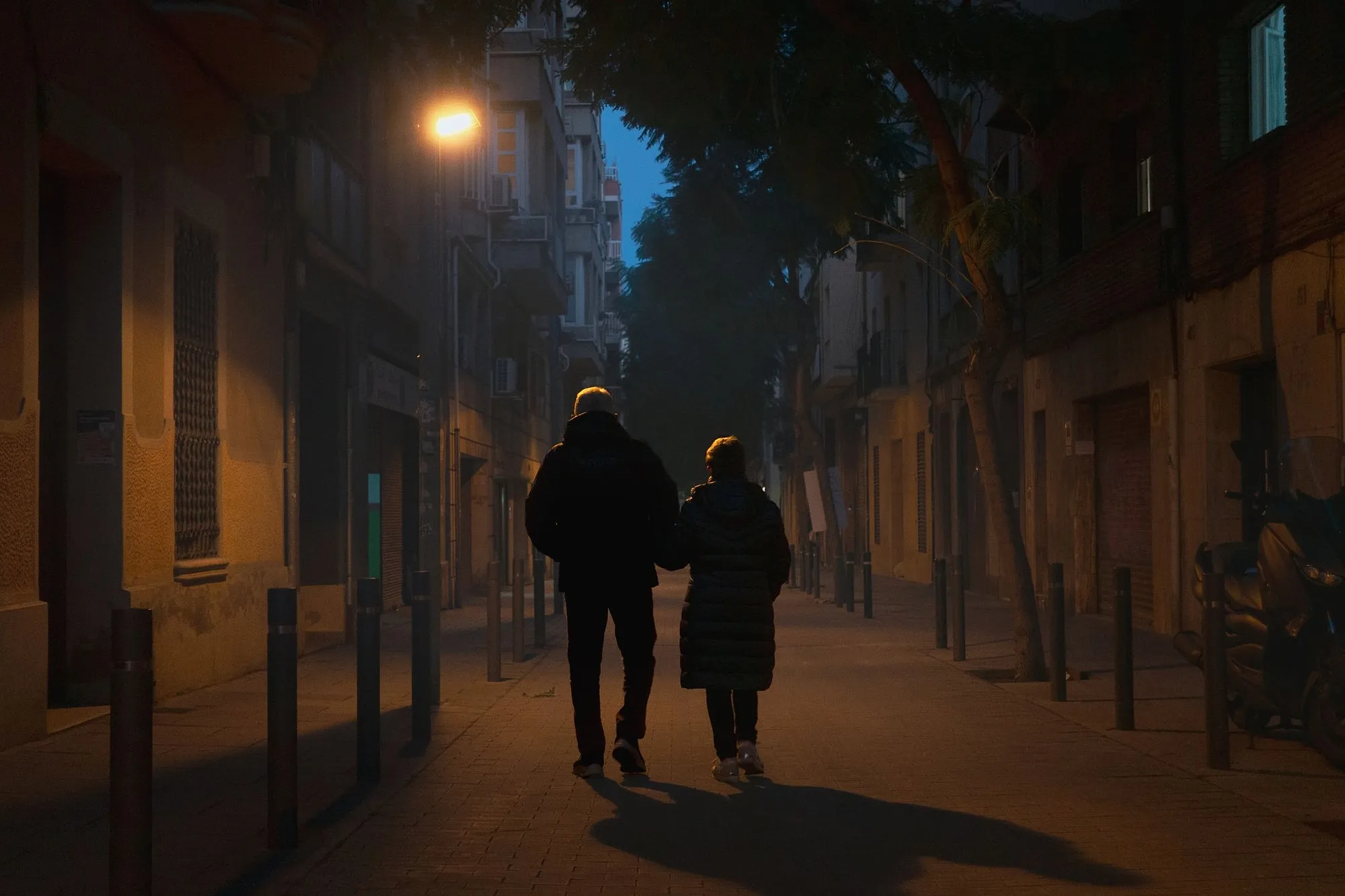
The Gothic Quarter after dark
By day it is a crowded stage set. By night it is a narrow city.
- How long it lasts
- 2 h
- Runs in
- EN · ES · CA
- Price
- 18 €
Never more than 20 people
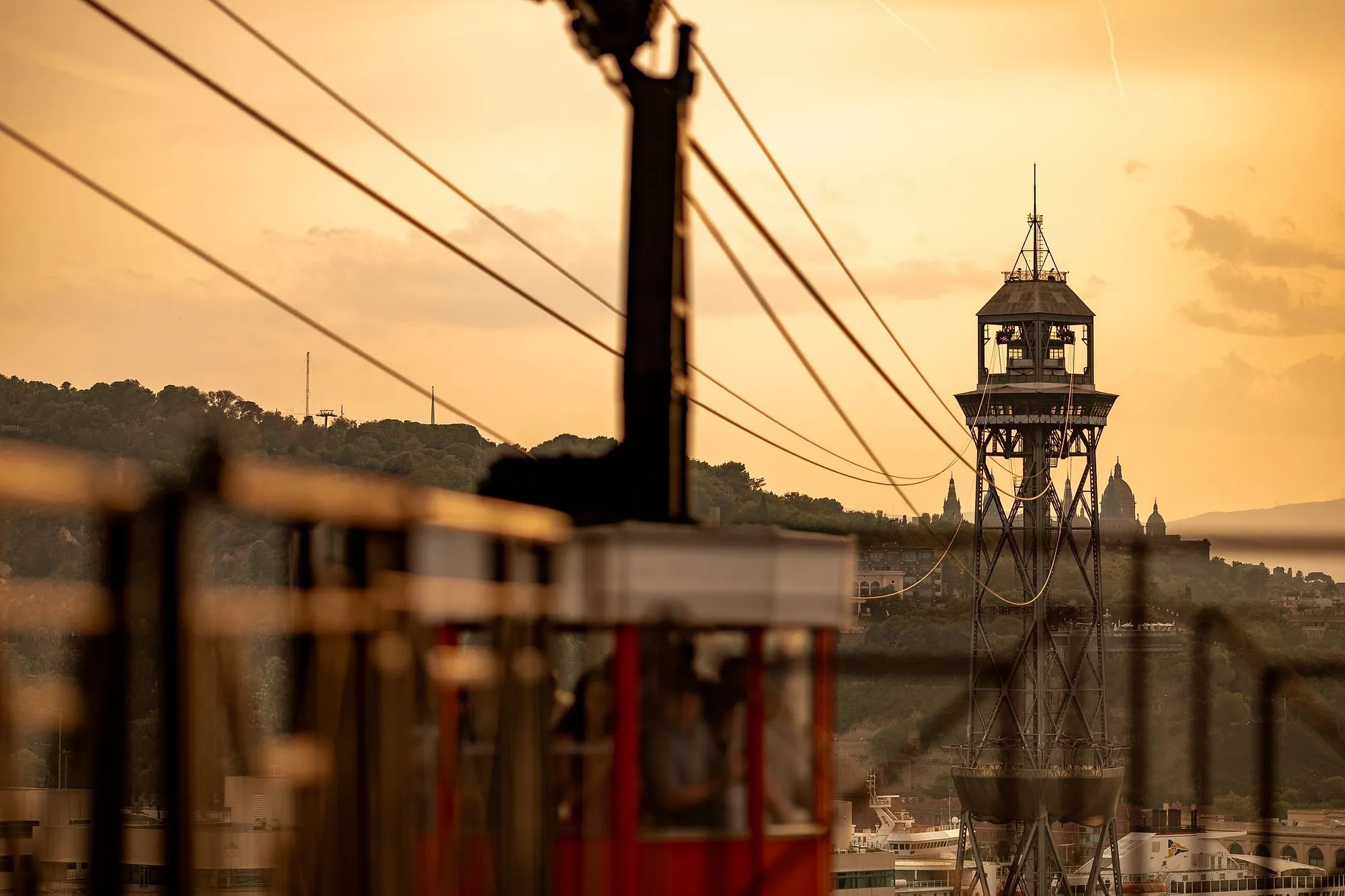
Montjuïc: the hill with two names
Nobody agrees where the name comes from. That is where it starts.
- How long it lasts
- 2 h 30
- Runs in
- EN · ES · CA
- Price
- 15 €
Never more than 20 people
More in the journal
The Gothic Quarter
- El Call: four streets, a stone that is a copy, and an argument about one building
- It was a watercourse with a city wall on one side and convents on the other
- The city counted 1,322 shelters, and says the people dug most of them themselves
- Barcelona has the first documented giant in Europe, and almost everything that walks today was carved after 1987
- The square is called Royal because of a monument that was never put up
- The engineer everyone credits with the Barceloneta designed a neighbourhood that was never built