
Montjuïc
Formula One raced through this park four times, and no institution in Barcelona records how it stopped
The avenues you walk up to the museum were a Grand Prix track within living memory. What is documented is the beginning. The ending is a hole in the institutional record, and we are going to leave it as one.
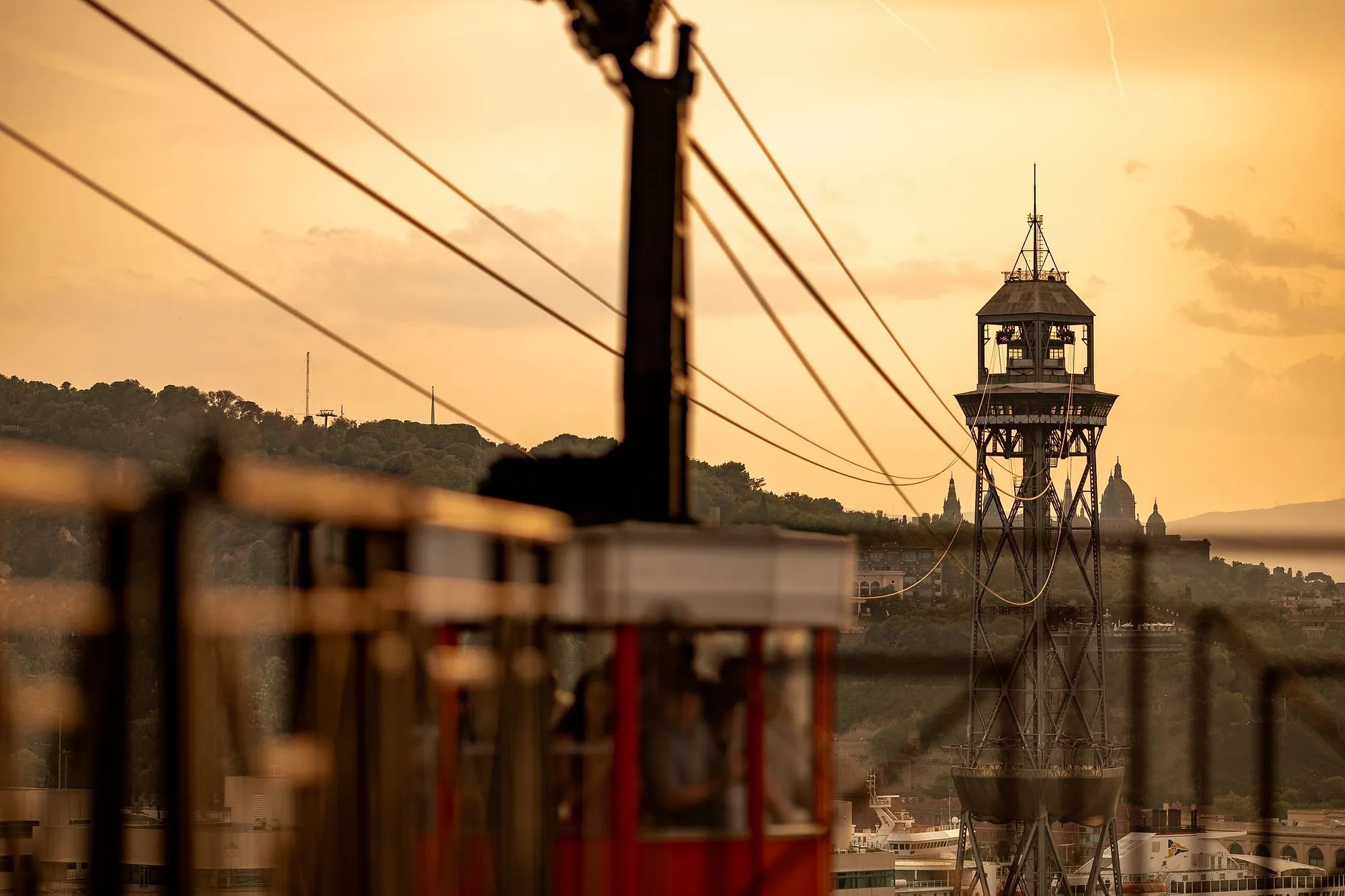
Walk up from Plaça d’Espanya to the museum and you are on a Grand Prix circuit. Nothing tells you so. There is no plaque, no marking on the road, and no line in the municipal street register.
But the encyclopaedia is quite specific about the beginning.
1933, and it started as a road
The road that encircles the central core of the Exposition was converted in 1933 into a motor-racing circuit when the Penya Rhin began car races there, on the Passeig dels Muntanyans up to the Palau Nacional, on a leafy route, over bridges, and as far as the old Municipal Stadium of Montjuïc.
Four years after the 1929 exposition closed, its access roads found a second use.
Read the route in that sentence, because you can walk it. Up the Muntanyans, past the Palau Nacional — the museum — and on to the stadium that is now the Olympic one. Over bridges, through trees, on public roads with the city’s monuments as scenery.
It is the same trick as everything else on this hill. The mountain was quarried, and the holes became gardens and a theatre. A fair was held, and the pavilions became museums and theatres. Roads were built to move visitors between exhibition palaces, and somebody looked at them and saw a racetrack.
Four Grand Prix, and not consecutive
The Spanish Grand Prix came to Catalonia at Pedralbes in 1951 and 1954. Then, in the encyclopaedia’s own list:
the Montjuïc one (1969, 1971, 1973, 1975)
and, from 1991, Montmeló, annually.
Four editions, in odd years. Not seven, not every year. The encyclopaedia gives no reason for the gaps and we are not going to supply one — but if you see this written as a continuous run from 1969 to 1975, the writer has copied rather than checked.
The club that brought it was the Reial Automòbil Club de Catalunya, whose own entry says it took an interest in Formula One, which it brought to the Montjuïc circuit (1969-75).
And it was not only Formula One. The same encyclopaedia records that Montjuïc also ran Formula 2 and Formula 3 through the sixties and seventies, and that the Fórmula 1.430 — created by the Spanish motorsport federation together with SEAT in 1970, for small single-seaters — raced at Montjuïc and at Calafat.
For roughly forty years, on and off, this park was a motor-racing venue.
The ending, which is missing
Here is where this page stops being a history and becomes an observation about records.
We looked in four encyclopaedia entries that describe the circuit — the mountain, Formula One, the RACC, and the circuit that replaced it. None of them gives a closing date. None of them gives a reason.
We looked in the municipal street register, which is where Barcelona explains its own place names and is usually voluble about anything that happened on a street. The Avinguda de l’Estadi, one of the main straights, is explained in five words: it leads to the Montjuïc stadium. The Avinguda dels Montanyans, where the 1933 races began, is explained by the fact that it is high up. Motor racing appears nowhere.
The only acknowledgement that the circuit ended at all is oblique, and it is in the entry for somewhere else. The Circuit de Barcelona-Catalunya at Montmeló, it says, was
conceived as a substitute for the old Circuit de Montjuïc of Barcelona
— construction delayed until 1986, first stone 24 February 1989, opened 1991.
A replacement, for something the same encyclopaedia never says stopped.
Why we are not telling you the rest
You will find, in five seconds, an account of what happened at the 1975 Spanish Grand Prix on this hill. It is well documented by people who specialise in motorsport history, and we have no reason to doubt them.
We are not repeating it here, for two reasons that are the same reason.
The first is the rule this journal runs on: we cite institutions that would be accountable for what they publish, and where they are silent we say they are silent rather than borrowing a version we cannot stand behind. That rule is worth nothing if we suspend it for a good story.
The second is that people died. That is precisely the kind of subject on which a walking-tour company should either have a primary source in its hand or keep quiet.
So: the institutions of this city record that Formula One raced here four times and that a replacement circuit was built forty kilometres away. They do not record the ending. That silence is itself the interesting fact, and it is a fair thing to point at while standing on the road.
What is left, and where to look for it
The roads. The Passeig dels Muntanyans, the Avinguda de l’Estadi, the Passeig de Santa Madrona, the Avinguda del Marquès de Comillas — the 2014 planning modification that governs the whole mountain defines its own perimeter by naming these streets one after another, and the shape they draw is broadly the shape of the track.
And an admission in the planning law. Among the stated aims of that modification, alongside identifying Montjuïc as a parc equipat and protecting its open spaces:
to propose a future mobility model, reducing the excess of urbanised roadway that exists.
An excess of built road, on a mountain that is legally a park. The document does not say where the excess came from, and it does not have to. Two generations of visitors have been walking up a motor-racing circuit to look at Romanesque frescoes.
One number for scale, from the other end of that history. The city is replacing the 22 escalators that carry people up this hill — 7.8 million euros, finishing in the first quarter of 2026 — and it says that 30 million escalator uses are recorded here every year. The mountain that once moved people around it at two hundred kilometres an hour now moves them at half a metre a second, and only the second figure is published.
Standing on it
Do this once, on the way up: stop where the Avinguda de l’Estadi bends above the Olympic ring, look at how wide the carriageway is and how little traffic uses it, and notice the crash-barrier geometry of the curve. Parks are not built like that.
Then keep walking, because everything else on this hill is older and stranger — the quarries, the Jewish necropolis, the castle, the Fossar de la Pedrera.
Our Montjuïc walk is on those, Tuesday and Thursday afternoons, two and a half hours. We are closed on 25 December and 1 January. And if you want the argument for coming up at all, it is here, along with why this is the one part of Barcelona locals have not walked away from.
Where this comes from
- MontjuïcGran Enciclopèdia CatalanaThat «la carretera que envolta el nucli central de l'Exposició fou convertida el 1933 en circuit automobilístic quan la Penya Rhin hi inicià les curses d'automòbils al passeig dels Muntanyans fins al Palau Nacional per un recorregut frondós, sobre ponts, i fins a l'antic Estadi Municipal de Montjuïc». The same entry gives the mountain as 192 metres, describes the cliff produced by a fault that continues underwater at the Morrot, and notes that the old quarries and the modern development of the hill — «en especial a partir de l'Exposició Internacional de Barcelona del 1929 i dels Jocs Olímpics del 1992» — have greatly altered its appearance.
- fórmulaGran Enciclopèdia CatalanaThat Formula One came to Catalonia «per primer cop al Circuit de Pedralbes (1951, 1954), posteriorment al de Montjuïc (1969, 1971, 1973, 1975) i, des del 1991, el Circuit de Catalunya acull anualment el Gran Premi d'Espanya»; that «el Circuit de Montjuïc també organitzà curses de les fórmules 2 i 3 durant els anys seixanta i setanta»; and that the Fórmula 1.430, created by the Spanish motorsport federation and SEAT in 1970, ran small single-seaters at Montjuïc and Calafat.
- Reial Automòbil Club de CatalunyaGran Enciclopèdia CatalanaThat the club organised the first circuit race in Spain, later «s'interessà per la Fórmula 1, que portà al circuit de Montjuïc (1969-75)», and that under the presidency of Sebastià Salvadó it led the construction of a new permanent circuit.
- Circuit de Barcelona-CatalunyaGran Enciclopèdia CatalanaThat the Montmeló circuit was «pensat com a substitut de l'antic Circuit de Montjuïc de Barcelona», that construction was delayed until 1986 when Sebastià Salvadó reached the presidency of the RACC, that the first stone was laid on 24 February 1989 and that it opened in 1991. This is the only place the closure of the Montjuïc circuit is acknowledged, and it is acknowledged without a date or a cause.
- Normes urbanístiques de la Modificació del Pla general metropolità a l'àmbit de la muntanya de Montjuïc (PDF)Generalitat de Catalunya · DOGCArticle 1, which defines the scope by naming its perimeter street by street — including the Passeig de Santa Madrona, the Carrer de la Guàrdia Urbana and the Avinguda del Marqués de Comillas — and states that «la superfície global és de 3.379.728 m2»; and the stated aims of identifying the mountain as «un parc equipat» and of «plantejar un model de mobilitat futur, reduint l'excés de vialitat urbanitzada existent».
- Avinguda de l'EstadiAjuntament de Barcelona · Nomenclàtor de les vies públiquesThe street register's entire explanation of one of the circuit's main straights: «Condueix a l'estadi de Montjuïc». No mention of motor racing, in this entry or in the others along the route.
- Avinguda dels MontanyansAjuntament de Barcelona · Nomenclàtor de les vies públiquesThat the avenue is named «per la mateixa dedicació que el carrer de Montanyans» and is popularly known as the avinguda dels Muntanyencs because it is high on the mountain — with no reference to the races the encyclopaedia says began on it in 1933.
- El Parc de Montjuïc renova les seves escales mecàniques per millorar l'accessibilitat (24/10/2024)Ajuntament de Barcelona · Servei de PremsaThat the replacement of the 22 escalators began on 24 October 2024 with a budget of 7.8 million euros, of which 3.6 million from Next Generation funds, promoted by Barcelona de Serveis Municipals and due to finish in the first quarter of 2026; and that «cada any es registren 30 milions d'usos de les escales mecàniques per part dels visitants que accedeixen al Parc de Montjuïc».
Everything above that carries a date, a figure or a name is checked against these before it is published. Where we could not find a source, the page says so.
Quick answers
- Was there really a racing circuit on Montjuïc?
- Yes, on ordinary park roads. The Gran Enciclopèdia Catalana says the road encircling the central core of the 1929 exposition «fou convertida el 1933 en circuit automobilístic quan la Penya Rhin hi inicià les curses d'automòbils al passeig dels Muntanyans fins al Palau Nacional per un recorregut frondós, sobre ponts, i fins a l'antic Estadi Municipal de Montjuïc».
- Did Formula One race on Montjuïc?
- Four times, and not consecutively. The encyclopaedia lists the Spanish Grand Prix at Pedralbes in 1951 and 1954, «posteriorment al de Montjuïc (1969, 1971, 1973, 1975)», and at the Circuit de Catalunya annually since 1991. Anyone writing that it ran every year from 1969 to 1975 has not checked; it alternated.
- Who brought Formula One to Montjuïc?
- The Reial Automòbil Club de Catalunya. Its encyclopaedia entry says it took an interest in Formula One, «que portà al circuit de Montjuïc (1969-75)». The same club later led the construction of the permanent circuit that replaced it.
- When did the Montjuïc circuit close, and why?
- We could not establish either from an institutional source, and we are not going to fill the gap. Four separate encyclopaedia entries describe the circuit and none gives a closing date or a reason; the municipal street register keeps no trace of it at all. What is documented is oblique: the Circuit de Barcelona-Catalunya at Montmeló was «pensat com a substitut de l'antic Circuit de Montjuïc de Barcelona».
- Why won't you say what happened in 1975?
- Because the sources that describe it are not the kind this journal cites, and the subject involves people who died. Motor-racing history is well documented elsewhere by people who specialise in it. When the institutions of this city have nothing on the record, our answer is that they have nothing on the record — not a version borrowed from somewhere we cannot stand behind.
- Can you still see the circuit?
- You walk on it. The route ran along the Passeig dels Muntanyans up to the Palau Nacional and on to the old municipal stadium, and those roads are the ones you use today to reach the MNAC and the Olympic ring. There is no plaque, no marking and no mention in the street register.
- Is there anything left of it in the paperwork?
- Only by implication, and it is the best line in the whole story. The 2014 planning modification that governs the mountain sets as one of its aims «plantejar un model de mobilitat futur, reduint l'excés de vialitat urbanitzada existent» — to reduce the excess of built roadway. Nobody says where the excess came from.
The tours this piece is about
More in the journal
Montjuïc
- The floor of this terrace is 420 square metres of scrap, and it is not by the man everyone credits
- The city tells you who carved the cat and will not tell you why the fountain is called that
- A good part of Barcelona is built on sand that this hill put there
- How high is Montjuïc? No institution in Barcelona will tell you
- The old city is made of the hill, and the hill has the holes to prove it
- The Magic Fountain was switched off for two and a half years, and the city's own spec sheet still describes a machine that no longer exists