
Gaudí
Gaudí worked on the Ciutadella park, and the encyclopaedia cannot agree on whether he was still a student
The earliest Gaudí in Barcelona is in a public park, it is free, and almost nothing about it can be stated with a source. Here is exactly where the evidence stops.
The oldest work by Antoni Gaudí that you can walk up to in Barcelona is probably in a public park, costs nothing, and nobody will tell you which part of it is his.
That is not a tease. It is the actual state of the evidence, and this page is about where the evidence stops — because the gap gets filled, confidently, by almost everyone who writes about it.
What is actually documented
The Gran Enciclopèdia Catalana, in its entry for Josep Fontserè i Mestre, the man who made the Parc de la Ciutadella:
He had as assistants the sculptors Joan Flotats and Llorenç Matamala and the architecture students Cristòfor Cascante and Antoni Gaudí.
That is the whole documented fact. Gaudí was one of four named assistants on Fontserè’s park.
The encyclopaedia also lists what Fontserè made there: the cascade (1874-82), the dairy (1882) and the umbracle (1883).
And in the entry for Gaudí himself, the collaboration appears in a list of his earliest work — alongside the street lamps, a flower stall with a kiosk and a urinal, and the factory and workers’ housing he built for the Mataró cooperative.
The contradiction, which is genuinely useful
Look again at the two entries.
Fontserè’s entry calls Gaudí one of the architecture students.
Gaudí’s entry places the collaboration inside a first period defined as running from 1878 — the year he qualified — until 1882.
Same encyclopaedia. One says student, the other says qualified architect. Since Fontserè’s cascade is dated 1874-82 and the park was designed in 1873, both can be partly right — a long project that began while Gaudí was a student and ended after he was not. But no source we opened says that, and it is exactly the kind of tidy reconciliation this journal exists to refuse.
So: nobody has published the years of Gaudí’s involvement. The 1875-1882 span you will see quoted is not something we could verify.
What we specifically could not confirm, and are not going to write
⚠️ That Gaudí calculated the structure of the water tank — the dipòsit de les aigües, now a university library. This is the claim that appears in nearly every account, usually as a student did the sums for it. Two things about it. First, no source we opened supports it. Second, and more telling, the encyclopaedia enumerates Fontserè’s works in the park one by one and the water tank is not in the list.
That is not proof it is false. An absence of support is not a refutation, and we have publicly corrected ourselves for treating one as the other — twice, on this site, for exactly this mistake. But it does mean the claim currently rests on nothing we can hand you.
⚠️ The balustrade and the park gates. Also unconfirmed.
⚠️ The cascade. Fontserè’s, on the encyclopaedia’s list. What Gaudí did or did not contribute to it is not stated anywhere we could open.
If that is unsatisfying, it should be. The alternative is a paragraph that reads well and cannot be checked, which is how twenty false facts got onto this site in the first place.
Why Fontserè is the interesting one anyway
The encyclopaedia does something unusual in his entry. It says he qualified as a mestre d’obres — a master builder — in 1853, and then adds:
his academic competence was often denied.
A master builder is not an architect. It was a real and contested professional boundary in nineteenth-century Catalonia, and Fontserè spent his career on the wrong side of it while building one of the largest public works in the city.
And he won that work in a competition, in 1870, for a park on the site of the fortress the Bourbons built to hold the city down — a fortress whose own official record cannot agree with itself about whether 1869 was the year it was demolished or the year the land was handed over on condition that only gardens go on it.
So the site is: a citadel that flattened a neighbourhood, replaced by a park designed by a man the profession would not fully accept, with a future genius carrying his drawings. That is a better story than a disputed water tank.
What to do when you are there
Go for the cascade and know whose it is. Fontserè’s, 1874-82. Stand in front of it and enjoy the fact that the most theatrical object in the park was made by the man whose academic competence was often denied.
Look at the umbracle and the dairy, 1883 and 1882, also his.
Do not go hunting for Gaudí’s contribution. You will find a lot of signs and a lot of certainty on the internet and nothing you can trace.
And put the park in its real sequence. It is the second thing on this ground: a fortress, then a park, then a world’s fair in 1888. The Born market and its excavation are five minutes away, and they are what the fortress destroyed.
Where this sits on a walk
The Ciutadella is at the sea end of the old city, past the Born and along from where the sea wall ran. It is a fifteen-minute walk from Plaça de Sant Jaume.
Our Gaudí walk runs every day, morning and evening, with an actor playing Gaudí — who is a good deal more honest about what he did and did not design than the internet is. The Gothic Quarter walk runs Monday and Wednesday afternoons. We are closed on 25 December and 1 January.
Where this comes from
- Josep Fontserè i MestreGran Enciclopèdia CatalanaThat Fontserè qualified as a «mestre d'obres» in 1853 and that «la seva competència acadèmica era sovint negada»; that he «tingué com a ajudants els escultors Joan Flotats i Llorenç Matamala i els estudiants d'arquitectura Cristòfor Cascante i Antoni Gaudí»; and that his works in the Parc de la Ciutadella were «la cascada (1874-82), la vaqueria (1882) i l'umbracle (1883)» — a list in which the water tank does not appear.
- Antoni Gaudí i CornetGran Enciclopèdia CatalanaThat Gaudí's first period runs «des del 1878 —any que es titulà— fins al 1882», is «marcada per la comunió de l'arquitecte amb l'ideari cooperativista», that «totes les obres d'aquells anys són de caire urbà i social», and that in them he «col·laborà amb Josep Fontserè al parc de la Ciutadella, projectà fanals —com els dos de la plaça Reial— i una parada de flors amb quiosc i urinari i construí la fàbrica i dos edificis d'habitatges […] la cooperativa L'Obrera Mataronense (Nau Gaudí)». The entry gives no years for the Ciutadella collaboration and does not describe him as a student.
- Ciutadella de BarcelonaGeneralitat de Catalunya · Inventari del Patrimoni Arquitectònic (Invarquit), fitxa 41153That the fortress was raised after 1714 «per sotmetre la ciutat», to a design by the engineer Jorge Próspero de Verboom, and that in 1869 the central government ceded the land on condition that nothing be built there but gardens — an account that the inventory's own fitxa 42298 contradicts by saying that in 1869 «es va enderrocar la Ciutadella».
Everything above that carries a date, a figure or a name is checked against these before it is published. Where we could not find a source, the page says so.
Quick answers
- Did Gaudí work on the Parc de la Ciutadella?
- Yes, as an assistant. The Gran Enciclopèdia Catalana's entry for Josep Fontserè i Mestre says he had as assistants «els escultors Joan Flotats i Llorenç Matamala i els estudiants d'arquitectura Cristòfor Cascante i Antoni Gaudí».
- What exactly did Gaudí do there?
- No source we opened says. The encyclopaedia names him as an assistant and stops. Everything more specific that circulates — the cascade, the balustrade, the park gates, the structural calculations for the water tank — we could not confirm, and we would rather leave the question open than fill it in.
- Was Gaudí a student or already an architect?
- The encyclopaedia says both, in two different entries. Fontserè's entry calls him one of «els estudiants d'arquitectura». Gaudí's own entry places the collaboration inside a first period running «des del 1878 —any que es titulà— fins al 1882» — that is, after he qualified. The two entries describe different men on the same scaffold.
- Did Gaudí design the water tank that is now a university library?
- Not on any source we could open, and there is an indication against. The encyclopaedia lists Fontserè's works in the park one by one — «la cascada (1874-82), la vaqueria (1882) i l'umbracle (1883)» — and the water tank is not among them. Gaudí's own entry does not mention it either. That is not proof of a negative; it is an absence of support, and we report it as such.
- Who was Josep Fontserè?
- A master builder, not an architect, and the encyclopaedia is pointed about it: it says he qualified as a «mestre d'obres» in 1853 and that «la seva competència acadèmica era sovint negada». He won the competition for the Parc de la Ciutadella and designed the park on the site of the demolished fortress.
- So is it worth going to look?
- For the park, absolutely — it is free, it is where the fortress that flattened a neighbourhood stood, and the cascade is one of the great pieces of nineteenth-century Barcelona. For Gaudí spotting, go with the honest version: he was here, young, working for somebody else, and nobody can currently tell you which stone is his.
The tours this piece is about
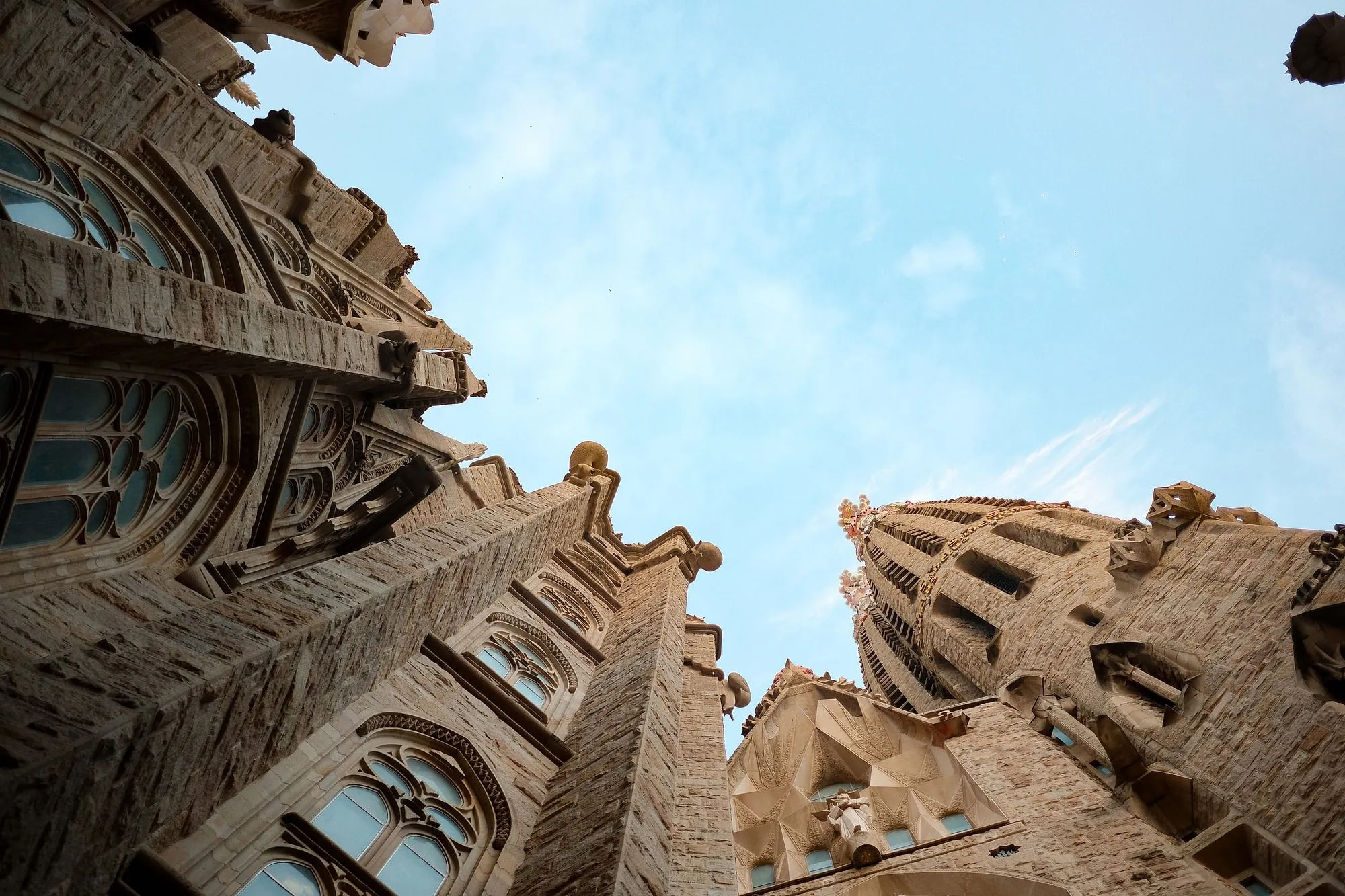
Gaudí comes alive
You will recognise the guide because he will be Antoni Gaudí.
- How long it lasts
- 1 h 30
- Runs in
- EN · ES · CA
- Price
- 30 €
Never more than 15 people
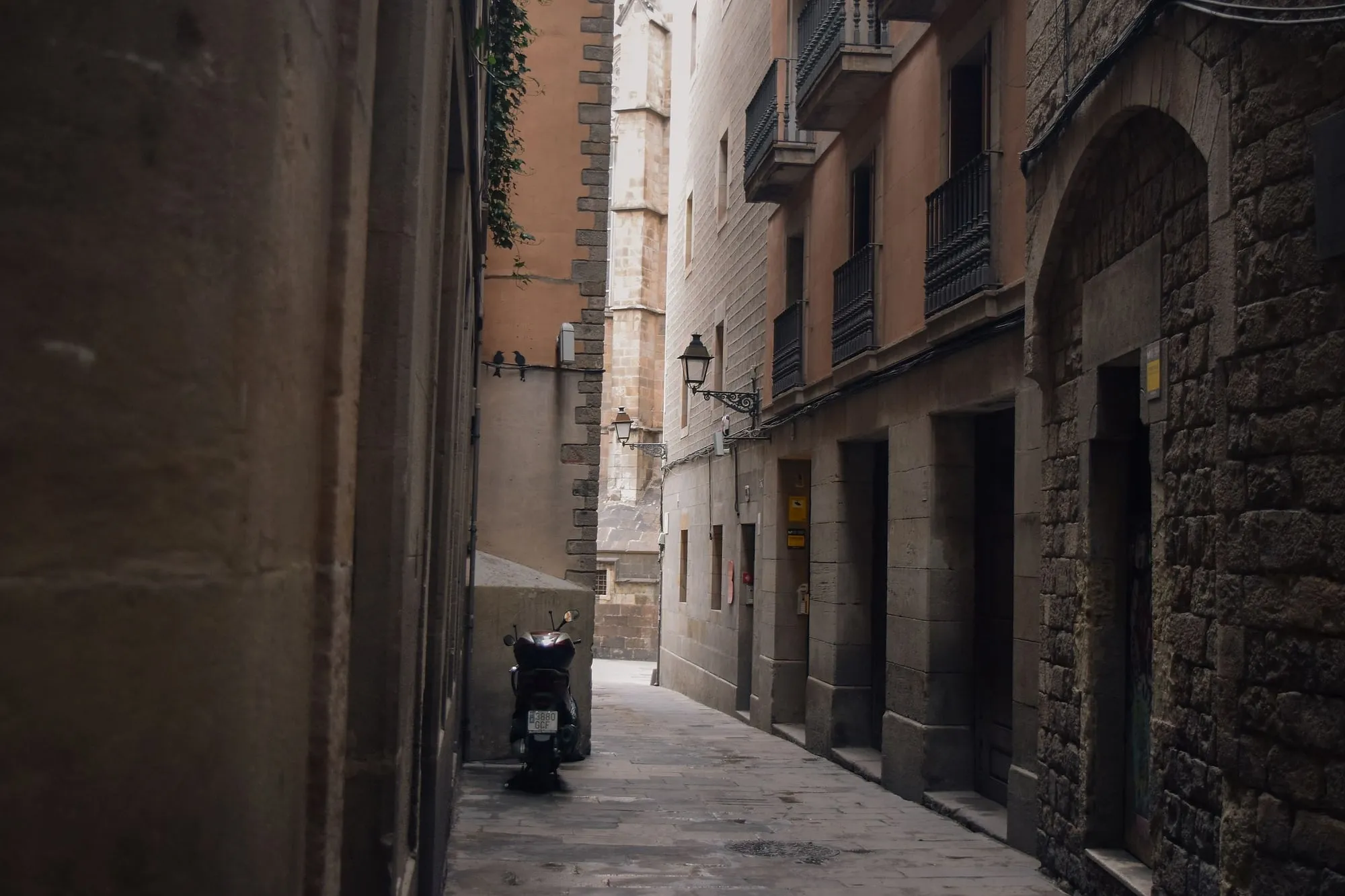
The Gothic Quarter: a neighbourhood that invented itself
Barcelona's most photographed bridge dates from 1928.
- How long it lasts
- 2 h
- Runs in
- EN · ES · CA
- Price
- 15 €
Never more than 20 people
More in the journal
Gaudí and Modernisme
- The city's own Gaudí list has things on it that no tour goes to
- The city that made him has nothing he built, and says so on its own website
- Casa Calvet and Bellesguard: the two Gaudís that UNESCO turned down
- Gaudí designed street lamps for the whole old city, and the city took delivery of four
- UNESCO listed three Gaudí buildings in 1984 and four more in 2005, and its own pages cannot agree on that
- Things you will be told about Gaudí that are not true