
Gaudí
Gaudí designed street lamps for the whole old city, and the city took delivery of four
Before the churches and the rich men's houses, Gaudí was doing municipal ironmongery — and the city's own art catalogue says what happened when it edited him.
There are four Gaudí street lamps in Barcelona. Most people know about two of them, photograph those two, and never learn that the other two are a documented argument between an architect and a municipality — with the municipality’s own verdict written down.
The pair everyone photographs
Two candelabra with six arms each, in Plaça Reial, either side of the fountain.
The municipal art catalogue explains a detail of placement that turns them from decoration into design. They stand on the transverse axis of the rectangle, not the long one, because the main way into the square is from the Rambla, along carrer Colom. Come in that way and the lamps and the fountain read as a single unit: the radial spread of the six arms answering the circular basins of the fountain.
They completed the square’s second arrangement, begun in 1876 with the fountain’s installation.
The iconography is not vague. At the foot of the column, the arms of the city, incised in the iron and painted. At the top, two coiled serpents, and above them a winged helmet.
The snakes come from the caduceus, symbol of the god Mercury, and the winged helm is also part of that divinity’s attributes. Mercury, messenger of the gods, is considered the god of commerce, which is why he is related to the city of Barcelona.
A young architect being given a lamp to design put the god of trade on top of it, over the shield of a merchant city, at the entrance to its newest square. That is a thesis, not an ornament.
And two details the catalogue adds that most accounts miss: the lamps are frankly eclectic, with a mechanistic flavour the catalogue compares to Domènech i Montaner or the early Josep Vilaseca — and they were polychrome, described as a fairly strange resource in pieces of this type. Painted street lamps. Look at the base.
He wanted them everywhere
Gaudí was not designing two lamps. He was designing a system for the city and got a pilot.
The catalogue lists what he had in mind: the lamps should stand in front of the most significant buildings of the city, such as the Ajuntament, the Llotja, the Duana Vella, or even the Cathedral, and in the busiest public spaces of old Barcelona — plaça de l’Àngel, plaça del Pi, Sant Josep Oriol, Urquinaona and the Portal de l’Àngel.
His stated purpose was double: more light at those points, and to enhance them through the beauty of the lamps.
He also proposed that Plaça Reial should have four, forming a square around the fountain, so that the composition worked for people arriving from carrer Ferran through the passatge Madoz as well as from the Rambla.
He got two, in one square.
Eleven years later, the second pair — and the edit
At Pla de Palau, in front of the old customs house, there are two more, and they look wrong to anyone who knows the first pair.
They are, in the catalogue’s words, a simplified version of the six-armed lamps Gaudí designed for the plaça Reial. Project 1889, execution 1890. Eleven years after the first pair.
What changed:
Three arms instead of six.
No winged helmet and no caduceus — Mercury is gone.
The catalogue is explicit about whose decision that was: the Ajuntament’s decision to eliminate these ornaments, which were the ones that crowned the original lamps, obliged Gaudí to introduce a new finishing element —
a kind of upturned crown from which two snake heads emerge.
He salvaged what he could. The crown echoes the rounded form of the helm; the reptile heads recall the two coiled serpents of the caduceus. It is a designer making the best of a client’s cut.
And then the sentence that makes this whole page worth writing. The city’s own catalogue of its own public art, on its own commission:
Despite the architect’s efforts, the result of these simplifications is rather poor.
Barcelona commissioned a work from Gaudí, stripped its iconography, and then wrote in its permanent record that the outcome was rather poor. We have looked at a lot of municipal documents for this site and that is the most self-critical sentence we have found in any of them.
And the lamps that are not there
The catalogue adds a piece of vanished city: there were originally two more at the lower end of Pla de Palau, roughly where the nautical faculty now stands. They
marked the entrance to the Barceloneta neighbourhood, creating a new “portal” that replaced the demolished Portal de Mar of the wall.
That is a remarkable thing to design. The sea wall had gone; its gate had gone; and the city put up two lamps to stand where a gate used to be, so that you still knew you were crossing into the Barceloneta.
Also worth noting from the same record: in the memoir accompanying the Plaça Reial project, Gaudí had already recorded his intention that the lamps should stand in front of significant buildings, and among them he cited the Govern Civil — which is the use the Duana Vella had until relatively recently. He named the building eleven years before he furnished it.
What we will not say about them
⚠️ That they were his first commission. You will read it constantly. The Gran Enciclopèdia Catalana places them in a first period from 1878 — the year he qualified — until 1882, and calls them the two in the plaça Reial. It gives no separate date, and it does not use the superlative. We have retracted enough Gaudí facts to be careful with this one.
⚠️ An exact inauguration date, or the foundry that cast them. Both circulate. Neither appears on the catalogue records we opened. If we find them on an institutional page we will add them and say where.
What the encyclopaedia does say is more interesting than the superlative anyway: that whole first period is marked by the architect’s communion with the cooperativist ideal, and all the works of those years are urban and social in character — the Ciutadella park work with Fontserè, the street furniture, a flower stall with a kiosk and a urinal, and the factory and housing he built for the workers’ cooperative L’Obrera Mataronense.
Before the expiatory temple and the industrialists’ houses, Gaudí was doing municipal ironmongery and a public toilet.
How to see all four in twenty minutes
Start at Plaça Reial, from the Rambla end, through carrer Colom — the way the composition was designed to be entered. Look at the base for the city’s shield; look at the top for the helmet and the snakes. The square itself has a separate set of surprises.
Walk down to the sea and turn left along Pla de Palau. Find the two three-armed lamps in front of the old customs house. Count the arms. Look at the finial: the upturned crown, the two snake heads, no helmet.
Then stand between them and imagine the two that are gone, at the far end, marking a gate that was already demolished.
And notice what it teaches you about the rest. Every Gaudí building you will visit went through a version of this — a client, a budget, an edit. Some of them lost more than a helmet.
Where this sits on a walk
The lamps are the cheapest Gaudí in Barcelona: outdoors, free, in two squares eight minutes apart, and they are the only place you can see the same designer’s hand before and after being overruled.
Our Gaudí walk runs every day, morning and evening, with an actor playing Gaudí throughout; the Gothic Quarter walk runs Monday and Wednesday afternoons and passes Plaça Reial’s end of the story. We are closed on 25 December and 1 January.
Where this comes from
- Canelobres de la plaça Reial — Antoni Gaudí i CornetAjuntament de Barcelona · Catàleg d'Art Públic, fitxa 1383That they are «els dos fanals de sis braços dissenyats per Antoni Gaudí per a la plaça Reial», dated 1879 in the record heading, completing the second arrangement of the square's central space begun in 1876 with the installation of the fountain; that they sit on the transverse axis because the main access is from the Rambla by carrer Colom; that «Gaudí també va presentar la possibilitat que els fanals fossin quatre i formessin un quadrat al voltant de la font»; that his idea was to place them «davant dels edificis més significatius de la ciutat, com ara l'Ajuntament, la Llotja, la Duana Vella, o fins i tot la Catedral», and in the busiest public spaces of old Barcelona, «la plaça de l'Àngel, la del Pi, Sant Josep Oriol, Urquinaona, i Portal de l'Àngel»; that the base carries the city arms incised in iron and painted, and the top «és coronada per dues colobres enroscades sobre de les quals se situa un casc alat»; that «les serps provenen del caduceu, símbol del déu Mercuri» and that «Mercuri, missatger dels déus, és considerat el déu del comerç, per la qual cosa es relaciona amb la ciutat de Barcelona»; and that the lamps are eclectic in character, with a «regust ‘mecanicista’» comparable to Domènech i Montaner or Josep Vilaseca in his early period, and with polychromy, «un recurs força estrany en aquest tipus de peces». Record by Joan Molet.
- Fanals del pla de Palau — Antoni Gaudí i CornetAjuntament de Barcelona · Catàleg d'Art Públic, fitxa 1384That the two lamps in front of the Duana Vella are «una versió simplificada dels fanals de sis braços que Gaudí va dissenyar per a la plaça Reial», with a project of 1889, execution in 1890 and a restoration in 1967; that there were initially two more «a la part baixa de la plaça, aproximadament on ara hi ha la Facultat de Nàutica», which «marcaven l'entrada al barri de la Barceloneta, creant un nou ‘portal’ que substituïa l'enderrocat del Portal de Mar de la muralla»; that in the project memoir for the Plaça Reial lamps Gaudí had already recorded his intention that they should stand in front of significant buildings, «entre els quals cita precisament, el Govern Civil»; that they have «la meitat de braços, tres en lloc de sis, i sense els atributs, casc alat i caduceu, del déu Mercuri»; that «la decisió de l'Ajuntament d'eliminar aquests ornaments… va obligar a Gaudí a introduir un nou element de remat, que consisteix en una mena de corona capgirada d'on sorgeixen dos caps de serp»; and the catalogue's own judgement, «Tot i els esforços de l'arquitecte, el resultat d'aquestes simplificacions és més aviat pobre».
- Antoni Gaudí i CornetGran Enciclopèdia CatalanaThat Gaudí's first period runs «des del 1878 —any que es titulà— fins al 1882», that it is marked by his communion with the cooperativist ideal and that all the works of those years are urban and social in character, and that in them he «projectà fanals —com els dos de la plaça Reial— i una parada de flors amb quiosc i urinari». The entry gives no separate date for the lamps, calls them two, and does not describe them as a first commission.
Everything above that carries a date, a figure or a name is checked against these before it is published. Where we could not find a source, the page says so.
Quick answers
- How many Gaudí street lamps are there in Barcelona?
- Four, in two pairs, and they are not the same design. Two six-armed candelabra in Plaça Reial, and two three-armed ones at Pla de Palau in front of the old customs house. The municipal art catalogue records that there were originally two more at the lower end of Pla de Palau, roughly where the nautical faculty now stands.
- Are the Plaça Reial lamps and the Pla de Palau lamps the same?
- No, and the difference is the story. The Pla de Palau pair is «una versió simplificada dels fanals de sis braços que Gaudí va dissenyar per a la plaça Reial»: half the arms — three instead of six — and stripped of the winged helmet and the caduceus of Mercury. The catalogue dates the first pair 1879 and gives the second a project of 1889 and an execution of 1890.
- What do the snakes on the Plaça Reial lamps mean?
- Commerce. The catalogue says the serpents come from the caduceus, the symbol of Mercury, and that the winged helm is also among that god's attributes: «Mercuri, missatger dels déus, és considerat el déu del comerç, per la qual cosa es relaciona amb la ciutat de Barcelona».
- Why does the Pla de Palau pair have a crown instead?
- Because the ornaments were removed and something had to go on top. The catalogue says the Ajuntament's decision to eliminate the winged helmet and caduceus «va obligar a Gaudí a introduir un nou element de remat, que consisteix en una mena de corona capgirada d'on sorgeixen dos caps de serp» — an upturned crown recalling the round helm, with two snake heads recalling the caduceus.
- What does the city think of the result?
- It is unusually blunt about it in its own catalogue: «Tot i els esforços de l'arquitecte, el resultat d'aquestes simplificacions és més aviat pobre». Despite the architect's efforts, the result of these simplifications is rather poor. That is Barcelona, marking its own homework.
- Did Gaudí want more of them?
- Many more. The catalogue says his idea was to place these luminaires in front of the city's most significant buildings — the Ajuntament, the Llotja, the old customs house, even the cathedral — and in the busiest public spaces of the old city: plaça de l'Àngel, plaça del Pi, Sant Josep Oriol, Urquinaona and the Portal de l'Àngel. He also proposed that the Plaça Reial pair should be four, forming a square around the fountain.
- Were these his earliest works?
- They belong to his earliest phase, and we will not put it more strongly than the sources do. The Gran Enciclopèdia Catalana places the Plaça Reial lamps in a first period running from 1878, the year he qualified, to 1882, characterised by urban and social work. No institution we have found calls them his first commission, so neither do we.
The tours this piece is about
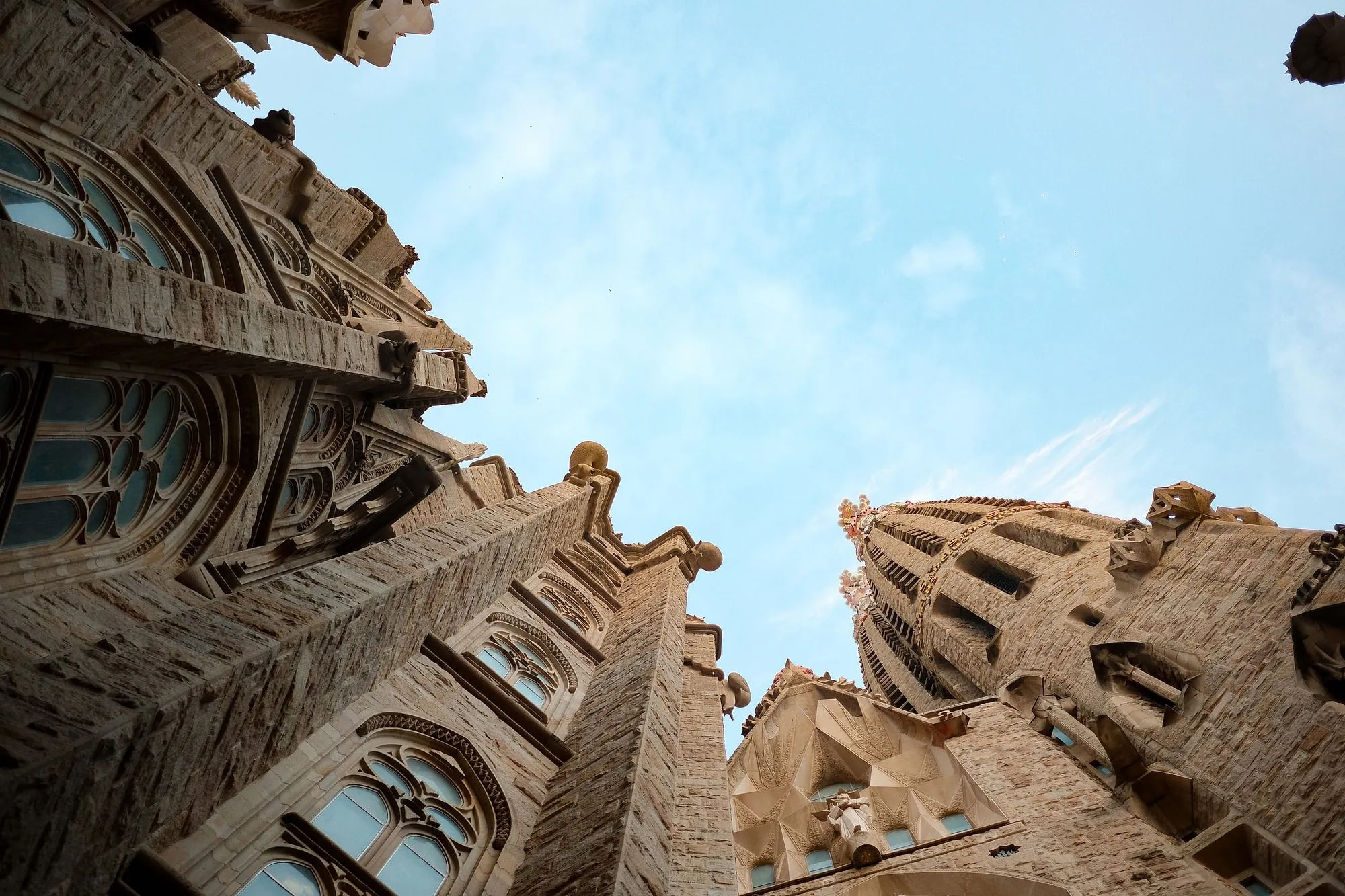
Gaudí comes alive
You will recognise the guide because he will be Antoni Gaudí.
- How long it lasts
- 1 h 30
- Runs in
- EN · ES · CA
- Price
- 30 €
Never more than 15 people
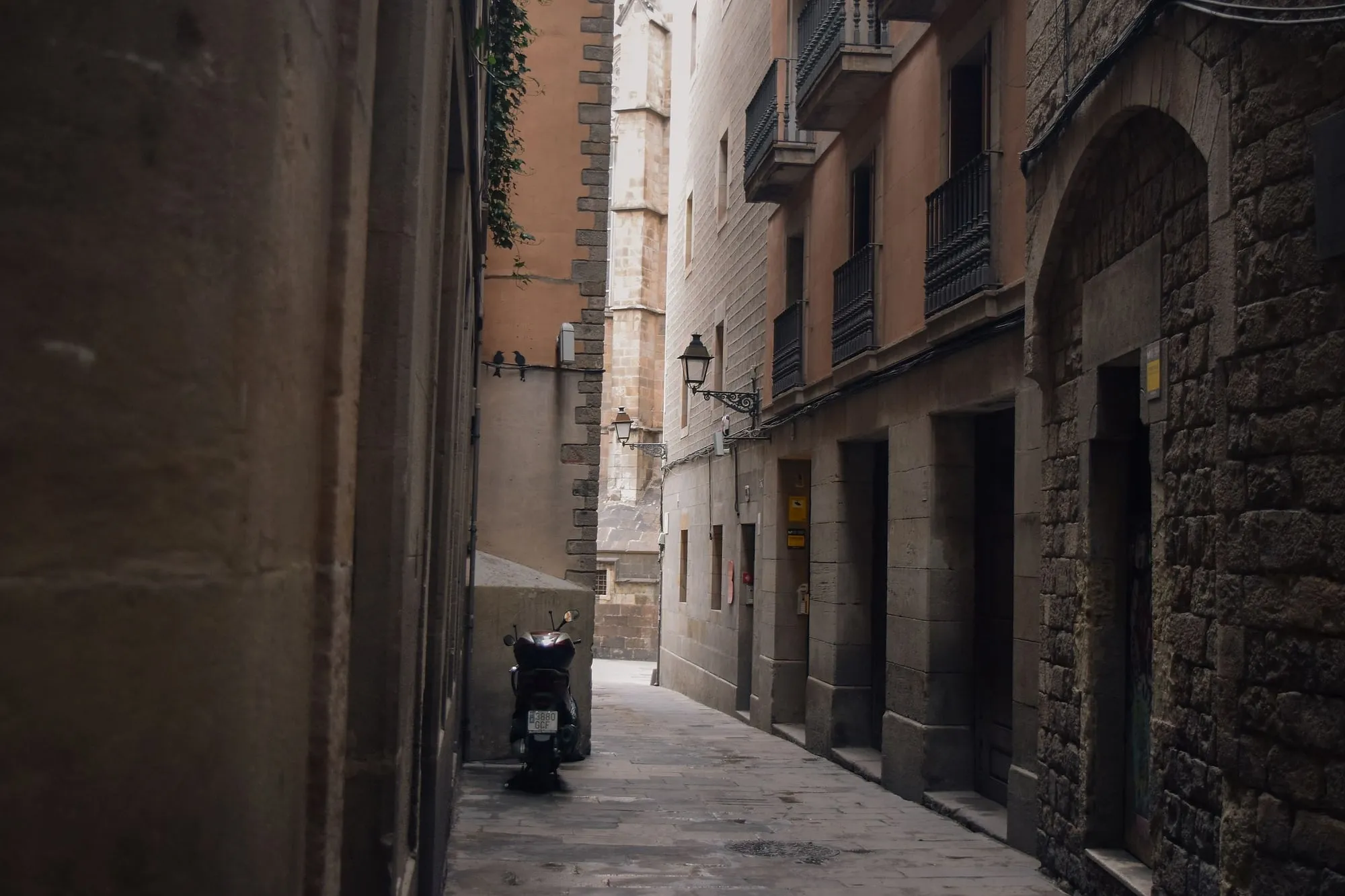
The Gothic Quarter: a neighbourhood that invented itself
Barcelona's most photographed bridge dates from 1928.
- How long it lasts
- 2 h
- Runs in
- EN · ES · CA
- Price
- 15 €
Never more than 20 people
The Gothic Quarter after dark
By day it is a crowded stage set. By night it is a narrow city.
- How long it lasts
- 2 h
- Runs in
- EN · ES · CA
- Price
- 18 €
Never more than 20 people
More in the journal
Gaudí and Modernisme
- The city's own Gaudí list has things on it that no tour goes to
- The city that made him has nothing he built, and says so on its own website
- Casa Calvet and Bellesguard: the two Gaudís that UNESCO turned down
- UNESCO listed three Gaudí buildings in 1984 and four more in 2005, and its own pages cannot agree on that
- Gaudí worked on the Ciutadella park, and the encyclopaedia cannot agree on whether he was still a student
- Things you will be told about Gaudí that are not true