
Gaudí
The city that made him has nothing he built, and says so on its own website
People go to Reus expecting a Gaudí building. There is not one, and the city says so plainly. The buildings are somewhere else, and one of them ends with the architect resigning and telling the diocese exactly what he thought of them.
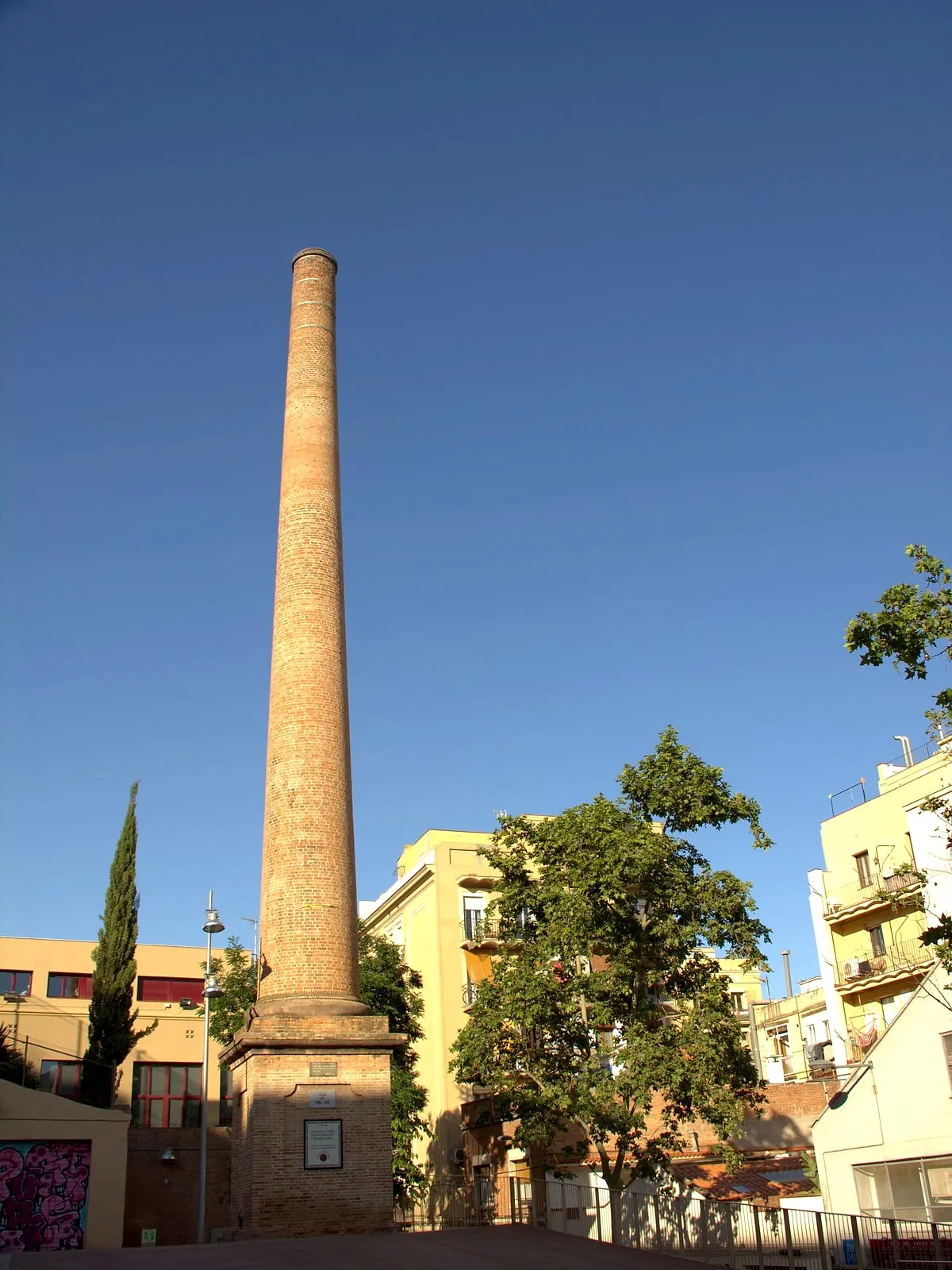
Every year people take the train an hour down the coast to Reus because it is where Gaudí came from, and go looking for a Gaudí building.
There is not one. The city says so itself, on its own tourism site, in a subordinate clause it does not try to hide:
Malgrat que la ciutat no compta amb cap obra de l’arquitecte, Reus conserva la memòria d’Antoni Gaudí…
Although the city does not have a single work by the architect, Reus preserves the memory of Antoni Gaudí.
We have rarely seen an official tourism page tell the truth so quietly against its own interest, and it deserves saying out loud, because half the internet implies otherwise.
So where did he actually build, outside Barcelona?
Three places in Catalonia and three outside it.
In Catalonia: the crypt at Santa Coloma de Cervelló, twenty kilometres out — the Colònia Güell — and, earlier and much less known, Mataró.
Outside Catalonia: the institution that runs one of them states the count for us. The Episcopal Palace at Astorga, Casa Botines in León and El Capricho at Comillas describe themselves collectively as those responsible for “Gaudí’s only three buildings outside Catalonia”. Three, and they are in León, León and Cantabria.
Mataró, where the arches start
This is the part almost nobody knows, and it changes the shape of his career.
Mataró’s tourist information says his three first buildings were all for the same client: the Sociedad Cooperativa La Obrera Mataronense, a workers’ cooperative. They were the house of Salvador Pagès in 1878 — which no longer exists — an aedicule of latrines around 1878-1880, and, in 1883, a cotton bleaching shed.
The shed is the one that matters, and here is why, in the city’s own words: it is where the architect experiments for the first time with parabolic arches.
Then the sentence that should be on a plaque somewhere:
If the Mataró cooperative had not existed, Gaudí would not have developed the formulas he later used to design the attics of La Pedrera or the famous model of the church at the Colònia Güell.
Two hundred and seventy arches over Passeig de Gràcia, and a hanging string model that changed how a church could be built, and the line runs back to a shed where cotton was bleached, for a cooperative, at the very beginning. Why that shape does the work it does is how Gaudí’s buildings stand up.
His friendship with Salvador Pagès, one of the leading figures of the Catalan cooperative movement, is what got him the commission. The shed and the latrines survive; since November 2010 the shed has housed an art collection, and it was listed by the Spanish state in 1969 and by the Generalitat in 1982.
Astorga, the one he walked away from
The best story of the six, and it is entirely in the palace’s own published history.
In 1886, Juan Bautista Grau y Vallespinós, a native of Reus, took possession of the diocese of Astorga. On 23 December of that same year the old episcopal palace burned down.
The post of diocesan architect was vacant. The bishop proposed his fellow townsman. That is how a thirty-something Catalan ended up building a neo-Gothic granite palace in León: two men from Reus, one of whom had a fire on his hands.
The dates are precise and worth having. December 1888, Gaudí travels to Astorga to look at the site and the surrounding architecture. February 1889, the Ministry approves the project; the works go to public auction and are awarded to the contractor Policarpo Arias for 168,520 pesetas. 24 June 1889, the bishop’s feast day, the first stone.
Completion was planned for June 1894. The bishop died in 1893.
What follows, in the palace’s own phrasing, is that the works were paralysed “by the antagonism between Gaudí and the Diocesan Board”, and that he resigned as director architect, very angry at the treatment received. They record what he said on the way out:
Serán incapaces de acabarlo y de dejarlo interrumpido.
Which reads, awkwardly and memorably, as: they will be incapable of finishing it, and of leaving it unfinished. We are quoting it in the original because the translation on their own English page renders it differently, and because either way it is a man telling an institution that it lacks the competence even to abandon something properly.
In 1905 a later bishop tried to get him back. He would not come: the basilica had all of him by then. Ricardo García-Guereta finished the palace, on 12 October 1913, twenty years after Gaudí left it. During the Civil War it was used as barracks and Falange offices. Since 1964 it has been a museum.
What is actually in Reus, and why to go anyway
Reus is a good day out. Just not for the reason people think.
Casa Navàs, on the plaça del Mercadal, was built between 1901 and 1908 by Lluís Domènech i Montaner with the decorator Gaspar Homar, for a merchant couple, Joaquim Navàs and Pepa Blasco, who wanted a shop with a house over it and gave him a budget the city describes as almost unlimited. Reus claims it is the only modernista building in Europe that keeps its whole original interior — over two hundred square metres of stained glass, and nearly all the furniture. In 1938 a bomb took the corner tower off; as the second Catalan capital, Reus was among the most heavily bombed cities of the war.
Institut Pere Mata, also Domènech i Montaner, is a psychiatric hospital laid out in pavilions at the end of the nineteenth century. The Pavelló dels Distingits — where patients from wealthy families lived — is the part now open, and it is listed at the highest national level.
The Gaudí Centre on the same square is an interpretation centre, which is the honest word for it and the word Reus uses. And the city’s modernisme route runs to around eighty catalogued buildings, each with a plaque giving the name, the architect and the year.
So the shape of the day is: two great Domènech i Montaner interiors, a route with plaques, a childhood, and a vermouth. Set out that way it is worth the train. Set out as “Gaudí’s home town” it produces the specific disappointment of walking round looking for something that was never there. The other architects of that generation, in Barcelona, are in modernisme beyond Gaudí.
Where he was from, and what he took with him
The basilica’s own booklet is compact about the beginning: born in Reus in 1852, “then the second-largest city in Catalonia”; primary school at the Escola Pia; and — the detail that explains half his buildings — introduced to the trades at his father’s potsmith workshop, a shop where sheet metal is beaten into vessels.
Barcelona in 1869, the School of Architecture from 1873, the degree in 1878. He was, the booklet says, “an inconsistent student, but stood out in subjects like projects, drafting and calculus”. And it records what the head of the School said as he handed over the diploma:
I do not know if we have awarded this degree to a madman or to a genius; only time will tell.
One qualification we owe you, since this page turns on where he was from. The basilica says Reus and so does Reus. The Holy See’s decree of April 2025 — which we cite on how he died and which is the most cautious institutional wording we have found — says he was born on 25 June 1852 probably in Reus. That probably is doing deliberate work: the claim is contested locally, and the body with the least incentive to take a side declines to. We are not going to resolve it either.
The Reus thread nobody sells
Once you start counting, it gets hard to ignore. Gaudí, from Reus. Francesc Berenguer, his right hand, born in Reus in 1866. Joan Rubió i Bellver, born in Reus in 1871. Domènec Sugrañes, who took over the basilica, born in Reus in 1878. Aleix Clapés, the painter of Palau Güell and La Pedrera, trained in Reus. And the bishop who handed him Astorga was a Reus man hiring a paisano.
A town with no Gaudí building supplied most of the people who built the ones there are. They all have their own entries in the workshop.
If you only have Barcelona
Then none of this is a problem, because everything on this page is a supplement. The inventory of what is in the city, with the free ones marked, is every Gaudí building in Barcelona; the ones the tourist map leaves off are in the city’s own Gaudí list; and the day that fits without wrecking itself is Gaudí in one day.
Our Gaudí walk is ninety minutes outside the Sagrada Família with an actor playing Antoni Gaudí, fifteen people, no ticket to anything. He is from Reus, and on this subject he has opinions.
Where this comes from
- Ciutat de GaudíReus Turisme · Ajuntament de ReusThat 'malgrat que la ciutat no compta amb cap obra de l'arquitecte, Reus conserva la memòria d'Antoni Gaudí, des de la seva casa natal als indrets que va freqüentar a la seva infantesa i adolescència abans de marxar cap a Barcelona'; that the Gaudí&Reus route includes the sculpture the city dedicated to his childhood; and that the Gaudí Centre is an interpretation centre on the plaça del Mercadal with 1,200 m² of exhibition space, housing the tourist office, shop and restaurant.
- Casa NavàsReus Turisme · Ajuntament de ReusThat Casa Navàs was built between 1901 and 1908 by the architect Lluís Domènech i Montaner with the decorator Gaspar Homar, commissioned by Joaquim Navàs and Pepa Blasco with an almost unlimited budget; that it is 'l'únic edifici modernista d'Europa que conserva tot el seu interior original'; that it holds over two hundred square metres of stained glass; and that in 1938 a bomb destroyed its corner tower, Reus having been one of the most heavily bombed cities of the Spanish Civil War.
- Institut Pere MataReus Turisme · Ajuntament de ReusThat the Institut Pere Mata is a psychiatric hospital designed by Lluís Domènech i Montaner at the end of the nineteenth century for a group of Reus notables; that the full project was never completed; and that the Pavelló dels Distingits, where patients from well-off families lived, is catalogued as a Bé Cultural d'Interès Nacional and no longer provides health services.
- Nau Gaudí — Col·lecció BassatVisit Mataró · Ajuntament de MataróThat Gaudí built his three first buildings for the Sociedad Cooperativa La Obrera Mataronense — the house of Salvador Pagès (1878, not preserved), the latrine aedicule (ca. 1878-1880) and the cotton bleaching shed (1883), 'on experimenta per primera vegada amb els arcs parabòlics'; that the wider project was conceived between 1878 and 1883; that his friendship with Salvador Pagès, one of the leading figures of the Catalan cooperative movement, was decisive; that 'if the Mataró cooperative had not existed, Gaudí would not have developed the formulas he later used to design the attics of La Pedrera or the famous model of the church at the Colònia Güell'; and that the shed was declared a historic-artistic monument by the Spanish state in 1969 and a Bé Cultural d'Interès Nacional by the Generalitat in 1982.
- HistoriaPalacio de Gaudí, Astorga (Diócesis de Astorga)That Bishop Juan Bautista Grau y Vallespinós, a native of Reus, took the diocese of Astorga in 1886 and that the old episcopal palace burned on 23 December of that year; that with the post of diocesan architect vacant Grau proposed his fellow townsman Gaudí, who ran the works from 1889 to 1893; that Gaudí travelled to Astorga in December 1888 to see the site, that the Ministry approved the project in February 1889 and the works were auctioned to the contractor Policarpo Arias for 168,520 pesetas; that the first stone was laid on 24 June 1889, the bishop's feast day; that the bishop died in 1893 and the works were paralysed 'por el antagonismo entre Gaudí y la Junta Diocesana'; that Gaudí resigned as director architect, 'muy enfadado por el trato recibido'; that in 1905 Bishop Julián de Diego y Alcolea failed to persuade him to return; that Ricardo García-Guereta concluded the works on 12 October 1913; that the building was used as barracks and Falange offices during the Civil War; and that it opened as the Museo de los Caminos in 1964.
- Home — The Gaudí WayPalacio de Gaudí, Astorga (Diócesis de Astorga)That the Gaudí Way is 'a project led by those responsible for Gaudí's only three buildings outside Catalonia: Gaudí Palace in Astorga, Casa Botines in León and El Capricho in Comillas'.
- Bollettino, 14 April 2025 — decree on the heroic virtues of Antoni GaudíSala Stampa della Santa SedeThat Gaudí was born on 25 June 1852 «probably in Reus» and died on 10 June 1926 in Barcelona. The qualifier is the Holy See's own, and it is the reason this page does not close the question of his birthplace.
- Information Booklet 3 — Gaudí and his followers. The workshop (PDF)Basílica de la Sagrada FamíliaThat Gaudí was born in Reus in 1852, 'then the second-largest city in Catalonia', attended Escola Pia primary school and was introduced to the trades at his father's potsmith workshop; that he moved to Barcelona in 1869, entered the School of Architecture in 1873 and took his degree in 1878; that El Capricho de Comillas dates from 1883; and that the head of the School said on handing him his diploma, 'I do not know if we have awarded this degree to a madman or to a genius; only time will tell.'
Everything above that carries a date, a figure or a name is checked against these before it is published. Where we could not find a source, the page says so.
Quick answers
- Are there any Gaudí buildings in Reus?
- No. Reus's own tourist board writes it in one clause: 'malgrat que la ciutat no compta amb cap obra de l'arquitecte' — although the city does not have a single work by the architect. What Reus has is his birthplace, a route through the places of his childhood, a statue and an interpretation centre. Its two great modernista buildings, Casa Navàs and the Institut Pere Mata, are by Lluís Domènech i Montaner.
- What was Gaudí's first building?
- Mataró's tourist information says his three first buildings were all commissioned by the Sociedad Cooperativa La Obrera Mataronense: the house of Salvador Pagès in 1878, which no longer exists; the latrine aedicule around 1878-1880; and the cotton bleaching shed of 1883, where he experimented with parabolic arches for the first time. The shed and the latrines survive.
- How many Gaudí buildings are there outside Catalonia?
- Three, according to the institution that runs one of them. The Episcopal Palace at Astorga, Casa Botines in León and El Capricho at Comillas describe themselves jointly as those responsible for 'Gaudí's only three buildings outside Catalonia'.
- Why did Gaudí stop working on the Astorga palace?
- His patron died. Bishop Grau, a Reus man who had proposed his fellow townsman for the job, died in 1893, and the palace's own history says the works were then paralysed by antagonism between Gaudí and the Diocesan Board. He resigned as director, angry at the treatment he had received. Another architect finished the building in 1913.
- Is it worth going to Reus for Gaudí?
- Not for buildings by him, and the city is honest about that. It is worth going for two of the best modernista interiors in Europe by somebody else, and for a very good vermouth. Treat it as a Domènech i Montaner day with a Gaudí backstory attached, and it works.
The tours this piece is about
More in the journal
Gaudí and Modernisme
- Casa Batlló or La Pedrera: one is a refit, the other is a building
- The only Gaudí home that nobody was left alone with
- The city's own Gaudí list has things on it that no tour goes to
- Casa Calvet and Bellesguard: the two Gaudís that UNESCO turned down
- Gaudí designed street lamps for the whole old city, and the city took delivery of four
- UNESCO listed three Gaudí buildings in 1984 and four more in 2005, and its own pages cannot agree on that