
Gothic Quarter
Europe's largest early-modern excavation is five per cent of what was demolished here, and it exists because somebody tried to build a library
Nine streets, sixty houses, sixty-nine families and thirty-five trades, under a roof of cast iron. And the whole thing is a fraction of the barri de la Ribera, which no longer exists.
Walk east from Santa Maria del Mar for two minutes and you come to a nineteenth-century iron market with no market in it. Inside, under the columns, there is a hole with streets at the bottom.
Two numbers make the visit. The first is the one on the sign. The second is the one that puts it in proportion, and hardly anybody hears it.
Eight thousand square metres, and what they are five per cent of
The Ajuntament calls the excavation el jaciment arqueològic d’Època Moderna més gran del continent, amb 8.000 metres quadrats d’excavació. The largest early-modern archaeological site in Europe.
That is true and it is also a fraction. The city’s own Tricentenary material says the market plot corresponds to about five per cent of the city destroyed to build the citadel, and that the whole levelled zone — the fortress plus its field of fire — ran to more than 295,705 square metres.
So what you look down at is a sample. The neighbourhood it came out of is not partially preserved; it is almost entirely gone, and this is the corner that a market roof happened to sit on.
What is actually down there
The MUHBA’s description is unusually specific, and worth having before you go in.
Part of the forty-two streets destroyed by the citadel and its esplanade, with stretches of up to nine different thoroughfares documented. The remains of around sixty houses in eleven blocks. Three clearly distinct sectors, which the museum says represent the urban and social complexity of the barri de la Ribera from the thirteenth to the eighteenth century.
And the thing that organises everything: the Rec Comtal, the medieval watercourse, which the museum calls a key piece of the site because it governs the urbanism of the western half and was vital to the craft trades that worked there.
The streets have names. The city’s Tricentenary pages walk through them: Carrer Bonaire, where the houses of the Dutch merchants Joan Kies and Arnold de Jäger stood; Carrer del Joc de la Pilota; Carrer dels Corders de Viola, where two of the best-known indoor ball courts were. Around them, the Bornet, the Pla d’en Llull, the Fusina.
And the human figure, which is the one that lands: in the area of the site alone lived 69 families, practising 35 trades.
The pottery is mostly of one moment. The excavators found green-and-manganese decorated ware as the oldest material tied to structures, and the great majority of the finds fall between the second half of the seventeenth century and 1717 — motifs with names like the ditada and the botifarra — along with glass traced to Murano. A neighbourhood’s crockery, stopped on a date.
It exists because somebody tried to build a library
This is the part that makes the site what it is, and two separate institutions tell it the same way.
The Generalitat’s heritage file: the last episode in the building’s history was the attempt to install the Biblioteca Provincial, a project that va aturar-se quan durant el procés d’excavació van aparèixer les restes del barri de la Ribera.
The architects’ register goes further and names them. When the library was to go in, its architects Enric Sòria and Rafael de Cáceres, digging out the floor slab, found the remains of the old Ribera quarter in an optimal state of preservation. And then the sentence that decided everything: el programa s’adequa a la troballa — the brief was adapted to the find.
A library was displaced by the thing it was standing on. There is a certain symmetry in that, given what displaced the neighbourhood in the first place.
When the digging started is one point where the city disagrees with itself. The centre’s own chronology gives 1994 — inici de les intervencions arqueològiques; the Tricentenary pages say the site was descobert a finals del 2001, adding that although its existence was known, nobody imagined the structures would be in the state they turned out to be in. Probably soundings versus the main find — but they are two municipal sources with two dates, so we are giving you both.
1716, and the neighbourhood that stopped existing
The Ciutadella was built between 1716 and 1748, to a design by Joris Prosper van Verboom. Its esplanade — the cleared field of fire around it — was not finished until 25 January 1725. The people it displaced were meant to be rehoused in a new district on the sandbank beyond it, and the plan drawn for them in 1718 was never built.
What it cost, in the Ajuntament’s own figures: the destruction of a fifth of Barcelona’s dwellings; es van enderrocar mil cases, which the city notes was as many houses as whole towns like Mataró, Girona or Reus then had; a zone covering 17% of the city’s surface.
The MUHBA says més de mil cases, and adds the detail that changes the register of the whole thing: the demolition order va obligar els mateixos propietaris a ensorrar les seves llars — it obliged the owners themselves to pull their own homes down.
Nobody publishes an exact count. If you see a precise figure quoted, it did not come from these pages.
What went with the houses was an economy: tanneries, ropemakers’ workshops, the slaughterhouse, fishmongers, mills for salt, sumac and tobacco. And institutions — the convents of Santa Clara, Sant Agustí and the Clergues Menors, the hospital of Santa Marta, the chapels of Montserrat and the Sant Esperit.
The trades in that list are the same trades that named the streets of the old city and sent the animals into the Corpus procession. This is the part of that world that did not survive to be renamed.
The roof over it
The building is worth its own five minutes, and it is the first of a series you will meet all over Barcelona.
Josep Fontserè i Mestre — a master builder, not an architect, as the Gran Enciclopèdia Catalana is careful to say, qualified in 1853 — won the competition for the Parc de la Ciutadella in 1870, with the young Gaudí among his assistants. In 1873 he designed the park on the site of the demolished citadel, and the general project included a new market.
The iron is somebody else’s. The structure of cast-iron columns and metal trusses was awarded to La Maquinista Terrestre y Marítima under the technical direction of the engineer Josep M. Cornet i Mas — which is why the architects’ register lists Cornet as co-author and attributes the teulat lleugeríssim, the extremely light roof, to him. Over the crossing there is an octagonal dome with a lantern. The whole thing rests on 128 cast-iron columns with vegetal capitals.
When it opened is genuinely disputed. The Generalitat says the works es van enllestir el 1876, encara que el mercat no s’inauguraria fins el 1878. The centre itself gave 28 November 1876, with a day attached. The MUHBA and the encyclopaedia say 1876; the architects’ register dates the work 1873–1876; and the city’s Tricentenary pages say construït entre el 1874 i el 1878. That is the Ajuntament publishing two different answers on two of its own sites. We use 1876, because it is the majority and the only one with a date on it, and we are telling you the Generalitat says 1878.
Afterwards: a neighbourhood market until 1921, then the city’s central wholesale fruit and vegetable market, then closed in 1971 after ninety-five years. A first remodelling in 1977–79 under Pere Espinosa. The building is listed BCIL 4019-I.
What changed in 2024
The Born is no longer its own institution. In February 2024 the Ajuntament announced its integration into the Museu d’Història de Barcelona, with first changes staged between La Mercè 2024 and Santa Eulàlia 2025 and the transformation to be completed in 2026. Its old web address now redirects to the museum’s.
Practically, that means two things for a visitor. The interpretation of the site is being rewritten as part of a wider account of the modern and contemporary city, so what is on the panels may not be what a guidebook from 2019 describes. And the Born is now one of the eighteen buildings that make up the city history museum, which is a much better way to understand it than as a standalone monument.
Being there
The market hall itself is free to walk into, and you can look down into the excavation from the level of the old market floor without paying anything. Going down among the streets has its own arrangements, which change and which we do not print.
Go for the level change. The single most useful thing this site does is show you that the ground you walk on in Ciutat Vella is several metres above the ground people walked on in 1700. Nothing else in the city makes that as physical.
Give it the neighbourhood, not just the building. You are three minutes from Santa Maria del Mar, which the Generalitat’s inventory says sums up Catalan Gothic better than the cathedral does, and five from the Santa Caterina market, which turned out to have its own archaeology underneath.
And read the site as absence. Nine streets out of forty-two, on five per cent of the ground. The rest is the park, the station and the streets you walked in on.
Our Gothic Quarter walk works the cathedral side of Via Laietana rather than this one, told by an actor rather than recited — but the argument is the same argument, two hundred years apart: a city centre rebuilt by decisions, and the pieces of it that happened to survive. The walkable order through the rest is what to see in the Gothic Quarter.
Where this comes from
- El Born — els espais del museuMuseu d'Història de BarcelonaThat the site preserves part of the 42 streets destroyed by the building of the Ciutadella and its security esplanade, with stretches of up to nine different thoroughfares documented; that the remains of «una sesentena de casas» are distributed across eleven blocks; that there are three clearly distinguished sectors representing the urban and social complexity of the barri de la Ribera from the thirteenth to the eighteenth century; that the Rec Comtal is one of the key features, governing the urbanism of the western half; and that the sequence runs from Roman times to the beginning of the eighteenth century.
- El Born s'integra a la xarxa d'equipaments del MUHBAAjuntament de Barcelona · Servei de PremsaThat El Born joins the MUHBA's network of facilities; that the site is «el jaciment arqueològic d'Època Moderna més gran del continent, amb 8.000 metres quadrats d'excavació»; that the first changes were planned between La Mercè 2024 and Santa Eulàlia 2025 with the transformation to be completed in 2026; and that the centre had been open to the public since September 2013.
- L'alcalde participa en la inauguració del Born Centre Cultural i dels actes del TricentenariAjuntament de Barcelona · Servei de PremsaThat the Born Centre Cultural at Plaça Comercial 12 was inaugurated on Monday 9 September 2013 at 20.00; that the act also marked the starting point of the Tricentenary programme in Barcelona; and that the centre would be the epicentre of the commemorations, held between September 2013 and September 2014.
- Nova campanya d'excavacions a El Born, a la Casa SanmartíAjuntament de Barcelona · Servei de PremsaThat the Casa Sanmartí lies between the Rec Comtal, the Pla d'en Llull and the Plaça del Bornet, and that it is a key space for understanding the urban evolution of the city.
- Mercat del BornGeneralitat de Catalunya · Inventari del Patrimoni ArquitectònicThat after the demolition of the Bourbon citadel in 1869 the master builder Josep Fontserè i Mestre designed the new Parc de la Ciutadella in 1873, within whose general project a new market was included; that the structure of cast-iron columns and metal trusses was awarded to La Maquinista Terrestre y Marítima under the technical direction of the engineer Josep M. Cornet i Mas; that the works «es van enllestir el 1876, encara que el mercat no s'inauguraria fins el 1878»; that the whole market rests on 128 cast-iron columns with vegetal capitals; that a first remodelling took place between 1977 and 1979 under Pere Espinosa i Giménez; that the building is protected as BCIL 4019-I; and that the attempt to install the Biblioteca Provincial «va aturar-se quan durant el procés d'excavació van aparèixer les restes del barri de la Ribera».
- Mercat del BornCol·legi d'Arquitectes de Catalunya · arquitecturacatalana.catThat the work is dated 1873–1876 and authored by Josep Maria Cornet i Mas and Josep Fontserè i Mestre; that the original market is conceived as a covered square with an extremely light roof by Cornet; that an octagonal dome with a lantern sits over the crossing; and that when the Biblioteca Provincial de Barcelona was to be installed there its architects Enric Sòria and Rafael de Cáceres found the remains of the old Ribera quarter in an optimal state of conservation, so that «el programa s'adequa a la troballa».
- Josep Fontserè i MestreGran Enciclopèdia CatalanaThat Fontserè was a master builder qualified in 1853, not an architect; that he won the competition for the Parc de la Ciutadella in 1870, with Gaudí among his assistants; and that he made the Born market of Barcelona in 1876 in collaboration with the engineer Josep M. Cornet.
- Barcelona 1700. Història i vidaMuseu d'Història de BarcelonaThe museum's formulation of the demolition order — «l'ordre d'enderroc de més de mil cases, que va obligar els mateixos propietaris a ensorrar les seves llars».
- Barri de la Ribera i jaciment del BornAjuntament de Barcelona · Tricentenari BCNThe city's Tricentenary account, archived: that the Ciutadella (1716–1748), designed by Joris Prosper van Verboom, meant the destruction of a fifth of Barcelona's dwellings, that «es van enderrocar mil cases» and that the razed zone occupied 17% of the city's surface; that the esplanade was not finished until 25 January 1725; that the market plot corresponds to 5% of the city destroyed for the citadel; that 69 families lived in the area of the site and 35 trades were practised there; and the street names of the excavation — Bonaire, Joc de la Pilota, Corders de Viola — alongside the Bornet, the Pla d'en Llull and the Fusina.
Everything above that carries a date, a figure or a name is checked against these before it is published. Where we could not find a source, the page says so.
Quick answers
- What is under the old Born market?
- Part of the barri de la Ribera, demolished from 1716 for the Ciutadella. The MUHBA's description is precise: stretches of up to nine of the forty-two destroyed streets, the remains of around sixty houses in eleven blocks, and three clearly distinct sectors representing the urban and social complexity of the quarter from the thirteenth to the eighteenth century. One of the key features is the Rec Comtal, the watercourse that governs the western half of the layout.
- How big is the site?
- Eight thousand square metres of excavation, which the Ajuntament calls the largest early-modern archaeological site on the continent. But the whole area levelled for the citadel and its esplanade was more than 295,705 square metres; the market plot is, in the city's own words, about five per cent of the destroyed city.
- Why was the site excavated?
- Because a library was going to be built there. Both the Generalitat's heritage record and the architects' register say so: the Biblioteca Provincial de Barcelona was to be installed in the old market, and its architects Enric Sòria and Rafael de Cáceres found the remains of the Ribera quarter while excavating the floor. In the COAC's phrasing, «el programa s'adequa a la troballa» — the brief was adapted to the find.
- How many houses were demolished for the Ciutadella?
- The Ajuntament's Tricentenary pages say a thousand houses, a fifth of Barcelona's dwellings and 17% of the city's surface; the MUHBA says «més de mil cases», and stresses that the owners themselves were ordered to pull their homes down. No institution publishes an exact figure, and the round numbers you will see quoted come from one or other of these.
- Is El Born still its own institution?
- No. Since 2024 it is part of the Museu d'Història de Barcelona. The Ajuntament announced the integration in February 2024, with the first changes between La Mercè 2024 and Santa Eulàlia 2025 and the transformation to be completed in 2026. The centre's old web address now redirects to the museum.
- When did El Born open?
- On Monday 9 September 2013 at 8pm, as the Born Centre Cultural, and the same act opened the Tricentenary programme that ran until September 2014. The name «El Born Centre de Cultura i Memòria» came later.
The tours this piece is about
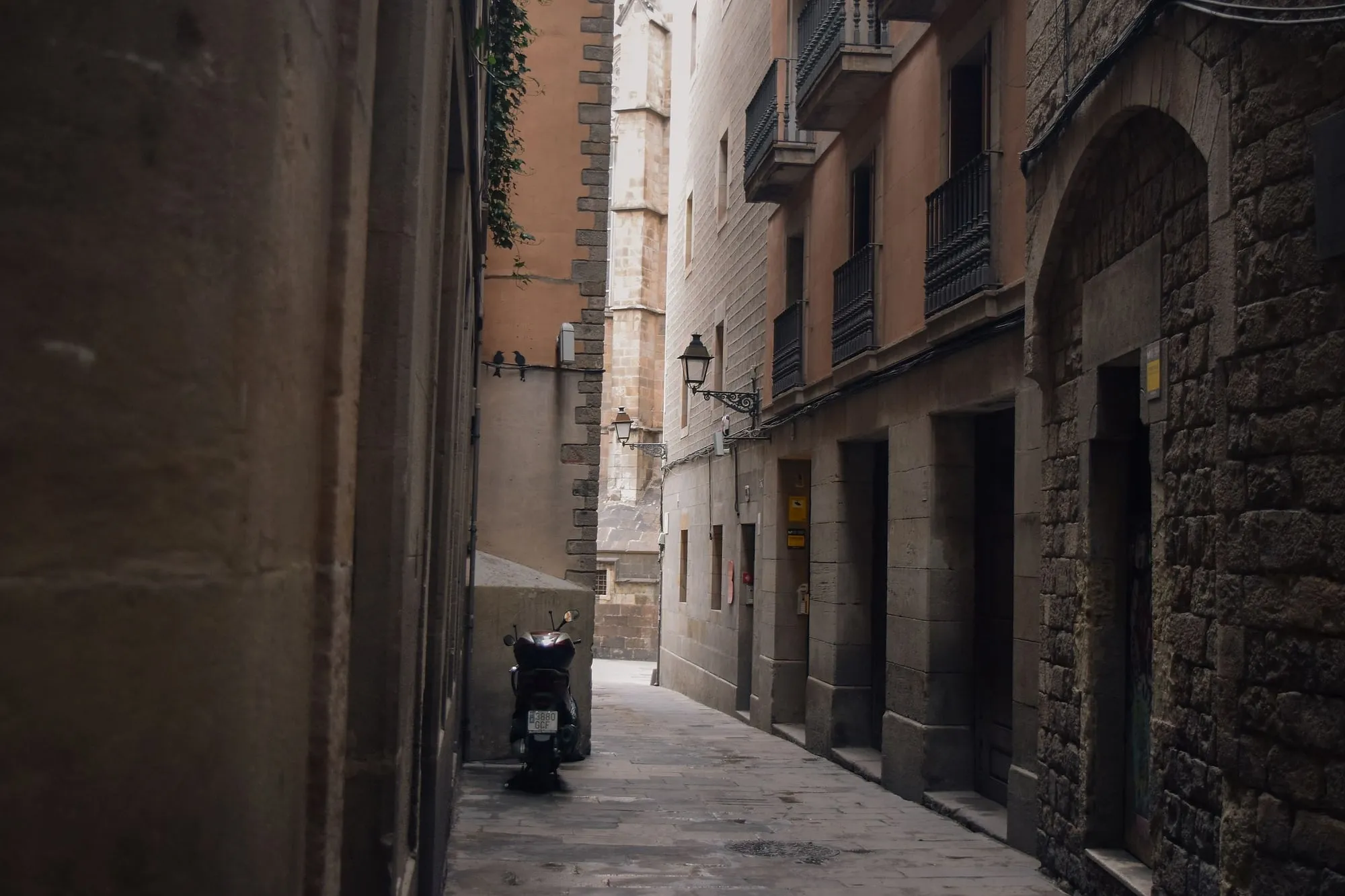
The Gothic Quarter: a neighbourhood that invented itself
Barcelona's most photographed bridge dates from 1928.
- How long it lasts
- 2 h
- Runs in
- EN · ES · CA
- Price
- 15 €
Never more than 20 people
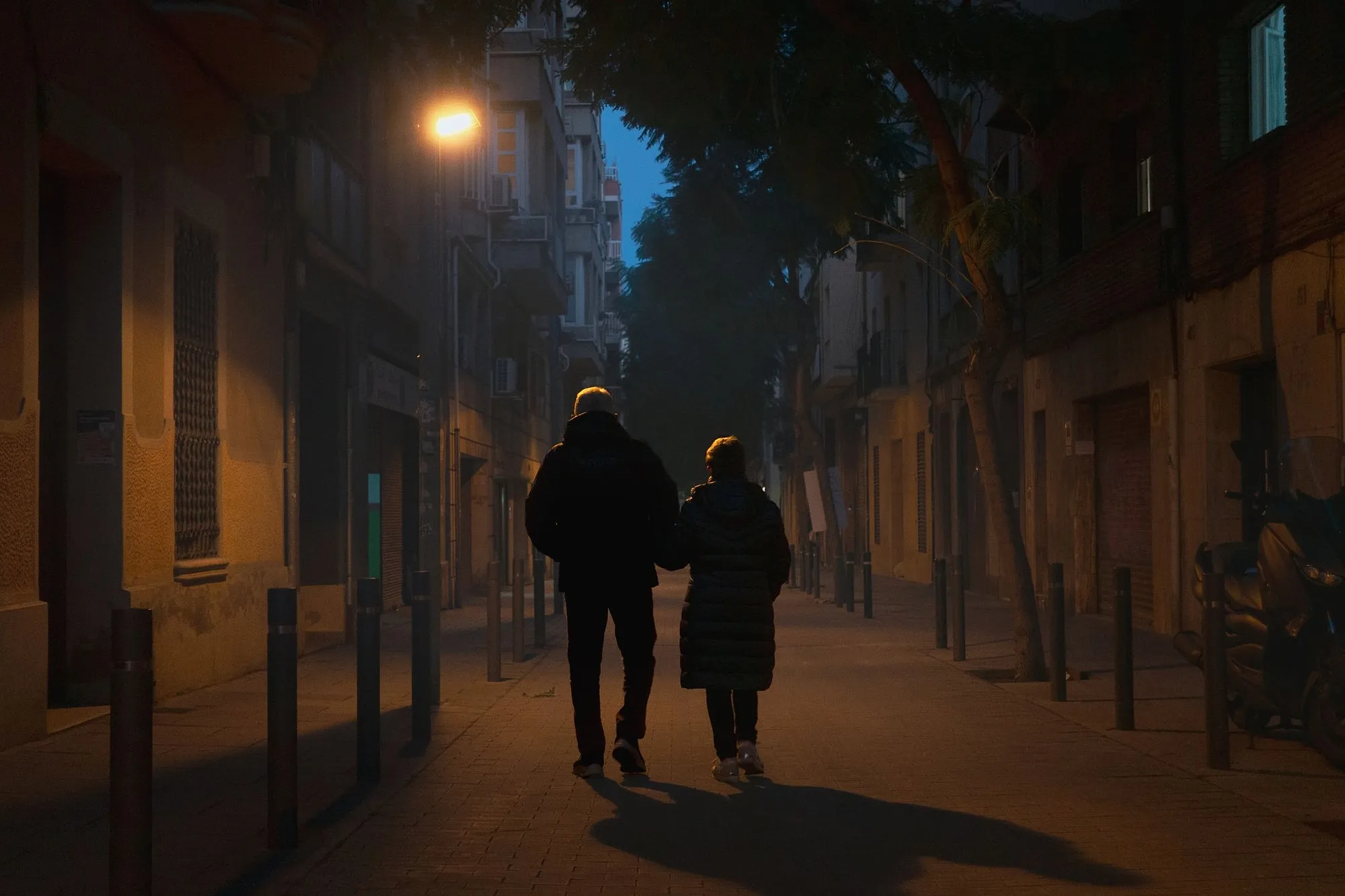
The Gothic Quarter after dark
By day it is a crowded stage set. By night it is a narrow city.
- How long it lasts
- 2 h
- Runs in
- EN · ES · CA
- Price
- 18 €
Never more than 20 people
More in the journal
The Gothic Quarter
- The Generalitat says the cathedral is not really Catalan Gothic. It says Santa Maria del Mar is
- It has three naves and can look like seven, and the cathedral and the Generalitat cannot agree on how many bays
- There are thirteen geese in the cathedral cloister and nobody official will tell you why
- The street names are trades, and the city that keeps the register says do not trust them too far
- In one of these squares you can still swear a will out loud, under a procedure from the eleventh century
- The Council of a Hundred had a hundred members for about ninety years, and kept the name for another four centuries