
Gothic Quarter
Thirty galleys at once, and the superlative everyone uses is not the one the Generalitat wrote
A stone shed at the bottom of the Rambla where a medieval state built warships on an industrial scale. The claim you will hear about it is bigger than the claim the sources make.

At the bottom of the Rambla, behind a wall that most people read as fortification and walk past, is a stone hall the size of a cathedral where a medieval state built warships.
It is the best building in Barcelona that visitors skip, and the reason they skip it is that it looks like nothing from outside. That is not an accident. It was an open building facing the sea — the ships came in and went out through the sea façade — and the sea is no longer there. What you see from the street is its back.
What it was for
The Crown of Aragon ran a Mediterranean empire on oared warships. Galleys are labour-intensive, short-lived and needed in quantity at short notice. A state that wants them needs a permanent covered yard where hulls can be laid down side by side, all year, under a roof, out of the weather and out of sight.
The Generalitat’s architectural inventory gives the chronology:
- 1255 — the earlier shipyards at the Regomir were considered inadequate.
- 1276-1285 — new ones begun on the other side of the Rambla, under Pere el Gran.
- 1378 — Pere el Cerimoniós continues the works, joining his own resources to those of the city and of the corts, under the master builder Arnau Ferrer.
- 1381 — eight parallel naves, where thirty galleys could be built at the same time.
Thirty at once. That is the number to hold on to. Not thirty in a good year: thirty on the floor simultaneously. This is a fourteenth-century factory, and the word is not a stretch.
The superlative, and why we are not going to use it
Here is the part this page exists for.
You will read, in a great many places, that the Drassanes are the largest medieval shipyard preserved in the world. The sources say something narrower.
The Generalitat’s inventory:
the largest and most complete of the Mediterranean type that exist anywhere in the world today
The qualifier is theirs, in their own sentence. It is not a hedge somebody added; it is what the claim is.
And the Museu Marítim, which lives in the building and would have every commercial reason to make the bigger claim, does not make it at all. Its page says the building became a great medieval arsenal. No superlative.
So: the institution that owns the building declines to rank it, and the institution that ranks it does so within a type. Writing “the biggest in the world” is not a summary of either. It is a third claim, made by nobody.
We do this a lot on this site and it is not pedantry for its own sake. A visitor who is told the biggest-in-the-world version and later finds the qualifier concludes they were sold something. A visitor who is told the largest and most complete of the Mediterranean type walks in already knowing what to look at — because “of the Mediterranean type” is itself a fact about the roof.
What you are actually looking at
Seven naves, not eight. The inventory says the present halls include a central one, wider than the rest, which is the result of joining two of them in the eighteenth century. The building has been edited. The great space in the middle that reads as the architectural climax is a demolition.
Timber on stone. Wooden roof beams, double-pitched, resting on semicircular diaphragm arches carried on square piers. That is the construction, and it is the same system across four centuries of extensions — the inventory notes that the method stayed constant despite its extension in time, because it was structurally and functionally rational. In other words: they never found a reason to change it.
Three towers. Of the original thirteenth-century enclosure there remain three towers and fragments of wall with royal arms and arms of the Generalitat. Two authorities’ badges on the same masonry, which is exactly what happened here: royal yard, then from the end of the sixteenth century the Generalitat’s, which added three large halls between 1612 and 1618, then the monarchy again, putting up its shield.
And the stone came from the hill. The Drassanes were built with Montjuïc stone and preserve hundreds of stonemasons’ marks — the hill and the old city are the same material.
Why it is still here
Because the army had it.
From 1663 the buildings belonged to the Spanish army, which in 1681 enclosed them in a bastion and adapted them as barracks and arsenal. The Maritime Museum says plainly that the Drassanes were about to be demolished with the great urban reforms Barcelona underwent in the first decades of the twentieth century, and were saved.
The military occupation that reads as three centuries of indignity is the reason there is anything to visit. It is also why the last surviving medieval city gate is attached to it. Barcelona demolished its walls with enthusiasm in the nineteenth century; it could not demolish the bit inside a barracks.
The army left in 1935. On 20 October 1936 — three months into a civil war — the provision creating the Museu Marítim de Catalunya was approved. Make of the timing what you like.
BCIN 28-MH, monument històric, by a decree of 5 March 1976 published on 29 April of that year.
How to use it
Go for the room, not the labels. The exhibits change. The hall does not. Give yourself ten minutes of standing still in the middle of it before you read anything.
Look up at the joins. Where a nave is wider, or the arch spacing changes, you are at a seam between centuries. The eighteenth century’s amalgamated central nave is the obvious one; the seventeenth-century Generalitat halls are on the Rambla side.
Then go outside and round the back. The Paral·lel flank is where the medieval gate and the eighteenth-century bastion are, and where the building stops being a museum and turns back into a fortification.
And put the sea back in your head. You are standing on what was beach, outside the walls, at the foot of Montjuïc. The whole shoreline moved — hundreds of metres of it — which is why a building designed to launch ships now has a road in front of it.
⚠️ We are not printing opening times or ticket prices, here or anywhere. They change, and a page that pretends otherwise is worse than useless. The museum publishes its own.
Where this sits on a walk
The Drassanes are the end of the Rambla and the end of the old city: the wall came down to here, the gates let you out here, and La Rambla was the watercourse that ran alongside.
Our Gothic Quarter walk runs Monday and Wednesday afternoons and starts at Plaça Nova; the after-dark version is Friday and Saturday nights. We are closed on 25 December and 1 January.
Where this comes from
- Reials DrassanesGeneralitat de Catalunya · Inventari del Patrimoni Arquitectònic (Invarquit), fitxa 32That the Drassanes are «les més grans i completes de tipus mediterrani que hi ha actualment arreu del món»; that the present seven halls include a central one «més ampla», the result of joining two in the eighteenth century; that «del recinte originari del segle XIII en resten tres torres i fragments de muralla amb escuts reials i de la Generalitat»; that in 1255 the earlier Regomir shipyards were judged inadequate; that construction of the new ones began under Pere el Gran (1276-1285); that in 1378 Pere el Cerimoniós continued the works under the master builder Arnau Ferrer, producing «vuit naus paral·leles (1381), on es podien construir trenta galeres alhora»; that the Generalitat added three large halls between 1612 and 1618; that the buildings passed to the Spanish army in 1663, were enclosed in a bastion in 1681 and adapted as barracks and arsenal; and that the army did not leave until 1935.
- Les DrassanesMuseu Marítim de BarcelonaThat the first enclosure was built in the mid thirteenth century «a la platja de Barcelona, fora muralles i al peu de la muntanya de Montjuïc», with four towers and three stretches of wall, for Pere el Gran; that it was «un edifici obert al mar, ja que els vaixells entraven i sortien per la façana de mar»; that it «va esdevenir un gran arsenal medieval»; that being a military installation saved the medieval wall and the Baluard de Santa Madrona from destruction; that it passed from military to city hands in 1935; and that on 20 October 1936 the provision creating the Museu Marítim de Catalunya was approved.
Everything above that carries a date, a figure or a name is checked against these before it is published. Where we could not find a source, the page says so.
Quick answers
- What are the Drassanes Reials de Barcelona?
- The royal shipyards: a covered hall where the Crown of Aragon built and maintained galleys and warships. The Maritime Museum dates the first enclosure to the middle of the thirteenth century, «a la platja de Barcelona, fora muralles i al peu de la muntanya de Montjuïc», with four towers and three stretches of wall, for King Pere el Gran.
- Are the Drassanes the largest medieval shipyard in the world?
- Not in those words, and the difference matters. The Generalitat's architectural inventory calls them «les més grans i completes de tipus mediterrani que hi ha actualment arreu del món» — the largest and most complete of the Mediterranean type. The typological qualifier is the source's own. The Maritime Museum makes no superlative at all; it says the building «va esdevenir un gran arsenal medieval». Dropping the qualifier inflates both.
- How many ships could be built there at once?
- Thirty galleys. The Generalitat's inventory says that under Pere el Cerimoniós, with the master builder Arnau Ferrer, the eastern and western porches were enlarged and became «vuit naus paral·leles (1381), on es podien construir trenta galeres alhora».
- Why does it have seven naves and not eight?
- Because two were joined into one. The inventory says of the present halls that «la central, més ampla, és el resultat d'unir-ne dos el segle XVIII». The building you walk through is the eighteenth century's edit of the fourteenth century's plan.
- What is left of the original thirteenth-century shipyard?
- Three towers and pieces of wall. The inventory: «del recinte originari del segle XIII en resten tres torres i fragments de muralla amb escuts reials i de la Generalitat». Royal arms and the Generalitat's arms on the same stones, which is a compact lesson in who paid for what.
- When did it stop being military?
- 1935. The Maritime Museum says the Drassanes came close to being demolished during Barcelona's great urban reforms in the first decades of the twentieth century, were saved, and passed from military to city hands in 1935; the decree creating the Museu Marítim de Catalunya was approved on 20 October 1936.
- Is it worth going inside?
- If you like buildings more than exhibits, yes — the hall is the exhibit. It is the one place in Barcelona where you can stand inside a medieval industrial building at full scale. Admission arrangements and opening times change, so check the museum's own site rather than any page that prints them.
The tours this piece is about
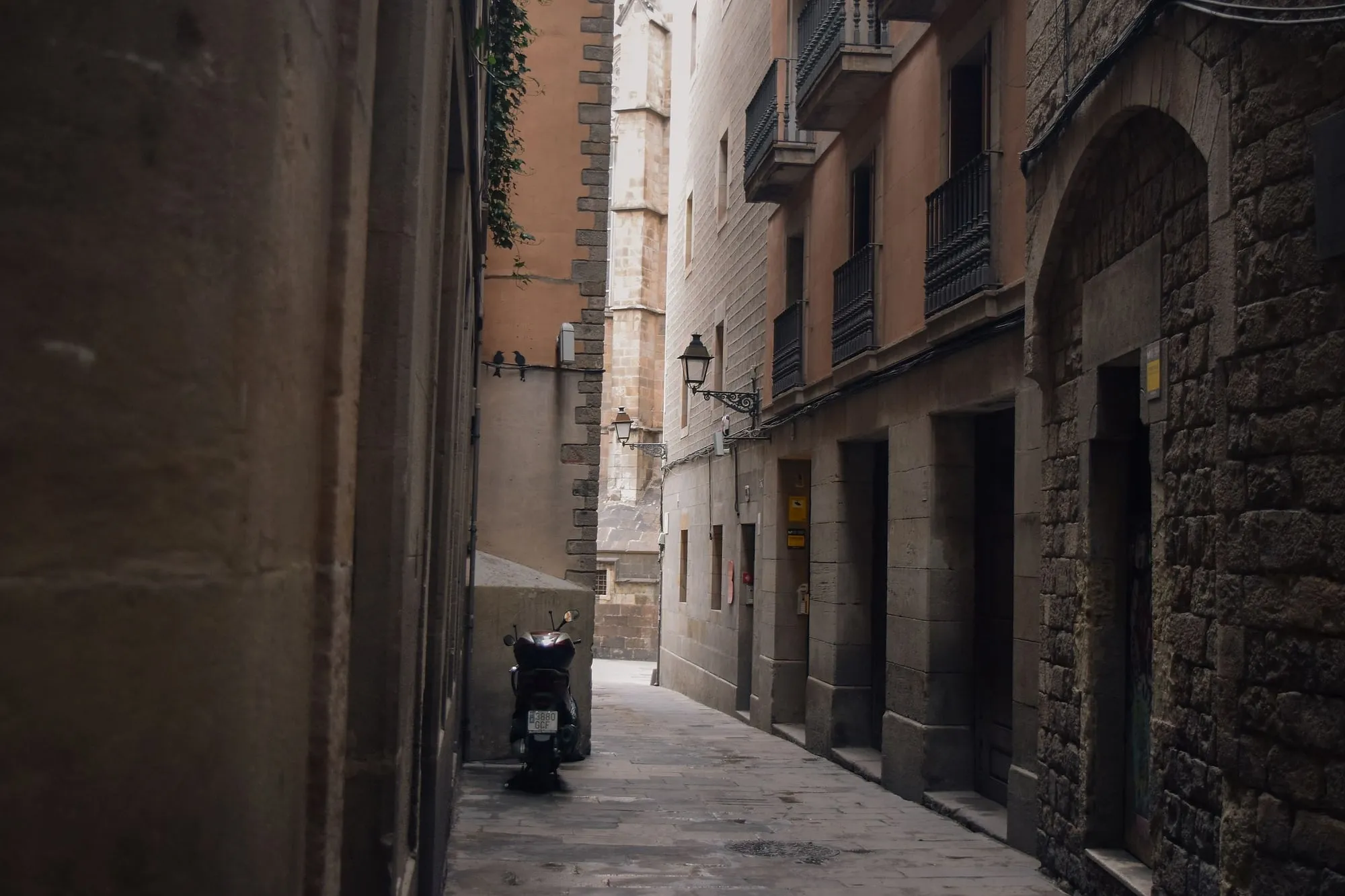
The Gothic Quarter: a neighbourhood that invented itself
Barcelona's most photographed bridge dates from 1928.
- How long it lasts
- 2 h
- Runs in
- EN · ES · CA
- Price
- 15 €
Never more than 20 people
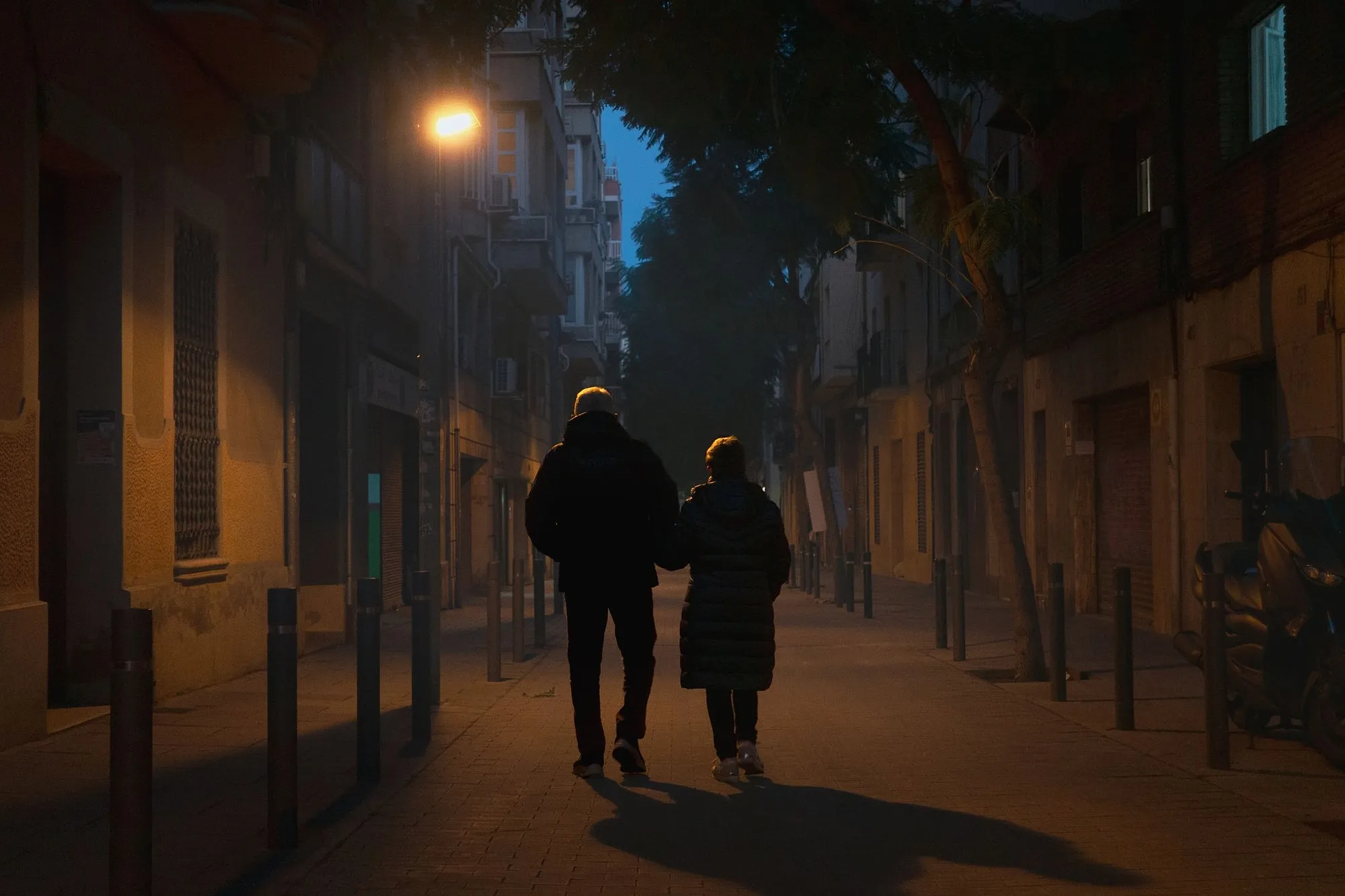
The Gothic Quarter after dark
By day it is a crowded stage set. By night it is a narrow city.
- How long it lasts
- 2 h
- Runs in
- EN · ES · CA
- Price
- 18 €
Never more than 20 people
More in the journal
The Gothic Quarter
- The Roman city is still there, and most of it is free to look at
- The city history museum has eighteen buildings and most visitors have been to one
- The ring roads are the wall, and the city dates the same wall twice, twelve years apart
- One medieval gate is still standing, and it survived because the army was using it
- The Gothic Quarter at night is a different neighbourhood, and it is free
- Barcelona is switching off 10,101 tourist flats, and it commissioned a study of what that will cost