
Gothic Quarter
The city history museum has eighteen buildings and most visitors have been to one
Everybody goes to the one under Plaça del Rei. There are seventeen others, several of them free, and between them they are the cheapest and strangest way to see this city.
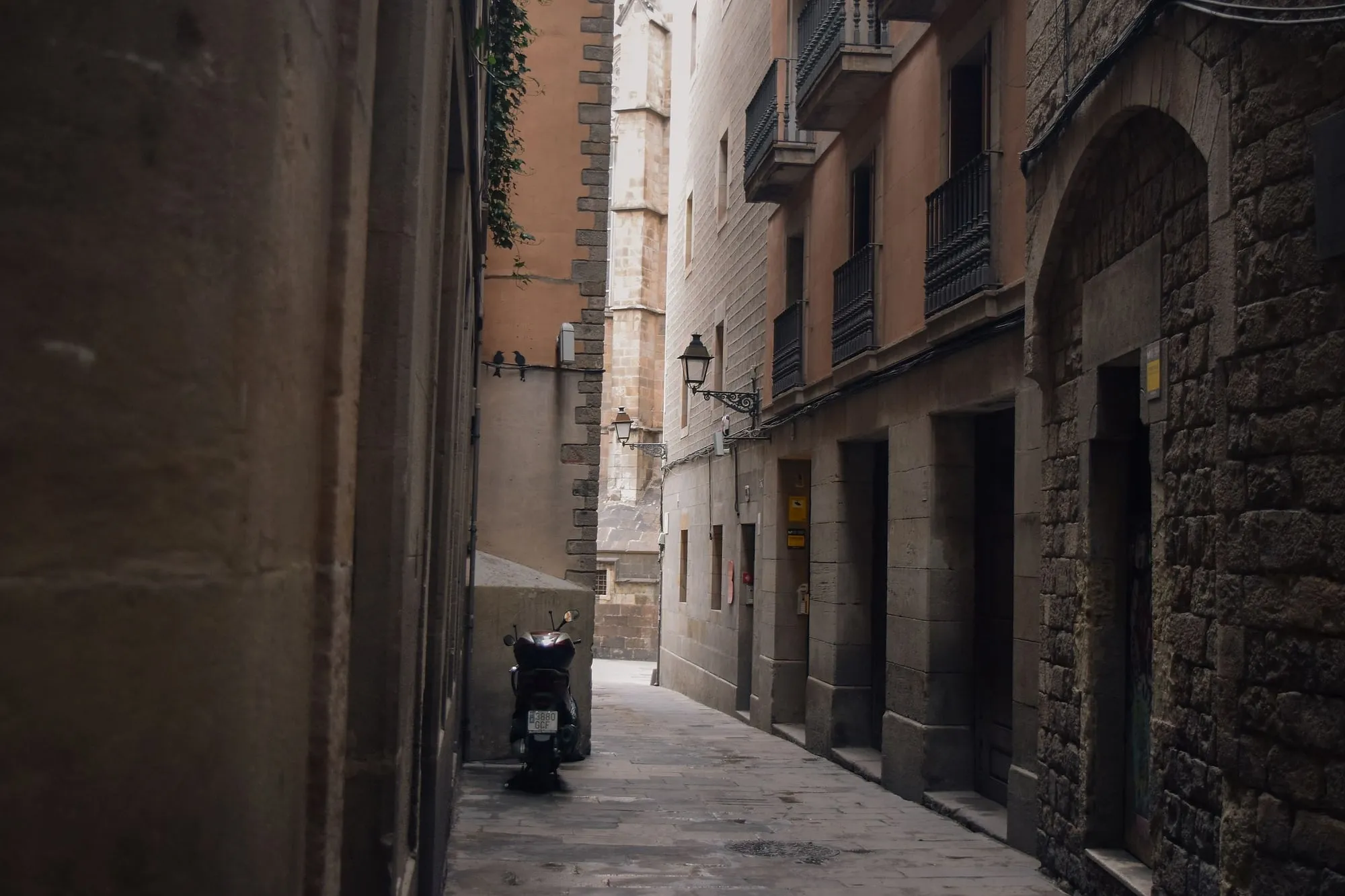
Ask a visitor whether they have been to Barcelona’s history museum and they will say yes, they did the Roman bit under the square by the cathedral.
That is one of eighteen.
The museum is explicit about this in a way that never reaches a guidebook. In its own words:
The Museum has to be seen as a museum with its rooms spread throughout the city.
They are, it adds, distributed among the different neighbourhoods and districts. Eighteen buildings, several free, running from a Roman temple to a 1920s machine shop.
The old-city ones, which you will walk past anyway
Six of the eighteen are inside a kilometre of each other in Ciutat Vella, and between them they hold most of the visitable Roman city.
Plaça del Rei is the founding site, created in 1943. Its own centre guide describes what you are doing down there with a precision worth borrowing:
A walk of 4,000 m² through the subsoil of the present city allows us to approach the two walls the Roman city had, one of the first century and the other of the third, and the streets and insulae.
A four-thousand-square-metre walk through the subsoil. That is a smaller and more accurate claim than the one that circulates — including, until today, on our own pages, which described four thousand square metres of excavated city. We have changed the wording to the museum’s. The full account of what is down there is a separate piece.
Temple d’August — free — the four columns in the courtyard of a hikers’ club on Carrer del Paradís, which the museum places as the central part of the forum, at the summit of Mont Tàber. It is the single strangest free thing in the old town and you need to know it is there, because the doorway is unmarked.
Porta de Mar, on Carrer del Regomir — free — two public bath complexes by the old sea gate, which the museum dates between the middle of the first century and the beginning of the second AD. Inside a civic centre you can simply walk into.
Domus d’Avinyó — a Roman house of the first to fourth centuries with ceiling and wall paintings, visited with a guide.
Domus de Sant Honorat — 680 square metres of Roman house, fourth-century shops and six medieval silos, opened on 23 April 2010.
Via Sepulcral Romana, at Plaça de la Vila de Madrid — the Roman burial road, in use between the first and third centuries, which you can look down into from the street for nothing even when the enclosure is shut.
And El Call, in the medieval Jewish quarter, in the house of Jucef Bonhiac, opened in March 2015 — the small museum at the heart of what survives of the Call.
El Born is also MUHBA now: the archaeological remains of the Ribera quarter under the iron market hall, across Via Laietana.
Santa Caterina — free — is an archaeological interpretation centre inside the working market.
The ones nobody tells you about
This is where the museum stops being a Roman attraction and starts being a portrait of the city.
Refugi 307, in Poble-sec — a Civil War air-raid shelter, and the reason the shelters have their own page here.
Turó de la Rovira — free — the anti-aircraft battery on the ridge above Gràcia, with the traces of the barri dels Canons, the shanty neighbourhood that grew up around the gun emplacements afterwards. Opened March 2011. It is the viewpoint everybody photographs; almost nobody reads the ruins they are sitting on.
Cases Barates del Bon Pastor — free — one block of the cheap workers’ housing of 1929, kept as it was. Built the same year as the world’s fair on Montjuïc, for the people the fair was not for.
Fabra i Coats, in Sant Andreu — work and labour in contemporary Barcelona, in a textile factory.
Oliva Artés, in Poblenou — a machinery workshop of 1920.
Casa de l’Aigua — free — the pumping station and treatment plant that supplied the city with water.
Vil·la Joana, up in Vallvidrera — the house where Jacint Verdaguer died on 10 June 1902, now the Casa Verdaguer de la Literatura.
Park Güell, the Casa del Guarda — built by Gaudí between 1901 and 1903, and the one MUHBA site most visitors walk past without knowing it is a museum. It is inside the ticketed zone, which is its own argument.
Plus the Centre de Col·leccions in the Zona Franca, which is the collections and archive centre rather than a visit.
Which are free
The museum lists free entry for: Temple d’August, Porta de Mar, Santa Caterina, Turó de la Rovira, Casa de l’Aigua and Cases Barates del Bon Pastor. At El Born, the enclosure is free and the archaeological site is not.
The rest are ticketed. We are not printing prices or hours, and there is one we will not even categorise: the museum’s price field for the Park Güell site is empty, so we do not know.
One correction to somebody else’s list
The Monestir de Pedralbes is not a MUHBA space. The museum’s own history page says it was linked to the museum between 1999 and 2012. It has its own institution and its own site now.
If you are reading a list that includes it, that list is more than a decade old — which is worth knowing, because it probably has the rest of this wrong too.
And a small negative that saves a wasted trip: the remains of a Roman villa found at Plaça d’Antoni Maura are, in the museum’s own parenthesis, not visitable.
How to use it
The trick is to stop treating it as a museum you visit and start treating it as a layer over the map.
On one afternoon in the old city, the free ones alone give you a Roman temple, two public bath complexes, a burial road seen from the railings and an interpretation centre in a market — and they are on the route you were walking anyway. That is what to see in the Gothic Quarter with a second floor added underneath it.
On a second trip, the outer ones are the argument for going to neighbourhoods nobody sends you to: a battery on a ridge, a block of 1929 workers’ flats, a waterworks. That is what a second visit to Barcelona is for, and it is a better method than any list of hidden gems — see non-touristy things to do in Barcelona.
One caution on the phrase. You will see this network sold as underground Barcelona. The museum does not use that expression. It says the subsoil, which is a duller word and an accurate one: a lot of these sites are on ridges, in markets and up a mountain road.
Where our walks meet it
Our Gothic Quarter walk passes the Temple d’August, Plaça del Rei and the edge of El Call in two hours, and goes into none of them — the walk is about the streets and about what was moved, rebuilt and invented above ground, which is a different argument from the one the museum makes below it.
They fit together well, and in this order: the walk first, the subsoil afterwards, because once you know which centuries the surface belongs to the Roman layer stops being a curiosity and starts being the bottom of a stack you can read.
The after-dark version does the same streets when everything on this page is shut, which is not a loss: the museum sites close and the neighbourhood opens.
Two of the eighteen have their own pages here: the 1714 excavation under the old Born market, which joined the museum in 2024, and the archaeological space at the back of the Santa Caterina market, which joined in 2007 and is free.
And there is a day when this network stops being a curiosity and becomes the plan: Barcelona in the rain. Four metres underground the weather is irrelevant.
Where this comes from
- Els espais del museuMuseu d'Història de Barcelona (MUHBA)The museum's own index of its eighteen spaces, with the description and location of each, and which of them the museum lists as free entry.
- Qui somMuseu d'Història de Barcelona (MUHBA)That «the Museum has to be seen as a museum with its rooms spread throughout the city» and that its spaces «are distributed among the different neighbourhoods and districts».
- 80 anys d'història: cap al museu de la ciutadaniaMuseu d'Història de Barcelona (MUHBA)That Plaça del Rei is the museum's founding nucleus «since it was created in 1943»; that the Monestir de Pedralbes was «linked to the museum between 1999 and 2012» and is therefore no longer one of its spaces; the opening years of the newer sites — Park Güell 2002, Refugi 307 2003, Santa Caterina 2007, El Call 2008, Domus de Sant Honorat 2010, Turó de la Rovira 2011, Casa de l'Aigua 2011; and that the remains of a Roman villa found at Plaça d'Antoni Maura are not visitable.
- Guia del centre MUHBA Plaça del Rei (PDF)Museu d'Història de Barcelona (MUHBA)The museum's own wording for the site under Plaça del Rei: «a walk of 4,000 m² through the subsoil of the present city allows us to approach the two walls the Roman city had, one of the first century and the other of the third, and the streets and insulae». It is a four-thousand-square-metre walk, which is not the same claim as four thousand square metres of excavated city — a distinction we had blurred on our own pages.
Everything above that carries a date, a figure or a name is checked against these before it is published. Where we could not find a source, the page says so.
Quick answers
- What is the MUHBA?
- The Museu d'Història de Barcelona, the city's history museum — which is not one building. It runs eighteen spaces spread across the city, and describes itself as a museum whose rooms are spread throughout Barcelona, distributed among its different neighbourhoods and districts. The founding nucleus is the site under Plaça del Rei, created in 1943.
- Which MUHBA sites are free?
- The museum lists free entry for the Temple d'August, the Porta de Mar baths on Carrer del Regomir, the archaeological interpretation centre inside Santa Caterina market, the anti-aircraft battery at Turó de la Rovira, the Casa de l'Aigua and the Cases Barates del Bon Pastor. At El Born the enclosure is free but the archaeological site is not.
- Is the MUHBA at Plaça del Rei worth it?
- It is the one most people do and it earns it. The museum's own centre guide describes a four-thousand-square-metre walk through the subsoil of the present city, taking in the two walls the Roman city had, one of the first century and one of the third, and its streets and insulae. It is the largest thing of its kind in the old town.
- Which MUHBA site is the strangest?
- Probably the Temple d'August — four Roman temple columns in the courtyard of a hikers' club, up an unmarked doorway on a street barely wide enough for two people, free to walk into. The museum describes it as the central part of the forum, on the summit of Mont Tàber.
- Is the Monestir de Pedralbes part of the MUHBA?
- Not any more. The museum's own history page says the monastery was linked to it between 1999 and 2012. It has its own institution and its own site now, and pages that list it as a MUHBA space are out of date.
- How much of Roman Barcelona can you see in MUHBA sites?
- A surprising amount, and much of it for nothing. Between Plaça del Rei, the Temple d'August, the Porta de Mar bath complexes, the Domus d'Avinyó, the Domus de Sant Honorat and the Roman burial road at Plaça de la Vila de Madrid, the museum holds most of the visitable Roman city — a temple, houses, shops, public baths and a cemetery, inside about a kilometre.
The tours this piece is about
The Gothic Quarter: a neighbourhood that invented itself
Barcelona's most photographed bridge dates from 1928.
- How long it lasts
- 2 h
- Runs in
- EN · ES · CA
- Price
- 15 €
Never more than 20 people
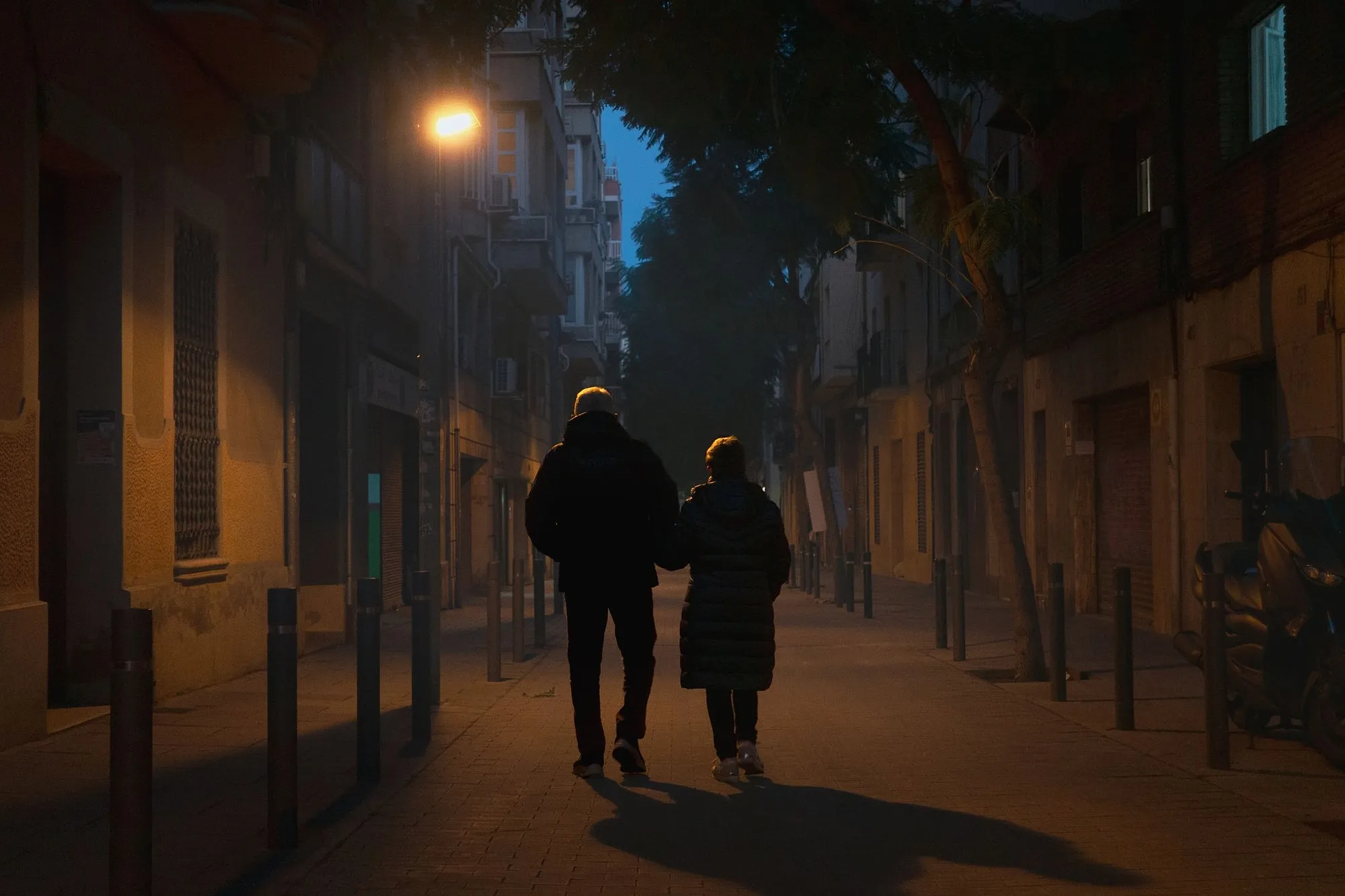
The Gothic Quarter after dark
By day it is a crowded stage set. By night it is a narrow city.
- How long it lasts
- 2 h
- Runs in
- EN · ES · CA
- Price
- 18 €
Never more than 20 people
More in the journal
The Gothic Quarter
- Barcelona has written down, to two decimal places, how much of this market is allowed to be a snack bar
- The Roman city is still there, and most of it is free to look at
- The ring roads are the wall, and the city dates the same wall twice, twelve years apart
- One medieval gate is still standing, and it survived because the army was using it
- Thirty galleys at once, and the superlative everyone uses is not the one the Generalitat wrote
- The Gothic Quarter at night is a different neighbourhood, and it is free