
Gothic Quarter
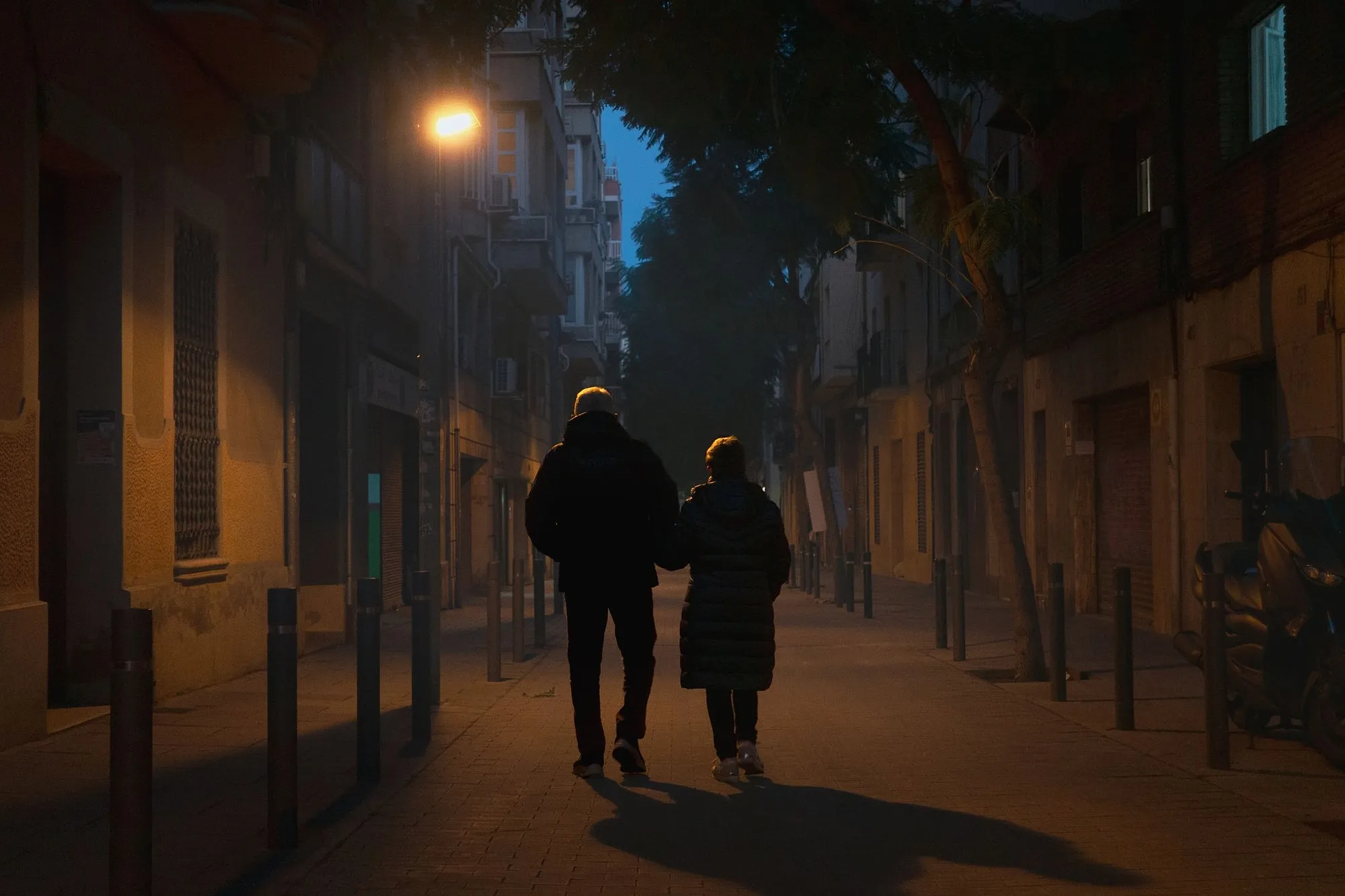
The Gothic Quarter at night is a different neighbourhood, and it is free
Everything indoors is shut, which is the point. The best free thing in central Barcelona happens after most visitors have gone to bed.
The Gothic Quarter by day is one of the most crowded places in Barcelona: two thirds of everybody who visits the city gets into it, and the streets are three metres wide.
By about ten at night it is empty, and it becomes the thing everybody came to see in the first place.
What actually changes
The width. This is the one nobody expects. In daylight, a street with four hundred people in it reads as narrow. At night, with nobody in it, the same street reads as deliberate — you can see that it was built this width, for reasons, by people who were making decisions.
The sound. Stone on three sides and no traffic. Your own footsteps come back at you off the walls with a delay, and after a few minutes you start walking differently. It is the only sensory thing about this neighbourhood that a photograph cannot carry home.
The light. The old town is lit from below and from the side, by lamps mounted on the walls, because there is nowhere to put a lamp post. Everything acquires an angle it does not have at two in the afternoon. The famous arched bridge on carrer del Bisbe, which was finished in 1928 and designed to look older, works considerably better under a street lamp than it does in the sun — which tells you something about what it was for.
The walk that works in the dark
Twenty minutes if you march it, an hour and a half if you do it properly.
- Plaça Nova. Start at the Roman gate with the cathedral lit on your right — an Augustan gateway with late-Roman towers bolted onto it. In the daytime there is a queue in front of them. At eleven at night there is nobody, and you can see the stone.
- Carrer del Bisbe. Under the bridge. Look up at the underside; it is a star vault, and one of its keystones is a skull pierced by a sword. It has been there since the bridge was built in 1928.
- Plaça de Sant Felip Neri. Small, enclosed, entered through an alley you will miss the first time. The pockmarks on the church wall are from an air raid on 30 January 1938, and the city says the bombing went on without pause while the site was being evacuated. Its figure is forty-two killed, some twenty of them children who had taken shelter in the church basement. At night it is silent and the marks read for what they are. It is not a photo stop.
- El Call. The medieval Jewish quarter, four narrow streets west of carrer del Bisbe, with next to no signage and almost nobody in it after dark. There is very little to look at — the quarter was destroyed in August 1391 and in 1401 the king granted the city a privilege that it would never have another — so the dark takes away nothing and gives you the shape of the streets, which is all there is.
- Plaça del Rei. The royal square, closed on all sides, with the great hall on one flank. Stand in the middle of it and it does the thing enclosed squares do.
- Carrer de la Tapineria. Finish at the Roman wall, where a real stretch of it stands in the open with its towers. Lit at night, and free, and empty. Most people walking past it in daylight do not know what it is — or that the street is named after cork-soled women’s shoes, which is the sort of thing the street signs of this quarter are still telling you.
Is it safe
Yes, with the caveat that applies to every large European city.
The specific risk in this neighbourhood is pickpocketing, and pickpocketing needs density. That makes the middle of the day the exposed part of your trip, not the evening — the opposite of what most people assume. At night, on the central streets, in a normal number of people, you are fine.
Ordinary rules: stay on lit streets, keep valuables in a pocket that closes, do not follow a shortcut into an alley you cannot see the end of, and if a street has genuinely nobody in it and you feel wrong about it, turn round. That instinct is usually correct and costs nothing to obey.
The thing people forget
Ciutat Vella is residential. The balconies above the square you are standing in are bedrooms, and a group laughing at midnight in a street this narrow arrives in all of them at once. The neighbourhood has been fighting about exactly this for years, and the by-law capping guided groups at twenty came out of that fight.
Behave the way you would behave in your own street at home at midnight. That is the entire ask.
Why we do not do ghosts
There is a market for it here and several companies serve it. We are not being sniffy about the genre; we just cannot make it work alongside the rest of what we do.
The trouble is that this neighbourhood’s real history is already heavy — an air raid on a square full of children, a Jewish quarter that was destroyed, a wall built because the empire had stopped feeling safe. Once you have decided that some of the evening is invented, the audience has no way of knowing which parts. And the invented parts are always the weaker ones.
Our Gothic Quarter after dark runs on the two nights of the week when the streets empty properly, with twenty people at most and an actor rather than a torch. It is the same checkable history as the daytime walk, in a city you can hear.
If you are planning around it
The other neighbourhood people ask about after dark is Gràcia, and it is the opposite proposition — nobody leaves at night because everybody lives there, which is set out in Gràcia at night. A night in the old city is the single easiest thing to slot into a short trip, because it uses the hours nothing else wants — see a weekend in Barcelona and one day in Barcelona, both of which put it in the evening for that reason. What is in these streets by daylight is what to see in the Gothic Quarter, and whether the neighbourhood earns your time at all is here.
Two of the stops on the dark walk have their own pages now: Plaça de Sant Felip Neri, and the squares around Sant Just and the Pi, which change more than anywhere else once the terraces fold up.
Two pages that follow from this one: Plaça Reial after dark, which is the clearest case of a square that is at its best and its worst at the same hour, and what the city’s own victimisation survey says about the district.
Where this comes from
- Plaça de Sant Felip NeriAjuntament de Barcelona · Programes de Memòria DemocràticaThe bombing of 30 January 1938 and the propaganda version of the marks on the façade that stood for years.
- Itinerari pel Call Jueu de Barcelona (PDF)Ajuntament de Barcelona · MUHBAThe assault on the Call on 5 and 7 August 1391, and the museum's own account of where the Great Synagogue stood.
- Comença el control dels grups turístics a Ciutat Vella (3-3-2023)Ajuntament de Barcelona · Sala de premsaThe decree in force since 1 March 2023: guided groups capped at twenty, loudspeakers banned, fines up to 1,500 € and 3,000 € for a repeat.
Everything above that carries a date, a figure or a name is checked against these before it is published. Where we could not find a source, the page says so.
Quick answers
- Is the Gothic Quarter safe at night?
- Yes, on the central streets, at normal hours, with the common sense of any large city. The real risk in this neighbourhood is pickpocketing, and pickpocketing needs a crowd — which means the daytime is statistically the dangerous part, not the evening. Keep to lit streets, keep your phone in a pocket that closes.
- What time does the Gothic Quarter empty out?
- Around ten. The coach groups work to a timetable that ends in the early evening, the shops shutter, and by about half past ten the squares are quiet. It stays that way until the bars turn out.
- What is open in the Gothic Quarter at night?
- Bars and restaurants. Nothing else — the cathedral, the museums and the Roman sites all close. That is not a problem to solve: the neighbourhood itself is the thing you came for, and at night you can actually see it.
- Is it worth doing a night tour of the Gothic Quarter?
- It is worth being in those streets at night, whether somebody is talking or not. A tour buys you the reason to stand still in five specific places instead of drifting, which is what most people do and which is the version that ends up being a nice walk you cannot remember.
- Are there ghost tours in the Gothic Quarter?
- Several companies run them. We do not. The history of these streets is checkable and heavy enough without inventing anything, and a square where children died in an air raid in 1938 is not a place to be entertained in.
The tours this piece is about
The Gothic Quarter after dark
By day it is a crowded stage set. By night it is a narrow city.
- How long it lasts
- 2 h
- Runs in
- EN · ES · CA
- Price
- 18 €
Never more than 20 people
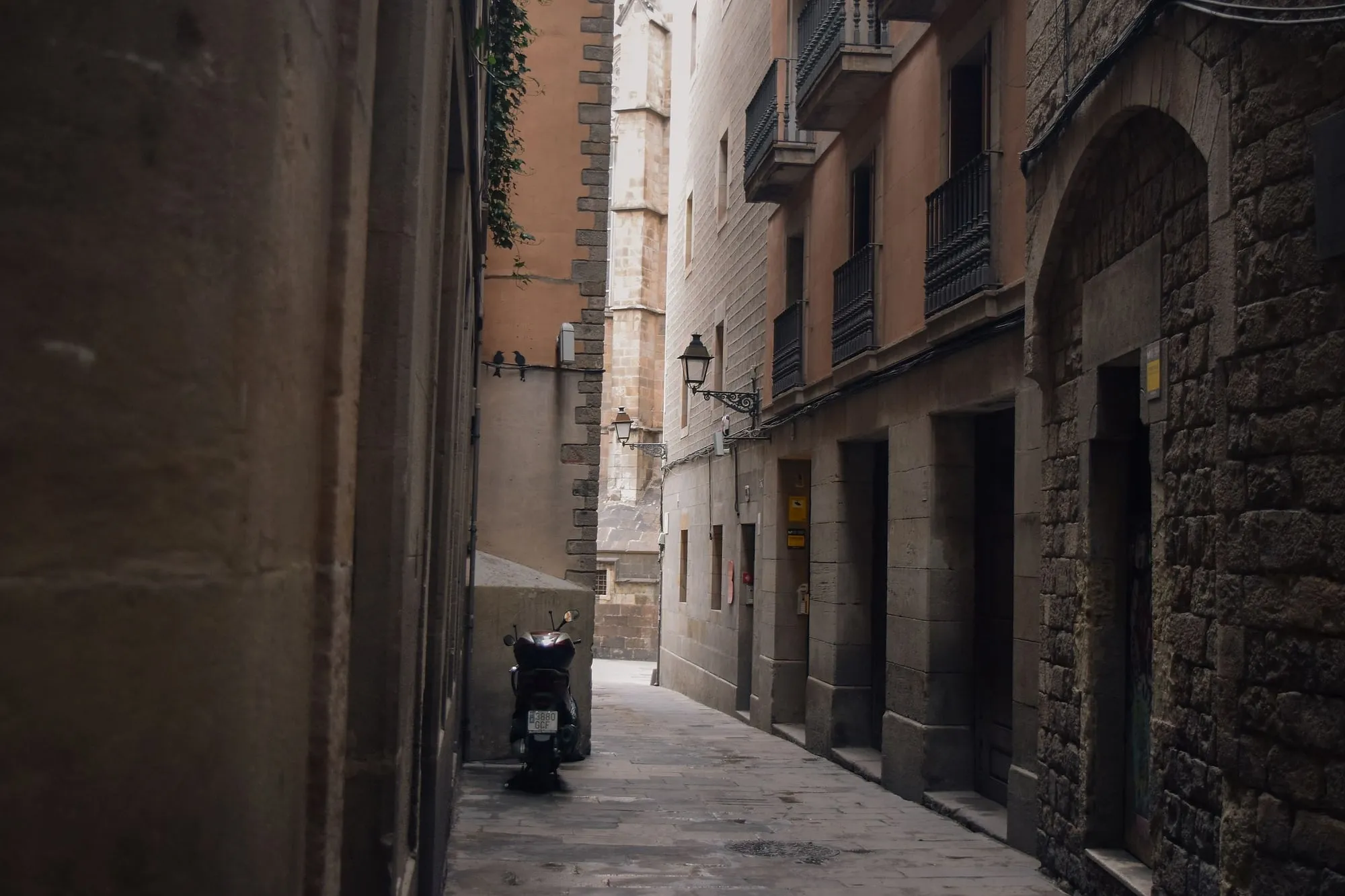
The Gothic Quarter: a neighbourhood that invented itself
Barcelona's most photographed bridge dates from 1928.
- How long it lasts
- 2 h
- Runs in
- EN · ES · CA
- Price
- 15 €
Never more than 20 people
More in the journal
The Gothic Quarter
- The city history museum has eighteen buildings and most visitors have been to one
- The ring roads are the wall, and the city dates the same wall twice, twelve years apart
- One medieval gate is still standing, and it survived because the army was using it
- Thirty galleys at once, and the superlative everyone uses is not the one the Generalitat wrote
- Barcelona is switching off 10,101 tourist flats, and it commissioned a study of what that will cost
- El Call: four streets, a stone that is a copy, and an argument about one building