
Gothic Quarter
It was a watercourse with a city wall on one side and convents on the other
The most walked street in Barcelona is also the one visitors most often say disappointed them. It gets better the moment you know what is underneath it — and right now, some of that is out of the ground.
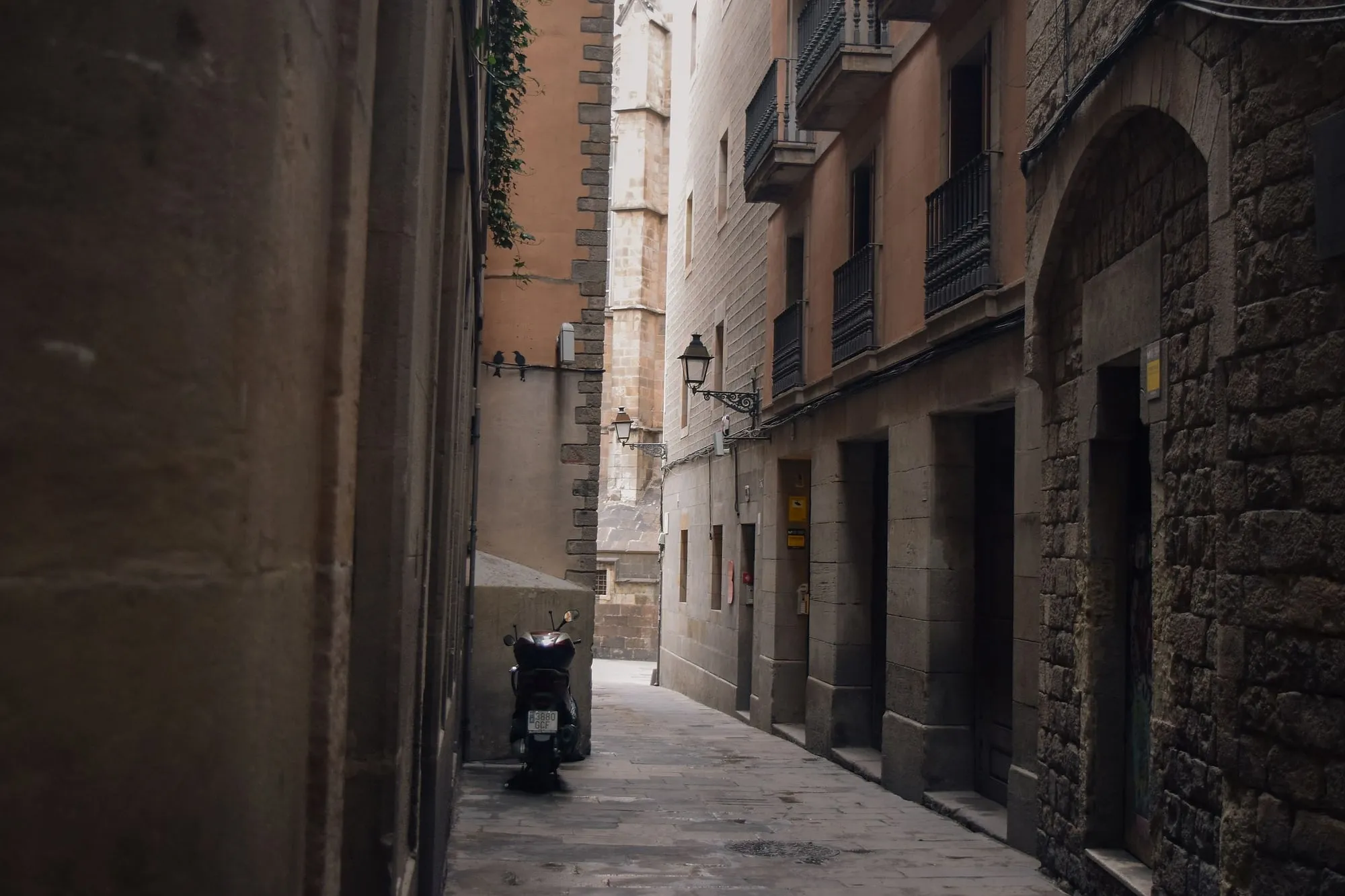
More visitors to Barcelona come here than to any single building except the Sagrada Família, and it is the place they most often describe afterwards as fine.
That is not the street’s fault. It is a category error: people walk La Rambla as a destination, and it has never been one. It is a boundary — the edge the medieval city stopped at — and everything interesting about it is either what it separates or what is buried in it.
It was water
The Ajuntament’s street register is unusually vivid about what this was:
Urbanisation began in the mid-eighteenth century, when it was only a path and an occasional torrent, with King James’s walls on one side and convents on the other.
A rambla is not a poetic word for boulevard. The Catalan Institute of Studies derives it from the Arabic ramla, sandbank or sandy ground, and defines it as the bed of a river or torrent covered with sand or stones brought down by floods.
So: a dry watercourse that ran when it rained, along the outside of the wall, with the city on one side and monasteries on the other. That is the shape you are standing in. It runs downhill to the sea because it is a stream bed, and it curves because water does.
The city’s archaeologists have gone and found it. Excavating under the promenade they have hit flood deposits with medieval pottery three and a half metres down, and they record that the watercourse itself had to be moved in order to build the wall.
The wall, and a hundred-year disagreement
There was a wall along here — the Ajuntament calls it la muralla de la Rambla — with gates whose names are still street names: Portal de Santa Anna, Portaferrissa, Boqueria, Trencaclaus, Framenors. Portaferrissa is the one people walk under every day without noticing it is a gate.
Now the disagreement, and it is between two arms of the same city.
The street register dates it to 1260 and calls it the walls of King James.
The city’s archaeological service, writing from the digs of 2024 and 2025, dates it between the end of the thirteenth century and the middle of the fourteenth, attributes it to Peter the Great in 1285, and describes it being consolidated by the Consell de Cent and reinforced in 1357.
That is a century apart, and we are not going to blend it into a comfortable “thirteenth to fourteenth century”, because that would hide a live argument between the register and the people currently digging it up.
What the archaeologists add is a good, deflating fact: this wall functioned as a defensive element only during the second half of the fourteenth century, because the Raval wall went up beyond it and made it interior. Barcelona built a wall along its stream, and within a lifetime the city had jumped over it.
The excavations of 2023 to 2025 have exposed around a hundred continuous metres of it. If you are here now, that is the single best reason to look at the ground.
We could not find a demolition date for it. Nobody publishes one, and we looked twice.
1835, and why there is a market where a convent was
The convent side is the reason La Rambla is wide.
The city’s own word for what happened is les bullangues del 1835 — the riots — and not, as you will read everywhere, a desamortització. The register is specific: the Discalced Carmelite convent of Sant Josep, founded in 1586, was burned during the bullangues of 1835. The square was designed in 1837, and the Boqueria has been sited there since 1840.
The pattern repeats down the promenade. The Jerusalem convent was hit in 1835 and again in 1868 and demolished. The Bonsuccés became an invalids’ barracks in 1835. The Liceu stands on the site of a Trinitarian convent — and, since it is the standard error, the Capuchin convent became the Plaça Reial, not the opera house.
So the flower stalls, the market, the opera house and the grandest square in the old city are all standing on land that was cleared by arson in one summer.
The market, and the date that is not a foundation
The Ajuntament’s official designation is Mercat Boqueria - Sant Josep, and the city explains the double name exactly: it occupies the space of the old convent of Sant Josep, which is why it is also known as the Mercat de Sant Josep.
You will see 1217 attached to it. The market’s own timeline is careful about what that is, and so are we: it is the date of the first documents confirming the presence of meat-selling tables at the Pla de la Boqueria, in a context of itinerant open-air markets on the Rambla. It is not the founding of the institution now called the Boqueria.
The dated events that are solid: stallholders moved onto the demolished convent’s site on 28 March 1836; the market’s first stone was laid on 19 March 1840; the modernista entrance arch went up in 1913 and the metal roof in 1914.
Who designed that roof is disputed between two institutions — the market credits Antoni de Falguera, the architects’ catalogue files it under Michel de Bergue. The year is not in dispute. We are naming both and asserting neither.
And no institution we could reach uses the word “founded” with any year. If a page tells you the Boqueria was founded in 1217, or 1836, or 1840, it has invented a category.
The opera house, and a toll worth getting right
The Gran Teatre del Liceu opened on 4 April 1847, Easter Sunday — and not with an opera. The programme was mixed; opera arrived on 17 April, with Anna Bolena. It is a small thing and it is the sort of small thing that tells you whether a page has read anything.
Then: fire on 9 April 1861, started in the costume workshop, destroying the hall and the stage. Rebuilt within a year.
7 November 1893, at the season’s opening performance, during the second act of Guillaume Tell: the anarchist Santiago Salvador threw two Orsini bombs into the stalls, of which only one exploded.
The Liceu’s own account says it left “20 víctimes” and a great number of wounded. It says victims. It never says dead. The figure of twenty-two that circulates appears nowhere on the theatre’s site. We are giving you the institution’s word and its ambiguity rather than the rounder version.
Then the fire of 31 January 1994, and the reopening on 7 October 1999 with Turandot.
The Miró on the ground
At the Pla de la Boqueria — the official name; Pla de l’Os is the popular one — there is a circular pavement by Joan Miró, from December 1976.
Three corrections to what you will be told about it.
It is not ceramic. It is terrazzo, made with the ceramist Joan Gardy-Artigas, about six thousand pieces, roughly 8.3 by 7.8 metres.
It was not commissioned. The Ajuntament’s public art catalogue describes it as one of three works Miró gave the city. Nobody ordered it.
Most of it is not original. The catalogue records that only the black and white tiles are original; the coloured ones have been progressively replaced since 1992. What you are photographing is a Miró that has been quietly renewed around its own skeleton for thirty years — which, on a street with this much foot traffic, is the only way it could still be there.
One more, because it is repeated with confidence: the mosaic was not damaged in the attack of 17 August 2017. It became the most reproduced image of that day. That is a different sentence.
The fountain, and the wish
The Font de Canaletes is from 1892, by the architect Pere Falquès, inaugurated on 28 December 1892.
The legend — drink from it and you will come back to Barcelona — is acknowledged by the Ajuntament, and acknowledged in exactly the right register: a nineteenth-century fountain of which it is said that whoever drinks there returns to Barcelona. Of which it is said. Not a claim; a report of a claim. That is how a city should write about its own folklore, and it is more careful than most guides manage.
It is also where Barcelona celebrates football victories, which the city’s own press service describes as happening as is traditional.
The name, and why both versions are fine
The registered name is the singular: la Rambla, approved on 12 June 1980. The five stretches — Canaletes, Estudis, Sant Josep or de les Flors, Caputxins, Santa Mònica — survive in the register only as former names, and Canaletes is not even among those.
But the Ajuntament writes les Rambles in its own prose, sometimes in the same document that uses the singular in a table. No institution publishes a preference. So say whichever you like; the argument people have about this is one the city has never joined.
Three of the five etymologies the city does explain: Estudis for an early university, closed when Philip V suppressed the Catalan universities; de les Flors because it was the only place in nineteenth-century Barcelona where you could buy flowers; Caputxins for the Capuchin convent that is now the Plaça Reial.
The number, and what it actually measures
Barcelona’s tourism observatory puts La Rambla at 77.2 % of the tourists it surveyed in 2025.
Read the series, because it is the interesting part: 82.6 % in 2021, 85.0 % in 2022, 81.4 % in 2023, 80.9 % in 2024, 77.2 % in 2025. It has fallen every year since the peak.
Two constraints on that figure, which we are printing because most pages do not. The report’s category is places visited, not walked. And a footnote beside the table says the question is put to half the Barcelona-city sample.
The Boqueria appears in that table for the first time in 2025, at 62.0 %. Because there is no earlier series, no trend can be read off it in either direction.
It is a building site, and that will outlast this page
The Ajuntament is reurbanising the whole promenade: 1,200 metres, 77,530 square metres, a stated cost of 55.6 million euros, to a scheme won by Km-ZERO in the 2017 international competition.
It is running behind because of what keeps coming out of the ground. The remaining central sections were scheduled to begin in February 2026, with completion in February 2027.
Which is either an inconvenience or the best thing about visiting right now, depending on your temperament. A street that spent seven hundred years as a wall and a stream bed is currently open, and its own archaeologists are arguing with its own street register about the dates.
How to actually walk it
Not end to end. That is the mistake and it is the source of every disappointed review.
Use it as a spine and leave it constantly. From Canaletes down: duck right into Portaferrissa — you are walking through a medieval gate — and left into the Raval; stop at the market; stand on the Miró; go left into El Call and the Gothic Quarter; come back out; finish at the sea.
Every one of those detours is better than the promenade, and the promenade is what makes them navigable. That is what a boundary is for.
Early or late, like everything else in the old city. And the same pickpocketing caution that applies to any dense crowd in Europe applies here more than anywhere in Barcelona, for the ordinary reason that this is where the crowd is — see the Gothic Quarter at night, where it is emptier and, statistically, safer.
Where our walks touch it
Our Gothic Quarter walk starts at Plaça Nova, four minutes uphill from here, and works the old city rather than the promenade — two hours on what is genuinely medieval and what was assembled in the twentieth century. The after-dark version uses the hours when the Rambla has emptied and the side streets have their width back.
Neither of them walks you down La Rambla, and now you know why: it is the edge, and the walk is inside it. If you want the other side of the same argument — the streets named after the trades that worked them — that is the guild streets, and the road that cut the old town in half a century after the convents burned is Via Laietana.
The city’s other convent-turned-market, five minutes the other side of Via Laietana, went the same way thirteen years later and kept its archaeology: Santa Caterina.
And at the bottom of the promenade, where the watercourse met the sea, is the building the Rambla was the edge of: the royal shipyards, with the last medieval gate of the city attached to their flank.
Two pages that came out of this one: the Boqueria, which is the only thing on this street the city publishes a footfall figure for, and the survey of what Barcelona residents avoid, in which La Rambla comes first and the cathedral, eight minutes away, comes eleventh.
Where this comes from
- ramblaInstitut d'Estudis Catalans · Diccionari català-valencià-balearThe etymology: «de l'àrab ramla, 'areny'» — sandbank, sandy ground — and the definition of a rambla as «the bed of a river or torrent covered with sand or stones coming from floods». The Ajuntament does not publish this etymology; the IEC does, and it is the only institution we found that does.
- la RamblaAjuntament de Barcelona · Nomenclàtor de les vies públiquesThat «urbanisation began in the mid-eighteenth century, when it was only a path and an occasional torrent, with King James's walls on one side and convents on the other»; that the registered name is the singular «la Rambla», approved on 12 June 1980; and that the section names survive only as former names — a list in which Canaletes does not appear.
- Plaça de Sant JosepAjuntament de Barcelona · Nomenclàtor de les vies públiquesThat the Discalced Carmelite convent of Sant Josep, founded in 1586, «was burned during the bullangues of 1835»; that the square was designed in 1837; and that the Boqueria has been sited there since 1840. The city's own term for what happened in 1835 is «les bullangues» — the riots — not a desamortització.
- La Rambla — les cinc ramblesAjuntament de Barcelona · Coneix BCNThe five named stretches of the promenade, and three of their etymologies: the Rambla dels Estudis for an early university closed when Philip V suppressed the Catalan universities, the Rambla de les Flors as the only place in nineteenth-century Barcelona where flowers could be bought, and the Rambla dels Caputxins for the Capuchin convent.
- HistòriaGran Teatre del LiceuThat the theatre opened on 4 April 1847, Easter Sunday, and that opera arrived a few days later, on 17 April, with «Anna Bolena»; that a fire that began in the costume workshop destroyed the hall and stage on 9 April 1861; that on 7 November 1893, during the second act of «Guillaume Tell», Santiago Salvador threw two Orsini bombs of which only one exploded, «leaving 20 victims and a great number of wounded» — the theatre's word is «víctimes», never «morts»; the fire of 31 January 1994; and the reopening on 7 October 1999 with «Turandot».
- Història del mercatMercat de la BoqueriaThat 1217 is the date of «the first documents confirming the presence of meat-selling tables at the Pla de la Boqueria», within a context of itinerant open-air markets on the Rambla — not a foundation date; that the stallholders moved onto the demolished convent's site on 28 March 1836; that the market's first stone was laid on 19 March 1840; and that the modernista entrance arch is of 1913 and the metal roof of 1914.
- Mercat Boqueria - Sant JosepAjuntament de Barcelona · Institut Municipal de MercatsThe market's official municipal designation — «Mercat Boqueria - Sant Josep» — that it is publicly owned, and that «it occupies the space of the old convent of Sant Josep, which is why it is also known as the Mercat de Sant Josep».
- La nova Rambla — projecte de reurbanitzacióAjuntament de BarcelonaThe city's own project for the promenade: 1,200 metres and 77,530 m², a stated cost of 55.6 million euros, the scheme won by Km-ZERO in the 2017 international competition, and the phased schedule with the remaining central sections beginning in February 2026 and completion in February 2027.
- Informe de resultats: perfil i hàbits dels turistes a Barcelona ciutat 2025 (PDF, table on p. 73)Observatori del Turisme a BarcelonaThe «places visited» table: La Rambla at 77.2 % in 2025, down from 82.6 % in 2021, 85.0 % in 2022, 81.4 % in 2023 and 80.9 % in 2024; the Boqueria appearing for the first time at 62.0 %; and the footnote beside the table stating that the question is put to half the Barcelona-city sample.
Everything above that carries a date, a figure or a name is checked against these before it is published. Where we could not find a source, the page says so.
Quick answers
- What does La Rambla mean?
- The Catalan Institute of Studies derives the word from the Arabic ramla, meaning a sandbank or sandy ground, and defines a rambla as the bed of a river or torrent covered with sand or stones brought down by floods. That is literally what this was: a seasonal watercourse running along the outside of the medieval city wall.
- Is it La Rambla or Las Ramblas?
- The registered name is singular — «la Rambla», approved on 12 June 1980 — and the section names survive in the register only as former names. But the Ajuntament itself still uses the plural in its own prose, sometimes in the same document as the singular, and it has never published a preference. So both are used by the city and neither is wrong.
- Why is La Rambla disappointing?
- Because most people walk it as a destination and it is a boundary. It is the edge of the medieval city, and the interesting things are the streets it separates — the Gothic Quarter on one side, the Raval on the other — plus a market, an opera house and a Miró on the ground. Walked as a spine with detours it is excellent; walked end to end in a straight line it is a wide street with a lot of people on it.
- Is the Miró mosaic on La Rambla original?
- Partly. It dates from December 1976, is terrazzo rather than ceramic, and was made with the ceramist Joan Gardy-Artigas. The Ajuntament's public art catalogue records that only the black and white tiles are original — the coloured ones have been progressively replaced since 1992. Miró was not commissioned to make it: it is one of three works he gave the city.
- How many people walk down La Rambla?
- Barcelona's tourism observatory records that 77.2 % of the tourists it surveyed visited La Rambla in 2025 — a figure that has fallen every year since 2022, when it was 85.0 %. The question is put to half the Barcelona-city sample, and the report's category is «places visited», not walked.
- Is La Rambla being rebuilt?
- Yes, and it is running late because of what is under it. The Ajuntament's reurbanisation project covers 1,200 metres and 77,530 square metres at a stated cost of 55.6 million euros, and archaeology has moved the schedule: the remaining central sections were due to start in February 2026, with completion in February 2027. Check the city's own project site before planning an afternoon around a particular stretch.
The tours this piece is about
The Gothic Quarter: a neighbourhood that invented itself
Barcelona's most photographed bridge dates from 1928.
- How long it lasts
- 2 h
- Runs in
- EN · ES · CA
- Price
- 15 €
Never more than 20 people
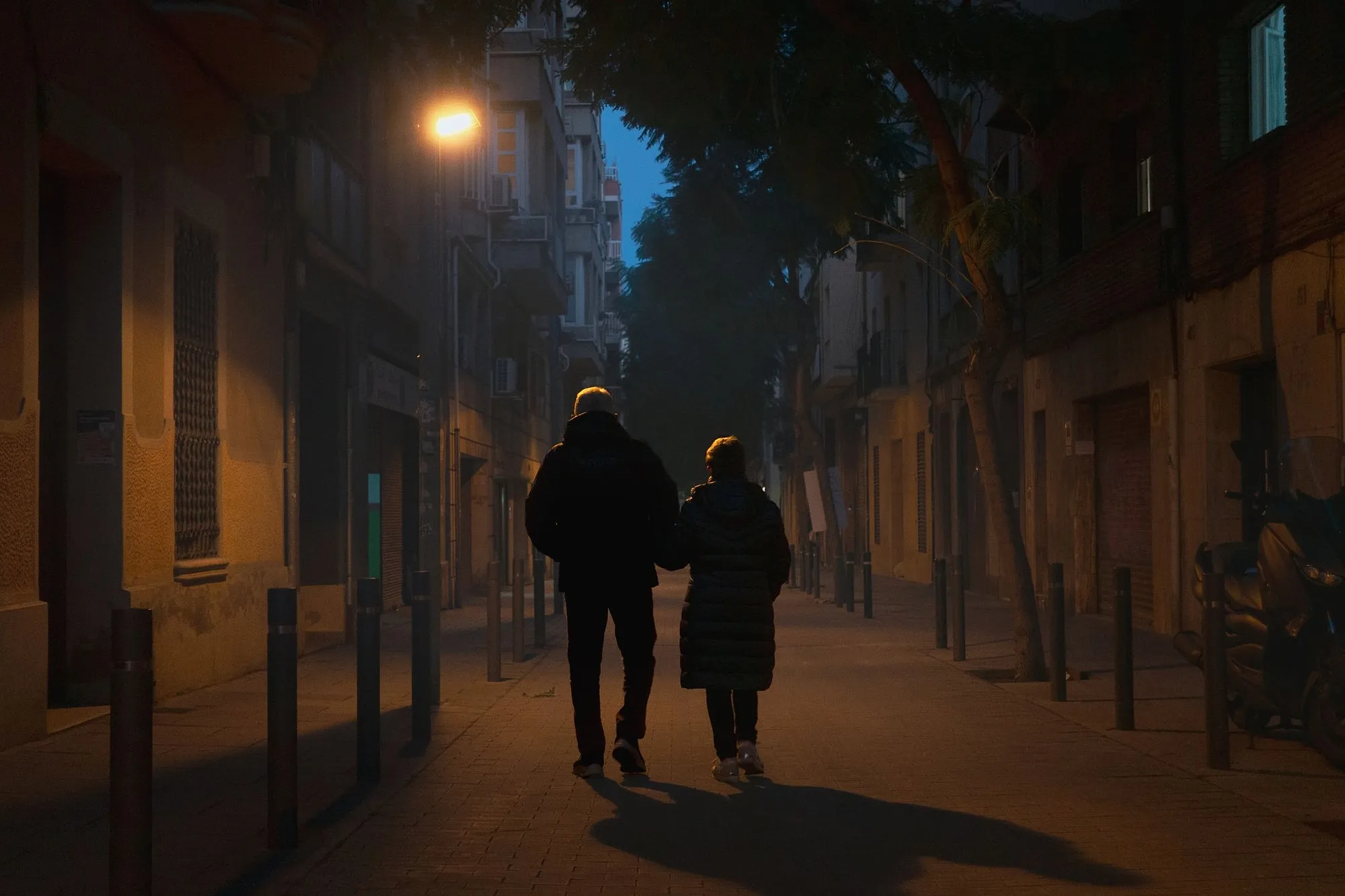
The Gothic Quarter after dark
By day it is a crowded stage set. By night it is a narrow city.
- How long it lasts
- 2 h
- Runs in
- EN · ES · CA
- Price
- 18 €
Never more than 20 people
More in the journal
The Gothic Quarter
- El Call: four streets, a stone that is a copy, and an argument about one building
- Asked which visitors they would like more of, Barcelona picked the ones who come to learn something
- The city counted 1,322 shelters, and says the people dug most of them themselves
- Barcelona has the first documented giant in Europe, and almost everything that walks today was carved after 1987
- The square is called Royal because of a monument that was never put up
- The engineer everyone credits with the Barceloneta designed a neighbourhood that was never built