
Gothic Quarter
Barcelona is switching off 10,101 tourist flats, and it commissioned a study of what that will cost
The honest guide to sleeping in Barcelona's old city is three facts and one date. Two of the facts are municipal surveys, and the date is 2028.
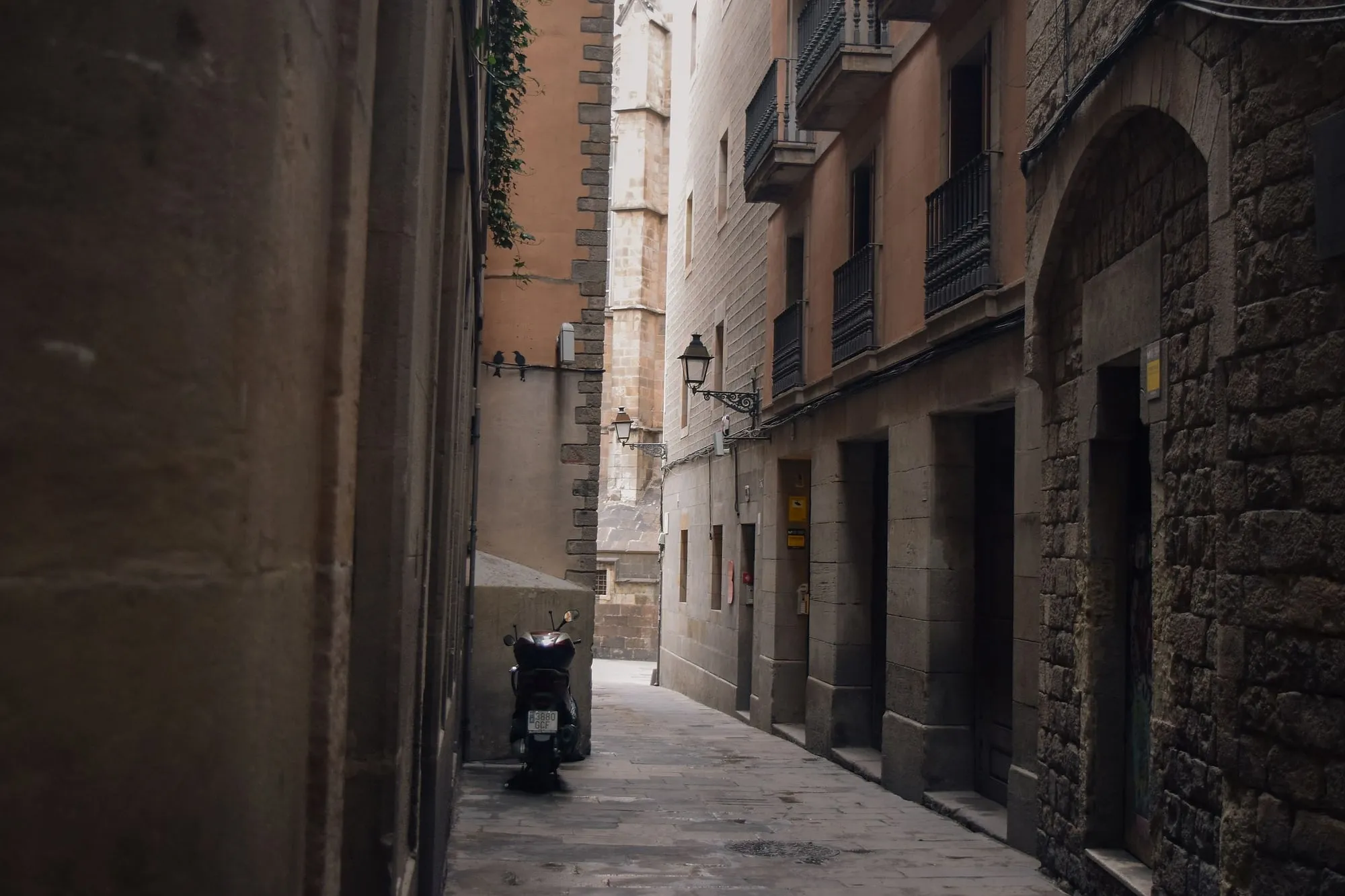
Most pages about where to sleep in Barcelona’s old city are a list of hotels with an affiliate link on each one. This is not that, because we do not sell rooms and would be bad at it.
What we can do is put the four municipal documents about this neighbourhood next to each other, which nobody seems to have done, and let you decide.
The date
From 2028, the 10,101 licensed tourist flats in Barcelona lose their licences.
That is not a rumour and it is not a proposal in a manifesto, and the figure is not one of those numbers that gets rounder every time somebody repeats it. It is in the Ajuntament’s own press office twice. The note of 27 June 2024 has the mayor and the housing minister standing in a public housing block in Trinitat talking about recovering fins a 10.101 habitatges d’ús turístic amb llicència que hi ha avui a la ciutat for ordinary residential use. The note of 9 August 2024, about inspections, repeats the number and adds the month the clock runs out: novembre de 2028, when s’hagin extingit totes les llicències dels més de 10.101 pisos turístics amb llicència a dia d’avui.
The study the Ajuntament then commissioned about it, published in September 2025, opens by describing the suppression from 2028 of the more than 10,000 tourist flats operating in the city. Same measure, rounded down; the exact count is in the 2024 notes.
The mayor’s line at the time: we are the first European city to take this measure, but we will not be the last.
If you are reading this in 2026 or 2027, nothing about your trip changes. What changes is an assumption. The stock of short-let flats in the old city is not a permanent feature of the place; it has an expiry date printed on it, and the city has published the arithmetic.
The study, which is the interesting part
Cities usually announce something like this and let other people argue about the consequences. Barcelona commissioned the argument from its own Institut d’Economia de Barcelona and published the answer, including the parts that are inconvenient.
What it projects when 10,000 flats go back to residential use:
- Rents down 8 % to 13.4 % — an average of 92 to 152 euros a month
- Purchase prices down 6.1 % — about 22,400 euros
- City GDP down about 36 million euros a year, which the study itself calls 0.04 % of total GDP, and practically imperceptible
- Social-security affiliations down 0.35 % to 1.35 %, against 1.2 million affiliated in the city
And it says why the GDP number is so small: the fall in retail and hospitality is offset by growth in financial, property, professional and technical activity. Money does not leave; it moves.
The report also lists its own limitations and possible biases, which is the mark of a study rather than a press release. And the city has attached something to it that is easy to miss: Barcelona Activa will run a retraining and job-transition service from the last quarter of 2027 until the end of 2029, delivered from Porta22 and from district facilities in Ciutat Vella, Sant Martí, the Eixample, Sants-Montjuïc and Nou Barris.
Whatever you think of the policy, that is a city doing its homework in public. It is also, if you are staying in a flat in the Barri Gòtic, a description of the building you are standing in.
What the neighbourhood is like to sleep in, on the city’s own numbers
Three things, all from municipal surveys, all with the source at the bottom.
It is the district where residents feel least safe. Ciutat Vella scores its own neighbourhood 4.9 out of ten and the city as a whole 5.7 — and it is the only district in Barcelona that rates its own streets below the city. Every other district does the opposite. The recorded-incident ratio is 137.3 per hundred inhabitants against 55.2 for the next district down. The full picture, including why almost all of that is theft rather than anything else, is in is the Gothic Quarter safe.
It is a place residents have partly withdrawn from. In the 2025 perception survey, «el Gòtic, el Raval and the old town» is the fourth most avoided area in Barcelona at 25.5 %, and among people who live in a tourist neighbourhood, 55.0 % now say tourism is harmful for their neighbourhood against 38.1 % who say beneficial. That survey is worth reading whole.
And within it, the difference between streets is enormous. La Rambla scores 27.1 % on the avoidance list. El Born scores 7.4 %. The cathedral and Santa Maria del Mar score 3.9 %. Ten minutes’ walk apart.
That last line is the practical one. «Staying in the Gothic Quarter» is not one decision. Staying twenty metres off La Rambla and staying between the cathedral and Via Laietana are different holidays, and the city’s own data says so.
What we would actually weigh
For it. You can walk to almost everything, including out of it — the Born, the Raval, the seafront and the Eixample all begin at its edges. The mornings are extraordinary and they are free: the streets between seven and nine belong to deliveries and to people going to work, and that is the version of this neighbourhood that survives in your memory. So does the night, which is its own argument.
Against it. Noise carries in stone canyons and closes nothing out. There is very little green. The middle of the day, from about eleven to five, is not yours. And the ordinary infrastructure of living — a supermarket that is not a tourist supermarket, a chemist, somewhere to sit that is not consuming something — thins out the closer you get to the Rambla.
The compromise most people should take. Sleep at the quiet end of the old city or just outside it, and walk in. Gràcia is the version of that argument we know best — it scores 2.9 % on the avoidance list and 6.8 out of ten on resident safety, and it is twelve minutes on the metro.
Two things we are deliberately not printing
Rates for the tourist tax. The municipal surcharge is on a rising schedule under Llei 2/2026 and any figure we print here is wrong within months. What we will note, because these are stable facts about dated documents: the Ajuntament published in February 2026 that 56.6 % of Barcelona’s population are very or fairly in favour of increasing it, against 6.7 % against and 33.4 % who do not know — and that tourist taxation became the city’s second largest source of income in 2025, at 148.08 million euros, behind only the property tax. Three quarters of residents know the tax exists; fewer than half know what it pays for.
A list of hotels. We have no way to keep it honest and no reason to be trusted about it.
The one practical thing to do before you pay
Check the licence. The Ajuntament publishes a lookup — barcelona.cat/habitatgesturistics, mirrored at fairtourism.barcelona, in Catalan, Spanish, English, French and German — where you type an address and it tells you whether that flat is licensed.
It exists because the problem is real: in August 2025 the city put 10,400 posters in the entrance halls of the five districts with most illegal lets — Ciutat Vella, the Eixample, Gràcia, Sant Martí and Sants-Montjuïc — precisely to tell residents and visitors that the tool is there. The same note says the council has imposed more than 11,500 sanctions since 2016.
Two minutes, and it is the only part of this page that can save you an actual bad evening.
Where this sits with the rest
If you are still deciding whether the neighbourhood earns your time at all, that is its own page. If you already know you are staying and want the walk that makes sense of it, what to see in the Gothic Quarter goes in an order that does not double back. And if the density of the old city is the thing that worries you, the Barceloneta is the other extreme: a grid built to a firing solution, whose typical home was once a rented quarter of a house.
And our own contribution is two hours: the Gothic Quarter walk on Monday and Wednesday afternoons, and the same streets after dark on Friday and Saturday nights, which is the one we would book if we were sleeping ten minutes away. We are closed on 25 December and 1 January.
Where this comes from
- La desaparició dels HUT a Barcelona rebaixarà el preu de l'habitatge sense afectar el PIB de la ciutat (26/09/2025)Ajuntament de Barcelona · Servei de PremsaThat an Institut d'Economia de Barcelona study commissioned by the Ajuntament quantifies for the first time the impact of «la supressió a partir del 2028 dels més de 10.000 habitatges turístics que operen a la ciutat»; that returning them to the residential market would produce «una reducció entre el 8 % i el 13,4 % en el preu dels lloguers i del 6,1 % en els preus de compravenda», amounting to between 92 and 152 euros on an average rent and about 22,400 euros on a purchase; that the effect on city GDP is «uns 36 milions d'euros anuals», which «representa un 0,04 % del PIB total i, per tant, l'impacte es podria considerar pràcticament imperceptible»; that the fall in social-security affiliations would be «entre el 0,35 % i l'1,35 %» against 1.2 million affiliated in the city; and that Barcelona Activa will run a professional-transition service from the last quarter of 2027, from Porta22 and from district facilities including Ciutat Vella and Sants-Montjuïc, until the end of 2029.
- Jaume Collboni i Isabel Rodríguez refermen el compromís per prioritzar el dret a l'habitatge per davant de l'ús turístic (27/06/2024)Ajuntament de Barcelona · Servei de PremsaThe exact figure and the exact claim: the measure covers «fins a 10.101 habitatges d'ús turístic amb llicència que hi ha avui a la ciutat», to be returned to habitual residential use, and the mayor's formulation that «som la primera ciutat europea que pren aquesta mesura però no serem l'última». It also places the measure inside the municipal Pla Viure.
- Barcelona intensifica la inspecció i control dels pisos turístics il·legals i les xarxes fraudulentes (09/08/2024)Ajuntament de Barcelona · Servei de PremsaThe second municipal statement of the same figure, and the one that puts a month on the deadline: that the inspection effort will be sustained «per evitar que hi hagi un augment de l'activitat il·legal a partir de novembre de 2028, un cop s'hagin extingit totes les llicències dels més de 10.101 pisos turístics amb llicència a dia d'avui».
- Enquesta de percepció del turisme a Barcelona 2025 (PDF)Ajuntament de Barcelona · Oficina Municipal de Dades, Departament d'Estudis d'OpinióQuestion P13, on the 999 residents who said tourism had made them stop visiting somewhere: La Rambla 27.1 %, Plaça Catalunya–Passeig de Gràcia 26.8 %, Front Marítim 26.3 %, «el Gòtic - el Raval - el casc Antic» 25.5 %, El Born 7.4 %, «Catedral - Santa Maria del Mar» 3.9 %, Gràcia 2.9 %. And question P2, which for residents of tourist neighbourhoods gives 55.0 % saying tourism is harmful for their neighbourhood against 38.1 % beneficial.
- Enquesta de Victimització de Barcelona 2025 — Presentació de resultats (PDF)Ajuntament de Barcelona · Oficina Municipal de DadesThat Ciutat Vella residents score safety in their own neighbourhood at 4.9 out of ten against 5.7 for the city as a whole — the only district in Barcelona where the neighbourhood scores below the city — and that the district's location ratio for 2024 is 137.3 incidents per hundred inhabitants against 55.2 for the next district.
- Barcelona reforça aquest estiu la lluita municipal contra els habitatges d'ús turístic il·legals (01/08/2025)Ajuntament de Barcelona · Servei de PremsaThat the council distributed 10,400 posters in the entrance halls of Ciutat Vella, the Eixample, Gràcia, Sant Martí and Sants-Montjuïc, «els districtes amb més presència d'HUT il·legals»; that the licence lookup is published «al web barcelona.cat/habitatgesturistics o bé al www.fairtourism.barcelona» and is available in Catalan, Spanish, English, French and German; and that «des del 2016 el consistori ha imposat més de 11.500 sancions».
- El 56 % de la població de Barcelona està a favor d'incrementar la taxa turística (05/02/2026)Ajuntament de Barcelona · Servei de PremsaThat «el 56,6 % de la població de Barcelona està molt o bastant d'acord amb augmentar l'Impost d'Estades en Establiments Turístics», against 6.7 % who are little or not at all in agreement and 33.4 % who do not know or prefer not to answer; that knowledge of the tax has reached its historic maximum at 75.7 % while only 48.3 % know it funds cultural or social projects; and that tourist taxation «s'ha convertit aquest 2025 en el segon ingrés de l'Ajuntament de Barcelona més important, només per darrera de l'Impost sobre Béns Immobles (IBI), en sumar 148,08 milions d'euros».
Everything above that carries a date, a figure or a name is checked against these before it is published. Where we could not find a source, the page says so.
Quick answers
- Is Barcelona banning tourist apartments?
- It is letting the licences expire rather than banning the activity. The Ajuntament announced in 2024 that the 10,101 licensed habitatges d'ús turístic in the city would return to residential use, and the study it later commissioned describes «la supressió a partir del 2028 dels més de 10.000 habitatges turístics que operen a la ciutat». The mayor's own framing at the time was that Barcelona is «la primera ciutat europea que pren aquesta mesura».
- What did the city's own study say the cost would be?
- The Institut d'Economia de Barcelona, commissioned by the Ajuntament and published in September 2025, put the effect on city GDP at about 36 million euros a year — «un 0,04 % del PIB total», which it calls practically imperceptible — and on employment at a fall of between 0.35 % and 1.35 % in social-security affiliations, against the 1.2 million affiliated in the city. On housing it projected rents down between 8 % and 13.4 %, an average of 92 to 152 euros a month, and purchase prices down 6.1 %, about 22,400 euros.
- Should I still book a flat in Barcelona?
- Licensed ones are operating and this page is not going to tell you otherwise. What matters is the word licensed, and the city has made that checkable: it publishes a lookup at barcelona.cat/habitatgesturistics and at fairtourism.barcelona, in five languages, where you can put in an address and see whether it holds a licence. The Ajuntament says it has imposed more than 11,500 sanctions since 2016. An unlicensed flat is the one that can vanish between booking and arrival.
- Is the Gothic Quarter a good place to stay?
- It depends entirely on what you want your evenings to be. It is the densest, oldest, most walkable part of the city and you will be inside almost everything. It is also the district where residents score their own neighbourhood 4.9 out of 10 for safety, the district with by far the highest recorded incident rate, and one of the four places Barcelona residents most often say they have stopped going to. Those are all in our pages on the neighbourhood, with the sources.
- Where is quieter but still central?
- The survey answer is unusually clear. Among residents who avoid somewhere because of tourism, El Born scores 7.4 % and «the cathedral and Santa Maria del Mar» 3.9 %, against La Rambla's 27.1 % — and all of those are within about ten minutes' walk of each other. Gràcia scores 2.9 %, and that is a genuinely different proposition, which is its own page.
- Is the tourist tax going up?
- The municipal surcharge has been rising on a published schedule under Llei 2/2026, so any figure printed today dates quickly. We do not print rates on this site for that reason. What is worth knowing is that in the perception survey published in February 2026, 56.6 % of Barcelona's population were very or fairly in favour of increasing it, against 6.7 % against — and that tourist taxation became the Ajuntament's second largest source of income in 2025, at 148.08 million euros, behind only the property tax.
- Does any of this change what a visit is like now?
- Not in 2026. The date is 2028 and the transition support the city has announced for the people who work in the sector starts in the last quarter of 2027. What it changes is the assumption that the supply of flats in the old city is permanent. It is not, and the city has said so in writing with an economic impact study attached.
The tours this piece is about
The Gothic Quarter: a neighbourhood that invented itself
Barcelona's most photographed bridge dates from 1928.
- How long it lasts
- 2 h
- Runs in
- EN · ES · CA
- Price
- 15 €
Never more than 20 people
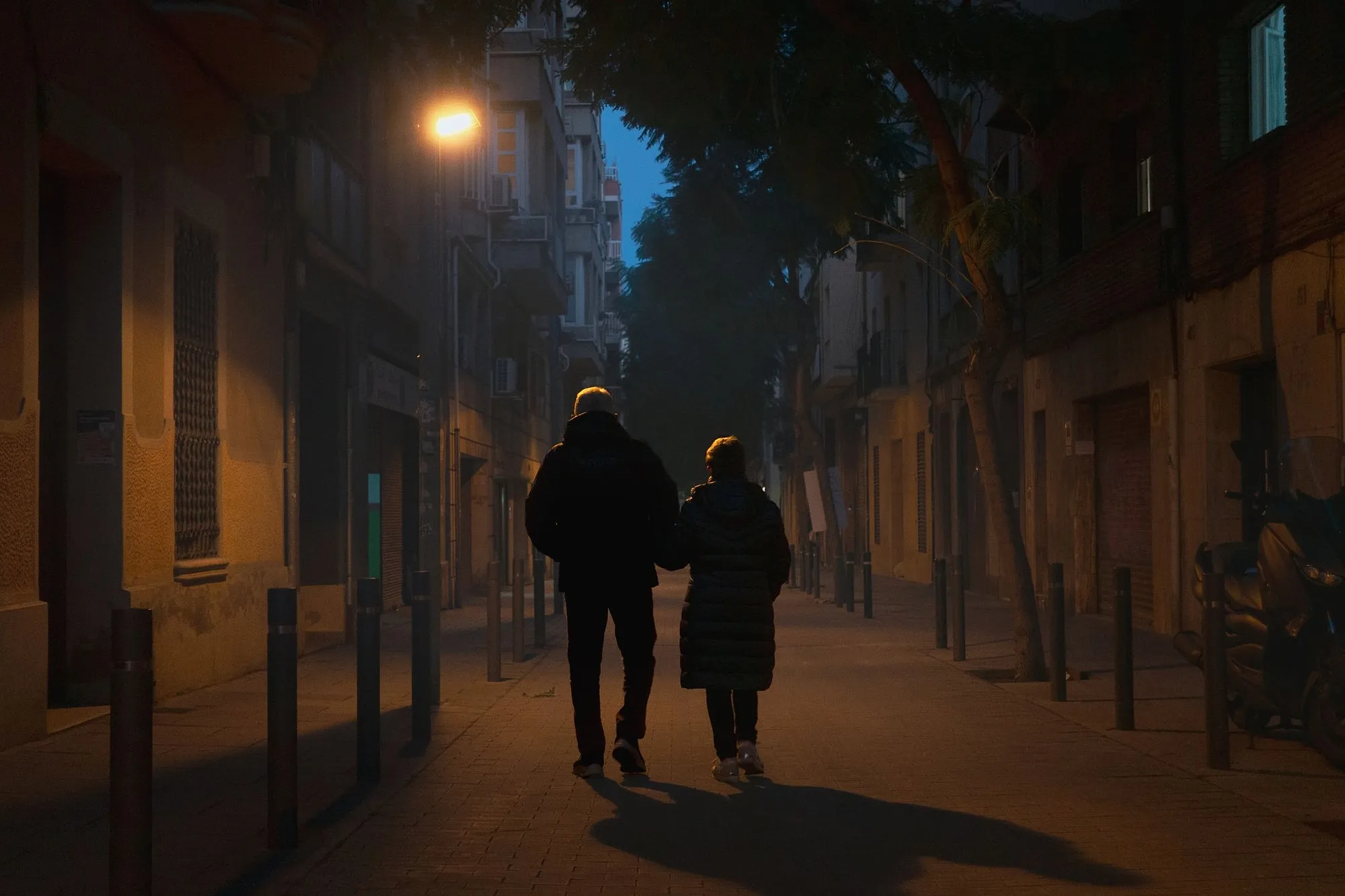
The Gothic Quarter after dark
By day it is a crowded stage set. By night it is a narrow city.
- How long it lasts
- 2 h
- Runs in
- EN · ES · CA
- Price
- 18 €
Never more than 20 people
More in the journal
The Gothic Quarter
- The city history museum has eighteen buildings and most visitors have been to one
- The ring roads are the wall, and the city dates the same wall twice, twelve years apart
- One medieval gate is still standing, and it survived because the army was using it
- Thirty galleys at once, and the superlative everyone uses is not the one the Generalitat wrote
- The Gothic Quarter at night is a different neighbourhood, and it is free
- El Call: four streets, a stone that is a copy, and an argument about one building