
Montjuïc
The quarry behind the hill, and the twenty-five columns of names
It is fifteen minutes from the castle and almost nobody walks up to it. This page is short on purpose.
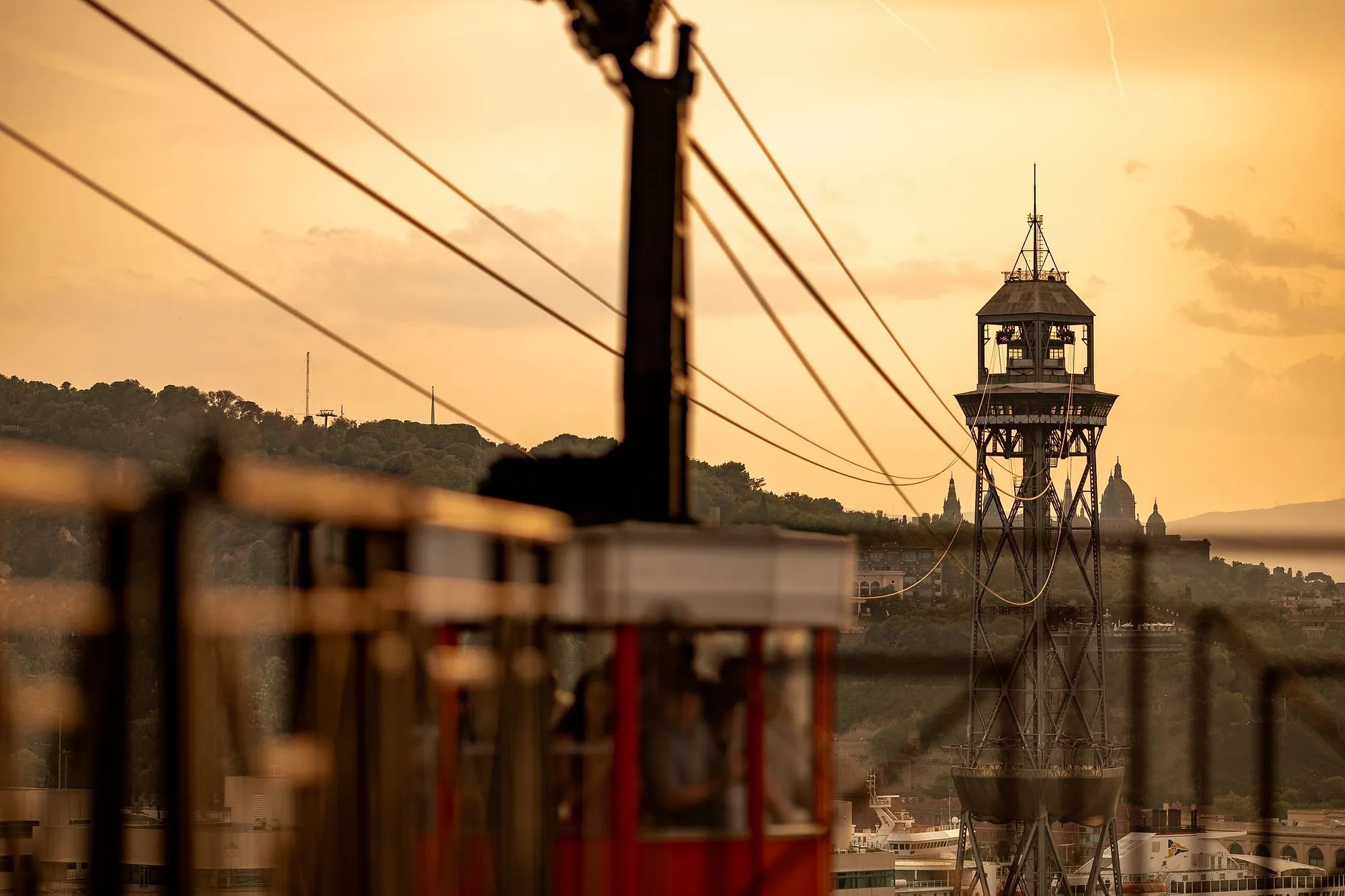
Montjuïc was quarried for centuries. The stone came out of it and went into the city, and the holes it left behind kept being used for other things: a theatre was built against one of them in 1929, and gardens went into others.
One of them was used for the dead.
What it is
The Fossar de la Pedrera is a worked-out quarry inside Montjuïc cemetery. Its origin, as the city describes it, is the pedrera Moragas, where the destitute and the unidentified were buried — the pit for people whose families could not pay for anything else.
It went on functioning as a common grave until 1979.
What is in it, in the municipal cemetery service’s own account: the remains of people buried without resources; of victims of the bombing of Barcelona by Italian, German and Francoist aircraft between 1936 and 1939; and of the more than 1,700 people executed in Barcelona by the Franco regime between 1939 and 1952.
That page is worth quoting exactly, because it does not round: 1.706 homes i 11 dones. One thousand seven hundred and six men and eleven women — 1,717 people.
And the city does not agree with itself about that number. Barcelona’s own memory programme, on the page for the memorial wall at the Camp de la Bota — the shore where most of these people were shot — gives the total as 1,706, from research by the Arxiu Nacional de Catalunya on the records of the summary courts martial, and that is how many names are carved on the wall. Same city, same years, eleven people apart. The eleven are the women. We could find nothing published that reconciles the two counts, so we are giving you both and neither is ours.
What the city does not publish anywhere is a total for the grave itself. You will often see a figure of around four thousand attached to this place; that number is the Gran Enciclopèdia Catalana’s, not the city’s, and the executed are only one of the three groups the cemetery service lists. We are giving you the facts separately rather than the rounder one that merges them.
The columns
The memorial was built after a long campaign by an association formed for that purpose, and was inaugurated by the city and the Generalitat on 27 October 1985. The Ajuntament credits the project to the architect Beth Galí; the encyclopedia credits Galí together with Màrius Quintana and Pere Casajoana.
It is a landscape rather than a monument. Twenty-five stone columns carry names — mostly, the city says, the names of those executed at the Camp de la Bota, down on the shore on the other side of Barcelona. There is a Holocaust memorial of ten stone blocks. There is a sculpture, Ferran Ventura’s Pietat. In 2011 a further piece by Juanjo Novella was added for executed libertarians.
Companys
He was shot in the moat of the castle at six in the morning on 15 October 1940, at the top of the same hill.
From then until 1985 he lay in a niche in this cemetery with no inscription identifying it. On the day the memorial was inaugurated, his remains were moved to the mausoleum that stands at the centre of it.
Forty-five years unmarked, on a hill in his own city. That is the fact worth carrying away, and it does not need any help from us. The rest of what happened to him is in the history of the castle.
The place the names come from
Most of the names on the columns belong to people who were shot at the Camp de la Bota, a stretch of shore at the north-eastern edge of Barcelona. The first executions at its parapet were on 10 February 1939 and the last on 14 March 1952.
The parapet itself is gone. The site was built over for the Fòrum development, and since 2004 it has lain under the water of the marina. The city’s history museum commissioned a sonar survey and a dive to look for it, and found no remaining trace.
So the columns up here are, in a real sense, the only place that site still exists.
Going
It is inside Montjuïc cemetery — which is a considerable place in its own right — on the seaward flank of the hill, and it is open to the public. The municipal cemetery service also runs free guided visits and school activities; their own pages carry the current arrangements, which is where we would rather send you than print something that goes out of date.
It is roughly fifteen minutes on foot from the castle side of the hill, and it is almost always empty. Barcelona’s tourism observatory records that 55.3 % of visitors reach Montjuïc. Essentially none of them reach this.
Two requests, and they are the only two.
Do not treat it as a viewpoint. It has one, and that is not what it is.
Go quietly and do not photograph the graves. People come here to visit relatives. That is still true on a Tuesday afternoon in August.
Why our walk ends here
Our Montjuïc walking tour finishes here, after the 1929 fairground and the castle. Not for a twist ending. Because a hill that gets visited for its fountain and its view has a quarry on the back of it, and an afternoon that takes the first two and leaves out the third has not been to Montjuïc. It has been to the brochure.
It is told plainly, by an actor, without dramatising it — the material does not need it. Whether that is the right way to spend an afternoon is is Montjuïc worth it, and the smaller question of how you get up the hill is here.
If you want the same subject at the other end of the city and on a smaller scale, the marks on the church wall in Plaça de Sant Felip Neri come from an air raid on 30 January 1938, and some of the people killed in raids like it are buried in this quarry.
The quarries that produced this one, and what else was done with the holes, are here — and why the hill is made of the rock it is is the layer underneath all of it.
Where this comes from
- El Fossar de la PedreraCementiris de Barcelona · Ajuntament de BarcelonaVerbatim, in Catalan: «Aquest espai, que era una fossa comuna, conté les despulles mortals de persones sense recursos, de víctimes dels bombardeigs sobre Barcelona -de l'aviació italiana, alemanya i franquista durant la Guerra d'Espanya de 1936-1939- i de les més de 1700 persones -1.706 homes i 11 dones- executades pel règim franquista, a Barcelona, entre 1939 i 1952.» Also that the common grave functioned as such until 1979; that the memorial project was by the architect Beth Galí, promoted by the Associació Pro-Memòria als Immolats per la Llibertat a Catalunya and inaugurated by the Ajuntament and the Generalitat on 27 October 1985; and that the columns carry mostly the names of those executed by the Franco regime at the Camp de la Bota.
- Espai Memorial Camp de la BotaAjuntament de Barcelona · Programes de MemòriaThe second, discrepant count, verbatim in Catalan: «Des de 1939 fins el 1952, segons la documentació extreta dels consells de guerra sumaríssims, en una recerca efectuada per l'Arxiu Nacional de Catalunya, a Barcelona van ser executades un total de 1.706 persones, la majoria en aquest espai del Camp de la Bota, però també al Castell de Montjuïc i a la presó Model.» Francesc Abad's memorial wall, 55 m by 3.5 m, carries those 1,706 names. It does not mention the Fossar de la Pedrera. Also that the MUHBA commissioned two technical reports to locate the parapet's remains under the sea.
- Cementiri de MontjuïcCementiris de Barcelona · Ajuntament de BarcelonaThat the Fossar de la Pedrera is inside Montjuïc cemetery and that President Companys rests there. It publishes no count of people buried.
- El Castell del franquismeAjuntament de Barcelona · Castell de MontjuïcCompanys shot at six in the morning on 15 October 1940, in the Santa Eulàlia moat at the top of this same hill.
- Informe de resultats: perfil i hàbits dels turistes a Barcelona ciutat 2025 (PDF, table on p. 73)Observatori del Turisme a BarcelonaThe 55.3 % who reach Montjuïc. The survey measures it as «Montjuïc, fountains and Plaça Espanya», not the whole hill.
Everything above that carries a date, a figure or a name is checked against these before it is published. Where we could not find a source, the page says so.
Quick answers
- What is the Fossar de la Pedrera?
- A worked-out quarry inside Montjuïc cemetery that was used as a common grave, and functioned as one until 1979. The municipal cemetery service records that it holds the remains of people buried without resources, of victims of the bombing of Barcelona between 1936 and 1939, and of the more than 1,700 people — it counts 1,706 men and 11 women — executed in Barcelona by the Franco regime between 1939 and 1952.
- Is Lluís Companys buried at the Fossar de la Pedrera?
- Yes, in the mausoleum at the centre of the memorial. From 1940 he lay in an unmarked niche elsewhere in the same cemetery. His remains were moved to the mausoleum on 27 October 1985, the day the memorial was inaugurated.
- Can you visit the Fossar de la Pedrera?
- Yes. It is inside Montjuïc cemetery and it is open to the public. The municipal cemetery service also runs free guided visits — check their own pages for current arrangements. It is a fifteen-minute walk from the castle side of the hill and it is almost always empty.
- Who designed the memorial?
- The architect Beth Galí, whom the Ajuntament credits with the project; the Gran Enciclopèdia Catalana credits Galí together with Màrius Quintana and Pere Casajoana. It was inaugurated on 27 October 1985, after a campaign by an association formed for the purpose.
- Is it suitable for children?
- It is a cemetery and a mass grave, and it is told without decoration. From around twelve it works if a child already has some idea of what the twentieth century was. Below that, the hill has plenty else.
The tours this piece is about
More in the journal
Montjuïc
- Barcelona built this castle to defend itself, and then spent two centuries being shelled from it
- The hill is named after a cemetery, and 529 of its graves are still down there unopened
- The architect wanted to build a monument made of monuments, and the city let him
- The best building of the 1929 Exposition spent fifty-six years not existing
- It is a copy of a hundred and seventeen buildings, and it never pretended otherwise
- The paintings in the museum were peeled off the walls of churches two hundred kilometres away