
Montjuïc
Is Montjuïc worth it? Give it half a day or give it nothing
Just over half of Barcelona's visitors get up here, and most of them see about a fifth of it. The hill does not fail people. Schedules do.
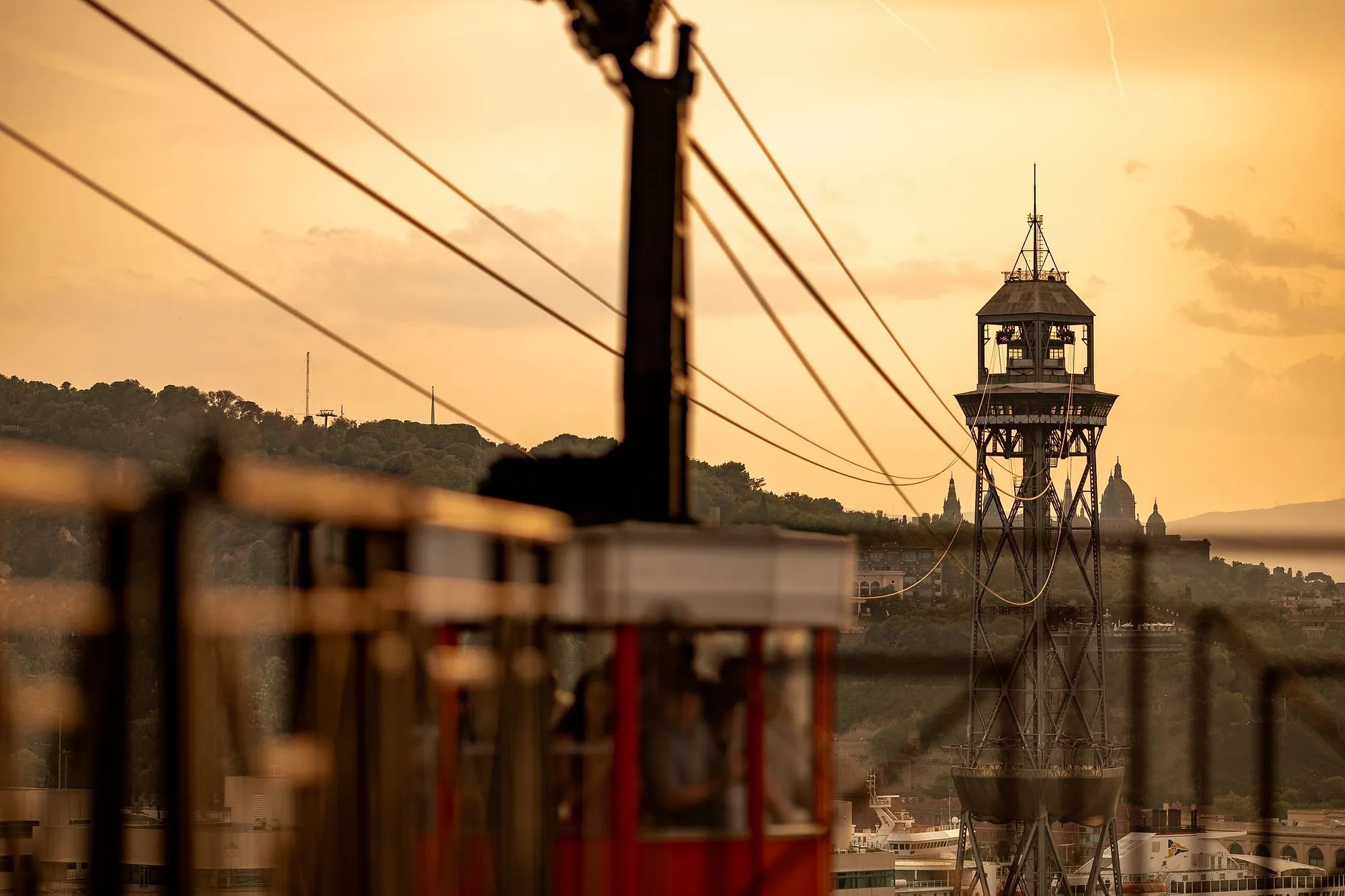
Yes, and the qualification matters more than the answer.
Barcelona’s tourism observatory records that 55.3 % of visitors reach Montjuïc — more than reach Park Güell. Most of them go up, look at the view, photograph the fountain and come down, and a good number of them write afterwards that it was fine.
They are not wrong about what they saw. They saw about a fifth of it.
The thing to understand before you plan
Montjuïc is not a sight. It is a district. The Ajuntament’s own action plan for the park gives it as 316 hectares of equipped park, within a planning scope of 337.97 — and the 376 hectares you will read everywhere, including on this page until today, is not a figure any institution publishes. Inside it there is a castle, the surviving half of a world’s fair, two major art museums, an Olympic stadium, a botanical garden, a cemetery and a common grave.
You cannot do that in the ninety minutes most itineraries give it, and the attempt is what produces the shrug. Half a day, or leave it for the next trip.
The hill of two names, and the one that is in the documents
It is mount of the Jews, after the medieval Jewish burial ground on the north-eastern slope.
We used to say here that this was an open question with the Latin Mons Iovis, Jupiter’s hill, and that nobody had settled it. That was wrong and we have taken it down. The Generalitat’s listing decree states that the cemetery dóna nom a la muntanya de Montjuïc; the Ajuntament’s own castle interpretation centre says the name prové del cementiri jueu; and the Gran Enciclopèdia Catalana treats Jupiter as an antiquarian argument closed long ago, because the documentation about this mountain, preserved from 878, calls it invariably Mons Judaicus.
So there are two names, but only one of them is in the paperwork. The burial ground it is named after is the one thing on this hill you cannot visit — 529 of its graves are still in the ground, located and deliberately left unopened.
What is actually up there
The castle. A fortress the city built for itself in thirty days in 1640 and then spent two centuries being shelled from — documented bombardments of Barcelona in 1842, 1843 and 1856, a prison under the Republic and under the dictatorship, and the place where Lluís Companys was shot in 1940.
The 1929 fairground. The Palau Nacional, now the national art museum; the Magic Fountain; the Poble Espanyol, which was going to be demolished and was not; and the German pavilion, which was demolished and was rebuilt fifty-six years later — the whole survival lottery is here.
The Olympic ring. The 1929 stadium, reused in 1992 by keeping the façade and rebuilding everything behind it, with the track lowered eleven metres — and the most famous thing that happened in it is the one thing nobody will confirm.
Two art museums, one of Romanesque and Gothic art in the Palau Nacional and one of Miró in a building by Josep Lluís Sert that opened in 1975. Both have their own admission arrangements, and both are half-day propositions on their own — which is a scheduling problem, not a recommendation against. The Romanesque murals in the first were taken off the walls of Pyrenean churches between 1919 and 1923; the second was built by the man who designed the pavilion that held Guernica.
The Fossar de la Pedrera, a worked-out quarry used as a common grave until 1979 and turned into a memorial in 1985. Almost nobody walks up to it.
The gardens, which are extensive, free, and the reason people who live in Barcelona come up here at all — several of them are in exhausted quarries.
The cemetery, opened in 1883 and laid out on the model of Père Lachaise by an architect who wanted to build a monument of monuments — it holds Miró, Cerdà and Verdaguer, and almost nobody goes.
And the rock itself. This hill was Barcelona’s quarry from Roman times until extraction stopped in 1957, and the old city is built out of it. How tall the rock is, though, nobody official publishes.
The viewpoints, of which the best is the Mirador de l’Alcalde — four terraces above the working port, with a floor made of scrap iron and broken bottles.
What you do not get
A compact visit. Everything on that list is ten to twenty minutes’ walk from everything else on it, uphill.
A single object to stand in front of. Like the old city and unlike the Sagrada Família, the place is the exhibit.
A light afternoon. If you do the castle and the Fossar, you have spent a couple of hours on political violence. That is the correct way to visit this hill and it is not what everyone wants on day two of a holiday. Better to know now.
The lower slopes as they are in the photographs. The old exhibition grounds are being transformed: demolition has begun, a second phase starts in 2029, and the programme runs to 2035 so the new spaces open for the centenary of the 1929 fair.
Who should skip it
- One day in Barcelona. Not a chance. See one day in Barcelona.
- Two days. Also no, and this is the hard one, because Montjuïc is genuinely better than several things people do on day two. It is still half a day you do not have — the reasoning is in two days in Barcelona.
- Three days or more. Now it belongs, and it is one of the best half days in the city. See three days in Barcelona and, if this is not your first visit, coming back to Barcelona.
- Anyone who wants a hill for the view. You will get a view. You will also have walked past a mass grave to reach it, and it seems fair to mention that in advance.
Montjuïc or Park Güell
People ask this as though it were one question. It is two.
Park Güell is a ticketed Gaudí site with a time slot and a queue, and whether it earns that is its own argument. Montjuïc is a district you walk into for nothing, where the tickets are optional and the walking is the point.
If your interest is architecture, Park Güell, and add the Gaudí buildings you can see from the street for free. If your interest is what actually happened to this city in the last two hundred years, there is no competition: everything on that subject is on this hill.
The half day that works
Up from Plaça d’Espanya on the escalators, through the fairground, up to the castle by bus or cable car, out to the Fossar behind it, and down over the harbour at the end. Four to five hours, most of it free, and one continuous argument rather than four stops.
Sorting out which of the three cable-car-shaped things to use — one of them is already in your metro ticket — is how to get to Montjuïc.
The version with someone doing the talking
Our Montjuïc walking tour runs a couple of afternoons a week, takes twenty people, and walks that sequence with an actor rather than a commentary. Fairground, then castle, then quarry — in that order and not another, because the order is the argument.
If you want the quiet corners of Barcelona that visitors skip rather than the famous ones, the Fossar is on that list too — see things to do in Barcelona that are not touristy.
Six pieces of this hill have their own pages: the Magic Fountain, dry from November 2022 to September 2025; the German pavilion, which the law protects as a new building; the Casaramona cotton mill, a listed monument that spent fifty years as a police barracks; Plaça d’Espanya, where the bullring closed twenty-one years before the ban; Poble-sec and the Paral·lel at the foot of it; and the Jewish necropolis that gave the hill its name.
Three pages since: why this is the one big destination in Barcelona residents have not withdrawn from, what the city plans to spend on the hill and when it said so, and the four theatres on its lower slopes.
Where this comes from
- Pla d'Actuació del Parc de Montjuïc (PDF, Decidim Barcelona)Ajuntament de Barcelona · Pla d'Actuació del Parc de Montjuïc 2019-2029The area of the park as the city itself plans it: «aquest àmbit de parc (316 Ha)» for the equipped park and «l'àmbit de la MPGM 2014 (337,97 Ha)» for the wider planning scope. It is the document that retired the 376 hectares this page used to carry.
- Informe de resultats: perfil i hàbits dels turistes a Barcelona ciutat 2025 (PDF, table on p. 73)Observatori del Turisme a BarcelonaThe 55.3 % who reach Montjuïc and the 49.4 % who reach Park Güell, from a sample of 2,023 people.
- The FoundationFundació Joan MiróThat the Fundació, in Josep Lluís Sert's building, opened to the public on 10 June 1975.
- Història del Castell de MontjuïcAjuntament de Barcelona · Castell de MontjuïcThe castle's history, which is half of what this page is arguing about.
Everything above that carries a date, a figure or a name is checked against these before it is published. Where we could not find a source, the page says so.
Quick answers
- Is Montjuïc worth visiting in Barcelona?
- Yes, as a half day. It holds the castle, the surviving buildings of the 1929 International Exposition, two major art museums, the Olympic ring and a mass grave from the Franco years. As a ninety-minute stop between two other things it is a hill with a view, and that is where the disappointed reviews come from.
- How long do you need on Montjuïc?
- Four to five hours to walk it properly with the castle in it. Any less and you are choosing between the fairground and the fortress, which are the two halves of the same argument.
- What does Montjuïc mean?
- Mount of the Jews, after the medieval Jewish burial ground on its north-eastern slope. We used to write that this was unresolved, and we were wrong. The Generalitat's listing decree says the cemetery «dóna nom a la muntanya de Montjuïc»; the Ajuntament's castle interpretation centre says the name «prové del cementiri jueu»; and the Gran Enciclopèdia Catalana notes that the rival Latin reading, Mons Iovis, was an old antiquarian argument settled by documents preserved from 878 that call the hill invariably Mons Judaicus. The full correction is in the piece on the necropolis.
- Is Montjuïc better than Park Güell?
- They are not the same purchase. Park Güell is a ticketed Gaudí site with a queue and a time slot; Montjuïc is a district you walk into for nothing. If you want architecture, Park Güell. If you want to understand what happened to this city in the twentieth century, Montjuïc, and it is not close.
- Is Montjuïc good for children?
- The gardens, the cable cars and the Olympic stadium, yes. The castle works from about ten. The Fossar de la Pedrera is a mass grave and is told without softening, which from around twelve is fine and below that is not.
The tours this piece is about
More in the journal
Montjuïc
- The city calls this the third great transformation of Montjuïc, and it has been counting from 1929
- The bullring closed twenty-one years before bullfighting was banned, and the ban was struck down anyway
- The eight-hour day was won on this avenue, and the decree that granted it does not mention it
- On the city's list of places residents avoid because of tourism, Montjuïc comes last
- There are three cable-car-shaped things on Montjuïc and most people book the wrong one
- Barcelona built this castle to defend itself, and then spent two centuries being shelled from it