
Gràcia
Gràcia at night is not nightlife, and going there expecting nightlife is the mistake
Gràcia turns up on lists of Barcelona nightlife and the lists are wrong — not about the place, about the word. What happens here after dark is closer to a very large shared living room than to a night out, and the difference decides whether you enjoy it.
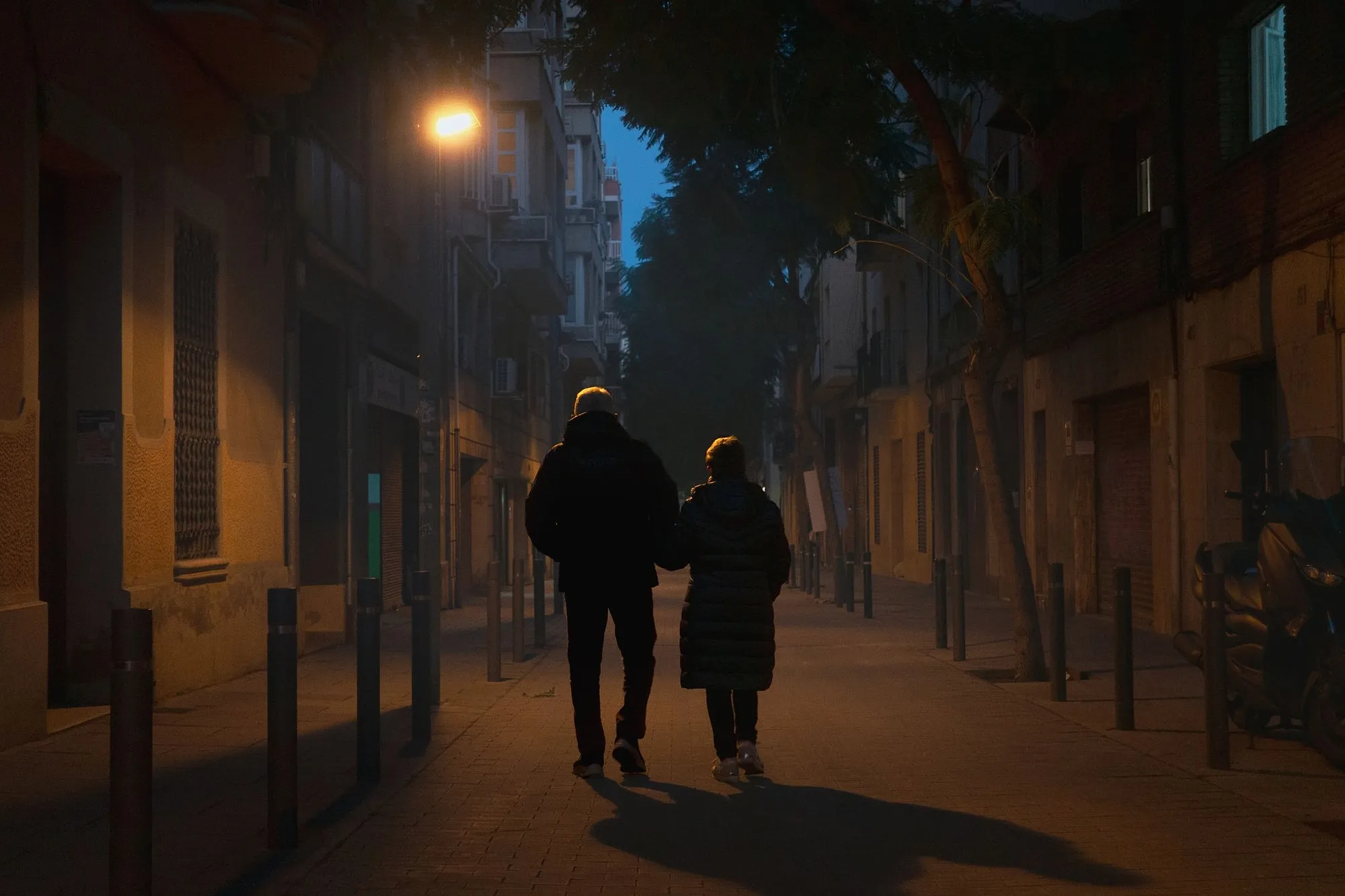
Gràcia appears on English-language lists of Barcelona nightlife, and the lists are not lying about the place. They are lying about the word.
There is no club here. There is no strip. There is no route that people do in order, no queue outside anything, and nothing that starts at two in the morning. What there is: five squares within fifteen minutes of each other, a very high concentration of very small bars, dinner that begins at nine, and 50,670 people, in 132 hectares, trying to sleep above all of it.
That last clause is the whole article, really. Everything else follows from it.
What actually happens, in order
From about eight, terraces fill. Not with an evening crowd that has come out from somewhere else — with people who live within four streets and have come downstairs.
From nine, dinner. Properly nine, often later. If you have not eaten by then you are on the neighbourhood’s clock rather than your own, which is fine, and the reason meals here take three hours is explained in eating in Gràcia.
From about eleven, the squares take over from the tables. Plaça del Sol is the loud one and has been for decades: people sitting on the ground, in numbers, with something to drink, for hours. Plaça de la Revolució does the same thing smaller and a minute’s walk away. Plaça de la Virreina keeps its terraces and its volume. Plaça del Diamant stays comparatively quiet, which is one of the reasons people who know the neighbourhood like it. What each square is for, and at which hour, is in the squares of Gràcia.
After one, it thins, unevenly, and mostly it does not stop.
The bars are small, and that is the format
A Gràcia bar is frequently one room, sometimes two, with a counter and a dozen stools. This has consequences that surprise people:
- You will stand outside. Not as a failure of the evening. As the evening.
- You will not do six of them. The room is the point; leaving it every forty minutes misses it.
- A group of ten does not fit. Genuinely does not fit, in the physical sense.
- Nobody is going to perform hospitality at you. Service here is brisk and unbothered and this is not rudeness, it is the register.
The cinema thing, which is real and is a hundred years old
There is one evening option up here that nobody puts in a guidebook, and the city itself has just published its history.
A cinema opened on 11 February 1926 on carrer Verdi under the name Salón Ateneo Cine — a picture house that opened with the word ateneu over the door, in a neighbourhood built on workers’ clubs. It became the Cinema Trebol in 1933 and the Cinema Verdi in 1935. In 1987 its founder turned it over to films in their original language with subtitles, which at the time was an eccentric commercial decision and turned out to be the making of it; by 1992 it had five screens. In February 2026 the city marked it as Barcelona’s first cinema to reach a hundred years.
That is why Gràcia is where this city watches subtitled films. It is also, statistically, a serious cluster: the municipal register of cinemas, theatres and auditoriums lists twenty-five such spaces in the district of Gràcia, out of 186 in the whole of Barcelona — fourth of the ten districts, in one of the smallest of them.
A subtitled film on a Tuesday is a completely normal evening for this neighbourhood and a very odd tourist activity, which is exactly the point if you are here for a week rather than a weekend.
The argument you are joining
The balconies around Plaça del Sol are bedrooms. Occupied ones. On a Wednesday.
The dispute between those bedrooms and that noise is decades old, it is genuinely unresolved, and it is not a piece of local colour: it is a live civic argument in which every visitor sitting on that pavement at one in the morning is a participant, whether or not they know the terms.
The scale of it is on the city’s own figures. The Vila de Gràcia holds 50,670 residents in 132.6 hectares — 382 people per hectare. There is no version of a square here that is not somebody’s window.
We are not going to tell you not to go. We take groups through these squares and we finish our own walk with a drink in one. What we will say is the thing that anybody who works here says: the volume of your own voice at one in the morning is the entire difference between being welcome and being a problem, and it is under your control in a way that almost nothing else about your trip is.
Where to go if you wanted the other thing
This is the part where recommending things we do not sell is more useful than recommending things we do.
- A proper bar crawl in a dense old city. The Gothic Quarter and the Born, which are built for it and are already full of people doing it.
- Clubs. Not in Gràcia. The beach front and Poble-sec are where that lives.
- A late dinner with a view. Not in Gràcia either — there is no view. That is the Eixample rooftops or the hill.
- Something to do after dark rather than somewhere to sit. The old city changes character completely once the day crowds leave, and that is the one after-dark thing we do sell: the Gothic Quarter after dark, which is a different city from the one the same streets contain at noon. The unguided version of that argument is in the Gothic Quarter at night.
Getting home
Work it out before you start, because Gràcia is up a hill and the walk down at two in the morning is longer than it looks on a map. The structural stuff — which lines serve which side of the neighbourhood, and the station that is not where its name suggests — is in how to get to Gràcia.
On safety, briefly, because it is the other thing people ask
Gràcia is residential and busy on foot until late. That is the single characteristic that most reliably makes a street feel all right to walk down, and it is true here in a way it is not true of a business district at midnight.
That is a statement about how streets get used, not a crime statistic, and we are not going to dress it up as one. The longer answer — including what the city measures, what it does not, and where the numbers people quote at you actually come from — is is Gràcia safe.
The evening version of the walk
Our Gràcia walking tour has an evening departure as well as a morning one, and they are not the same three hours. In the evening the squares are being used while you are standing in them, which makes the argument about what a square is for considerably easier to make and considerably harder to dodge. It ends in a celler, with vermouth from the barrel, at the hour when the neighbourhood is arriving rather than leaving.
The full hour-by-hour breakdown of the day that leads up to it is in a day in Gràcia.
One footnote on the venues. The neighbourhood’s reputation is cinema and the city’s own register says theatre — and the building the Teatre Lliure was founded in was a grocery cooperative. That story, with the rest of the societies that built themselves premises, is here.
Where this comes from
- Els Verdi, 100 anys d'història i dues noves sales (11/02/2026)Ajuntament de Barcelona · Districte de GràciaThe published chronology: opened 11 February 1926 as the Salón Ateneo Cine, renamed Cinema Trebol in 1933 and Cinema Verdi in 1935; turned over to original-version subtitled film by its founder in 1987; five screens from 1992; and described by the city as the first cinema in Barcelona to reach a hundred years.
- Cinemes, teatres i auditoris de la ciutat de BarcelonaOpen Data BCN · Ajuntament de BarcelonaThe municipal register of venues for cinema, theatre and concerts, from which the count of twenty-five such spaces in the district of Gràcia, out of 186 in the city, is taken.
- Vila de Gràcia — dades estadístiques del barriAjuntament de Barcelona · Districte de GràciaThat the Vila de Gràcia has 50,670 residents in 132.60 hectares, a density of 382 residents per hectare.
Everything above that carries a date, a figure or a name is checked against these before it is published. Where we could not find a source, the page says so.
Quick answers
- Does Gràcia have nightlife?
- It has an evening rather than a nightlife. Small bars, full terraces, late dinner and squares that stay busy until well past midnight, but no club district, no strip and nothing organised around dancing. If your evening needs a dance floor at three in the morning, it is not here.
- Which square is the busy one at night?
- Plaça del Sol, by a distance, with Plaça de la Revolució doing the same thing at a smaller scale a minute away. Plaça de la Virreina is terraces rather than pavement, and Plaça del Diamant stays comparatively quiet.
- Is Gràcia safe at night?
- It is residential and busy on foot until late, which is the thing that most reliably makes a street feel all right to walk down. That is an observation about how the streets are used, not a crime figure — the honest version, with what the city does and does not publish, is set out separately.
- What time does the evening actually start?
- Terraces fill from about eight. Dinner starts at nine and a dining room can still be filling at half past ten. Anyone arriving at seven for a big night out will spend the first two hours wondering where everybody is.
- Is Gràcia good for a night out with a big group?
- No, and this is the honest answer rather than a coy one. The rooms are small, the streets are narrow and a loud group of twelve is far more conspicuous here than anywhere in the old city. Big groups are better served in the Gothic Quarter, the Born or Poble-sec.
The tours this piece is about
Gràcia: the town that rang the bell
A bell, a bombardment, and a vermouth at the end of it.
- How long it lasts
- 3 h
- Runs in
- EN · ES
- Price
- 36 €
Never more than 10 people
The Gothic Quarter after dark
By day it is a crowded stage set. By night it is a narrow city.
- How long it lasts
- 2 h
- Runs in
- EN · ES · CA
- Price
- 18 €
Never more than 20 people
More in the journal
Gràcia
- A day in Gràcia, by the clock rather than by the map
- Eating in Gràcia: the hours, the formats, and why there is no list of restaurants on this page
- Gràcia joined Barcelona in 1897 with almost no public buildings, so its clubs built their own
- Shopping in Gràcia: the street and the neighbourhood are not the same place
- Why the streets of Gràcia are like that: two roads, four streams and a convent
- Gràcia has thirty passatges and only three of them are in Gràcia