
Gràcia
Shopping in Gràcia: the street and the neighbourhood are not the same place
Type these words into a search engine and you get two different neighbourhoods in one list. One is a boulevard of flagship stores. The other is a hill of one-room shops that shut at lunchtime. Here is which is which, and what the second one is actually good for.
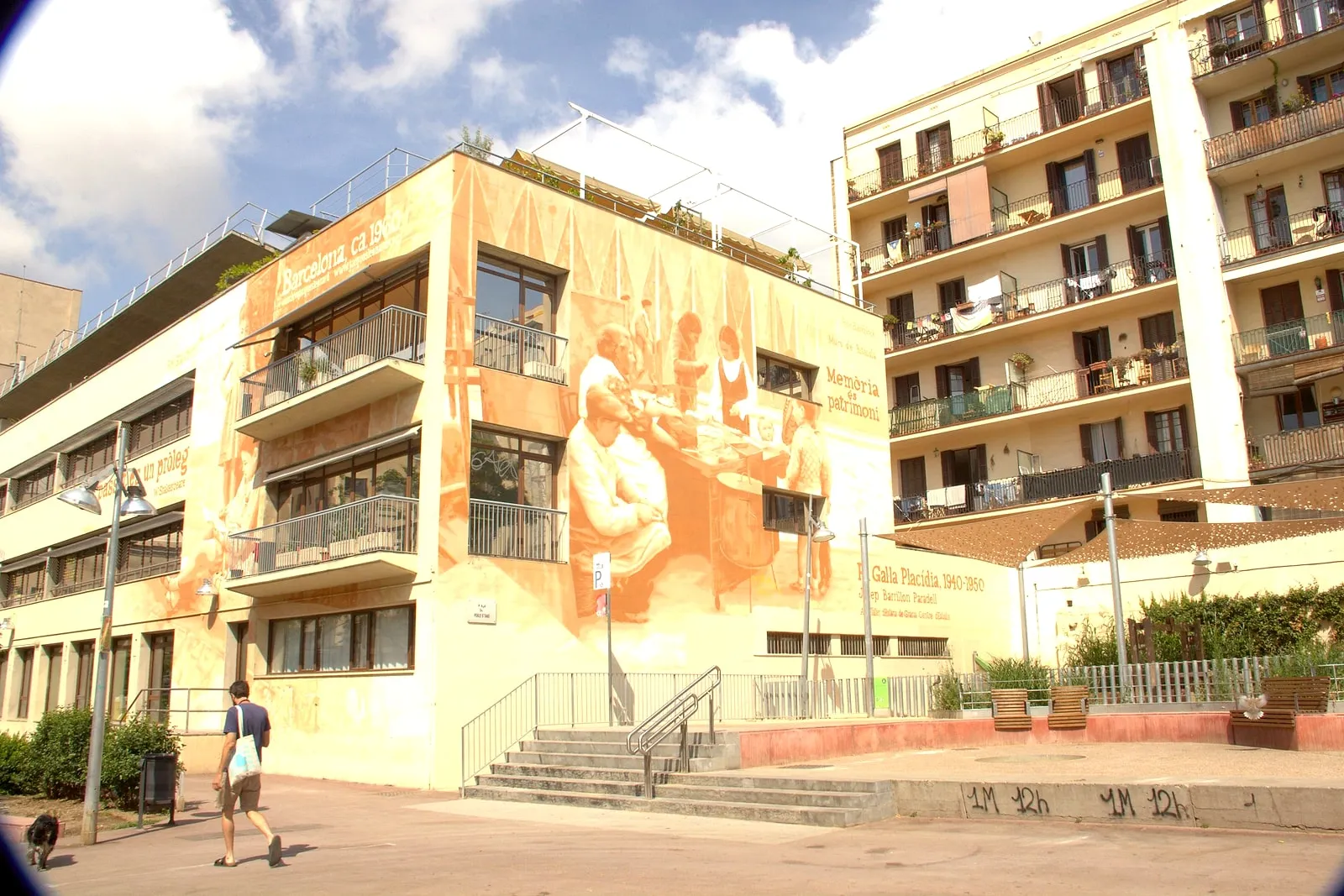
Search for shopping in Gràcia and you will get results about two places that are not the same place, and neither result will tell you that.
Passeig de Gràcia is a wide boulevard in the Eixample with flagship stores on both sides of it, and it is where you go for the brands you already know. Gràcia is the neighbourhood the boulevard was named after and points at, and it starts where the boulevard finishes — a ten-minute walk, uphill, through a completely different street plan.
That confusion is not an accident of search engines. The city’s own visitor survey makes the same collapse, measuring “Plaça de Catalunya and Passeig de Gràcia” as a place visitors go and not measuring Gràcia at all, which is dealt with properly in is Gràcia worth visiting.
So: this page is about the second one.
Why the shops here are small, and it is not a lifestyle choice
It is the width of the streets.
Gràcia was built as a factory town in the nineteenth century, on narrow plots along old roads, and nobody planning it was leaving room for a department store. The ground floors are small because the buildings are narrow, and the buildings are narrow because they were divided that way before Barcelona had any say in it. The longer version of why the street plan looks like it does is here.
The retail follows the geometry. A format that needs eight hundred square metres cannot open here, so it does not. What can open here is one person with one room, and that is most of what you will walk past.
This is the same reason the bars are small, the dining rooms hold thirty people, and everything in the neighbourhood feels like it is operating at a scale you could reach across.
What is actually for sale
In rough order of how much of it there is:
- Independent clothing and design, a lot of it, much of it made or selected by whoever is behind the counter.
- Second-hand and vintage, which is a genuine specialism of this neighbourhood rather than a couple of shops.
- Homeware, ceramics and things for a kitchen, including the local pottery that ends up under an olive in every bar in the city.
- Bookshops and record shops, in numbers that have no business surviving in 2026 and somehow do.
- Food shops that exist for residents: bakeries, a fishmonger, a shop that sells one thing. The covered iron market at the edge of the neighbourhood is the concentrated version of that, and it has its own page.
What you will not find: department stores, outlets, flagship anything, or a shopping centre. If that is the trip, go back down the hill.
The streets, since this is the one practical thing worth printing
- Carrer Verdi and Carrer de Torrijos, running up the eastern side, are the densest run of small shops in the neighbourhood.
- Carrer d’Astúries cuts across them and is the other axis.
- The streets off Plaça de la Virreina and Plaça del Sol are where it gets least predictable, which is the point.
- Gran de Gràcia is the through-road: busier, wider, noisier, and the one place up here where you will meet the ordinary high-street names.
Nothing on this list is a secret and none of it needs booking. It is a neighbourhood, not an attraction.
The timetable will beat you if you let it
Shops here keep neighbourhood hours: open in the morning, shut for a substantial chunk of the middle of the day, open again in the late afternoon and into the evening. Sunday is largely not a shopping day.
Which means the shopping window and the good-atmosphere window are the same window — roughly five to eight in the evening — and that is not a coincidence, it is one thing. The full clock is in a day in Gràcia.
No list of shops, and the reason is the same as with restaurants
We are not going to name them.
Partly because we would be guessing at your taste. Mostly because a one-room shop that appears on enough English-language pages stops being the shop you would have wanted to find, and the page that did it stays up long after the shop has changed hands. The same argument, at more length, is in eating in Gràcia and in the vermouth piece, and it is the one editorial position this site holds most stubbornly.
Also, honestly: retail turns over. Any list we published today would be a third wrong within two years and we would have no way of knowing which third.
The one thing to buy, if you want a suggestion
Something from a food shop, eaten later. A tin of something good, olives, a bottle of vermouth from a shop rather than a bar. It costs very little, it is what the neighbourhood actually sells to itself, and it does not require you to have opinions about anybody’s ceramics.
And the walk that goes past most of it
Our Gràcia walking tour runs through these streets on the way between the squares, and the guide is happy to point at things — but it is a tour about a town that fought the army in 1870, not a shopping tour, and pretending otherwise would waste your afternoon. It ends in a celler rather than a boutique.
If you want the shops properly, do them on your own on a weekday evening. If you want to know why any of these streets are the shape they are, that is the walk.
Where this comes from
- Informe de resultats: perfil i hàbits dels turistes a Barcelona ciutat 2025 (PDF, table on p. 73)Observatori del Turisme a BarcelonaThat the survey's table of areas visited measures 'Plaça de Catalunya i Pg. de Gràcia' at 78.8 % and does not list the Gràcia neighbourhood at all.
- Carrer de la Riera de Sant MiquelAjuntament de Barcelona · Nomenclàtor de BarcelonaThat Gràcia developed from the seventeenth century along and between two axes of communication — the old road from Barcelona to Sant Cugat, today carrer Gran de Gràcia, and the line of the rieres — rather than to a plan.
Everything above that carries a date, a figure or a name is checked against these before it is published. Where we could not find a source, the page says so.
Quick answers
- Is Passeig de Gràcia the same as Gràcia?
- No, and this is the single most common mix-up in this part of the city. Passeig de Gràcia is a broad boulevard in the Eixample lined with luxury flagships, and it is named after the neighbourhood it points at. Gràcia is the neighbourhood, and it begins where the boulevard ends — ten minutes on foot, uphill, and a completely different kind of shop.
- What sort of shops does Gràcia have?
- Small ones. Independent clothing and design, second-hand, ceramics and homeware, bookshops, record shops, and a large number of food shops that exist because people live here. Very little of it is chain retail, mostly because the ground floors are too small for chain retail to fit.
- Which streets should I walk for the shops?
- Carrer Verdi and Carrer de Torrijos on the eastern side, Carrer d'Astúries running across, and the small streets off Plaça de la Virreina and Plaça del Sol. Gran de Gràcia is the busy through-road and has more of the ordinary high-street names on it.
- When are the shops open?
- Broadly mornings and late afternoons, with a substantial closure in the middle of the day, and a good deal of it shut on Sunday. If your shopping afternoon is a Sunday afternoon, spend it in a square instead — that part of the neighbourhood never closes.
- Is it cheaper than the centre?
- It is not a discount district and nobody should come up here for bargains. What it is, is a place where a lot of what is for sale was made or chosen by the person selling it, which is a different proposition from a cheaper version of the same thing.
The tours this piece is about
More in the journal
Gràcia
- Gràcia at night is not nightlife, and going there expecting nightlife is the mistake
- Gràcia joined Barcelona in 1897 with almost no public buildings, so its clubs built their own
- Why the streets of Gràcia are like that: two roads, four streams and a convent
- Gràcia has thirty passatges and only three of them are in Gràcia
- The man who built modernista Gràcia was not allowed to sign it, and the city's catalogue names who did
- Gràcia has a Liberty street and a Fraternity street, and the jewels are a silversmith's sales pitch