
Gràcia
A day in Gràcia, by the clock rather than by the map
There is already a page here about what to see in Gràcia and the order it walks in. This is the other half: when. Turn up at the wrong hour and the same street is a different place, and usually a shut one.
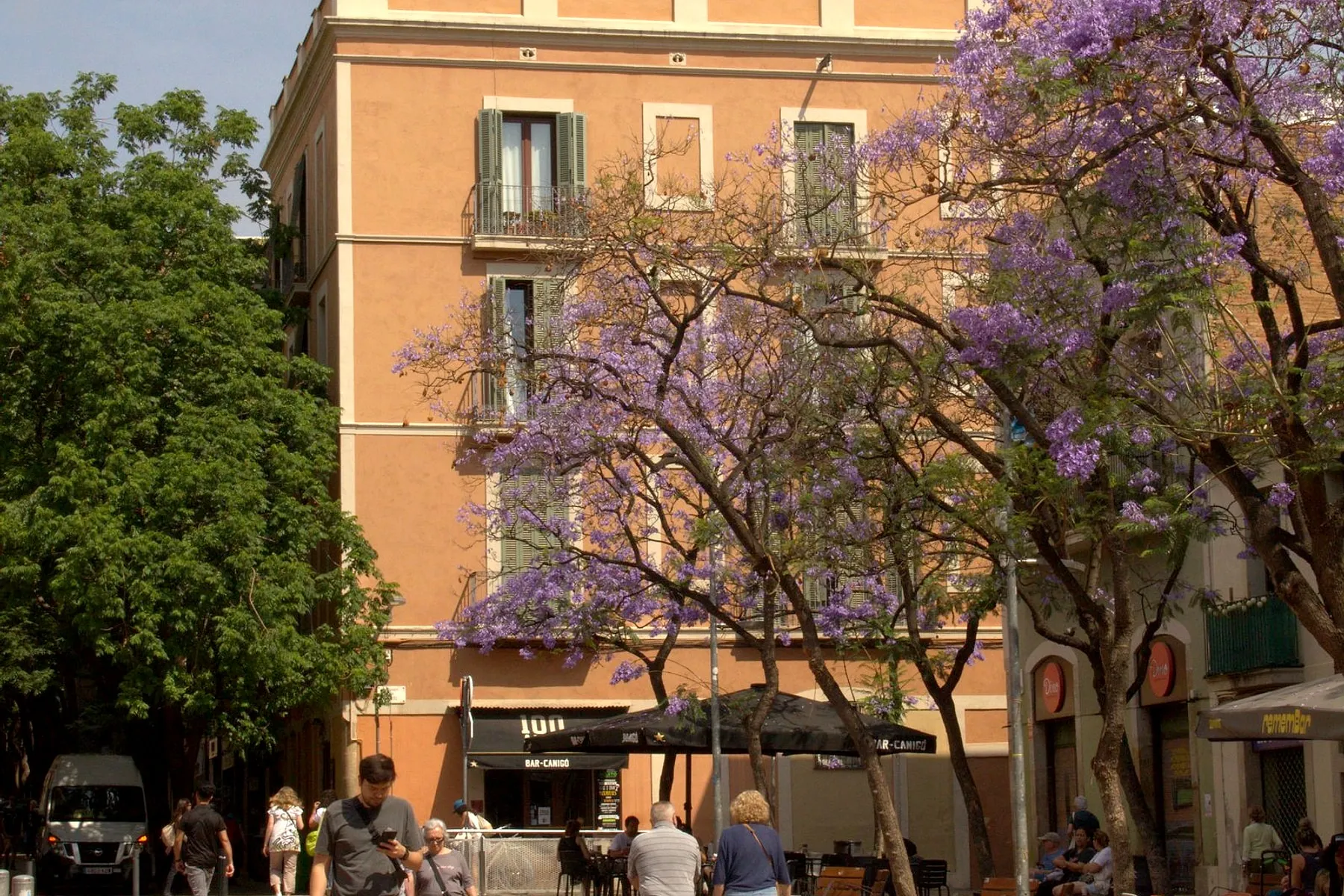
There is already a page on this site about what to see in Gràcia and the order it walks in. This one is about when, because the neighbourhood keeps a timetable and almost nobody arrives holding it.
The failure mode is specific and it is very common. Somebody finishes the Sagrada Família at half past one, walks over here, arrives at ten past two, finds the shops shuttered, the market winding down and four people in a square built for four hundred — and writes that Gràcia is overrated. They were not wrong about what they saw. They were an hour and a half late for it and three hours early for the rest.
Before ten: don’t
Deliveries, shutters, the smell of bleach on the pavement outside bars that are not open yet. There is nothing here for a visitor at half past eight and there is no view to catch at dawn, because there is no view.
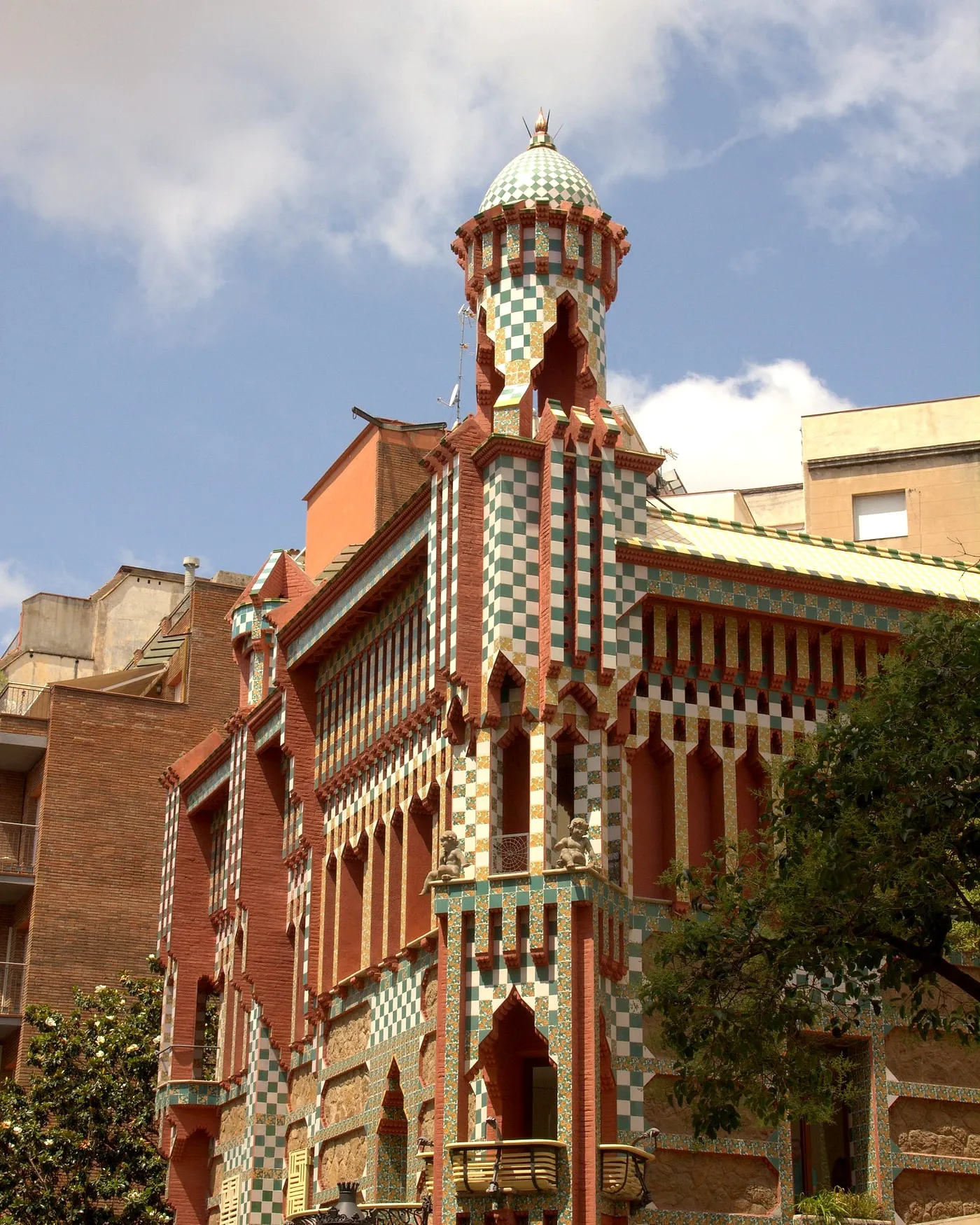
The one argument for being up here early is photographic: Casa Vicens faces the street it faces, and the chequerboard and the turret read differently in the first light than they do flattened out at noon. That is a reason for a photographer to come early. It is not a reason for anybody else.
Ten to twelve: the neighbourhood at work
The best two hours if what you want is Gràcia doing its job.
The Mercat de la Llibertat is properly open and properly busy, which is the fastest way to establish that this is somewhere people live rather than somewhere people are shown around — it has its own page here, because it is also a piece of nineteenth-century iron architecture that most visitors walk past without looking up.
The squares are being used by the people who use them on a weekday morning: prams, dogs, old men, a delivery van reversing badly. Terraces are half full. You can hear yourself.
This is also the window when the streets are legible. Gràcia is dense and slightly crooked, and at this hour you can actually see the shape of it — why the streets go the way they do is a longer story about torrents and a town that grew without a plan.
Twelve to two: the vermouth hour, and it is real
The one fixed appointment in the neighbourhood.
Fer el vermut is the hour before lunch, standing up, with a short drink and something salty, and it is at its densest on a Sunday. It is not a reconstruction for visitors: it is what the neighbourhood does, which is also why it stops dead at two. How to find a bar that still draws it from a cask, and why there is no list of names on this site, is in vermouth in Gràcia.
On a weekday the same hour is quieter and works the same way.
Two to four: the hour that ruins itineraries
Lunch. Long lunch.
Small shops shut. A good many of them do not reopen until late afternoon. The squares thin out. Bars that were full at one are serving three tables at three. If your plan has you arriving in Gràcia at two, your plan has you arriving in an empty neighbourhood.
Two ways to use this hour rather than lose it:
- Eat. This is the hour when a fixed-price weekday lunch is available and is the best value meal you will have in Barcelona, and it is also the hour when a restaurant that only does dinner is closed. The formats, the timings and the two things visitors reliably get wrong are in eating in Gràcia.
- Go and look at something with a door. Casa Vicens is the obvious candidate and it is inside the neighbourhood — whether the ticket earns its money is argued, drawbacks first, in is Casa Vicens worth it.
What does not work is walking around expecting atmosphere.
Four to seven: it comes back
Shutters go up. Children come out of school and take the squares — Plaça del Sol, Plaça de la Revolució and Plaça de la Virreina all turn into playgrounds with terraces around the edge, which is a specific and slightly startling thing to watch if you are used to city squares being thoroughfares.
This is the best stretch for the small shops. Gràcia’s retail is unusually independent for a European city centre and it concentrates on a handful of streets rather than spreading evenly — that pattern, and why it exists, is in shopping in Gràcia.
It is also, by a distance, the pleasantest hour to walk the route in what to see in Gràcia: the light is low, the squares are populated, and nothing is shut.
Seven to eleven: the actual evening
Terraces fill. People eat late — properly late, in a way that catches out anyone arriving from northern Europe with a seven o’clock stomach. The squares stay busy without becoming a nightlife district, because Gràcia is not one: it is a residential neighbourhood with a very high number of bars in it, which is not the same arrangement at all.
What that means in practice, including the parts that are genuinely worth staying up for and the part where you are standing in somebody’s bedroom window, is Gràcia at night.
After midnight: somebody else’s house
Plaça del Sol keeps going. So does Plaça de la Revolució, smaller.
The balconies around both of them are bedrooms, occupied, on a weeknight, by people with jobs. The argument between those bedrooms and that noise is decades old and it is not a curiosity — it is a live dispute you are joining by being there. Behave the way you would behave in your own street at home, which is all anybody here has ever asked.
Days of the week, briefly
- Sunday is the best single day, for the vermouth and because the squares belong to residents rather than to anybody’s itinerary.
- Monday is the weakest. Small businesses in this city take their closing day at the start of the week far more often than at the end of it, so a Monday plan wants checking rather than assuming.
- Mid-August is Festa Major, when the streets decorate themselves by hand and the whole city comes up the hill. Extraordinary, and a very poor sample of the neighbourhood.
If you only have three hours
Arrive at ten, do the market and the squares, be standing in a celler at half past twelve, leave at two. That is the compressed version and it is a good morning.
If you would rather arrive at six and stay for dinner, that is also a good evening, and it is a different neighbourhood. The two do not substitute for each other.
Getting up here, and getting out
Gràcia starts where Passeig de Gràcia ends, which is a walk rather than a journey, and it is uphill in the direction you will be walking. The metro lines, the station that is not where you think it is and the way in from the airport are in how to get to Gràcia.
And the version where somebody else keeps the time
Our Gràcia walking tour runs at more than one time of day, and — this is the point of this page — the morning walk and the evening walk are not the same neighbourhood, even though the route barely changes. The departure times live on the tour page, where they are kept honest against the diary the guide actually works from.
Both versions finish in a celler with the vermouth included, which is a decision about hours rather than about drinks.
Still deciding whether any of this earns the half day, is Gràcia worth visiting makes the case and names who should skip it. And if you are still shuffling the days themselves, this one belongs to the third: see three days in Barcelona.
Quick answers
- How long do you need in Gràcia?
- Half a day walks it. A whole day only works if you plan to spend a chunk of it sitting at a table, which is a legitimate plan and the one the neighbourhood itself follows on a Sunday.
- What is the best time of day to visit Gràcia?
- Late morning if you want it open and quiet, early evening if you want it full. Between roughly two and five the shops shut, the squares empty and the neighbourhood is having lunch, and a lot of visitors experience that hour and conclude the place is overrated.
- What is the best day of the week?
- Sunday before lunch, for the vermouth and because the squares fill with residents. Monday is the weakest day of the week here, and it is worth checking anything you are counting on before you build a morning around it.
- Can you combine Gràcia with the Sagrada Família in one day?
- Yes, and it is the standard pairing, because they are a walk apart across the Eixample grid rather than a journey. The order that works is the basilica first — it is sold by timed slot and your slot decides your day — and Gràcia afterwards, which needs no booking at all.
- Is there anything in Gràcia that closes early?
- The covered market runs on market hours, which means mornings above all. The cellers pour vermouth before lunch and stop. The squares, which are the actual attraction, never close and are free.
The tours this piece is about
More in the journal
Gràcia
- Festa Major de Gràcia: instructions, from someone who has to walk through it
- A baker in Gràcia made a promise in 1828, and the neighbourhood has been throwing sweets at itself ever since
- Gràcia imported a Mallorcan bonfire festival and the neighbourhood now treats it as its own
- Gràcia has five festes majors, and the city's page for one of them gives two different months
- Is Gràcia a good place to stay in Barcelona?
- Eating in Gràcia: the hours, the formats, and why there is no list of restaurants on this page