
Gaudí
7 June 1926, Gran Via at Bailèn, a little after six in the evening
What happened over four days in June 1926, from the sources that record it, with the parts that are only ever repeated marked as such.
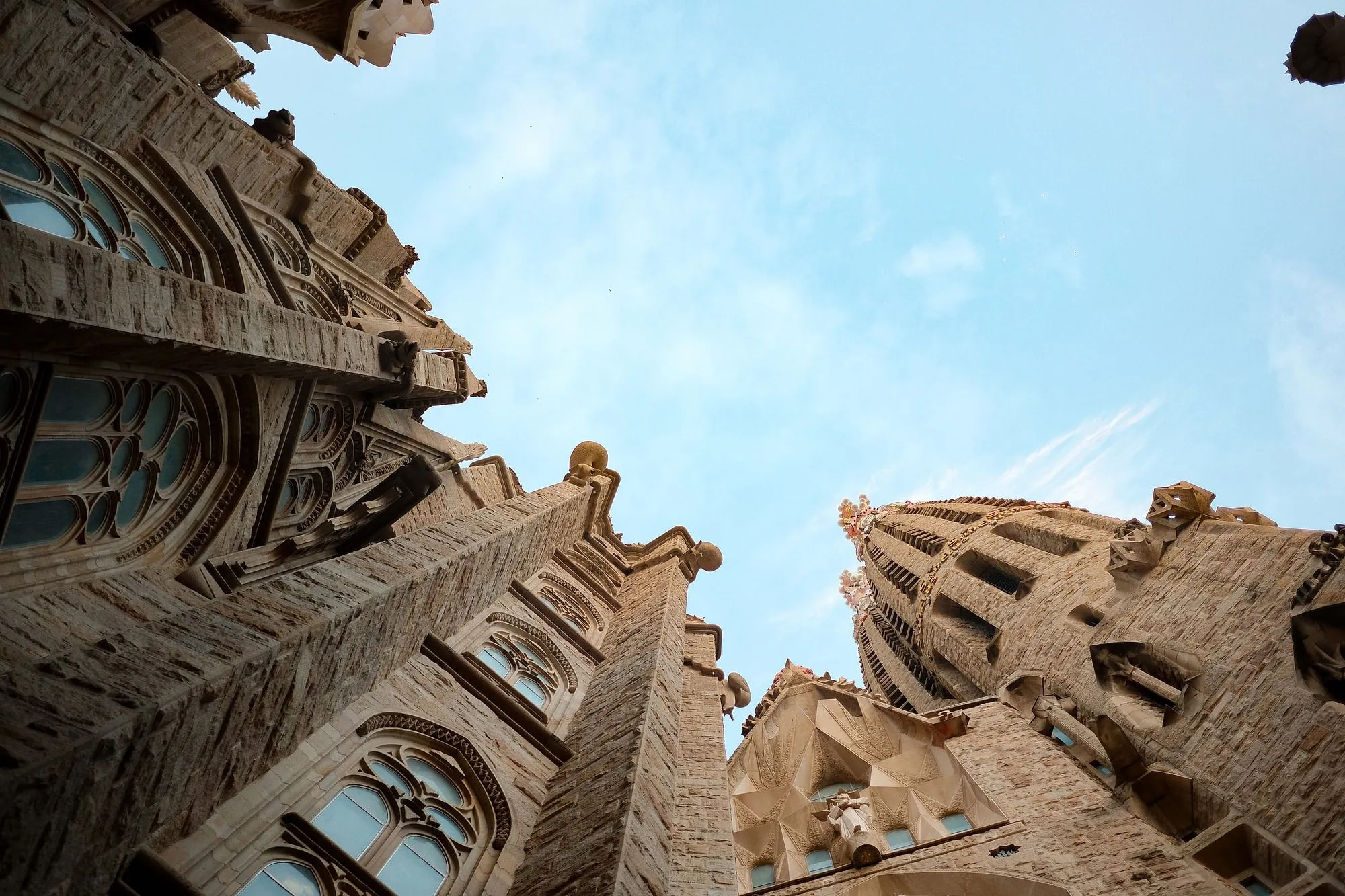
He was seventy-three, he was walking from the Sagrada Família towards Sant Felip Neri, and it was a Monday.
The Gran Via de les Corts Catalanes at the corner of carrer de Bailèn is a wide crossing then as now. A tram on the number 30 route hit him a little after six in the evening on 7 June 1926.
He was not carrying papers. He was wearing what he wore, which by that stage of his life was not much, and the people who reached him first assumed he was a beggar. He was taken to the Hospital de la Santa Creu, the city’s hospital for the poor.
A note on that last paragraph, because this page is about separating what is documented from what is told. The unrecognised-beggar detail is the received account and we have repeated it. The Holy See’s decree of 2025 does not say it — all it puts on the record is that he was born on 25 June 1852, probably in Reus, and died on 10 June 1926 in Barcelona. We had it attributed here to the Vatican and that was wrong.
He was found the next day by the chaplain of the Sagrada Família. By then moving him was not worth doing. He stayed in the ward where he had been put, received the last rites, and died there on 10 June 1926.
On 12 June his coffin was carried across most of the city to the church he had been building for forty-three years. The burial itself, in the crypt, did not happen until nine o’clock that night. He is in the chapel of Our Lady of Carmel, under the floor of a building that was nowhere near finished then and is not finished now.
Eighteen days later, on the other side of Barcelona, the first stone of the Palau Nacional was blessed and laid on the hill of Montjuïc for the International Exposition of 1929 — the fair that rebuilt the whole hill, and whose best building was taken apart within a year and not put back for fifty-six.
The Barcelona he was crossing that evening
It was a dictatorship. Primo de Rivera had taken power on 13 September 1923. A decree issued five days later banned the use of the Catalan flag and of the Catalan language in the public bodies of Catalonia. The Mancomunitat, the Catalan administration of the day, was wound up for good in July 1925.
Gaudí had already had his own run-in with it. On 11 September 1924 — the Catalan national day — he was stopped outside the church of Sants Just i Pastor, refused to answer the police in Spanish, and spent about four hours in a cell before being bailed. His own account of the exchange was written down the next day by the architect Cèsar Martinell: they asked whether he could not speak Spanish, and he told them he could, but that he did not feel like it.
He was seventy-two.
The city was being dug up. The metro had opened its first underground stretches in 1924. Montjuïc was a building site for the 1929 Exposition, which is where the Plaça d’Espanya, the Poble Espanyol, the Palau Nacional and the fountains all come from. The Eixample was closing in around his own site, block by block; the wide open setting he had wanted for the temple was being built over while he worked.
And the tourists had already started. The historian Joaquim M. Puigvert, speaking at the centenary congress this year, put it flatly: the Sagrada Família was already what visitors came to Barcelona to see in the 1920s. Gaudí died beside an attraction, not beside an obscurity.
The last year
The house he had lived in since 1906 is in Park Güell. He moved there with his father, Francesc, and his niece, Rosa. His father died that same year. Rosa died in January 1912. After that he lived in the house alone, with Carmelite nuns coming in to help with the housework.
In 1925 he gave that up and moved into the workshop on the building site. He had been there about eight months when he stepped off the pavement on the Gran Via.
What people will tell you that is not settled
That he was hit by a second tram after stepping back from the first. One documentary tells it that way. Every other account describes a single tram. It is a better scene and there is no reason to believe it.
That the Pope personally dispensed with the rules to allow the burial. Special permission was certainly needed — burial inside churches had been restricted since the eighteenth century, and the temple’s general request to allow burials in its chapels and crypts had been refused years earlier. Whether the authorisation that finally arrived came from Rome or from the Spanish interior ministry is not something we can show you a document for, so we do not say it.
That he was seventy-four. His own gravestone says so. He was born on 25 June 1852 and died on 10 June 1926, so he was seventy-three, fifteen days short of his birthday.
That he is a saint. He is Venerable, a title granted on 14 April 2025, which is a stage in a process and not its conclusion. A claimed miracle is still being examined in Rome. The centenary of his death fell on 10 June 2026 and he was not beatified on it.
That he was born in Reus. Or in Riudoms. Reus has the baptism, the day after his birth, at a time when there was no civil register to contradict it. Riudoms has the family farmhouse and has Gaudí himself, who from 1915 said that was where he was born. The Vatican’s decree of 2025 declines to settle it and writes “probably in Reus”.
Why any of this belongs on a page about walking tours
Because the last scene of our Gaudí walk is this one, and it is the part people ask about afterwards. Ninety minutes on the pavement outside the basilica with an actor playing Gaudí ends where the man ended: run over on a wide street, taken for a beggar, buried under his own unfinished building.
The rest of the stories that get told in front of that building, and which of them survive checking, are in things you will be told about Gaudí that are not true. The reason the thing he was buried under is still going up a century later is in why it takes this long. The building itself, read from the street for nothing, is in how to look at the Sagrada Família from the street.
What happened to the work afterwards is a separate and much longer story, and not a flattering one for most of the twentieth century: ceilings demolished by their owner, models smashed in 1936, twenty-nine iron grilles sold off, a piece of stone falling into Passeig de Gràcia in 1971. It is what happened to Gaudí’s buildings after he died.
What Rome has published about him since, word for word, and where the basilica’s account and the Holy See’s bulletin use different words, is Gaudí and the Church.
Where this comes from
- Bollettino, 14 April 2025 — decree on the heroic virtues of Antoni GaudíSala Stampa della Santa SedeThat Gaudí was born on 25 June 1852, probably in Reus, and died on 10 June 1926 in Barcelona. It is the Holy See's own wording, and it is all the Holy See says here.
- History of the TempleBasílica de la Sagrada FamíliaThe dates of the basilica around his death, and what happened to the workshop in 1936.
Everything above that carries a date, a figure or a name is checked against these before it is published. Where we could not find a source, the page says so.
Quick answers
- How did Antoni Gaudí die?
- He was struck by a tram on 7 June 1926 while crossing the Gran Via at the corner of carrer de Bailèn, was not recognised, and was taken to the Hospital de la Santa Creu, the city's hospital for the poor. He died there three days later, on 10 June 1926, aged 73.
- Where is Gaudí buried?
- In the crypt of the Sagrada Família, in the chapel of Our Lady of Carmel. The basilica states it plainly on its own pages. He was buried on 12 June 1926, after a funeral procession that crossed most of Barcelona.
- Is it true that nobody recognised him?
- It is what contemporary reports say: passers-by took him for a beggar because of how he was dressed, and he was taken to the Hospital de la Santa Creu, the city's hospital for the poor. We have not found an institutional source that states it in those terms, so take it as the received account rather than as a document.
- Is Gaudí a saint?
- No. He was declared Venerable on 14 April 2025, which is a step in the process and not the end of it. He has not been beatified. Anyone who tells you he is a saint is ahead of the paperwork.
- Was Gaudí born in Reus or Riudoms?
- Reus is the official answer and Riudoms is the family's. He was baptised in Reus the day after his birth, before civil registration existed, and from 1915 he himself said Riudoms. The Vatican's own decree splits the difference and says "probably in Reus".
The tours this piece is about
More in the journal
Gaudí and Modernisme
- Inside the Sagrada Família: a forest, on purpose, and the basilica says so itself
- Eighteen towers, and the tallest one was only finished in 2026
- George Orwell thought the anarchists should have blown it up
- Gaudí and the Church: an expiatory temple, a decree from Rome, and the word the decree does not use
- The things people walk past, standing right in front of them
- One group of chimneys on La Pedrera is clad in champagne bottles