
Montjuïc
The eight-hour day was won on this avenue, and the decree that granted it does not mention it
At the foot of Montjuïc there is a neighbourhood nobody sends you to, whose own name the city cannot explain, on an avenue where Spanish labour law changed.
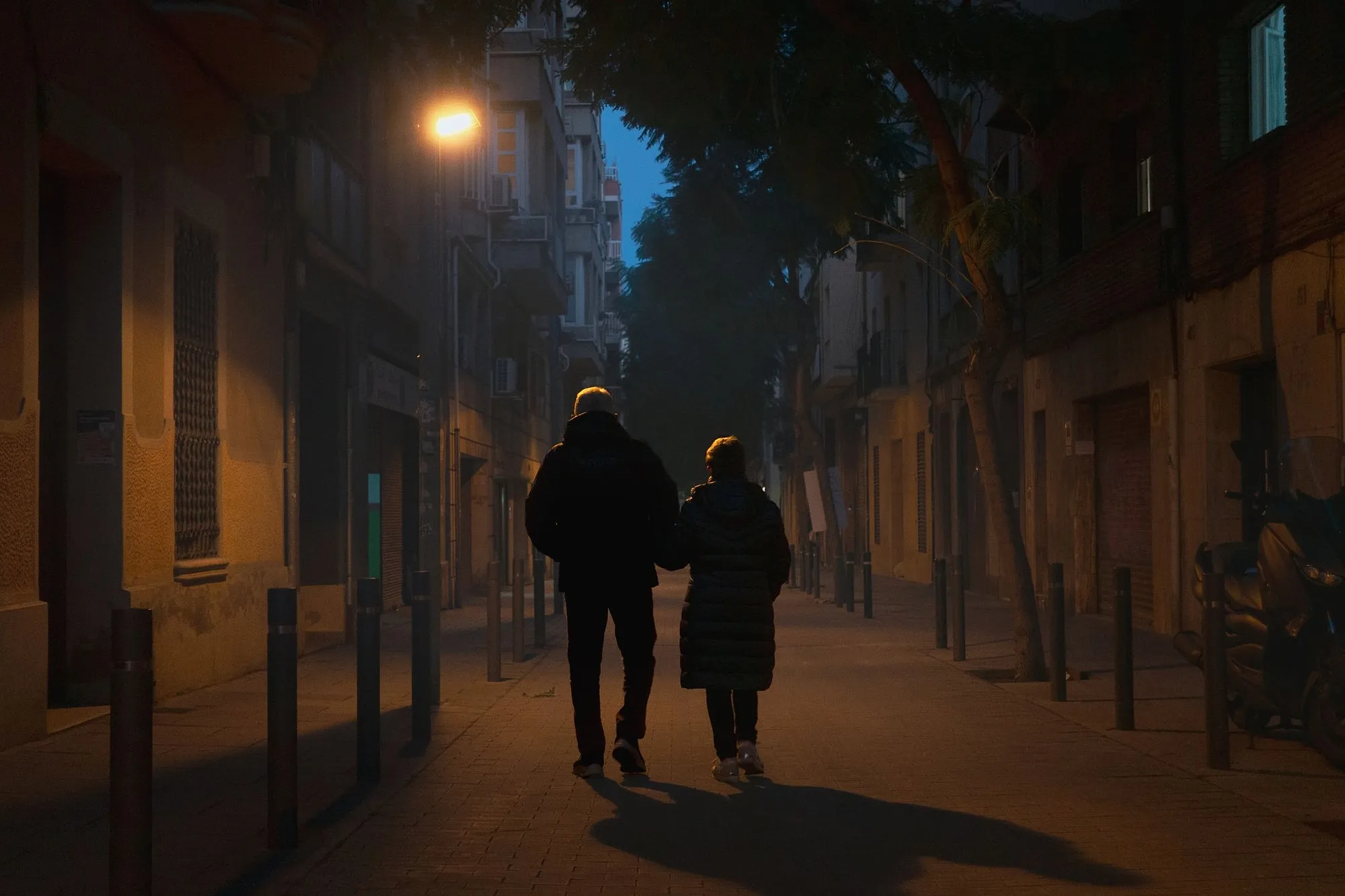
Most visitors meet Poble-sec by accident, on the way from a metro station to the escalators up Montjuïc, and read it as the scruffy bit before the hill.
It is the district Barcelona built before it built the Eixample, on an avenue where Spanish labour law changed, and the city cannot tell you where its name comes from.
Built before Cerdà, because it was outside the plan
The district’s own history page makes the claim flatly, and it is the thing to know first:
El Poble-sec va ser, de fet, el primer Eixample de Barcelona, anterior al que va projectar Ildefons Cerdà.
The mechanism is the interesting part. The walls came down in 1854 and Cerdà’s plan was approved five years later — but owners hesitated, because they disliked the project. Meanwhile the land on the seaward flank of Montjuïc was not included in the Eixample plan and therefore, in the city’s own words, no estaven, per tant, subjectes a limitacions urbanístiques.
So from 1858 the owners parcelled it up segons la seva conveniència and put up simple houses for workers. Three settlements grew: la França Xica, Santa Madrona and les Hortes de Sant Bertran, later grouped under one name.
And then the sentence that explains the street plan you are walking through: fins al 1887 l’Ajuntament no va decidir intervenir-hi. Thirty years of unplanned building before the council called a competition; the resulting urbanisation plan, by Josep Amargós, was finished in 1894.
The Gran Enciclopèdia Catalana adds the constraint that shaped the early years: building here was conditioned by les restriccions que imposaven les ordenances militars, que foren abolides el 1869. The castle above needed a clear field of fire, and it took precedence over housing. It also notes that la França Xica was, between 1858 and 1869, un lloc de pedreres — one more of the quarries that built the old city.
The name, which nobody will explain
Poble-sec means “dry village”, and the story everyone tells is that there was no water here until a fountain arrived, late.
We looked for that on the district’s history page, on the Ajuntament’s neighbourhood page, and in the Gran Enciclopèdia Catalana’s entry — three sources that describe the formation of the neighbourhood in real detail, including the military ordinances and the quarries. None of them mentions the name at all.
The place it would be is the city’s street register, which carries etymologies. Its search engine is currently returning errors on every query.
So this page does not tell you why Poble-sec is called Poble-sec. It is a small thing to admit and it seems better than the alternative, which is repeating a nice explanation nobody official has signed.
The Paral·lel, and a name with two incompatible origins
The avenue was urbanised shortly after the 1888 Universal Exposition and became, in the district’s phrase, un barri alegre, ple de teatres i cafès.
Where its name comes from is a good example of a city contradicting its own records.
The district’s history page: the name prové d’una taverna oberta el 1894, whose owners, choosing a name, followed the advice of their friend the astronomer Comas i Solà, on the grounds that the street runs exactly along a parallel of latitude.
The Ajuntament’s own open street-name dataset lists, among the avenue’s previous names: Paralelo (1859).
Thirty-five years earlier than the tavern. Both are municipal publications. One of them is wrong, and the dataset is the register.
The latitude is no better. The district says 41º 20’; the Gran Enciclopèdia Catalana says 41º 44’. Barcelona sits at about 41º 23’, so neither figure describes the city. We are not printing one.
For the record, the register also fixes the official name: approved 22 June 1979, after spells as Marquès del Duero and Francesc Layret. The encyclopaedia says the name was recovered in 1980. Even that is a year apart.
Eight theatres in twenty-four years
The district’s list, which is the fullest institutional one:
1892 the Teatre Espanyol, in the premises that later became a concert hall. 1898 the Café Sevilla, gone. 1901 the Nou. 1903 the Apolo and the Condal. 1907 the Còmic. 1916 the Victòria and El Molino. Raquel Meller debuted at the Arnau in 1911 and dominated the avenue’s halls for years.
Treat those dates as contested. The Gran Enciclopèdia Catalana gives the Apolo as 1901, the Còmic as 1908 and the Victòria as 1909. Nobody publishes a total number of halls; both sources give lists, and the lists do not match. If you want a figure, count from a cited list and say that is what you did.
El Molino is the survivor, and it too has three birthdays. The Ajuntament’s press office says the hall des del 1910 ha estat la llar per a la bohèmia; the district’s list puts it in 1916; the Gran Enciclopèdia Catalana untangles it as a sequence — Petit Palais from around 1909, then Petit Moulin Rouge, then Moulin Rouge from 1916, and in 1939 forced to change that French name to the present one. Read that way the sources stop contradicting each other: 1916 is the name, not the opening. It reopened on 1 November 2024.
Its predecessor on the site was a kiosk called La Pajarera — a sailors’ tavern with flamenco, per the city; una guingueta per the encyclopaedia, which does not add “Catalana” to the name.
What happened here in 1919
At the lower end of the avenue stand three chimneys. The Gran Enciclopèdia Catalana identifies them as what was kept of the FECSA thermal power station, later converted into offices for the same company. No institutional source we found gives a date, an engineer or a heritage listing for them.
They are, however, the right monument for what happened on this avenue.
The Canadenca strike began on 5 February 1919 at Riegos y Fuerzas del Ebro — a subsidiary of the Barcelona Traction, Light and Power Company, “the Canadian” — over the dismissal of workers. Gas and electricity workers joined, and Barcelona was left without light. A state of war was declared and more than three thousand workers were detained.
It ended in a specific room. Salvador Seguí’s conciliatory speech at a meeting in Les Arenes — the bullring on Plaça d’Espanya, five minutes up the road — on 19 March made an agreement possible, and work resumed victoriously on 20 March. Five days later a general strike was declared across Catalonia.
And the Gran Enciclopèdia Catalana states the outcome: la vaga comportà l’establiment de la jornada de vuit hores.
The decree exists and you can read it. Gaceta de Madrid, 4 April 1919, number 94:
Artículo 1.º La jornada máxima legal será de ocho horas al día o cuarenta y ocho semanales en todos los trabajos a partir de 1.º de Octubre de 1919.
Dated en Palacio a tres de Abril de mil novecientos diecinueve, signed ALFONSO.
Now the part that makes it worth quoting rather than summarising: the decree does not mention Barcelona, the strike, or La Canadenca. It is four weeks after the settlement and it is silent about why. The causal link is the encyclopaedia’s, drawn from the history; the legal text records only the result.
That is exactly the kind of gap this journal exists to point at. The strike is on the avenue; the victory is in the Gazette; the connection between them is an argument, not a citation.
What else is down here
Refugi 307, a site of the city history museum, with three entrances on Carrer Nou de la Rambla, dug by the neighbours themselves. Worth going into, and worth knowing that the museum’s own page gives two lengths: it opens by saying the shelter has a prop de 400 metres de túnels, and further down explains that about 400 metres was the project, and that by the end of the war s’havien aconseguit excavar 200 metres. The honest sentence is two hundred metres dug of a four-hundred-metre plan. The city-wide story is Barcelona’s air-raid shelters.
Carrer de Blai, the pedestrian spine, which the street register dates abans de 1860 and about which the city publishes nothing else at all. It is where the neighbourhood eats.
The Teatre Grec, up the slope, which is technically Montjuïc but reached from here. The Generalitat’s heritage file gives it something nobody mentions: it sits in a quarry with a name. The landscaping works of 1918 and 1919 reached la pedrera Machinet, on després s’ubicà el Teatre Grec — the work of Ramon Reventós. Another hole in the hill with something put into it, like the gardens.
Its festival is younger than the theatre by half a century. The Ajuntament’s culture institute dates the first edition to the summer of 1976 and describes it as una experiència insòlita d’autogestió teatral run by the city’s own actors, anticipating the arrival of democracy, with the council taking it over soon after. If you are told the festival began in 1929, that contradicts the organiser’s own chronology — and what happened to the theatre between 1929 and 1976 is not narrated on any municipal page we could find.
Fitting it in
Poble-sec is the natural bottom end of a Montjuïc afternoon rather than a destination of its own. You come down off the hill, you are hungry, and this is where the neighbourhood is.
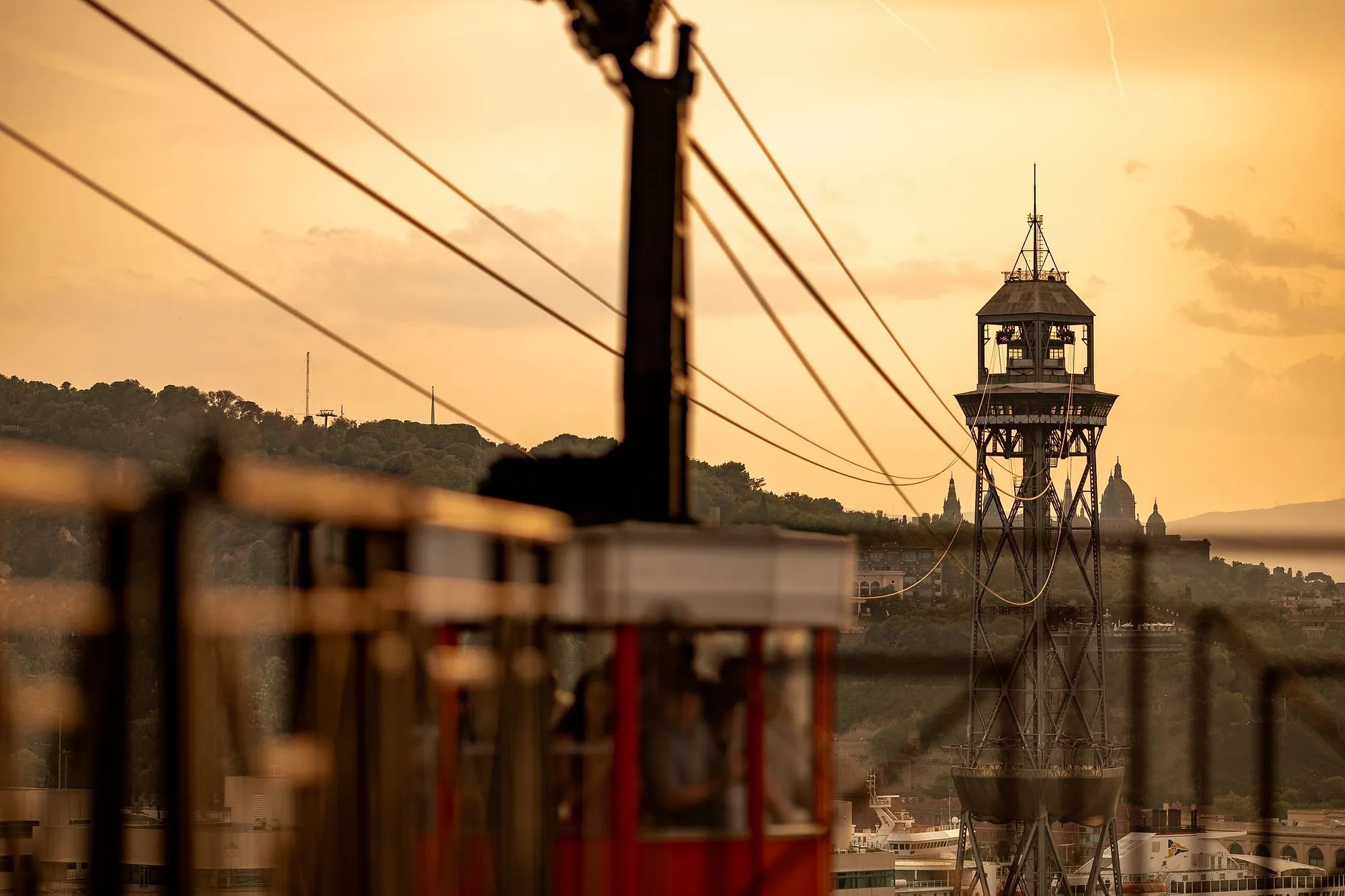
The other approaches, and the three cable-car-shaped things people confuse, are how to get to Montjuïc. What is up the hill and whether it earns the half day is is Montjuïc worth it.
Our Montjuïc walking tour starts at Plaça d’Espanya and works the fairground, the castle and the quarry, told by an actor rather than recited. It does not come down this side — which is why this page exists, because two of the best things in the district are a shelter and a strike, and neither of them is on anybody’s map.
Where this comes from
- Coneixeu el districte — HistòriaAjuntament de Barcelona · Districte de Sants-MontjuïcThat «el Poble-sec va ser, de fet, el primer Eixample de Barcelona, anterior al que va projectar Ildefons Cerdà», the walls having been demolished in 1854 and the Eixample plan approved five years later; that the land on the seaward flank of Montjuïc was not included in the plan «ni estaven, per tant, subjectes a limitacions urbanístiques», so owners began parcelling it from 1858, giving rise to la França Xica, Santa Madrona and les Hortes de Sant Bertran, later grouped as Poble-sec; that «fins al 1887 l'Ajuntament no va decidir intervenir-hi», calling a competition whose plan Josep Amargós finished in 1894; that the Paral·lel was urbanised shortly after the 1888 Universal Exposition and that its name «prové d'una taverna oberta el 1894» whose owners followed the advice of the astronomer Comas i Solà; and the list of theatre openings — Espanyol 1892, Café Sevilla 1898, Condal 1903, Nou 1901, Apolo 1903, Còmic 1907, Victòria and Molino 1916 — with Raquel Meller debuting at the Arnau in 1911.
- Nomenclàtor — noms dels espais públics de la ciutat de BarcelonaAjuntament de Barcelona · Dades obertesThe city's official street-name dataset, which for the Avinguda del Paral·lel records a length of 2,174.5 m across the districts of Ciutat Vella and Sants-Montjuïc, an approval date of 22 June 1979, and earlier names «C. del Marqués del Duero (1939), Francisco Layret, Marqués del Duero (1874), Paralelo (1859)»; and for Carrer de Blai a nineteenth-century dating noted as «abans de 1860».
- El Poble-secGran Enciclopèdia CatalanaThat the neighbourhood began to form in 1856 outside the old walls; that its urbanisation was initially conditioned «per les restriccions que imposaven les ordenances militars, que foren abolides el 1869», after which the villas and market gardens gave way to large buildings; and that la França Xica was «entre els anys 1858 i 1869 un lloc de pedreres».
- El Paral·lelGran Enciclopèdia CatalanaThat the lower end is flanked on one side by the medieval wall at the Porta de Santa Madrona and on the other by the FECSA thermal power station, closed and later converted into offices for the same company, «de l'antic edifici, hom n'ha conservat les tres xemeneies»; that the avenue was named by the astronomer Comas i Solà, who determined that the parallel 41° 44' passed along it; and that the name was officially recovered in 1980.
- Vaga de La CanadencaGran Enciclopèdia CatalanaThat the conflict took place in Barcelona in February and March 1919, beginning on 5 February at Riegos y Fuerzas del Ebro, a subsidiary of the Barcelona Traction Light and Power, over the dismissal of workers; that gas and electricity workers joined and the city was left without light; that a state of war was declared and more than three thousand workers detained; that Salvador Seguí's conciliatory stance at a meeting in Les Arenes on 19 March made an agreement possible and work resumed on 20 March; that a general strike was declared across Catalonia on 24 March; and that «la vaga comportà l'establiment de la jornada de vuit hores».
- Real decreto de 3 de abril de 1919 fijando en ocho horas la jornada máxima legalGaceta de Madrid · Presidencia del Consejo de MinistrosThe primary text: «Artículo 1.º La jornada máxima legal será de ocho horas al día o cuarenta y ocho semanales en todos los trabajos a partir de 1.º de Octubre de 1919», dated «en Palacio a tres de Abril de mil novecientos diecinueve» and signed ALFONSO. Published in the Gaceta de Madrid of 4 April 1919, no. 94, pages 41–43. The decree makes no mention of the Barcelona strike.
- Reobertura d'El MolinoAjuntament de Barcelona · Servei de PremsaThat the new stage of El Molino keeps the transgressive spirit of a hall that «des del 1910 ha estat la llar per a la bohèmia», and that the place began as a sailors' tavern, «la Pajarera, i després la Pajarera Catalana», offering flamenco.
- El MolinoGran Enciclopèdia CatalanaThat the theatre and café-concert on Carrer de Vila i Vilà was built on the site of a kiosk called La Pajarera; that it was initially called Petit Palais around 1909, later Petit Moulin Rouge, and Moulin Rouge from 1916; that in 1939 it had to change that name to the present one; and that it reopened on 1 November 2024.
- Refugi 307Museu d'Història de BarcelonaThat the shelter was dug in the Poble-sec quarter thanks to the work of many neighbours, with three entrances on Carrer Nou de la Rambla; and the museum's two figures — the page opening with «a prop de 400 metres de túnels» and later explaining that the project consisted of about 400 metres, that the planned capacity was 2,000 people, and that by the end of the war «s'havien aconseguit excavar 200 metres de túnels» of 2.10 m high and between 1.5 and 2 m wide.
- Parc de Montjuïc — jardins Laribal i Teatre GrecGeneralitat de Catalunya · Inventari del Patrimoni ArquitectònicThat the landscaping works begun in 1918 and 1919 reached «la pedrera Machinet, on després s'ubicà el Teatre Grec -obra de Ramon Reventós-», and that this space served as a viewpoint over the city and as the theatre's foyer; that in 1914 the Ajuntament acquired much of Montjuïc for public use in the framework of the future electrical industries exposition, postponed by the First World War until 1929; and that Forestier devised terraces, pergolas and stairs including those known as the Generalife stairs.
- Grec 50 — primer acte, 1976-2026Ajuntament de Barcelona · Institut de CulturaThat the festival commemorates fifty years since its first edition «l'estiu del 1976», which was «una experiència insòlita d'autogestió teatral conduïda pel col·lectiu d'actors, actrius i gent de teatre de la ciutat» anticipating the arrival of democracy, and that the Ajuntament took charge of the festival soon afterwards.
Everything above that carries a date, a figure or a name is checked against these before it is published. Where we could not find a source, the page says so.
Quick answers
- Why is Poble-sec called that?
- Nobody official says. The story is that the neighbourhood had no water until a fountain arrived late, and we could not find that explanation on any institutional page — not the district's history page, not the Ajuntament's neighbourhood page, not the Gran Enciclopèdia Catalana's entry, all of which describe the area's formation in detail and say nothing about the name. The city's street register would be the place to look and its search engine is currently down. So: an unexplained name, said out loud rather than filled in.
- Was Poble-sec built before the Eixample?
- Yes, and the district says so itself: «El Poble-sec va ser, de fet, el primer Eixample de Barcelona, anterior al que va projectar Ildefons Cerdà». The walls came down in 1854 and Cerdà's plan was approved five years later, but owners hesitated to build on it. The land on the seaward flank of Montjuïc was not included in the plan and so was not subject to its limits — so owners began parcelling it as they pleased from 1858. The council only intervened in 1887, and Josep Amargós's urbanisation plan was finished in 1894.
- What was the Paral·lel?
- The city's theatre and music-hall avenue. The district's history page names the openings: the Teatre Espanyol in 1892, the Café Sevilla in 1898, the Nou in 1901, the Apolo and the Condal in 1903, the Còmic in 1907, and the Victòria and El Molino in 1916. The Gran Enciclopèdia Catalana gives some of those different years, so treat any single date as contested.
- Where does the name Paral·lel come from?
- Two municipal answers that do not fit together. The district's history page says the name comes from a tavern opened in 1894 whose owners took the advice of their friend the astronomer Comas i Solà, the street running exactly along a parallel of latitude. But the Ajuntament's own street-name dataset lists «Paralelo (1859)» among the avenue's earlier names — thirty-five years before that tavern. And on the latitude itself the district says 41º 20' while the encyclopaedia says 41º 44', which is another reason not to print a figure.
- What happened in the Canadenca strike?
- It began on 5 February 1919 at Riegos y Fuerzas del Ebro over dismissals and spread to gas and electricity, leaving Barcelona without light. A state of war was declared and more than three thousand workers were detained. Salvador Seguí's speech at Les Arenes on 19 March made an agreement possible and work resumed on 20 March. The Gran Enciclopèdia Catalana states that the strike brought about the establishment of the eight-hour day.
- Can you visit an air-raid shelter in Poble-sec?
- Yes — Refugi 307, a site of the city history museum, with three entrances on Carrer Nou de la Rambla. Note the museum's own figures do not agree with each other: its page opens by saying the shelter has «a prop de 400 metres de túnels» and further down explains that 400 metres was the project, and that by the end of the war «s'havien aconseguit excavar 200 metres».
The tours this piece is about
More in the journal
Montjuïc
- Is Montjuïc worth it? Give it half a day or give it nothing
- The city calls this the third great transformation of Montjuïc, and it has been counting from 1929
- The bullring closed twenty-one years before bullfighting was banned, and the ban was struck down anyway
- On the city's list of places residents avoid because of tourism, Montjuïc comes last
- There are three cable-car-shaped things on Montjuïc and most people book the wrong one
- Barcelona built this castle to defend itself, and then spent two centuries being shelled from it