
Montjuïc
The gardens on Montjuïc are the reason people who live here come up the hill
Half the hill is garden, most of it costs nothing, and the visitors walking past to the castle do not go in. The odd shapes are not landscaping decisions. They are the holes the stone came out of.
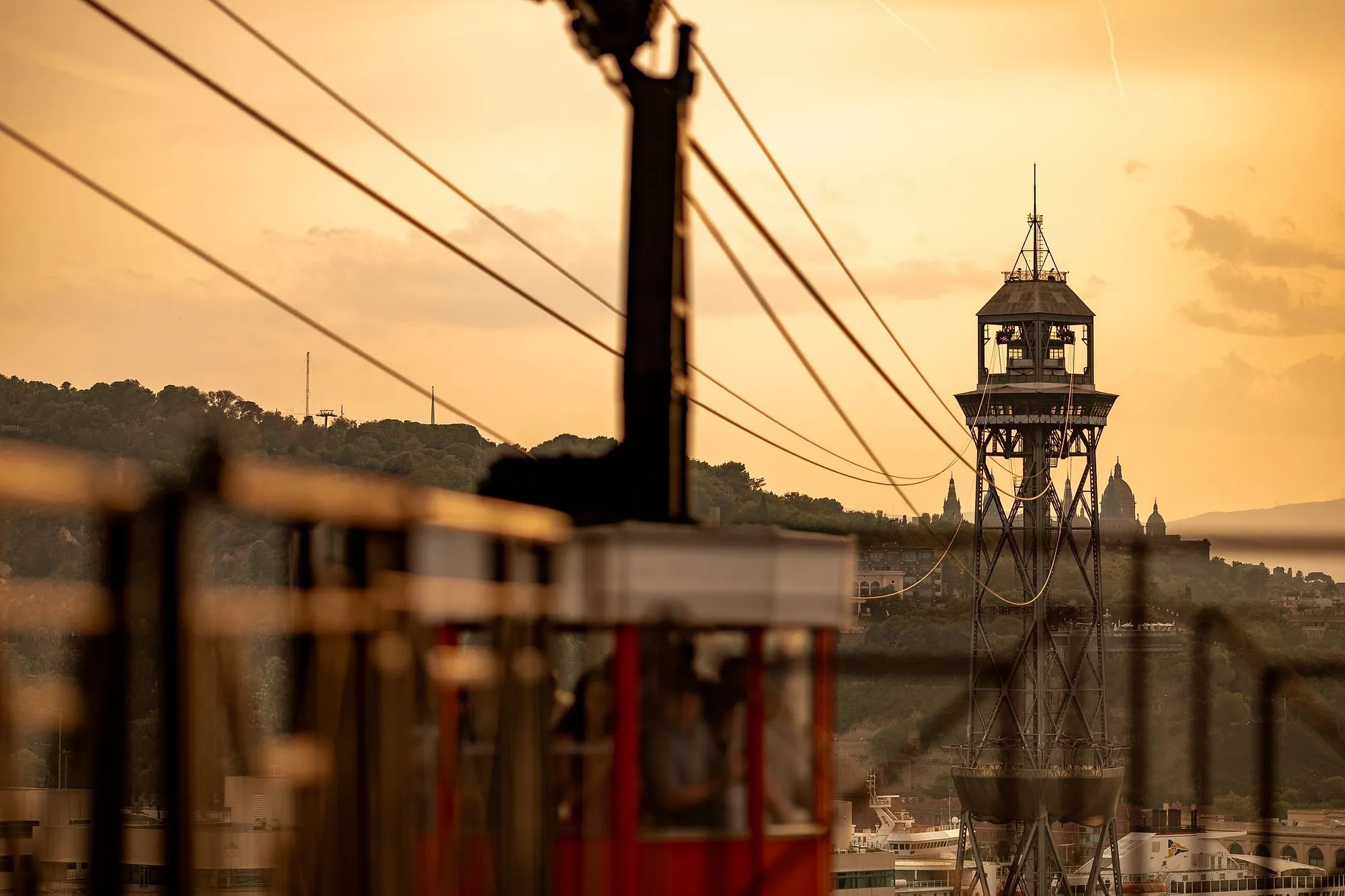
Barcelona’s tourism survey says just over half of the city’s visitors get up Montjuïc. Most of them are going to the castle, the fountain or the museum, and they walk past the thing the people who live here actually come up for.
The hill is largely garden. Most of it is free, none of it is queued, and the gardens are shaped the way they are for a reason that is not landscaping.
Why they are in holes
Because the holes were there first.
Montjuïc was Barcelona’s quarry for two thousand years, and when the stone ran out the city was left with a mountain full of enclosed hollows with their own microclimates. Two of the best gardens on the hill sit in the bottom of exhausted quarries, and the historic botanical garden hides — in the museum’s own phrase — in two old holes of the Foixarda quarry, where the cool microclimate lets Eurosiberian species grow.
Once you know that, walking Montjuïc changes. You stop reading the sunken gardens as design and start reading them as absence.
The one to do if you only do one
Jardins de Mossèn Costa i Llobera — the cactus and succulent garden, on the seaward flank above the port.
The Ajuntament describes it as a joint project between the architect Joaquim Maria Casamor and Joan Pañella, the gardening-school master who was the specialist in succulents. It was inaugurated in 1970 and covers 3.16 hectares, in the bottom of an exhausted quarry.
And there is a superlative, which we will hand you carefully because the city states it two different ways. The garden’s own page says it is one of the gardens specialising in cacti and succulents most important in Europe. The city’s general Montjuïc page says in the world. We are using the garden’s own wording, which is the more conservative of the two, and we are telling you the other exists.
On the date, the same thing: its own page says March 1970 and the neighbouring garden’s page says 22 June 1970. Both say 1970. We are printing 1970.
The other one that was made in a quarry
Jardins de Mossèn Cinto Verdaguer, inaugurated on 22 June 1970 — the same day as Costa i Llobera and Joan Maragall, all three named after Catalan poets.
This one is bulbs, rhizomes and water. The beds cover 2,800 m² and the city plants some 80,000 bulbs a year in them; the aquatic collection lives in around thirty small linked pools.
It is the garden that changes most between visits, for the obvious reason, and the one where you are most likely to be alone.
The botanical garden, and the dump underneath it
The Jardí Botànic de Barcelona opened in 1999, after an ideas competition in 1989, and it was designed by Carlos Ferrater, Bet Figueras and Josep Lluís Canosa.
Its organising idea is genuinely unusual and worth knowing before you walk in: the garden shows the vegetation of the five regions of the world with a Mediterranean climate, which the museum names as Australia, South Africa, California, the Mediterranean basin and Chile. You are not walking through a plant collection. You are walking through the same climate, five times, on four continents.
The architects’ catalogue supplies the detail nobody puts on a sign. It covers about fourteen hectares, and the land it was built on for the last hundred years was a dump for waste of every kind.
A rubbish tip, turned into a demonstration of convergent evolution. It is the most Montjuïc thing on the hill.
The historic one, which is a different place
Do not confuse it with the Jardí Botànic Històric, further down and behind the museum, which is where the story starts.
Pius Font i Quer was commissioned to make a botanical garden in the wake of the 1929 Exposition and began in 1930, in the museum’s phrase, with more will than money, assembling a notable collection of endemic and rare plants from the Iberian peninsula, the Balearics and Morocco.
It was formally inaugurated on 17 July 1941. It was closed in 1986, when the works to build accesses for the new Olympic facilities seriously affected the stability of its vertical walls — the quarry walls. It reopened in October 2003, but only the Sot de l’Estany sector, and the metropolitan authority has maintained it since November 2004.
Check before you go. The museum currently reports the Sot de l’Estany temporarily closed after a landslide. That is the kind of notice that changes, which is exactly why we are sending you to their page rather than printing a state of affairs.
The one that used to be a funfair
Jardins de Joan Brossa, up near the castle side.
There was an amusement park on Montjuïc from 1966. It closed in 1998, and in 2000 the city decided to build the present public gardens on the site; the work was done in 2001 and 2002 by Patrizia Falcone and Rosa Maria Torra Reventós.
The good detail is that four sculptures from the funfair were kept where they stood: a clown by Joaquim Ros i Sabaté (1972), a Carmen Amaya by Josep Cañas (1966), a Charlot by Núria Tortras (1972) and a Joaquim Blume by Nicolau Ortiz (1966).
So you are walking through a wood and you come across a 1972 clown, and it is not an art installation. It is what is left of a fairground.
The oldest ones, from the fair
Jardins de Laribal are the gardens that came with the 1929 Exposition, and they are the ones with the terraces, the water staircases and the tiled benches.
The city bought the estate from Josep Laribal in 1908. The landscaping was commissioned by Francesc Cambó — one of the Exposition’s commissioners — to the French landscape engineer Jean-Claude Nicolas Forestier, with his young assistant Nicolau M. Rubió i Tudurí, and the Ajuntament says they created here a new Mediterranean landscape style.
Two things to look for. The Font del Gat, whose cat’s head was sculpted by Joan Antoni Homs in 1918 — and whose name no institution we can find will explain. And the staircase Forestier designed inspired by the one in the gardens of the Generalife to link the top of the park to the Greek Theatre gardens.
One internal wrinkle, said out loud: the Ajuntament’s page dates the gardens finished in 1922 while framing them as work for a fair held in 1929. Both sentences are on the same page. The sensible reading is that Forestier and Rubió i Tudurí worked here in the long run-up, and we are not going to smooth it into a single year.
The one you will probably find closed
Jardins de Joan Maragall, around the Palauet Albéniz, behind the national museum.
They started as the gardens Forestier designed around the royal pavilion built for the 1929 Exposition. The Palauet itself is a neoclassical building of 1929 by the architect Joan Moya, enlarged and remodelled in 1970; the gardens were enlarged and renamed after Joan Maragall the same year, and hold thirty-two sculptures.
They are also, in the city’s own words, closed to the public on certain occasions, because the Palauet is the Spanish royal family’s residence in Barcelona and the gardens shut for official events. Opening is limited to particular days, which we are not printing because they move. If it matters to your afternoon, check first.
How many are there
We do not know, and nor does anyone else who has published it.
The Ajuntament’s Montjuïc page lists eight featured parks, and it says featured. That is a selection, not a total. Every page that gives you a round number for the gardens of Montjuïc got it from somewhere that also did not know.
Fitting them into an afternoon
They are not a destination in themselves for a visitor with three days. They are what makes the walk between the destinations worth doing instead of taking the bus.
The sequence that works: come up from Plaça d’Espanya, and instead of taking the escalators the whole way, cut into Laribal — you get the terraces, the Font del Gat and the Generalife staircase, and you arrive at the Greek Theatre from above.
From the top of the funicular to the castle is a twenty to twenty-five minute walk, uphill, and it goes through Joan Brossa and Mossèn Cinto Verdaguer. That is the walk to choose over the cable car if your legs are willing, and it is set out in how to get to Montjuïc.
Costa i Llobera is the outlier: it is low down on the sea side, near the port cable-car station, and it is worth going out of your way for. If you come down over the harbour at the end of the day, it is on the way.
Where this sits in the hill
The gardens are the counterweight to the rest of it. An afternoon on Montjuïc that takes in the castle and the Fossar de la Pedrera is a couple of hours of political violence, honestly told, and it should be. Walking between them through a cactus garden in an old quarry is not a distraction from that. It is the same hill doing the other thing it does.
Our Montjuïc walking tour goes up through the fairground, the castle and the quarry behind it, and uses the garden paths between them rather than the road, because the road tells you nothing.
Whether the hill earns the afternoon at all: is Montjuïc worth it. And if what you want is the parts of Barcelona its visitors do not reach, most of this page qualifies — see non-touristy things to do in Barcelona.
Below all of them, at the foot of the escalators, is the district that grew on the seaward flank because the Eixample plan did not reach it: Poble-sec and the Paral·lel.
The Greek Theatre at the top of Laribal is part of a cluster of four theatres, none of which was built to be one where it stands: the Ciutat del Teatre.
Where this comes from
- Jardí Botànic de Barcelona · Àrees del jardíMuseu de Ciències Naturals de BarcelonaThat the garden shows «the vegetation of the five regions of the world with a Mediterranean climate», and names them: Australia, South Africa, California, the Mediterranean basin and Chile.
- Jardí Botànic HistòricMuseu de Ciències Naturals de BarcelonaThat Pius Font i Quer was commissioned to build a botanical garden and began assembling the collection in 1930 «with more will than money»; that the garden hides in two hollows left by old quarries in the Foixarda sector; that it was formally inaugurated on 17 July 1941; that it was closed in 1986 when the works for the new Olympic accesses destabilised its vertical walls; and that it reopened in October 2003, only the Sot de l'Estany sector, maintained by the metropolitan authority since November 2004.
- Jardins de Mossèn Costa i LloberaAjuntament de Barcelona · Parcs i JardinsThat the garden is a joint project of the architect Joaquim Maria Casamor and the gardening-school master and succulent specialist Joan Pañella; that it was inaugurated in 1970 and covers 3.16 hectares; and that it is «one of the gardens specialising in cacti and succulents most important in Europe» — the wording we use, from the garden's own page.
- Jardins de Mossèn Cinto VerdaguerAjuntament de Barcelona · Parcs i JardinsThat the gardens stand on the land of a former quarry, that they were inaugurated on 22 June 1970 on the same day as Costa i Llobera and Joan Maragall, that the beds cover 2,800 m² with some 80,000 bulbs planted each year, and that the aquatic collection lives in around thirty linked pools.
- Jardins de Joan BrossaAjuntament de Barcelona · Parcs i JardinsThat the Montjuïc amusement park was created in 1966 and closed its doors in 1998, that the city decided in 2000 to build the present public gardens, and that four sculptures from the old park were kept — including Joaquim Ros i Sabaté's clown (1972) and Josep Cañas's Carmen Amaya (1966).
- Jardins de LaribalAjuntament de Barcelona · Parcs i JardinsThat the estate was bought by the city in 1908 from Josep Laribal; that the landscaping was commissioned by Francesc Cambó to Jean-Claude Nicolas Forestier with his assistant Nicolau M. Rubió i Tudurí in the context of the 1929 Exposition; that the Ajuntament dates the gardens' completion to 1922; that the Font del Gat's cat's head was sculpted by Joan Antoni Homs in 1918; and that Forestier designed a staircase inspired by the Generalife to link the park to the Teatre Grec gardens.
- Jardí Botànic de BarcelonaCol·legi d'Arquitectes de Catalunya · arquitecturacatalana.catThe authors — Josep Lluís Canosa Magret, Carlos Ferrater i Lambarri and Bet Figueras — the dates 1989–1999, the surface of about fourteen hectares, and that the site «for the last hundred years was a dump for waste of every kind».
- Jardins de Joan Maragall i Palauet AlbénizAjuntament de Barcelona · Parcs i JardinsThat the gardens originate in those Forestier designed around the royal pavilion built for the 1929 Exposition; that the Palauet Albéniz is a neoclassical building of 1929 by the architect Joan Moya, enlarged and remodelled in 1970; that the gardens were enlarged and renamed Joan Maragall in 1970 and hold thirty-two sculptures; and that the Palauet is the Spanish royal family's residence in Barcelona, «for which reason, on certain occasions, the gardens are closed to the public».
Everything above that carries a date, a figure or a name is checked against these before it is published. Where we could not find a source, the page says so.
Quick answers
- Are the gardens on Montjuïc free?
- The ones on this page are public parks and cost nothing. The Jardí Botànic is a museum site with its own admission arrangements, and the Jardins de Joan Maragall around the Palauet Albéniz open only on limited days because the building is the Spanish royal family's residence in Barcelona and the gardens close for official events.
- Which is the best garden on Montjuïc?
- For most people, the Jardins de Mossèn Costa i Llobera — the cactus and succulent garden, which the Ajuntament calls one of the most important gardens specialising in cacti and succulents in Europe. It is 3.16 hectares in the bottom of an exhausted quarry, on the sea side of the hill, and it looks like nowhere else in the city.
- Why are the Montjuïc gardens in strange hollows?
- Because they are quarries. The Costa i Llobera and Mossèn Cinto Verdaguer gardens were both made in the bottom of exhausted quarries, and the historic botanical garden sits in two hollows of the old Foixarda quarry, where the cool microclimate lets northern European species grow. The stone came out, and gardens went in.
- What is the Jardí Botànic de Barcelona organised around?
- The five regions of the world with a Mediterranean climate, which the museum names as Australia, South Africa, California, the Mediterranean basin and Chile. It opened in 1999 after an ideas competition in 1989, was designed by Carlos Ferrater, Bet Figueras and Josep Lluís Canosa, and — the architects' catalogue is blunt about this — it was built on about fourteen hectares of land that had been a rubbish dump for a hundred years.
- What happened to the Montjuïc funfair?
- It closed in 1998. In 2000 the city decided to build public gardens on the site, and the Jardins de Joan Brossa were laid out there in 2001 and 2002 by Patrizia Falcone and Rosa Maria Torra Reventós. Four sculptures from the old amusement park were kept in place, including a clown of 1972 and a Carmen Amaya of 1966.
- How many gardens are there on Montjuïc?
- Nobody publishes a total. The Ajuntament's Montjuïc page lists eight featured parks, and it is explicit that this is a selection and not a count. We would rather tell you that than invent a number.
The tours this piece is about
More in the journal
Montjuïc
- The most famous thing that happened in this stadium is the one thing nobody will confirm
- They built the roof on the ground and then lifted it forty-five metres into the air
- The floor of this terrace is 420 square metres of scrap, and it is not by the man everyone credits
- The city tells you who carved the cat and will not tell you why the fountain is called that
- A good part of Barcelona is built on sand that this hill put there
- How high is Montjuïc? No institution in Barcelona will tell you