
Montjuïc
The city calls this the third great transformation of Montjuïc, and it has been counting from 1929
In February 2025 the mayor stood in the Fundació Miró and read out a list. Most of it will not be finished for a decade, but two things in it change a visit now — and one of them is the only number anyone publishes about how many people use this mountain.
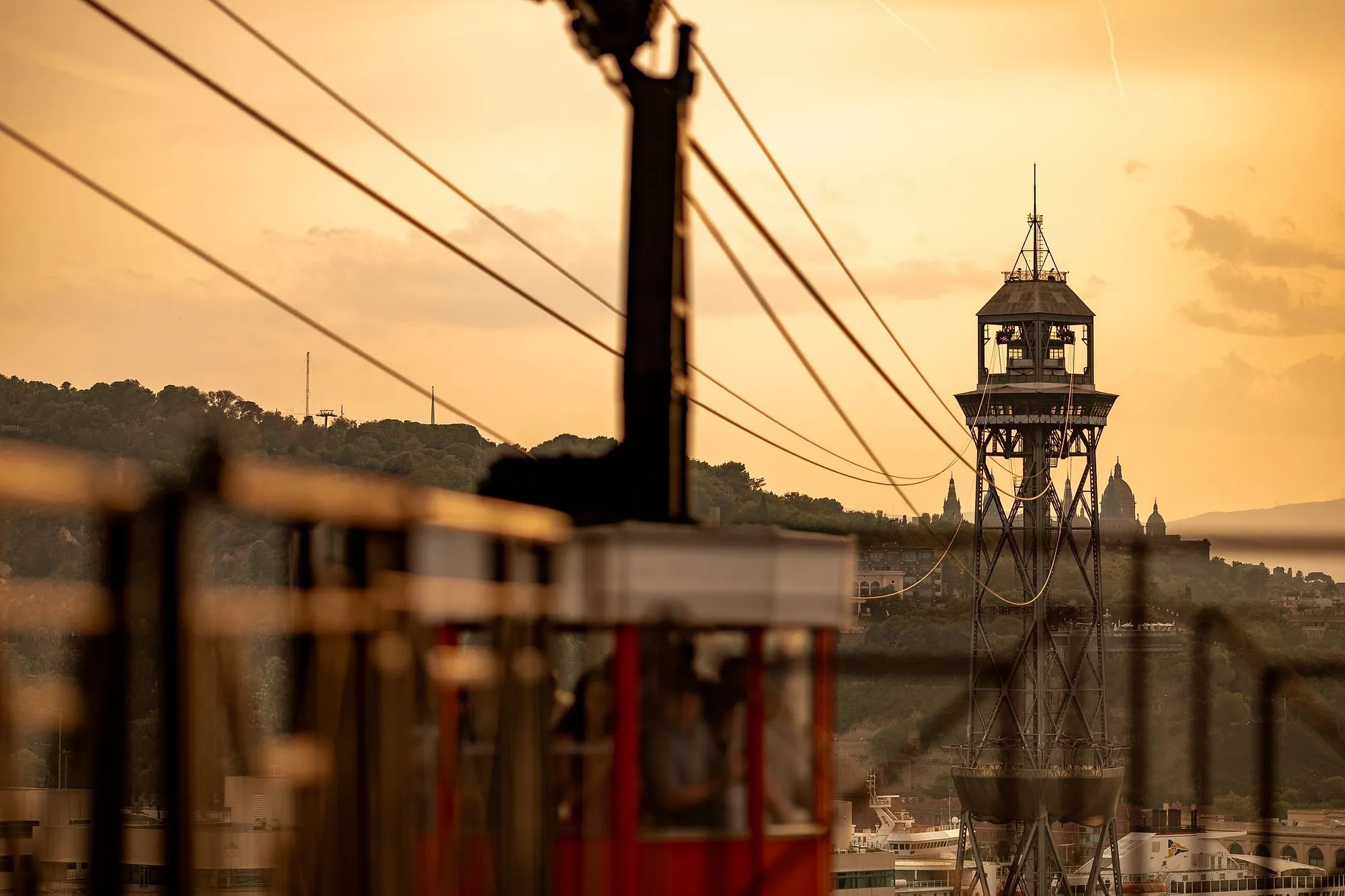
On 26 February 2025 the mayor of Barcelona gave his annual lecture in the Fundació Miró, which is on this hill, and spent it describing what the city intends to do to the hill.
He called it the third great transformation of Montjuïc, after the 1929 exposition and the 1992 Games.
That is a large claim and it deserves to be treated as a claim rather than as news. What follows is the list, the money, the caveats, and the two lines in it that change something for anyone going up there this year.
The numbers, as published
| What | Money | When the council said |
|---|---|---|
| Plaça d’Espanya pedestrian axis | 10 M€ | After the L8 works finish |
| Fira, new congress hall, Maria Cristina as a promenade; MNAC into the Pavelló de Victòria Eugènia; Palau d’Esports recovered; 500 public homes | 460 M€ | Over the coming decade |
| Olympic ring | 370 M€ | Over five years |
| Historic gardens | 8.8 M€ | Over two years |
| 22 escalators replaced | 7.8 M€ | Begun 2024, ending 2026 |
| Magic Fountain control, sound and light | 3 M€ | Under way |
| Groundwater network | 7 M€ | — |
| Morrot, phase one, led by the Port | 10 M€ | Finishing 2027 |
| Ronda Litoral at port level, by the Ministry | 98 M€ | 2035 horizon |
| Marina del Prat Vermell, up to 12,000 homes | 338 M€ | Over ten years |
Plus the surrounding neighbourhoods: 21 M€ for the Passeig de la Zona Franca, 24 M€ for a park at the Tres Xemeneies, 4 M€ for the streets of the Turó de la Font de la Guatlla, and Pla de Barris money of 15 M€ in Poble-sec and 8 M€ in the Marina.
We are printing the table because a plan that is only ever described in adjectives cannot be checked. This one can.
The one number in it that is actually useful today
Buried near the end, describing work already started:
The replacement of the 22 escalators that make the mountain more accessible, with 30 million uses a year.
That is, as far as we can find, the only published figure of any kind about how many people move around Montjuïc. Nobody counts visitors to the hill. The city counts escalator rides.
Be careful with it, because it is easy to misuse. Thirty million uses, not people — one person going up the escalator chain from Plaça d’Espanya to the MNAC uses several. It measures one route on one face of the mountain, and it counts residents, commuters and the people going to the Fira along with everybody else.
But it is a real municipal number, it is dated, and it is more than exists for La Rambla, where the official footfall figure does not exist at all.
The replacements run to 2026, which is the other reason to know about them: the escalators are how a lot of people get up this hill, and some of them have been out of service while this happens.
The gardens, and what the list tells you about the mountain
8.8 million euros over two years, and the council’s own inventory of what it means by the historic gardens is worth quoting because it doubles as a route:
the gardens and spaces created a century ago for the 1929 International Exposition, the Umbracle gardens, those of Laribal and those of the Teatre Grec. The great avenues, Miramar, de l’Estadi and Ferrer i Guàrdia, not forgetting the Forestier axis, the Font Màgica and the Sot de la Foixarda.
Read that as a list of what the city thinks is irreplaceable up here, written by the people who pay for it. It is almost entirely 1929, and it is almost entirely landscape rather than buildings — which is the argument we make about the gardens anyway, now with a budget line attached.
⚠️ The city cannot decide what the 1929 exposition was called
In the same press release, four times: Exposició Internacional de 1929.
Once, describing the Fira works: the commemoration of the centenary of the Exposició Universal de 1929.
Barcelona’s 1929 fair was an International Exposition. Its Universal Exposition was 1888, in the Ciutadella, and it is a different event forty-one years earlier.
This is a small slip in one document and we are not making a scandal of it. We are pointing at it because it is exactly how a wrong fact enters circulation: an institutional page says it once, a hundred pages copy the sentence, and within a year «Barcelona’s 1929 Universal Exposition» is something everybody knows. What the 1929 exposition actually was is on its own page, and it was International.
The metro, which is the part everyone will ask about
The plan is to extend line L2 to Montjuïc, and on through the Marina del Prat Vermell, the administrative district and the Fira to the Parc Logístic, where it would join L9 for the airport.
No opening date was given, and we are not going to supply one. An urban metro extension announced in a mayoral lecture is a statement of intent; the tunnel is a separate matter.
What was announced with more precision is the interim: a bus line X3 from the Paral·lel and Plaça d’Espanya with stops at the Olympic ring, carrer Foc and the Fira, and the renaming of line 150 as the Montjuïc Bus.
If you are working out how to get up there, the six ways and their traps is the page, and it is the one to trust over this one, because it describes what exists.
The Morrot, which nobody talks about and is the biggest idea in the list
Four kilometres of edge between the mountain and the port — the strip you look down on from the Mirador and never think about, because it is container terminal, rail and dual carriageway.
Two phases. The first, led by the Port of Barcelona, was stated to finish in 2027 at 10 million euros, producing a road at port level for public transport, pedestrians and bicycles. The second, by the Ministry of Transport, extends the Ronda Litoral at port level at 98 million euros on a 2035 horizon, turning the existing ring road into a promenade.
If that happens, the relationship between this hill and the water changes for the first time since the port was industrialised. It is also the item most likely to slip, which is why it is at the bottom of the press release rather than the top.
What to be sceptical about, and what not to
Be sceptical about dates. Nothing here is under construction on the strength of a lecture, most of it is a decade out, and the last two transformations of this mountain — 1929 and 1992 — both had immovable deadlines attached, which is precisely what this one does not.
Be sceptical about the audience figures. In February 2025 the council wrote that the Olympic ring’s venues already receive more than a million spectators a year. In July 2025 it wrote that they had held more than two million spectators and more than 170 events across 2023 and 2024. Both are its own numbers, five months apart, and it does not reconcile them.
Do not be sceptical about the intent. The money for the escalators, the gardens, the fountain and the groundwater is described as work already begun, and the Sant Jordi Club competition was launched in July 2025 with 70 million euros from the municipal company’s own commercial profits. Whatever happens to the rest, this hill is being spent on.
And note what is missing. There is nothing in this plan about managing visitors, because Montjuïc is the one major destination in Barcelona that residents have not withdrawn from — 2.1 % on the city’s avoidance list, last of everything. The council’s crowd-recovery programme runs in the Eixample and Ciutat Vella. It does not run here. A transformation this size is the sort of thing that changes that, and nobody has said what happens if it does.
Where to stand while it happens
The parts of Montjuïc worth your afternoon are, almost without exception, the parts that are not in this plan: the quarries, the cemetery, the Jewish necropolis, the Fossar de la Pedrera, the castle. None of them is getting 370 million euros, and none of them needs it.
Our Montjuïc walk is on those, on Tuesday and Thursday afternoons, two and a half hours. We are closed on 25 December and 1 January.
And if you are choosing whether the hill is worth the trip at all before any of this happens, that argument is here.
Where this comes from
- Barcelona transformarà Montjuïc i els seus barris en una nova àrea de centralitat metropolitana (26/02/2025)Ajuntament de Barcelona · Servei de PremsaThat the mayor set out «la tercera gran transformació de Montjuïc, després de la que va viure amb motiu de l'Exposició Internacional de 1929 […] i la dels Jocs Olímpics de 1992»; the Plaça d'Espanya pedestrian axis at 10 million euros, to be built once the L8 works finish and the square becomes a node with three metro and rail lines and a new underground interurban bus station; the renovation and expansion of the Fira with a new exhibition hall, a new congress hall and Avinguda Maria Cristina as a pedestrian promenade, culminating with the 1929 centenary; 500 public homes, a municipal sports centre and a new CAP between the Paral·lel and Avinguda de Rius i Taulet; the MNAC's expansion into the Pavelló de Victòria Eugènia, consolidating Montjuïc as «la muntanya dels museus»; the recovery of the Palau d'Esports; a budget of 460 million euros over the coming decade for those actions; 370 million over five years for the Olympic ring, including enlarging the Sant Jordi Club to 8,000, renewing the Palau Sant Jordi, modernising the stadium and transforming the esplanade into citizen space with more trees; 8.8 million euros over two years for the historic gardens, naming the Umbracle, Laribal and Teatre Grec gardens, the avenues of Miramar, de l'Estadi and Ferrer i Guàrdia, the Forestier axis, the Font Màgica and the Sot de la Foixarda; the Morrot as a four-kilometre opportunity, with a first phase led by the Port of Barcelona finishing in 2027 at 10 million euros and a Ronda Litoral extension at port level by the Ministry of Transport at 98 million euros on a 2035 horizon; the L2 extension to Montjuïc, the Marina del Prat Vermell, the administrative district and the Fira and on to the Parc Logístic to link with L9 to the airport; the interim bus line X3 and the renaming of line 150 as the Montjuïc Bus; the Marina del Prat Vermell at up to 12,000 homes, half protected, currently 2,600 residents and more than 5,000 expected by 2027, with 338 million euros over ten years; 21 million for the Passeig de la Zona Franca, 24 million for the Tres Xemeneies park, 4 million for the streets of the Turó de la Font de la Guatlla, 15 million of Pla de Barris money in Poble-sec and 8 million in the Marina; that «la substitució de les 22 escales mecàniques que fan la muntanya més accessible amb 30 milions d'usos anuals» began in 2024, ends in 2026 and costs 7.8 million euros; the 6.6-kilometre bike lane from the Font Màgica to Poble-sec; 7 million euros to extend the groundwater network for 50,000 m³ more a year for garden maintenance; and a 3-million-euro upgrade of the Magic Fountain's control, sound and lighting, «projectada per Carles Buïgas amb motiu de l'Exposició Internacional de 1929». The same document also states that «els equipaments de l'anella reben ja més d'un milió d'espectadors anuals».
- La transformació de l'Anella Olímpica comença creant un nou Sant Jordi Club (14/07/2025)Ajuntament de Barcelona · Servei de PremsaThe first phase: 70 million euros for the Sant Jordi Club, «que provindran íntegrament dels beneficis comercials de BSM», producing a 16,500 square metre hall with flexible capacities between 3,500 and 9,000, through an international architecture competition; the council's naming of the ring's four components as «l'Estadi Olímpic Lluís Companys, el Palau Sant Jordi, el Sant Jordi Club, i Esplanada Olímpica»; and the figure of «més de 2 milions d'espectadors i més de 170 esdeveniments» across 2023 and 2024 — which sits awkwardly beside the February note's «més d'un milió d'espectadors anuals».
- Barcelona amplia el programa 'Juguem a les places' als espais d'afluència turística (16/05/2026)Ajuntament de Barcelona · Servei de PremsaThat the council's crowd-recovery programme for the Espais de Gran Afluència ran in 2026 in four squares — Sagrada Família, Plaça Reial, the Gardunya and Plaça Nova — all in the Eixample and Ciutat Vella, and none of them on Montjuïc.
Everything above that carries a date, a figure or a name is checked against these before it is published. Where we could not find a source, the page says so.
Quick answers
- What is changing on Montjuïc?
- In February 2025 the Ajuntament set out what it calls «la tercera gran transformació de Montjuïc», after the 1929 exposition and the 1992 Games. The headline items: a pedestrian axis at Plaça d'Espanya (10 million euros), the renovation and expansion of the Fira with a new congress hall and Avinguda Maria Cristina turned into a pedestrian promenade, the MNAC extending into the Pavelló de Victòria Eugènia, the Palau d'Esports recovered as a sports hall, 500 public homes between the Paral·lel and Rius i Taulet — 460 million euros over the coming decade — plus 370 million for the Olympic ring over five years.
- Is the metro coming to Montjuïc?
- That is the plan. The council's stated project is extending line L2 to Montjuïc, the Marina del Prat Vermell, the administrative district and the Fira, and on to the Parc Logístic to link with L9 for the airport. No opening date was given. In the meantime the council announced a bus line X3 running from the Paral·lel and Plaça d'Espanya with stops at the Olympic ring, carrer Foc and the Fira, and the renaming of line 150 as the Montjuïc Bus.
- How many people use Montjuïc?
- Nobody publishes a visitor count for the hill. The closest figure the city has put in writing is about the escalators: it is replacing 22 of them, and describes them as making the mountain more accessible «amb 30 milions d'usos anuals». That is uses, not people, and it only counts the escalator route. It is still the only number of its kind anyone has published.
- Are the gardens being changed?
- Conserved rather than changed, on a two-year budget of 8.8 million euros. The council's list names the gardens and spaces created for the 1929 exposition — the Umbracle, Laribal and the Greek Theatre gardens — along with the avenues of Miramar, de l'Estadi and Ferrer i Guàrdia, the Forestier axis, the Magic Fountain and the Sot de la Foixarda, and frames the work in terms of adapting them to the current climate.
- What is happening to the Magic Fountain?
- A three-million-euro upgrade of its control system, sound and lighting was under way when the plan was announced, described as renewing the infrastructure «projectada per Carles Buïgas amb motiu de l'Exposició Internacional de 1929». The fountain has already been through one long shutdown, which is its own story.
- When is the 1929 centenary?
- 2029, and the city is openly building towards it: the Fira transformation is stated to culminate with the commemoration. If you are choosing a year to see Montjuïc at its most and least finished, that is the one to watch — and to be sceptical about, because construction programmes of this size do not land on anniversaries by accident or, usually, at all.
- Does any of this affect a visit now?
- Two things do. Works are live across the hill, so anything you plan around a particular garden, avenue or escalator should be checked on the day. And the Morrot — the four-kilometre strip between the mountain and the port — has a first phase led by the Port of Barcelona that the council said would finish in 2027, adding a road at port level for public transport, pedestrians and bicycles.
The tours this piece is about
More in the journal
Montjuïc
- Is Montjuïc worth it? Give it half a day or give it nothing
- The bullring closed twenty-one years before bullfighting was banned, and the ban was struck down anyway
- The eight-hour day was won on this avenue, and the decree that granted it does not mention it
- On the city's list of places residents avoid because of tourism, Montjuïc comes last
- There are three cable-car-shaped things on Montjuïc and most people book the wrong one
- Barcelona built this castle to defend itself, and then spent two centuries being shelled from it