
Gaudí
Who paid for each Gaudí building, and what they did for a living
A list. Each building, the person who commissioned it, and where their money came from — taken from what each building's own institution publishes.
Gaudí’s buildings are usually described as if they had appeared by force of imagination. They were paid for by five or six people with names, addresses and businesses. Here they are, with the source in each case being the institution that runs the building today.
Sagrada Família — Josep Maria Bocabella i Verdaguer, a Barcelona bookseller.
He founded the Spiritual Association of the Devotees of Saint Joseph in 1866 and a magazine to go with it, El Propagador de la Devoción a San José. The association bought the land on 31 December 1881 — 12,800 square metres for 172,000 pesetas. Work began the following March under Francisco de Paula del Villar. Gaudí replaced him in November 1883, after a falling-out the basilica’s own material variously puts down to a dispute over the cost of materials and to differences with Bocabella himself. He arrived to find the crypt foundations laid and the columns half built.
It has never had a single patron and it does not have one now. Donations, then visitors.
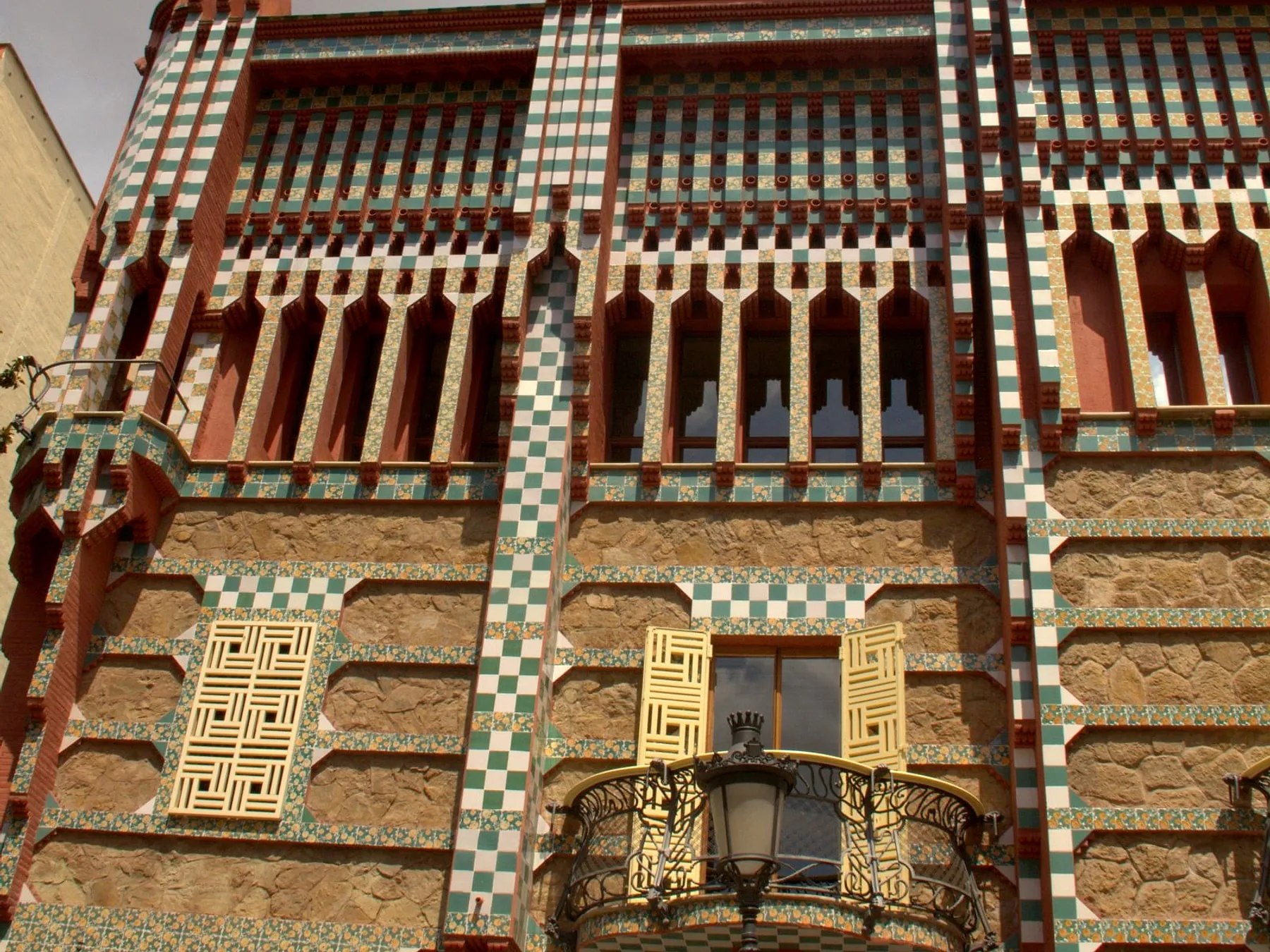
Casa Vicens — Manel Vicens i Montaner (1836-1895), currency trader and stockbroker, and his wife Dolors Giralt.
A summer house, built 1883 to 1885 at carrer de les Carolines 20-26 — a street that was not in Barcelona at the time, but in the separate town of Gràcia.
You will be told, on tours and in print, that Vicens was a tile or brick manufacturer and that this is why the house is covered in ceramic. It is the most seductive wrong fact in Barcelona and it does not survive opening the house’s own press dossier, which calls him a currency trader and stockbroker. There is no tile business anywhere in the record.
Finca Güell, Palau Güell, Park Güell, Colònia Güell — Eusebi Güell (1846-1918), industrialist, politician and patron.
He married Isabel López y Bru in 1871, heiress to the Marquises of Comillas, which is the part of the story that turns a rich man into a very rich one. He set up a corduroy factory at Santa Coloma de Cervelló which became the Colònia Güell. He was later created Count of Güell.
Four commissions, spread across thirty years: the Finca Güell pavilions from 1884, the Palau Güell from 1886, the Colònia Güell church from 1898, Park Güell from 1900. That last one was a housing development for well-off families, laid out with about sixty plots, of which two houses were ever built before the works were abandoned in 1914. The crypt at Santa Coloma stopped for the same reason — his children declined to keep paying — and that is set out in the Colònia Güell crypt.
Without this one man there is no Park Güell, no Palau Güell and no crypt, and probably a much smaller Gaudí.
Casa Batlló — Josep Batlló i Casanovas, textile industrialist, owner of several factories in Barcelona.
He bought an existing building on Passeig de Gràcia, put up in the 1870s, and his first instruction was to knock it down. Gaudí talked him out of it. The house was remodelled instead, between 1904 and 1906, which is why the thing everybody photographs is a refit rather than a building.
Casa Milà, La Pedrera — Pere Milà, politician and press promoter. And, more accurately, Roser Segimon.
Milà was elected as a Conservative deputy, ran the Madrid newspaper La Tribuna, and promoted the Monumental bullring. La Pedrera’s own pages say of him, at the time of his marriage, that he “had more pedigree than money”. The house was his wife’s property, as the bullring was. Her fortune came from her first husband, Josep Guardiola.
The building is known by his name. It was hers.
That is the list of the big ones. Three of them paid for somewhere to live or to let, one paid for a housing estate nobody bought plots in, and one was a subscription fund run out of a bookshop.
The building that made Gaudí famous is the one where no individual client existed to argue with him, and that fact is doing more work than it usually gets credit for.
The building nobody commissioned is also the one still going: what actually sets its pace is in why it takes this long.
Where each of these stands, and which you can see for nothing, is in every Gaudí building in Barcelona. The small things carved into them are in the things people walk past. And the version told out loud by an actor playing Gaudí, on the pavement outside the one nobody commissioned, is the Gaudí walk.
Two follow-ups. The building Eusebi Güell commissioned first is the only completed Gaudí home still true to its original design, and the reason is a donation his youngest daughter made in 1945: Palau Güell. And what the rest of these clients and their heirs did with the buildings after 1926 — including the owner who had 532.50 square metres of Gaudí’s ceilings demolished — is what happened to Gaudí’s buildings after he died.
And the clearest case of the money not working is the one everybody visits: Park Güell, sixty plots and two sales.
Where this comes from
- Press kit (PDF)Casa Vicens GaudíThat Manel Vicens i Montaner (1836-1895) was a stock and currency broker — not, as is endlessly repeated, a tile manufacturer.
- HistoryCasa BatllóThat Josep Batlló was a textile industrialist with several factories, and that the full renovation ran from 1904 to 1906.
- HistòriaCripta Gaudí · Colònia GüellThat Güell's children told Gaudí in 1914 they would stop financing the work, and that the lower nave was blessed in November 1915.
Everything above that carries a date, a figure or a name is checked against these before it is published. Where we could not find a source, the page says so.
Quick answers
- Who commissioned Casa Vicens?
- Manel Vicens i Montaner (1836-1895), described by Casa Vicens itself as a currency trader and stockbroker, with his wife Dolors Giralt. It was their summer house. He was not a tile manufacturer — that is a widely repeated story with nothing behind it, and he died in 1895 in any case.
- Who was Eusebi Güell?
- An industrialist, politician and patron of the arts, born in Barcelona in 1846 and died in 1918. He married Isabel López y Bru, heiress to the Marquises of Comillas, in 1871, and set up the corduroy factory at Santa Coloma de Cervelló that became the Colònia Güell. He was later created Count of Güell. He commissioned four of Gaudí's largest works.
- Who paid for the Sagrada Família?
- Nobody, in the sense of a single patron. It was begun by an association of lay devotees of Saint Joseph founded in 1866 by Josep Maria Bocabella, a Barcelona bookseller. The association bought the land on 31 December 1881. The building has been funded by donations and, later, by visitors ever since.
- Who owned La Pedrera?
- Roser Segimon, not her husband. Pere Milà is the name on the building, but La Pedrera's own pages say he had "more pedigree than money" and that the house, like the Monumental bullring, was his wife's property. Her fortune came from her first husband, Josep Guardiola.
- Did Gaudí choose his own projects?
- Rarely. Almost everything he built was a private commission from someone with a specific use in mind — a summer house, a town palace, a block of flats to let. The one exception is the basilica, which he inherited from another architect and stayed with for forty-three years.
The tours this piece is about
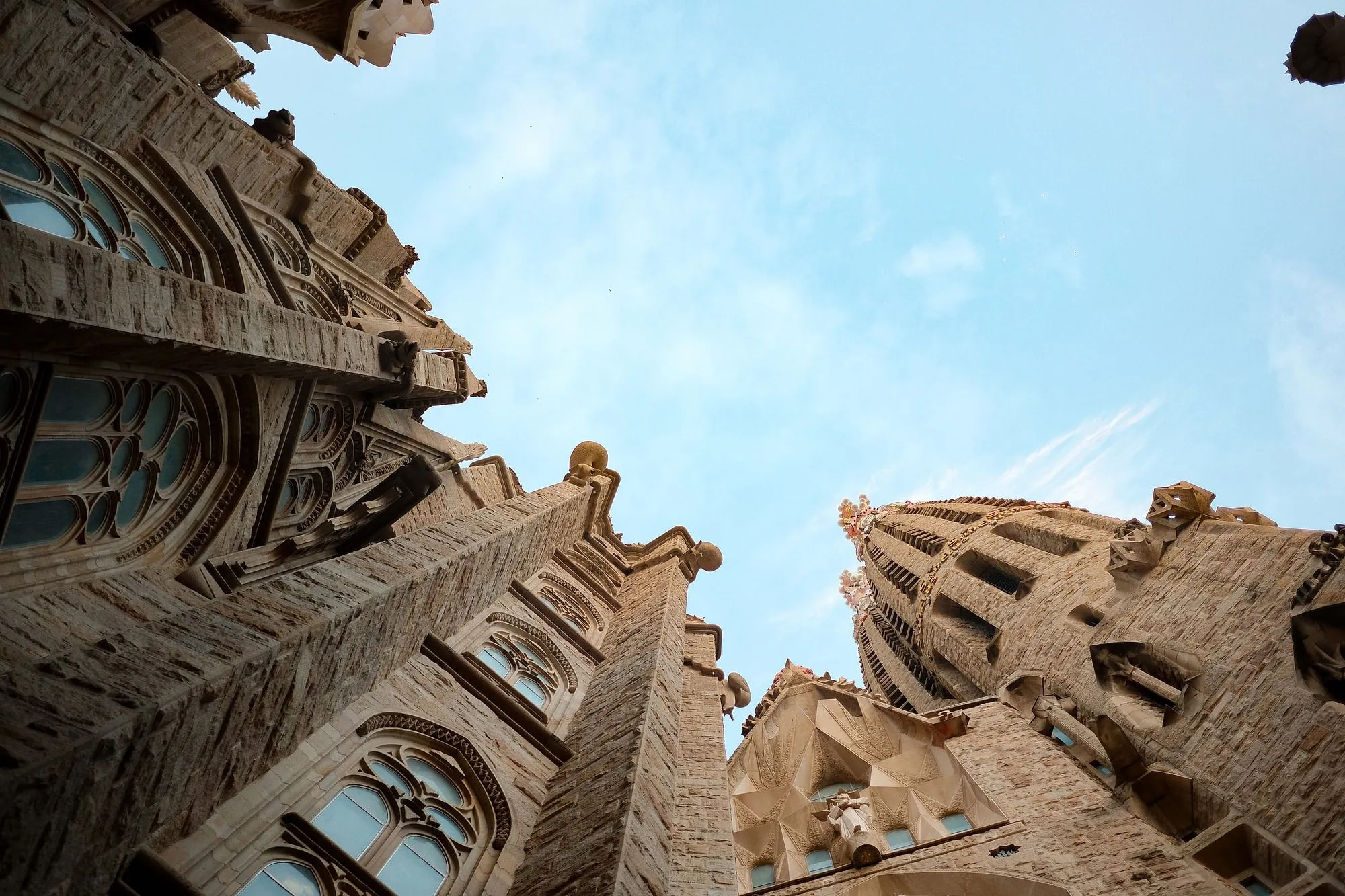
Gaudí comes alive
You will recognise the guide because he will be Antoni Gaudí.
- How long it lasts
- 1 h 30
- Runs in
- EN · ES · CA
- Price
- 30 €
Never more than 15 people
Gràcia: the town that rang the bell
A bell, a bombardment, and a vermouth at the end of it.
- How long it lasts
- 3 h
- Runs in
- EN · ES
- Price
- 36 €
Never more than 10 people
More in the journal
Gaudí and Modernisme
- The Colònia Güell crypt, and the day Gaudí's money stopped
- He did not copy nature. He copied what nature does with a load
- Barcelona did not have one great architect. It had a generation
- The house Gaudí lived in was designed by somebody else, and Gaudí signed it
- Why it takes this long, written as constraints rather than excuses
- In 1971 a piece of La Pedrera fell into the street