
Gaudí
The only Gaudí home that nobody was left alone with
Every other house Gaudí finished was lived in, sold, stripped or redecorated by somebody who did not like it. This one left the family early and ended up belonging to a public body, and that accident is why it is the one worth going into.
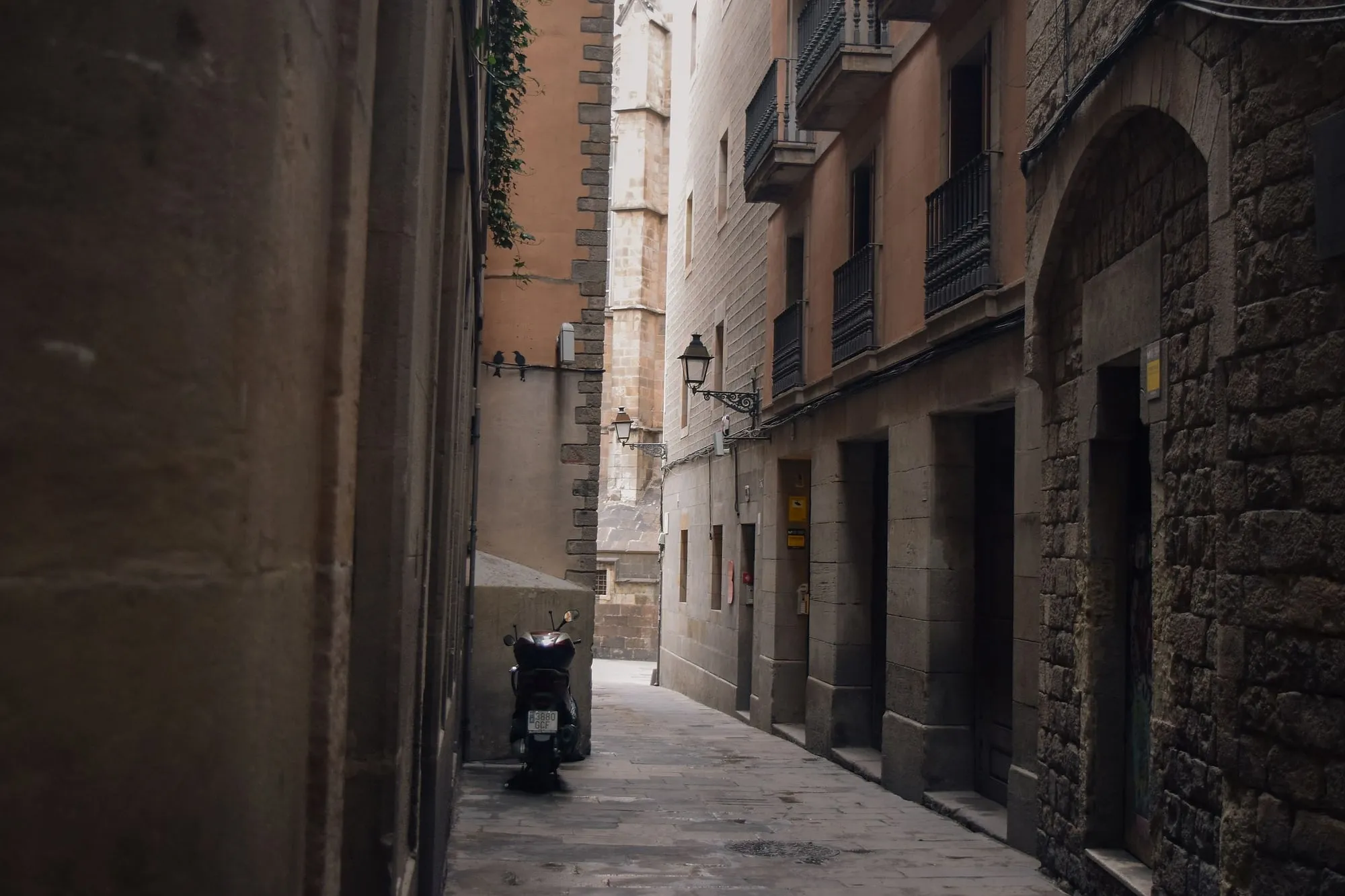
Barcelona has one Gaudí house that nobody got to improve, and it is the one people walk past on their way to La Rambla.
The claim, and who makes it
Palau Güell belongs to Barcelona Provincial Council. Its own visitor guide puts the case in a single sentence:
It is the only example of residential architecture that Gaudí completed and that has remained true to the original design.
Read that with the others in mind and it stops sounding like marketing.
La Pedrera. Its owner, Roser Segimon, never liked what Gaudí had done to her flat. After he died she had 532.50 square metres of his suspended ceilings demolished, hired a decorator, pulled out the parquet and the shutters and replaced twenty doors and windows. The building’s own history says so, with the measurement.
Casa Batlló. Left the family in the 1950s, then hosted businesses and private individuals until the 1990s.
Casa Vicens. A private home for over a century; nobody could go inside until 2017.
Park Güell. A failed housing estate that the city bought and turned into a park.
Palau Güell. The family moved out around 1910. In 1945 Eusebi Güell’s youngest daughter, Mercè Güell i López, gave the building to the Provincial Council on condition it be preserved and used for culture. It has been a public building ever since.
So the reason this one is intact is not that anybody loved it more. It is that it stopped being somebody’s house before the century that redecorated everything else.
What it actually is
A town palace on Carrer Nou de la Rambla, built for Eusebi Güell — the industrialist behind four of Gaudí’s largest works — a few steps off La Rambla, in El Raval. Its owners date it 1886 to 1890. Barcelona’s municipal heritage catalogue dates the same building 1885-89, and calls its style historicista rather than modernista. Two official records, four years of overlap and no agreement on either end. We are giving you both because that is the only honest thing to do with two sources of equal standing.
It is seven floors, and the way they stack is the whole experience.
The ground floor is the entrance hall and the coach house — you come in where the carriages came in. From there a ramp goes down to the basement, which is the stable. Horses, under the house, reached by a slope, in the middle of a city block.
Up the main staircase to the mezzanine, and then the main floor, which is a ring of rooms around a central hall: the sala de confiança, the gallery or smoking room, the dining room, the billiards room, the reception room, and the one whose name we have never got out of our heads, the sala dels passos perduts — the room of lost steps.
The central hall has an organ. It is programmed to play by itself every half hour, and the musicians’ gallery looks down into the hall from the floor above. A house built so that music falls on the family from overhead.
Then the bedroom floor. Then, by the service stairs, the attic. Then the roof.
The roof
Twenty chimneys clad in trencadís, around a sixteen-metre spire at the centre.
The other great Gaudí roofscape in Barcelona is La Pedrera’s, and everybody knows about it. This one is older, it is smaller, it is above a much darker building, and on most days there is nobody on it. What the broken tile is actually made of — and it is not always tile — is in trencadís, and what it is made of.
Why so few people go
The Gaudí map in most visitors’ heads runs from the Sagrada Família down Passeig de Gràcia and up to Park Güell. It never comes back down into the old city. Palau Güell is five minutes from the Plaça Reial lampposts, which are also his and which people photograph without knowing it, and it sits on a street most itineraries treat as somewhere to pass through.
That is an argument in its favour if what you want is to stand still. It is also, bluntly, the best Gaudí building in the rain, because the entire visit is indoors except for the roof.
One practical note that is not a timetable: it is one of the few Gaudí buildings that publishes regular free-admission days, tied to the city’s and Catalonia’s own feast days. Its owners list them; we are not going to reprint dates that can change, but it is worth looking before you buy anything.
Where it fits
It is an early work — the council’s own phrasing is that it “contains the essence of all his later work and is fundamental to understanding his architecture”. Casa Vicens, in Gràcia, is earlier still and is the other end of the same argument: is Casa Vicens worth it.
Who Eusebi Güell was, where the money came from and what else he paid for is in who paid for each Gaudí building. The full inventory, with the free ones marked, is every Gaudí building in Barcelona. The century in which most of these buildings were nearly lost, and the handful of donations and purchases that saved them, is what happened to Gaudí’s buildings after 1926.
And since you will be in the old city anyway, the streets around it are the subject of what to see in the Gothic Quarter — and the same streets after dark, which is a different neighbourhood, in the Gothic Quarter at night.
The other Gaudí with no ticket office
Our Gaudí walk is at the other end of his life and the other end of the city: ninety minutes on the pavement outside the Sagrada Família, fifteen people, performed by an actor playing Antoni Gaudí. If Palau Güell is where you meet the architect who had just been given his first serious money, the basilica is where you meet the one who had stopped taking anybody else’s.
Where this comes from
- About the PalauDiputació de Barcelona · Palau GüellThat Palau Güell was built by Antoni Gaudí between 1886 and 1890 for Eusebi Güell; that in 1945 Mercè Güell i López, Eusebi Güell's youngest daughter, donated the Palau to Barcelona Provincial Council on condition that it be preserved and used for cultural purposes; that UNESCO declared it World Heritage in 1984; and that 'as an early work, it contains the essence of all his later work and is fundamental to understanding his architecture'.
- Visitor's Guide, Easy-to-Read Version (PDF, 2024)Diputació de Barcelona · Palau GüellThat the Güell family lived here until approximately 1910; that it is 'the only example of residential architecture that Gaudí completed and that has remained true to the original design'; that the building has seven floors, with the coach house on the ground floor and the stable in the basement; that the main-floor rooms around the central hall include the sala de confiança, the gallery or smoking room, the dining room, the billiards room, the reception room and the sala dels passos perduts; that the organ in the central hall is programmed to play automatically every thirty minutes and the musicians' gallery is on the mezzanine above; and that the roof terrace has twenty chimneys decorated in trencadís with a sixteen-metre spire at the centre.
- Catàleg del patrimoni arquitectònic protegit de la ciutat de BarcelonaOpen Data BCN · Ajuntament de BarcelonaThat the municipal catalogue records PALAU GÜELL, by Antoni Gaudí i Cornet, dated 1885-89, style 'Historicista', original use residential, at the highest protection level, in district 01. The dates do not match the 1886-1890 published by the building's own owners.
- HistoryLa Pedrera · Casa Milà (Fundació Catalunya La Pedrera)That after Gaudí's death Rosario Segimon, who never liked his decoration of her flat, had 532.50 square metres of his suspended ceilings demolished, brought in the decorator Modest Castañé i Lloret, had the parquet and shutters removed and twenty doors and windows replaced — the comparison that makes Palau Güell's survival unusual.
Everything above that carries a date, a figure or a name is checked against these before it is published. Where we could not find a source, the page says so.
Quick answers
- Is Palau Güell worth visiting?
- It is the one we send people to when they have already seen the Passeig de Gràcia houses, and the one we send them to first when they care about how Gaudí actually worked. Its owners, Barcelona Provincial Council, describe it as the only example of residential architecture Gaudí completed that has remained true to the original design. It is also indoors, vertical and compact, which makes it the best Gaudí building in bad weather.
- When was Palau Güell built?
- Its owners date it 1886 to 1890, commissioned by the industrialist Eusebi Güell. Barcelona's municipal heritage catalogue dates the same building 1885-89. Both are official records and they do not agree; we quote both rather than choose.
- Why is Palau Güell in such original condition?
- Because it stopped being a home early. The Güell family lived there until about 1910. In 1945 Eusebi Güell's youngest daughter, Mercè Güell i López, gave the building to Barcelona Provincial Council for cultural use. It therefore missed the century in which the other Gaudí houses were redecorated, subdivided, converted to offices or emptied of their fittings.
- What is on the roof of Palau Güell?
- Twenty chimneys clad in trencadís — broken tile — around a spire sixteen metres tall at the centre. It is one of the two great Gaudí roofscapes in the city and the less crowded of them by a wide margin.
- Where is Palau Güell and why do people miss it?
- Carrer Nou de la Rambla, a few steps off La Rambla, in El Raval. It is a five-minute walk from the Plaça Reial lampposts, which are also his. People miss it because the Gaudí map in their heads runs up Passeig de Gràcia and does not come back down into the old city.
The tours this piece is about
Gaudí comes alive
You will recognise the guide because he will be Antoni Gaudí.
- How long it lasts
- 1 h 30
- Runs in
- EN · ES · CA
- Price
- 30 €
Never more than 15 people
The Gothic Quarter: a neighbourhood that invented itself
Barcelona's most photographed bridge dates from 1928.
- How long it lasts
- 2 h
- Runs in
- EN · ES · CA
- Price
- 15 €
Never more than 20 people
More in the journal
Gaudí and Modernisme
- Every Gaudí building in Barcelona, and which ones are free
- One day of Gaudí is two timed tickets at opposite ends of a city, unless you plan it backwards
- Casa Batlló or La Pedrera: one is a refit, the other is a building
- The city's own Gaudí list has things on it that no tour goes to
- The city that made him has nothing he built, and says so on its own website
- Casa Calvet and Bellesguard: the two Gaudís that UNESCO turned down