
Gaudí
Barcelona did not have one great architect. It had a generation
The case for spending your whole trip on Gaudí is a good one and this page will make it properly before disagreeing with it.
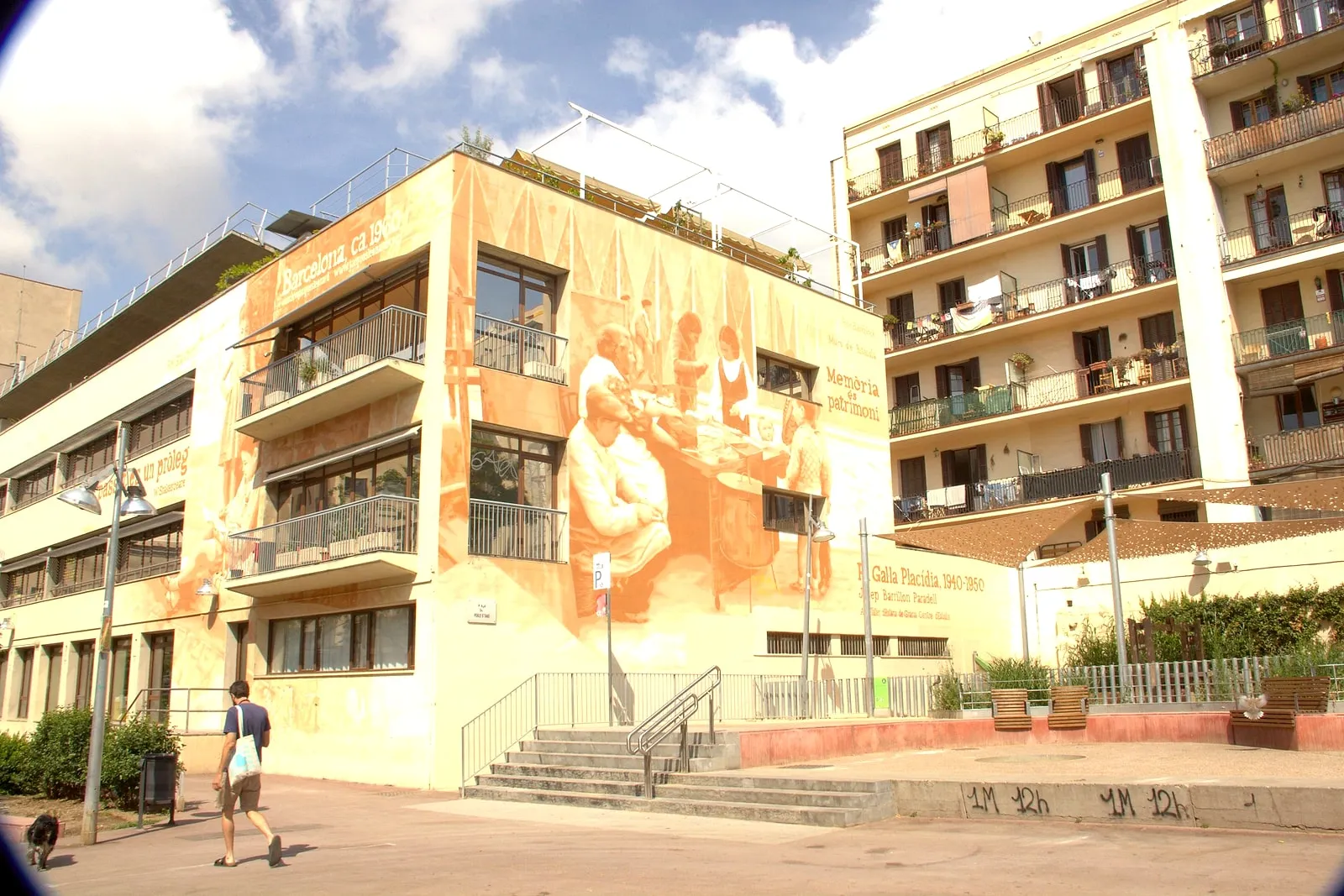
Barcelona did not have one great architect. It had a generation, and the visitor map records exactly one of them.
Here is the case for keeping it that way, and it is stronger than the people who make it usually realise.
You have three days. Gaudí is the reason most people come, his buildings are spread across four districts, and going inside two of them plus the basilica will already eat a day and a half. Adding a second architect does not add depth — it adds transport, and transport is the thing that ruins short trips in this city. Besides, Gaudí genuinely is the outlier. Nobody else in Europe was building anything like the Sagrada Família. If you have limited time and you want the thing Barcelona has that nowhere else has, the answer is one man’s work and there is no shame in going straight at it.
That argument wins on a two-day trip. On anything longer it starts to cost you something.
What it costs you
It costs you the smallest thing he made. Set into the doorway of the Casa de l’Ardiaca, beside the cathedral in the old city, there is a marble letterbox carved with swallows and a tortoise that Domènech designed in 1895 for the lawyers’ association. It costs nothing, it takes ten seconds, and essentially nobody stops at it — it is stop six on what to see in the Gothic Quarter.
It costs you the block. Casa Batlló is not a solitary object on Passeig de Gràcia. It stands on the block between Consell de Cent and Aragó, alongside Casa Amatller by Josep Puig i Cadafalch and Casa Lleó Morera by Lluís Domènech i Montaner — three houses, three architects, remodelled within a few years of each other. Casa Batlló’s own history says the owners were competing for the city council’s architecture prizes of the day, “which is why this area became known as the Block of Discord”, and counts five houses rather than three.
Standing in front of Casa Batlló and photographing only Casa Batlló is like reading one side of an argument. The neighbours are three metres away and they are free.
It costs you Sant Pau, which is at the end of the same street. The Sagrada Família stands at the foot of Avinguda Gaudí. Walk up it — it is pedestrianised, it takes about ten minutes — and at the far end there is a hospital complex by Lluís Domènech i Montaner that most visitors do not know exists.
The numbers from the site’s own history are worth having, because they say something about ambition in this city at that moment. Domènech designed 48 buildings. Twenty-seven were built, and only sixteen followed his modernist design. Construction of the first ten began in 1902; Alfonso XIII inaugurated the hospital on 16 January 1930, seven years after the architect had died. It worked as a hospital until autumn 2009, when the medical activity moved to a new building on the north side and the old pavilions became a cultural site.
It was declared a Historic-Artistic Monument in 1978 and a UNESCO World Heritage Site in 1997 — eight years before Casa Vicens and Casa Batlló were added to the Gaudí listing.
And the idea behind it is not decoration. Domènech laid out separate pavilions in gardens, joined underneath by a network of tunnels, on the theory that patients recover in daylight and air rather than in corridors. It is a medical argument built in brick.
The thing that makes this more than a list
Modernisme was not a style anybody imported and it was not only about taste. It arrived alongside a Catalan cultural revival, and it was paid for by industrialists who had made money in textiles and shipping and wanted the money to look like something.
So the buildings are not quiet. A hospital laid out as a garden village, a concert hall built for a choral society, a block of Passeig de Gràcia where neighbours hired rival architects and let them fight it out in public — these are statements about what Catalonia was supposed to be, and they were made by people who expected to be read that way. Gaudí is the one whose buildings survived into the postcard, and the postcard dropped the argument.
What we would actually do with a spare afternoon
Walk up Avinguda Gaudí from the basilica to Sant Pau. It is one street, it is flat, it takes ten minutes, and it is the single highest return on effort in modernista Barcelona: two enormous buildings, one at each end, one enormously famous and one not, with terraces in between.
Then, if you have another day, Gràcia — where the first Gaudí house sits among ordinary modernista blocks that nobody labels, which is the most useful way to see how normal this stuff once was. The route is in what to see in Gràcia and the house itself is argued over in is Casa Vicens worth it.
Who paid for all of it — the booksellers, stockbrokers and textile men behind the famous names — is in who paid for each Gaudí building. For the full inventory of Gaudí specifically, including which ones you can see free from the pavement, there is every Gaudí building in Barcelona. For the trip that does not revolve around a basilica ticket at all, Barcelona without the Sagrada Família.
Our own Gaudí walk spends its last scene on Avinguda Gaudí, which is the street that runs up to Sant Pau. Carrying on up it afterwards is the obvious next hour and it does not need us.
There is a third direction, and it is inwards rather than sideways: the people who worked for him, several of whom have buildings of their own that nobody attributes to them. Jujol built the fountain in Plaça d’Espanya; Rubió built half a dozen houses across the city; Berenguer built the house Gaudí lived in. That is who worked with Gaudí.
And if you are willing to leave the city entirely, his own home town has no building by him at all and says so on its own tourism site: Gaudí outside Barcelona.
And one Puig i Cadafalch building that is never on the modernisme lists because people take it for a castle: the Casaramona cotton mill at the foot of Montjuïc, listed as a national monument in 1976 in the same decree as Els Quatre Gats and Les Punxes.
One neighbourhood makes the point better than any list: in Gràcia, a large part of what is catalogued as modernista is by a master builder who never qualified, and the city’s own author field names the five men who signed for him. The modernisme of Gràcia.
Where this comes from
- Història del Recinte ModernistaSant Pau Recinte ModernistaThe 48 buildings designed, 27 built and only 16 to the original modernista design; works from 1902; Alfonso XIII's inauguration on 16 January 1930; the hospital moving out in autumn 2009; listed in 1978 and UNESCO in 1997.
- HistoryCasa BatllóThe block with Casa Amatller by Puig i Cadafalch and Casa Lleó Morera by Domènech i Montaner, and the city architecture prizes their owners were competing for.
Everything above that carries a date, a figure or a name is checked against these before it is published. Where we could not find a source, the page says so.
Quick answers
- Who else built modernista Barcelona apart from Gaudí?
- Lluís Domènech i Montaner (1850-1923) and Josep Puig i Cadafalch are the two names that matter most. Domènech built the Hospital de Sant Pau and the Palau de la Música Catalana, both of which carry a UNESCO World Heritage inscription of their own, from 1997.
- What is the Illa de la Discòrdia?
- One block of Passeig de Gràcia where houses by different architects stand side by side, remodelled within a few years of each other in competing styles. Casa Batlló is Gaudí's contribution and the one everyone photographs; its neighbours are the argument.
- Is Sant Pau worth visiting?
- It is a full site rather than a single building, it is at the top of Avinguda Gaudí and it is a ten-minute walk from the Sagrada Família, which almost nobody does. Domènech designed 48 buildings for it; 27 were built and 16 followed his modernist design. The hospital moved out in autumn 2009 and the old pavilions opened as a cultural site.
- Can you see any of this without paying?
- The Sant Pau pavilions read clearly from the street and the gardens, the façades on Passeig de Gràcia are all free from the pavement, and the outside of the Palau de la Música is the part with the sculpture on the corner. The interiors are ticketed.
- Does modernisme mean art nouveau?
- Roughly, in the way that Jugendstil and Liberty also roughly mean it — the same European moment with a Catalan accent, and with a nationalist political charge the others do not have. Sant Pau's own English pages call itself an art nouveau site.
The tours this piece is about
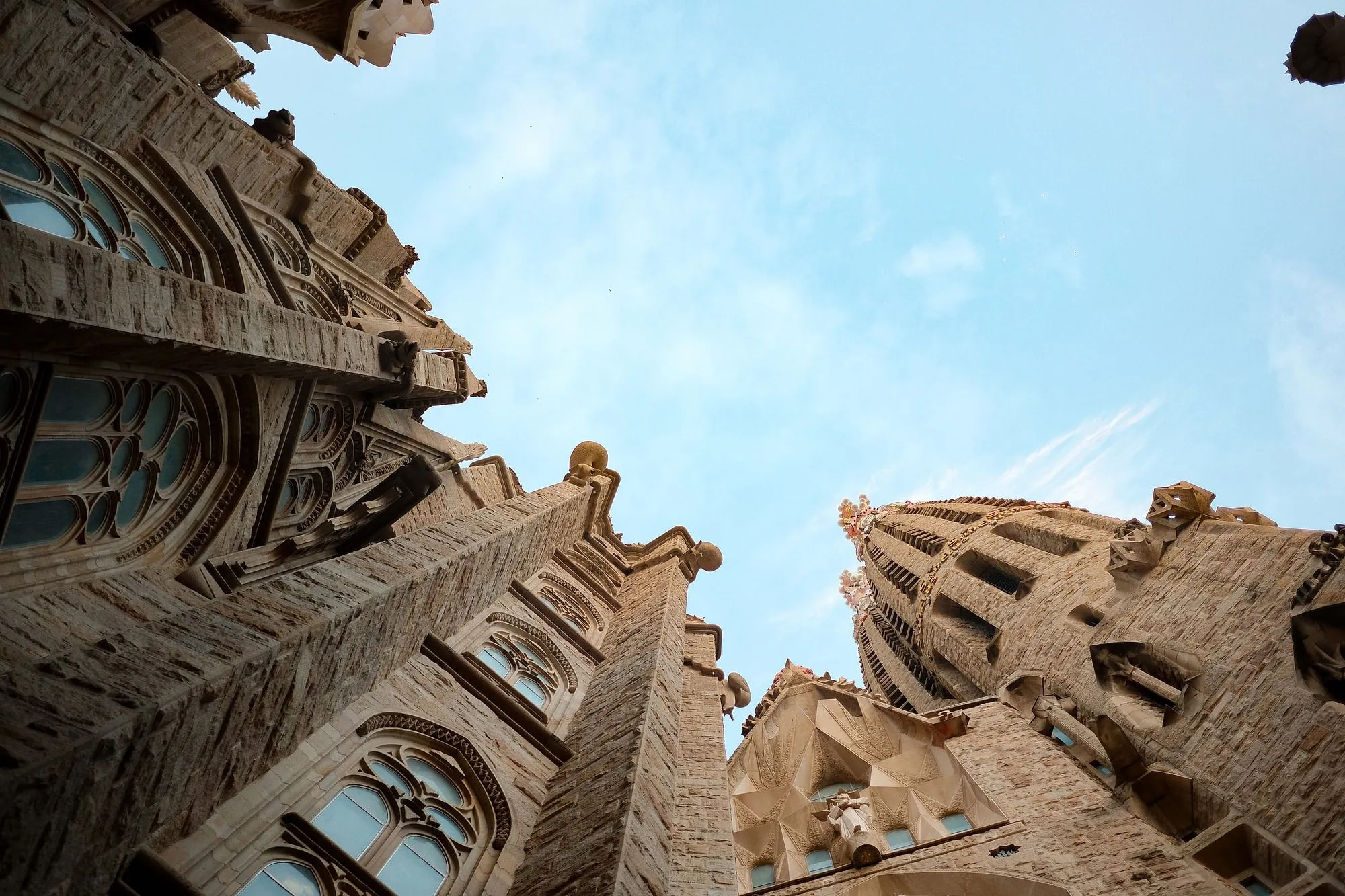
Gaudí comes alive
You will recognise the guide because he will be Antoni Gaudí.
- How long it lasts
- 1 h 30
- Runs in
- EN · ES · CA
- Price
- 30 €
Never more than 15 people
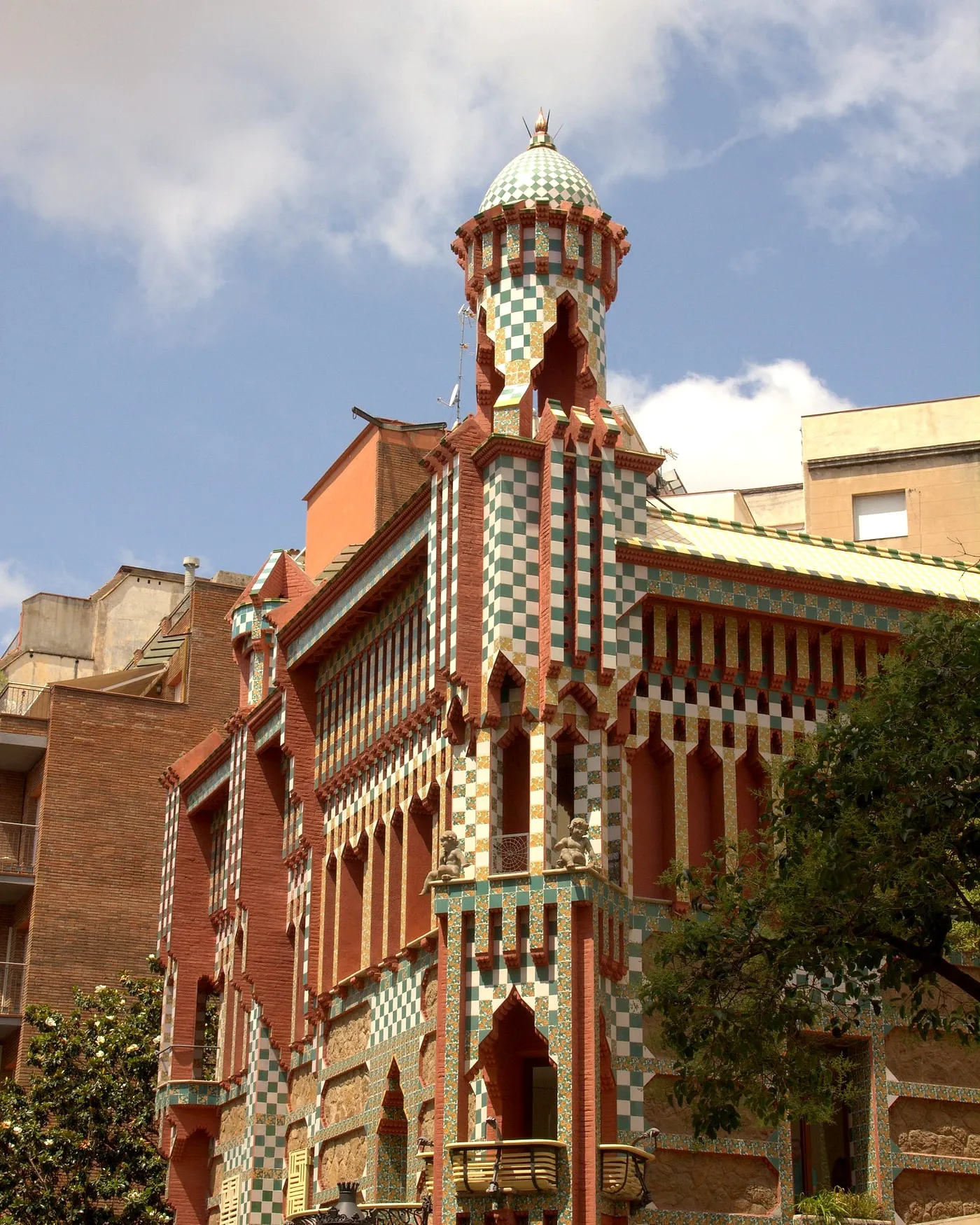
Gràcia: the town that rang the bell
A bell, a bombardment, and a vermouth at the end of it.
- How long it lasts
- 3 h
- Runs in
- EN · ES
- Price
- 36 €
Never more than 10 people
More in the journal
Gaudí and Modernisme
- The things people walk past, standing right in front of them
- One group of chimneys on La Pedrera is clad in champagne bottles
- The Colònia Güell crypt, and the day Gaudí's money stopped
- He did not copy nature. He copied what nature does with a load
- The house Gaudí lived in was designed by somebody else, and Gaudí signed it
- Who paid for each Gaudí building, and what they did for a living