
Gaudí
The Colònia Güell crypt, and the day Gaudí's money stopped
Go if you have four days and you want to see how Gaudí worked out whether a building would stand up. On a three-day trip it is the wrong choice, and this page says so before it says anything else.
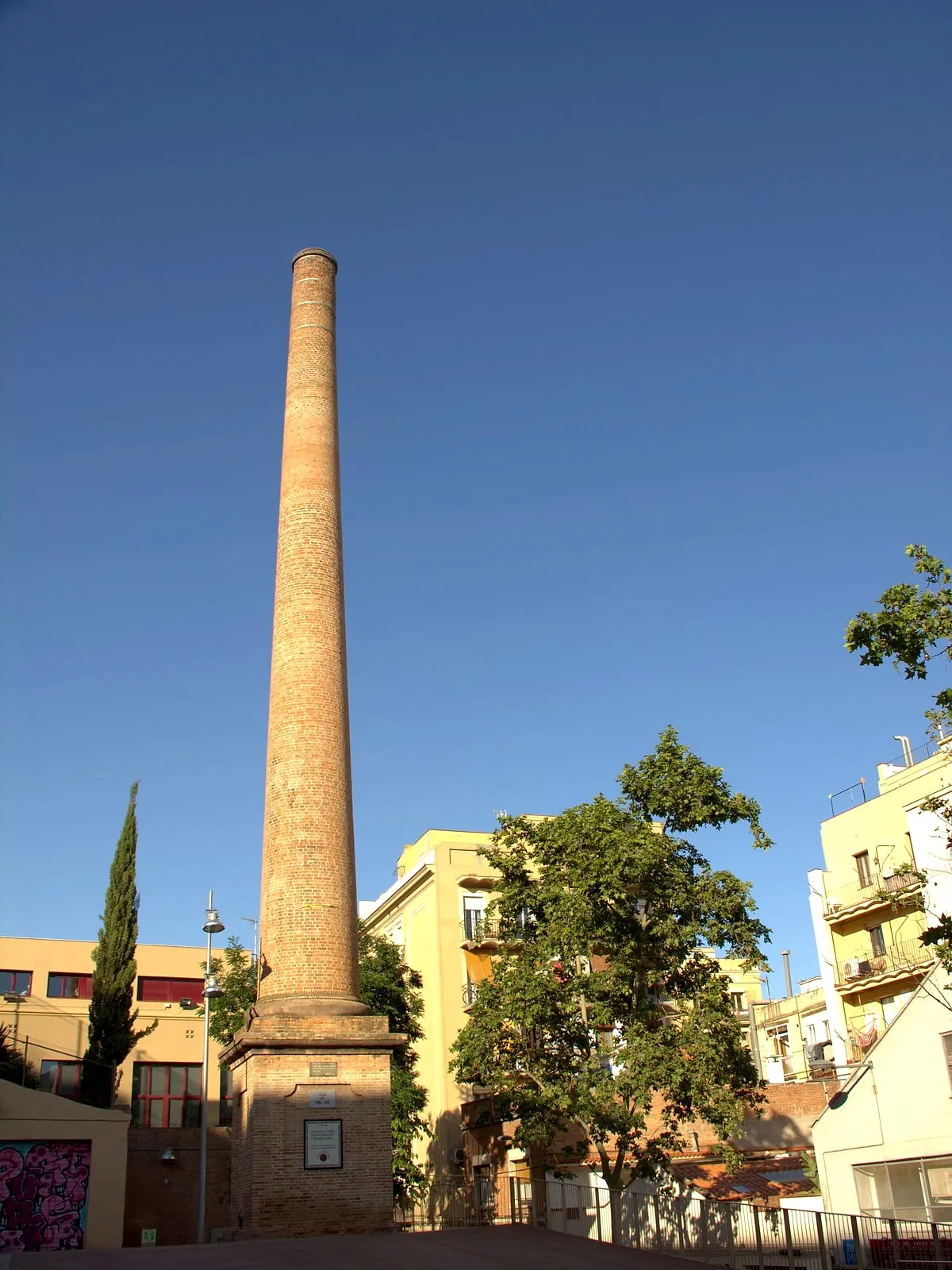
Go to the Colònia Güell if Gaudí is a real interest and you have four days in Barcelona. On three days, do not: it is twenty kilometres out, it is one room, and there is nothing at the end of the journey that photographs the way the famous buildings photograph.
What actually happened there
Eusebi Güell founded an industrial colony in 1890 on his farm at Can Soler de la Torre, in Santa Coloma de Cervelló — a factory with the workers’ housing built around it, which was a fashionable idea among Catalan industrialists at the time and a way of keeping a workforce out of a city that kept going on strike.
In 1898 he commissioned Gaudí to build its church. The site’s own history is blunt about the terms: Güell “did not set limits: neither in the budget, nor in the type of work nor in the deadline.” An architect with no budget ceiling, no brief and no delivery date is not a normal commission. It is closer to a grant.
Work started in 1908. The design had two naves, towers, and a dome of forty metres.
Then, in 1914, Güell’s children told Gaudí they would not go on paying. The lower nave was blessed by the Bishop of Barcelona in November 1915 and the rest was never built. That is why a building at ground level, with windows and daylight in it, is called a crypt.
The date is worth holding onto. 1914 is also the year Gaudí gave up everything else and worked on nothing but the Sagrada Família for the rest of his life. Those two facts are usually told in separate rooms.
The thing on the upper floor of the exhibition
Before he built any of it, Gaudí hung the church upside down.
The exhibition holds a reproduction of what the site calls the stereostatic model: the structure built as a hanging web of strings with small weights on them, so that gravity pulls every string into exactly the line of force it will have to carry. Photograph the result, turn the photograph over, and you have the shape of a building that stands in pure compression, with no need for the flying buttresses a Gothic church needs. The site says the technique was invented by Gaudí and was later used on the Sagrada Família.
That is the whole argument for coming here, and it is not an aesthetic one. Everywhere else in Barcelona you look at what Gaudí decided. Here you can see how he decided it.
The drawbacks, said plainly
It is one room. An hour covers the church comfortably. If you have travelled forty minutes each way for an hour, the maths only works if that hour interests you specifically.
Nothing about it is spectacular. The columns lean, the brick is rough, the windows are irregular, and none of it is trying to impress you. People who came for Casa Batlló find it plain.
The colony is a village, not a site. People live in it. The other modernista buildings — Ca l’Espinal, Ca l’Ordal, the old cooperative — are worth the walk around, and they are somebody’s front door.
It is the last thing to add and the first thing to drop. If your trip is already carrying a basilica ticket with a fixed slot, adding a half-day excursion at the other end of a train line is how the rest of the trip starts running late. The general version of that problem is in three days in Barcelona.
Who it is actually for
Anyone who has stood in front of the Sagrada Família and wondered whether the branching columns inside are a metaphor or a structure. They are a structure, and this is where that was proved, twenty kilometres away, with string.
It is also the obvious second Gaudí day for a returning visitor — the case for building a whole trip that way is in coming back to Barcelona a second time — and it belongs on the same shortlist as Casa Vicens, which is the other end of his career and the other building where nobody is standing behind you.
The full list of what he left in this city, with the ones you can see free from the pavement marked, is in every Gaudí building in Barcelona. And the reason the basilica that came out of these experiments is still not finished is set out, as constraints rather than excuses, in why it takes this long.
If you want the reasoning without the train
The Gaudí walk covers the same ideas standing on the pavement outside the Sagrada Família, performed by an actor playing Gaudí, and it takes ninety minutes rather than half a day. It is not a substitute for the crypt and we would not pretend it is: you cannot see the hanging model from Barcelona. It is the version that fits in a trip.
The hanging model is the beginning of an argument that runs through every building he made, and it did not start here — it started in a cotton bleaching shed in Mataró in 1883. The whole chain, from the string to the 270 arches over Passeig de Gràcia, is how Gaudí’s buildings stand up, and the Mataró end of it is in Gaudí outside Barcelona.
Why an industrialist was commissioning a church for his workers at all, and what the rest of Gaudí’s religious work amounted to, is Gaudí and the Church.
Where this comes from
- HistòriaCripta Gaudí · Colònia GüellThe colony begun in 1890 on Güell's Can Soler de la Torre estate in Santa Coloma de Cervelló; that Güell set no limit on budget, kind of work or deadline; the church begun in 1908, abandoned in 1914, and the lower nave blessed in November 1915.
Everything above that carries a date, a figure or a name is checked against these before it is published. Where we could not find a source, the page says so.
Quick answers
- Is the Colònia Güell crypt worth visiting?
- It is worth half a day if Gaudí is a real interest rather than a box on a list, and it is the wrong choice on a short trip. It is one room. What it gives you is the room where the structural ideas behind the Sagrada Família were tried out at full size, with nobody else in it.
- How do you get to the Colònia Güell from Barcelona?
- FGC trains from Plaça Espanya, lines S3, S4, S8 and S9, to the Colònia Güell stop — the site puts the journey at twenty to twenty-five minutes. From the station you cross the road and follow the blue marks painted on the ground, which is a small detail that tells you how many people arrive lost.
- Why is it called a crypt if it is not underground?
- Because only the lower nave was ever built. Gaudí's design had two naves, towers and a dome of forty metres; the Güell family stopped paying in 1914 and the lower level was blessed in November 1915 as a church in its own right. Everyone has called it the crypt since.
- Is it part of the UNESCO listing?
- Yes. It was added to the Works of Antoni Gaudí world heritage listing in July 2005, in the same extension that brought in Casa Vicens and Casa Batlló.
- Can you see it from outside without a ticket?
- You can walk the colony — the workers' housing, the school, the cooperative — freely, and the outside of the church too. The inside is ticketed, and the inside is the entire reason to make the journey.
The tours this piece is about
More in the journal
Gaudí and Modernisme
- Gaudí and the Church: an expiatory temple, a decree from Rome, and the word the decree does not use
- The things people walk past, standing right in front of them
- One group of chimneys on La Pedrera is clad in champagne bottles
- He did not copy nature. He copied what nature does with a load
- Barcelona did not have one great architect. It had a generation
- The house Gaudí lived in was designed by somebody else, and Gaudí signed it