
Barcelona
One day in Barcelona: the case for cramming, and why we argue with it
The plan below fits in a day. It fits because four of the things people put in a one-day Barcelona itinerary have been taken out of it, and this page says which four and why.
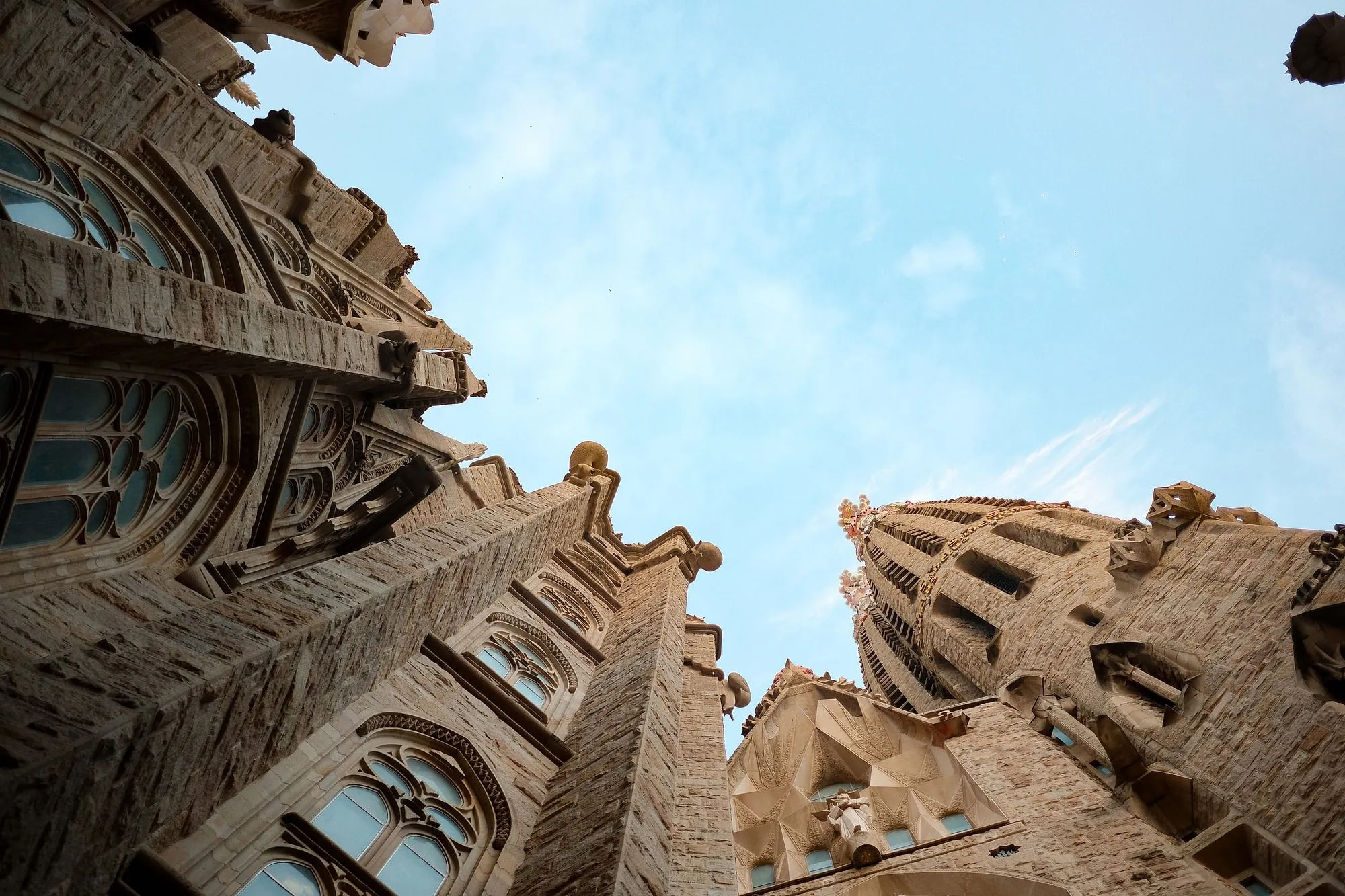
There is a real argument for cramming a one-day Barcelona itinerary, and it goes like this: you are here once, the flight cost money, and a day spent walking slowly through one neighbourhood is a day you will regret when someone at home asks whether you saw the Sagrada Família. Under that logic you take the earliest entry slot you can get, you move fast, and you accept that the day will be tiring. People who plan this way usually do see more things than people who don’t.
We still think it is the wrong plan, for a reason that has nothing to do with taste.
The day is not controlled by your energy. It is controlled by two things
The first is a timed entry slot. The Sagrada Família is sold by fixed entry time, and once you hold a ticket for a particular hour, that hour becomes the fixed point everything else in the day bends around. You cannot be somewhere else at that moment and you cannot arrive an hour late.
The second is geography, and it is the one people underestimate from a map. Barcelona’s famous places are not on a circuit. The Sagrada Família is inland, Park Güell is uphill and further, Montjuïc is a hill on the other side of the city, the beach is at the bottom, and the old city is in the middle. Any plan with four of those in it spends more of the day in transit than in front of anything.
So a one-day plan is not a list. It is a choice of two anchors that happen to be near each other, plus whatever fits between them.
The two anchors, and why these two
Barcelona’s tourism observatory measures which parts of the city visitors actually reach. In its 2025 survey the Sagrada Família was reached by 80.6 % of visitors, the Plaça de Catalunya and Passeig de Gràcia axis by 78.8 %, La Rambla by 77.2 %, the seafront by 75.1 % and the Barri Gòtic by 65.3 %. Park Güell was reached by 49.4 % and the Camp Nou by 21.5 %.
That list is not a recommendation, it is a measurement, and for one day it happens to be good advice. The two anchors are the Sagrada Família and the old city. They are the two largest things Barcelona has, they are on the same metro line, and everything between them can be walked.
The shape of the day
Morning — Sagrada Família. Take the earliest slot you are willing to get up for. Go inside; the outside is extraordinary but the inside is the argument. Give yourself longer than you think for the two façades, which are two different sculptors working a century apart on the same building.
Late morning — walk back down. Avinguda Gaudí and then the Eixample grid, which is the part of Barcelona nobody photographs and everybody walks through. The chamfered corners of those blocks are a nineteenth-century design decision you can see working with your own eyes.
Midday — Passeig de Gràcia. The modernista façades are free from the pavement. Going inside one of the houses is a good afternoon and it is not a good use of this afternoon.
Afternoon — the old city. Down through Plaça de Catalunya into the Gothic Quarter. This is the part where a plan stops helping: the streets are the attraction, and the correct method is to get slightly lost in them for two hours. If getting lost makes you anxious rather than happy, there is a route that does not double back in what to see in the Gothic Quarter.
Evening — the seafront, or dinner where you already are. Both are defensible. The old city after dark is a different place from the old city at four in the afternoon, and it is the version most one-day visitors never see because they have already gone back to the hotel.
The four things this plan drops
- Park Güell. Distance, plus a second timed entry to coordinate.
- The Camp Nou. A destination for people who came for it, and a long way from everything else.
- Montjuïc. A hill, and a half day of its own — the castle, the 1929 Expo buildings and the Fossar de la Pedrera are one continuous argument that does not survive being rushed. The full case for and against is is Montjuïc worth it.
- Gràcia. We sell a walk there and we are still telling you to skip it on a single day. It is a neighbourhood that rewards slowness, and slowness is the one thing you do not have. That case is made at length in is Gràcia worth visiting, including the part where the answer is no.
Where the day usually goes wrong
Almost always the same way: the entry slot is booked for the middle of the afternoon. That single decision splits the day in half, strands you near the basilica for the hours before it, and pushes the old city into the dark before you have seen it. Book the morning slot even if you hate mornings.
The second failure is trying to eat lunch at one o’clock in the middle of Barcelona’s busiest streets. It is possible. It costs an hour you needed.
If you would rather be told than shown
There is a version of this day where the Sagrada Família gets explained to you from the pavement, before or after your entry slot, by an actor playing the man who designed it. It runs about ninety minutes, it happens entirely in the street, and it needs no ticket of its own, which is the only reason it fits into a day like this at all — that is the Gaudí walk. The old city has its own version, and the one that suits a compressed day best is the Gothic Quarter after dark, which happens on Friday and Saturday nights after everything else has closed.
If you have longer than a day, this plan is the wrong one to extend. Start again from two days in Barcelona, which is a different shape rather than this one with more in it — or from a Barcelona weekend if your two days are a Saturday and a Sunday, because that is a third shape again.
And if the one day is going to be spent on Gaudí specifically, there are three honest ways to build it, including one with no ticket in it at all: Gaudí in one day.
Two things decide this day before you write it. Which month you are in — the weather and the crowding, from the two datasets that exist — and which of the tickets is genuinely compulsory, which is a shorter list than you are told.
Where this comes from
- Informe de resultats: perfil i hàbits dels turistes a Barcelona ciutat 2025 (PDF, table on p. 73)Observatori del Turisme a BarcelonaThe table of places visited, from a sample of 2,023 people: Sagrada Família 80.6 %, Plaça de Catalunya and Passeig de Gràcia 78.8 %, La Rambla 77.2 %, the seafront 75.1 %, the Barri Gòtic 65.3 %, the Boqueria 62.0 %, Montjuïc 55.3 %, Park Güell 49.4 %, the Camp Nou 21.5 %, the Sant Antoni market 21.0 %, the Turó de la Rovira 15.7 %. The Gràcia neighbourhood is not on it — the street named after it is.
Everything above that carries a date, a figure or a name is checked against these before it is published. Where we could not find a source, the page says so.
Quick answers
- What should I book before I arrive?
- One thing: your Sagrada Família entry. It is sold by timed slot and the good slots go long before the date. Everything else in a one-day plan is street, and street does not sell out. Buy the entry on the basilica's own site and buy it before you commit to the rest of the day, because the hour on that ticket is what the day is built around.
- Can I fit Park Güell into one day as well?
- You can, and we would not. It is up a hill away from everything else on this list, its ticketed area also runs on timed entry, and getting there and back is most of a half day. Just under half of Barcelona's visitors go to Park Güell at all — you would not be skipping something universal.
- Is one day enough for the Sagrada Família and the Gothic Quarter?
- Yes, and they are the right pair. They sit on the same metro line, they are the two things nearly every visitor reaches, and between them you get the city's biggest single object and its oldest streets. A day that does those two properly beats a day that half-does five.
- Should I do a guided tour if I only have one day?
- Only if it is short and near something else you were going to do anyway. A ninety-minute walk that starts and ends at the Sagrada Família costs you an hour and a half; a half-day tour on the other side of the city costs you the afternoon. That arithmetic matters far more on one day than on three.
- What if I arrive on a cruise ship or a late flight?
- Then you have half a day, not a day, and the plan changes: pick one of the two anchors, not both. From the port, the old city is the reachable one. From an evening arrival, the old city again — it is the part of Barcelona that improves after dark.
The tours this piece is about
Gaudí comes alive
You will recognise the guide because he will be Antoni Gaudí.
- How long it lasts
- 1 h 30
- Runs in
- EN · ES · CA
- Price
- 30 €
Never more than 15 people
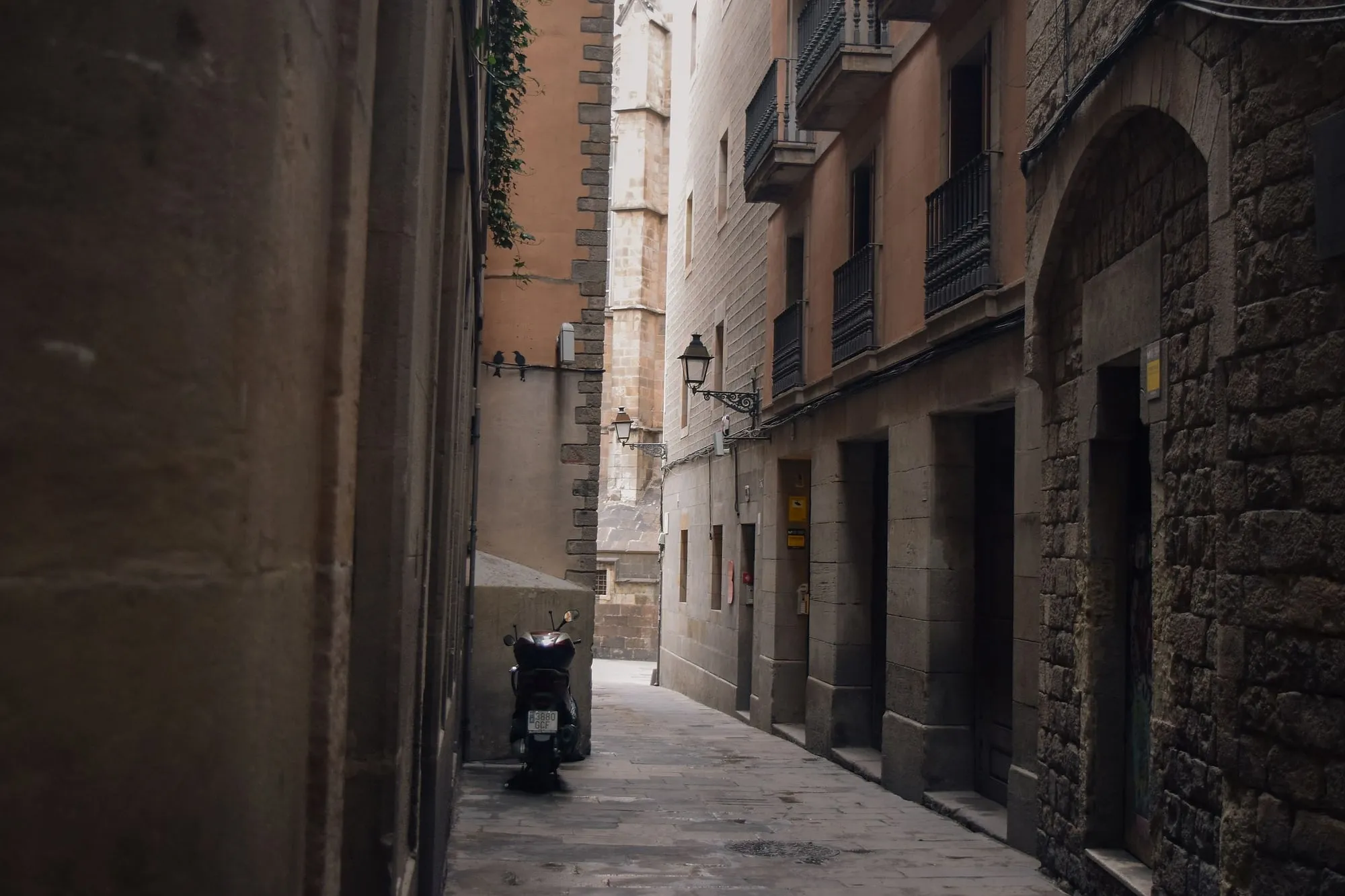
The Gothic Quarter: a neighbourhood that invented itself
Barcelona's most photographed bridge dates from 1928.
- How long it lasts
- 2 h
- Runs in
- EN · ES · CA
- Price
- 15 €
Never more than 20 people
More in the journal
Planning your trip
- When to go to Barcelona, from the only two datasets that exist
- Barcelona rains about fifty-three days a year, and it does it all at once
- Two days in Barcelona, planned backwards from the tickets
- Three days in Barcelona, and what the third one is actually like
- A Barcelona weekend, arranged around what only happens at weekends
- Barcelona with children: a short list, with the drawbacks attached