
Gaudí
One day of Gaudí is two timed tickets at opposite ends of a city, unless you plan it backwards
The buildings are spread over four districts and the two most famous run on appointments. That is the whole problem, and every good version of this day is a decision about which appointment not to make.
Every Gaudí-in-a-day itinerary on the internet is a list. The problem with a list is that it does not know about appointments, and appointments are what break this particular day.
Two of the three things people want run on timed entry, at opposite ends of the city, uphill from each other. So the useful question is not what to see. It is which booking not to make.
Here are three versions that work, and the reasons.
Version A — one interior, two districts
The one we would do.
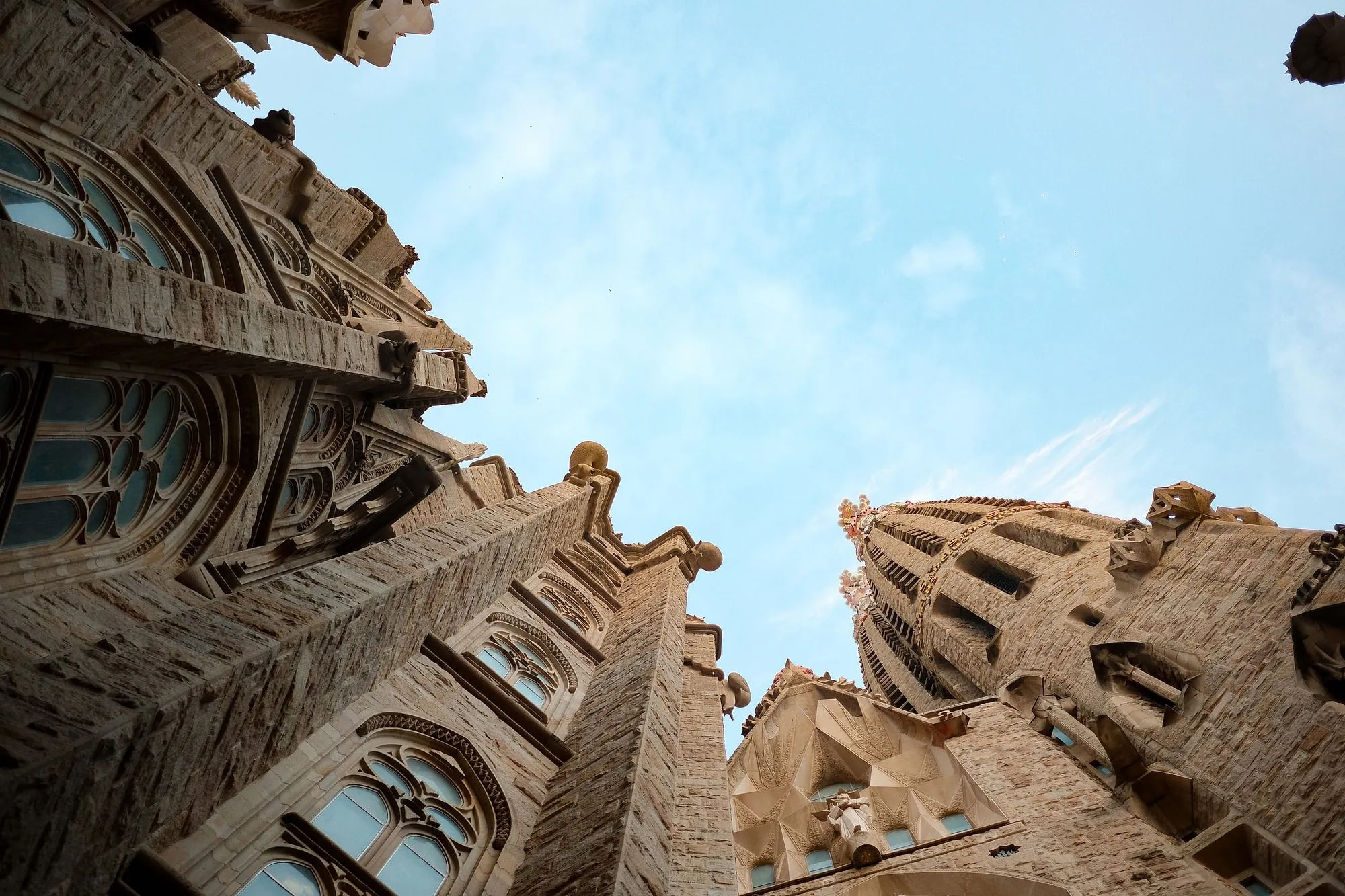
Morning: the basilica from outside. A full lap of the Sagrada Família, on the pavement, takes about an hour and costs nothing, and it is the version where you can actually look at the thing instead of shuffling through it. There is an order that makes it read — Nativity first, in the morning light, then round — and it is set out in how to look at the Sagrada Família from the street. The turtles at the base of the columns are two different animals and almost nobody notices: the things people walk past.
Then walk up Avinguda Gaudí. Ten minutes, pedestrianised, terraces on both sides, and at the top a hospital complex by Domènech i Montaner with 27 pavilions in gardens that most visitors do not know exists. It is the highest return on effort in modernista Barcelona and it is a street: modernisme beyond Gaudí.
Midday: Passeig de Gràcia, and go inside exactly one. Casa Batlló and La Pedrera are two blocks apart. Look at both fronts from the opposite pavement — free, and the only place from which either façade actually reads — and buy one ticket. Which one depends on what you want out of it, and the difference is bigger than it looks: Casa Batlló or La Pedrera.
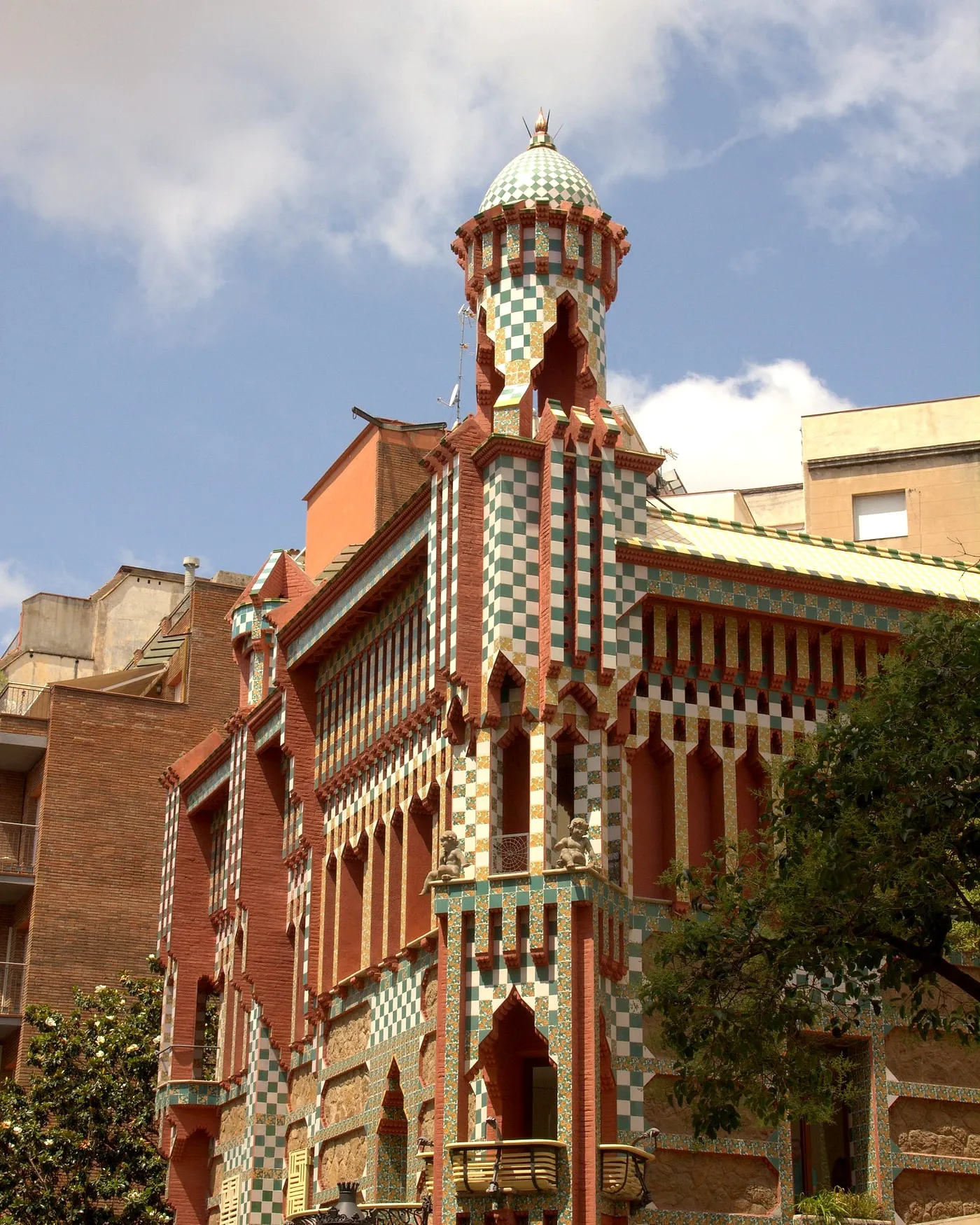
Afternoon: up into Gràcia. Ten minutes’ walk from the top of Passeig de Gràcia and you are in the neighbourhood the city’s own visitor survey does not even count. Casa Vicens is there — his first house, the one where you can stand still — and the street around it is an ordinary neighbourhood rather than a monument. Is Casa Vicens worth it, and if you would rather just walk, what to see in Gràcia.
One interior. One timed ticket. No metro after breakfast. That is the whole trick.
Version B — the Park Güell day
If the hill is the thing you came for, build the day around it and accept that something else goes.
Go first thing, for the light and because the terrace is emptier, and know three things before you book, none of which appear on the page you will book from:
- There is a second controlled access point inside the ticketed area. Nature Square, the Hypostyle Room, the Laundry Room Portico, the Dragon Stairway and the Austria Gardens are behind it, on a one-way route, and the city says visitors are likely to wait. The whole monumental area is capped at 1,400 people an hour.
- You cannot re-enter. Leave for lunch and the ticket is spent.
- The Casa Museu Gaudí is not included. It is inside the park, it is the house he lived in for nineteen years, and it is a separate admission. This is the single most common surprise at that gate.
Come down the hill afterwards rather than going back to the metro, because the bottom of the hill is Gràcia, and then pick up Version A from midday. What the ticket does and does not buy, and where the free eight hectares of pine wood are, is in Park Güell without a ticket. Whether the ticketed part earns a morning at all, argued by people who sell nothing up there: is Park Güell overrated.
What you give up: an interior on Passeig de Gràcia. Two timed entries at two ends of the city is the classic way to lose an afternoon, and the numbers suggest most people already know it — the tourism observatory measures 80.6 % of visitors reaching the basilica and 49.4 % reaching Park Güell.
Version C — the day with no ticket at all
Better than it sounds, and the only version that cannot go wrong.
The full lap of the basilica. Avinguda Gaudí up to Sant Pau. The Block of Discord from the opposite pavement — Casa Batlló between Puig i Cadafalch’s Casa Amatller and Domènech i Montaner’s Casa Lleó Morera, three architects arguing in public. Casa Vicens from the corner in Gràcia, because the street is too narrow to see it from opposite. Then down into the old city for the Plaça Reial lampposts, which were a city commission to a very young Gaudí and are still doing the job they were made for, and the front of Palau Güell five minutes away.
That is a full day, all of it on public streets, and it is the day we would give somebody on a tight budget without apologising for it. If you have appetite for more of the same, the city’s heritage catalogue credits Gaudí with a parish church interior, a fountain, a shade house and a second set of street lamps that no itinerary carries: the city’s own Gaudí list.
The four rules underneath all three
Do not put two timed entries in one day. Everything else on this page follows from that.
Group by district, not by fame. Passeig de Gràcia and Gràcia are one walk. Palau Güell and Plaça Reial are one walk. The basilica has its own stop. Park Güell is a climb. Pedralbes and Sarrià only pay off if you do more than one thing up there.
Buy from the building, not from a reseller. The first page of results for any of these is intermediaries selling you the same ticket with a commission on it. Park Güell’s tickets are named, personal and non-transferable, and the identity document can be checked at the gate — which makes a resold ticket worth nothing.
Leave the crypt for another trip. The Colònia Güell is twenty kilometres out, it is one room, and it is the most informative room about Gaudí anywhere. It is also a half-day and it does not belong in this one: the Colònia Güell crypt.
If you want ninety minutes of it told properly
Our Gaudí walk is an actor playing Antoni Gaudí, in front of his own work, on the pavement outside the basilica. Ninety minutes, fifteen people, no ticket to anything and no queue to join, which is why it fits into any of the three days above rather than competing with them.
And if what you actually want is to understand why the buildings are the shape they are before you look at any of them, read how Gaudí’s buildings stand up on the plane. It is twenty minutes and it changes the day more than any itinerary does.
Whichever version you pick, the hour you go into the basilica decides what colour it is: inside the Sagrada Família.
Where this comes from
- Why are the access points regulated?Ajuntament de Barcelona · Park Güell (Barcelona de Serveis Municipals)That the monumental area is capped at 1,400 visitors an hour; that a second controlled access point covers Pl. Natura, the Hypostyle Room, the Laundry Room Portico, the Dragon Stairway and the Austria Gardens, on a one-way route where visitors 'are likely to have to wait'; and that the early morning and evening bands are reserved for citizens.
- Maps and servicesAjuntament de Barcelona · Park GüellThat 'tickets do not include access to the Casa Museu Gaudí'.
- Frequently asked questionsAjuntament de Barcelona · Park GüellThat reservations are held for half an hour after the booked time, and that once you have left the park you cannot go back in.
- Informe de resultats: perfil i hàbits dels turistes a Barcelona ciutat 2025 (PDF, table on p. 73)Observatori del Turisme a BarcelonaThat 80.6 % of visitors reach the Sagrada Família and 49.4 % reach Park Güell, and that the Gràcia neighbourhood does not appear in the list of areas visitors reach at all.
- Història del Recinte ModernistaSant Pau Recinte ModernistaThat the modernista hospital at the top of Avinguda Gaudí was designed by Lluís Domènech i Montaner, who planned 48 buildings of which 27 were built and 16 followed the modernista design, and that the medical activity moved out in autumn 2009.
Everything above that carries a date, a figure or a name is checked against these before it is published. Where we could not find a source, the page says so.
Quick answers
- Can you see all of Gaudí in one day?
- No, and trying is how the day turns into transport. His buildings are spread across the Eixample, Gràcia, the Raval, Sarrià and Pedralbes, with one twenty kilometres outside the city. A good Gaudí day goes inside one building, looks at three or four from the street, and stays in two districts.
- Should I do the Sagrada Família and Park Güell on the same day?
- We would not. They are two timed entries at opposite ends of the city, and the second one turns the middle of your day into a deadline. If you only have one day and you want both, look at the basilica from the street — which costs nothing and is a genuinely good hour — and spend the ticket on the hill.
- What is the biggest scheduling trap at Park Güell?
- Three of them. There is a second controlled access point inside the ticketed area, on a one-way route, covering the parts everybody has come for. Once you leave the park you cannot re-enter. And the ticket does not include the Casa Museu Gaudí, which is inside the park and is the house he actually lived in.
- Which single Gaudí interior should I choose?
- If you want to understand a building, La Pedrera. If you want to be delighted, Casa Batlló. If you want to stand still in front of something with nobody behind you, Casa Vicens in Gràcia, which is smaller and off the circuit. If you want the one closest to original condition, Palau Güell in the old city.
- Is there a version of this day with no tickets at all?
- Yes, and it is better than it sounds. The façades on Passeig de Gràcia, the whole exterior lap of the basilica, the walk up Avinguda Gaudí to Sant Pau, Casa Vicens from the pavement in Gràcia, the Plaça Reial lampposts and the front of Palau Güell. That is a full day, all of it on public streets.
The tours this piece is about
Gaudí comes alive
You will recognise the guide because he will be Antoni Gaudí.
- How long it lasts
- 1 h 30
- Runs in
- EN · ES · CA
- Price
- 30 €
Never more than 15 people
Gràcia: the town that rang the bell
A bell, a bombardment, and a vermouth at the end of it.
- How long it lasts
- 3 h
- Runs in
- EN · ES
- Price
- 36 €
Never more than 10 people
More in the journal
Gaudí and Modernisme
- Every Gaudí building in Barcelona, and which ones are free
- Casa Batlló or La Pedrera: one is a refit, the other is a building
- The only Gaudí home that nobody was left alone with
- The city's own Gaudí list has things on it that no tour goes to
- The city that made him has nothing he built, and says so on its own website
- Casa Calvet and Bellesguard: the two Gaudís that UNESCO turned down