
Gràcia
Is Gràcia worth visiting? Half a day, and here is the measurement
Half a day, yes. A whole day only if you like sitting down. And if this is your one day in Barcelona, skip it — there are things here you have not seen yet that are not negotiable.
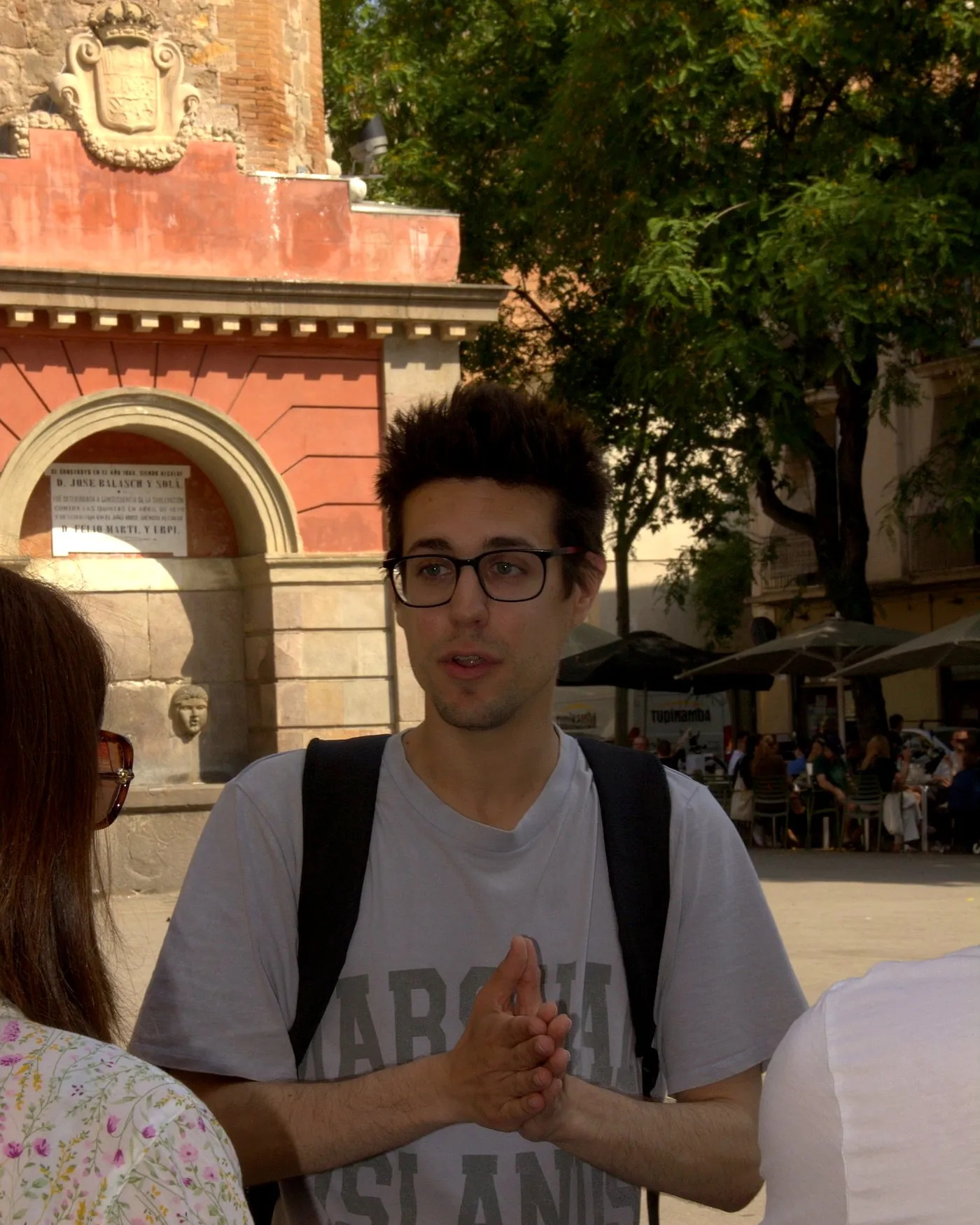
Yes for half a day, if what you want from Barcelona is to see how it lives rather than what it exhibits. No if this is your only day in the city and you have not yet stood in front of the Sagrada Família — nothing in Gràcia is going to beat that on a first trip, and pretending otherwise would be doing you a disservice.
Here is the measurement that the yes rests on.
The city’s own survey does not measure Gràcia at all
Barcelona’s tourism observatory asks visitors which parts of the city they actually reached. In its 2025 survey the Sagrada Família came out at 80.6 %, the Plaça de Catalunya and Passeig de Gràcia axis at 78.8 %, Park Güell at 49.4 %. The list also finds room for the Turó de la Rovira and the Sant Antoni market, which are not obvious choices. Gràcia does not appear on it at all.
Read that list twice, because it contains a trap that a lot of writing about this city falls into. Passeig de Gràcia is on it, near the top. That is a shopping street in the Eixample. Gràcia is the neighbourhood the street is named after and points at, and it begins where the street ends — ten minutes on foot, uphill. The street is measured. The neighbourhood is not measured.
That absence is the product. Not a hidden gem in the marketing sense: a place with normal traffic in it.
What you actually get
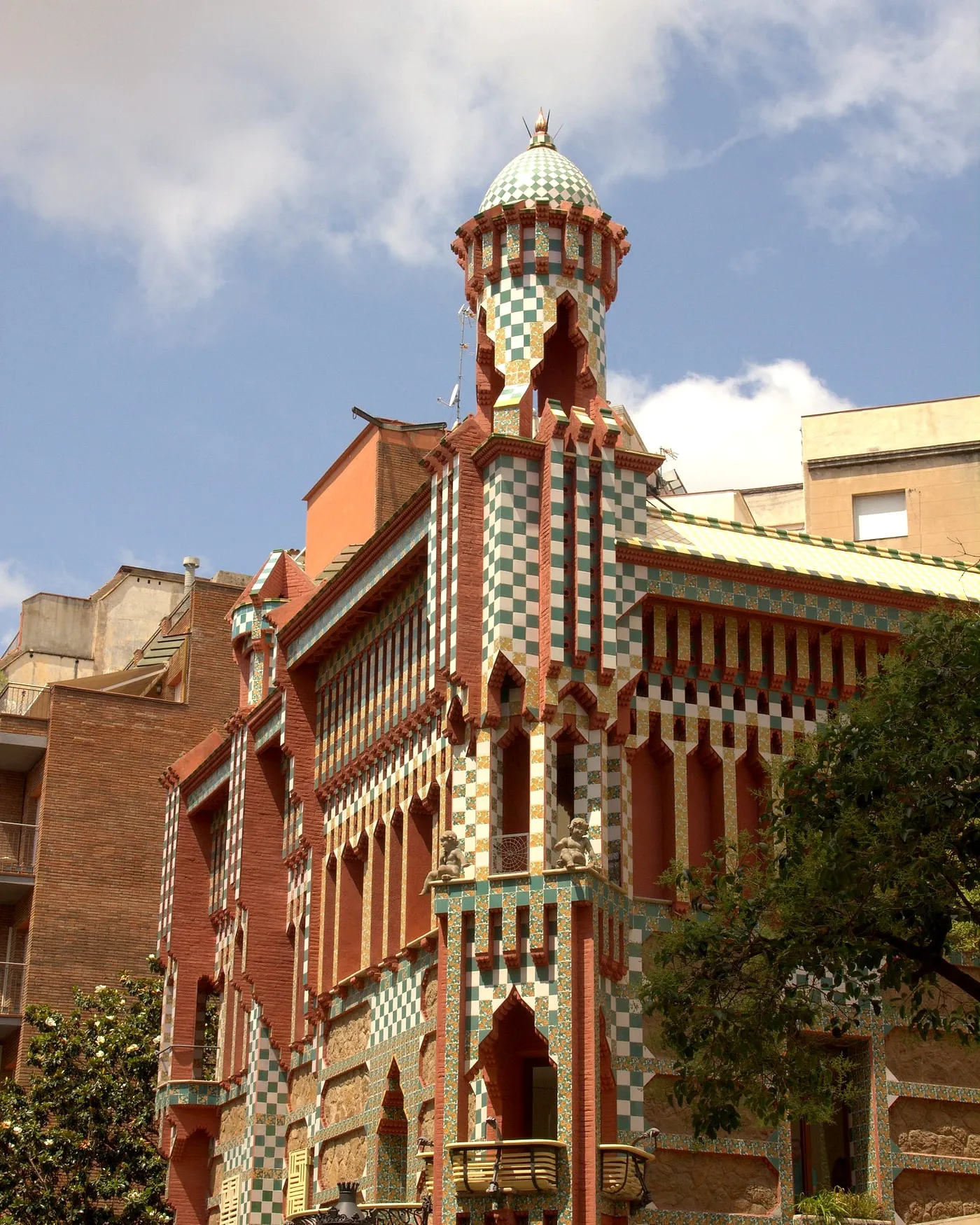
A chain of small squares, each one with a different job. Casa Vicens, the first house Gaudí built, visible whole from the pavement without paying anything — the ticket question is dealt with separately in is Casa Vicens worth it. A brick factory chimney standing among the flats with no factory underneath — the only one the city’s heritage catalogue lists in the district, which is a story in itself. Cellers where the vermouth comes out of a tapped barrel rather than a bottle. A covered iron market where people are doing their actual shopping.
Laid out in the order that walks well, it is what to see in Gràcia. Broken down square by square, it is the squares of Gràcia. The one thing here with a fixed timetable is the vermouth, which happens on Sunday before lunch and stops at two. The rest of the neighbourhood keeps a timetable too, and arriving against it is the commonest way to be disappointed here — that is a day in Gràcia, hour by hour. The eating, which is what most people ask about next, is here.
What you do not get
No monument. No viewpoint. No panoramic anything. No queue, which is the good news, but also no ticket office, no audio guide and no gift shop, which for a certain kind of trip reads as a hole in the schedule.
There is no single image from Gràcia that will make somebody at home say where is that. If your days are built around the shots, this half day will feel like an afternoon off. Some people book it precisely as an afternoon off.
If you are choosing between neighbourhoods
Most people arrive with this framed as Gràcia or the old city, which is the wrong question — they answer different things and the order matters. That argument, with the group-size rules and the parts of the Gothic Quarter that were built in 1928, is Gràcia or the Gothic Quarter. And if what you are really deciding is where to sleep rather than where to spend an afternoon, the trade-offs are in staying in Gràcia.
Who should skip it, honestly
- One day in Barcelona. Go to the Sagrada Família and the Gothic Quarter. Come back another year.
- Anyone who needs the trip to be efficient. Gràcia is spread across three kilometres of short streets and rewards drifting. Efficiency is the wrong tool.
- Anyone travelling with somebody who wants the beach. It is the other end of the city and the walk is uphill.
The thing that is easy to forget
People live here, in ordinary numbers, doing ordinary things. The balconies above the square you are photographing are bedrooms, and the noise of a group at eleven at night arrives in all of them at once.
That is not a reason to stay away. It is a reason to behave here the way you would behave in your own street at home, which is all the neighbourhood has ever asked. The other question people ask about a residential neighbourhood they have not been to — whether it is safe, and what the city actually publishes about that — is here.
Where the history is, if you want the argument rather than the walk
The short version is that Gràcia was a separate town with its own mayor until 1897 and has never entirely got over it — why Gràcia was its own town sets out what that meant, and the revolt of the quintes is the afternoon in 1870 when it rang the alarm bell and the army answered with artillery.
If you would rather be told than read, our Gràcia walking tour walks that route with a working actor for a guide, and finishes with the vermouth. It is one way of spending the half day. Doing it on your own with this page open is another, and it costs nothing.
And if you are still working out how many days you have and what goes in them, the half day this page describes belongs to the third one — see three days in Barcelona, or one day in Barcelona for the version where you should not come up here at all.
One last thing worth knowing before you commit an afternoon: the Gràcia on the map is bigger than the Gràcia in your head. The district has five neighbourhoods and three of them used to belong to Horta, and only one of them is the town. What the town built for itself once it stopped being one — a choir, a billiard hall, a cooperative that became a theatre — is the associative Gràcia.
Where this comes from
- Informe de resultats: perfil i hàbits dels turistes a Barcelona ciutat 2025 (PDF, table on p. 73)Observatori del Turisme a BarcelonaThe table of places visited, from a sample of 2,023 people: Sagrada Família 80.6 %, Plaça de Catalunya and Passeig de Gràcia 78.8 %, La Rambla 77.2 %, the seafront 75.1 %, the Barri Gòtic 65.3 %, the Boqueria 62.0 %, Montjuïc 55.3 %, Park Güell 49.4 %, the Camp Nou 21.5 %, the Sant Antoni market 21.0 %, the Turó de la Rovira 15.7 %. The Gràcia neighbourhood is not on it — the street named after it is.
Everything above that carries a date, a figure or a name is checked against these before it is published. Where we could not find a source, the page says so.
Quick answers
- How long do you need in Gràcia?
- Half a day covers it at a walking pace, about three kilometres, flat, with stops. A whole day only works if you intend to spend a large part of it sitting at a table, which is a perfectly good plan and is what the neighbourhood does on Sundays.
- Is Gràcia far from the centre of Barcelona?
- It starts where Passeig de Gràcia ends, so it is a ten-minute walk uphill from Casa Batlló. By metro it is Fontana or Lesseps on the green line, Joanic on the yellow, Diagonal on green and blue.
- Is there anything you have to book?
- Only Casa Vicens, and only if you want to go inside. Everything else in the neighbourhood is street: the squares, the chimney, the market, the bars. Nothing has a ticket office.
- When is the best time to go?
- Sunday late morning, because that is when the vermouth comes out and the squares fill with people who live there rather than people visiting. Weekday evenings are the second-best answer.
- Is it worth it with children?
- It is flat, it has no traffic in the squares, and in the late afternoon those squares belong to local children and dogs. What it does not have is anything designed for a child to look at, which for some families is the whole appeal and for others is a long afternoon.
The tours this piece is about
More in the journal
Gràcia
- What to see in Gràcia, in the order that walks well
- Chillida hung fifty-four tonnes of concrete over a quarry pool, and said the water made half of it
- Gràcia is five neighbourhoods, and three of them used to belong to Horta
- Gràcia was its own town until 1897, and the street plan never forgave it
- April 1870: the bell of Gràcia cracked, and went on ringing
- Gràcia built a bell tower with no church attached, and put the signs of the zodiac on it to make the point