
Barcelona
Three days in Barcelona, and what the third one is actually like
Days one and two of a Barcelona trip are more or less decided for you. Day three is the first day where you have to choose something, and it is the day most itineraries fill with whatever is left over.
Day one, inland
The morning goes to the Sagrada Família and it takes longer than the plan said. Everyone books ninety minutes and stays two hours, because the two carved façades were made about a century apart by different hands, in styles that do not agree with each other at all, and once someone points that out you cannot stop comparing them.
Afterwards most people get straight back on the metro. The ones who walk down Avinguda Gaudí instead find a pedestrian street with a modernista hospital complex at the far end of it, built by Domènech i Montaner, which is a second enormous building nobody had told them about.
By early afternoon the day is in the Eixample grid — the nineteenth-century extension with the cut-off corners on every block — and by mid afternoon on Passeig de Gràcia, where the famous façades are free to look at from the pavement and expensive to walk into. The day usually ends at Plaça de Catalunya with tired feet and a photograph of a building nobody can name.
Day two, the port end
Day two starts early in the Gothic Quarter, because at nine in the morning those streets belong to people going to work and at eleven they belong to groups. The cathedral, the Roman wall, Plaça del Rei, and the alleys in between, which are the actual attraction and cannot be planned.
Somewhere in the middle of it, people stop at the arched stone bridge on carrer del Bisbe and photograph it as the oldest thing they have seen all day. It was built in 1928, designed by Joan Rubió i Bellver for the Diputació de Barcelona, while the streets around the cathedral were being remodelled ahead of the 1929 International Exposition. That fact reorganises the whole neighbourhood for the rest of the afternoon, and it is the reason our own Gothic Quarter walk exists. Why nobody ever crosses that bridge is its own small story; what else in those streets was moved or built late is here.
The afternoon drifts east into Born or west into the Raval. The seafront comes at the end, because it is downhill from everything and because it is the one part of the day that does not require concentration.
At around ten at night the old city empties. The streets go back to their real width, the noise drops, and it becomes a different place — which is why the after-dark version of that walk runs on Friday and Saturday nights rather than in the afternoon.
Day three, where the trip forks
Everything up to here is the same trip everybody takes. Barcelona’s tourism observatory measures which areas visitors reach: 80.6 % get to the Sagrada Família, 78.8 % to the Plaça de Catalunya and Passeig de Gràcia axis, 77.2 % to La Rambla, 75.1 % to the seafront and 65.3 % to the Barri Gòtic. Days one and two are that list.
Day three is where the numbers spread out.
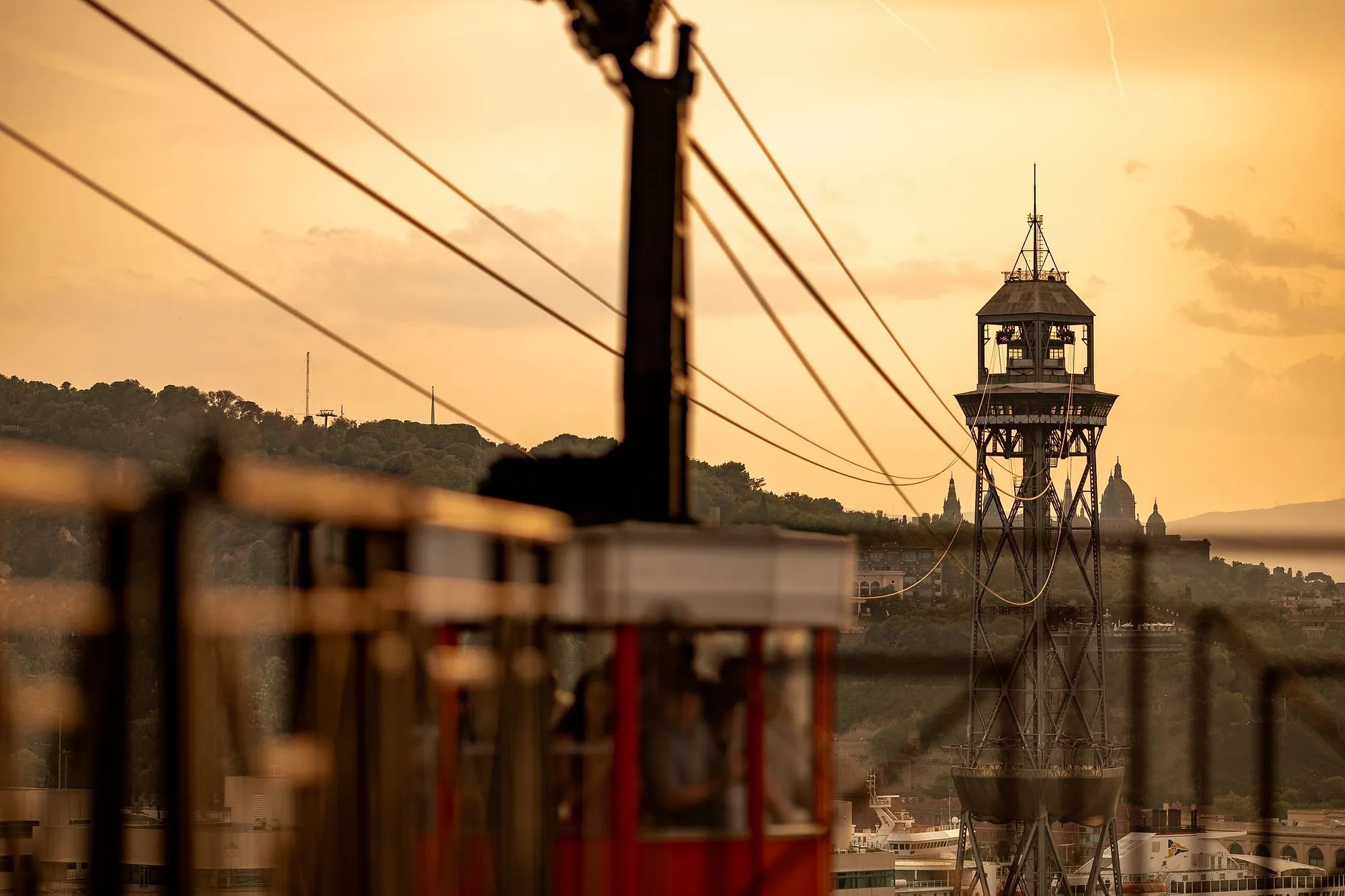
Montjuïc — reached by 55.3 % of visitors. A hill the city has used for burying people, for watching them and for showing off to them, usually in that order. The castle at the top was raised by the city against a royal fleet in 1640 and then used to bombard Barcelona in 1842, 1843 and 1856; Lluís Companys, the president of Catalonia, was shot in its moat on 15 October 1940. Below it, the 1929 Exposition left a set of monumental buildings that were designed to be optimistic, and the Fossar de la Pedrera is a worked-out quarry used as a common grave until 1979, where Companys has lain since 1985. It is not a light afternoon and it should not be scheduled like one. That is the sequence our Montjuïc walk follows, and it takes about two and a half hours on foot.
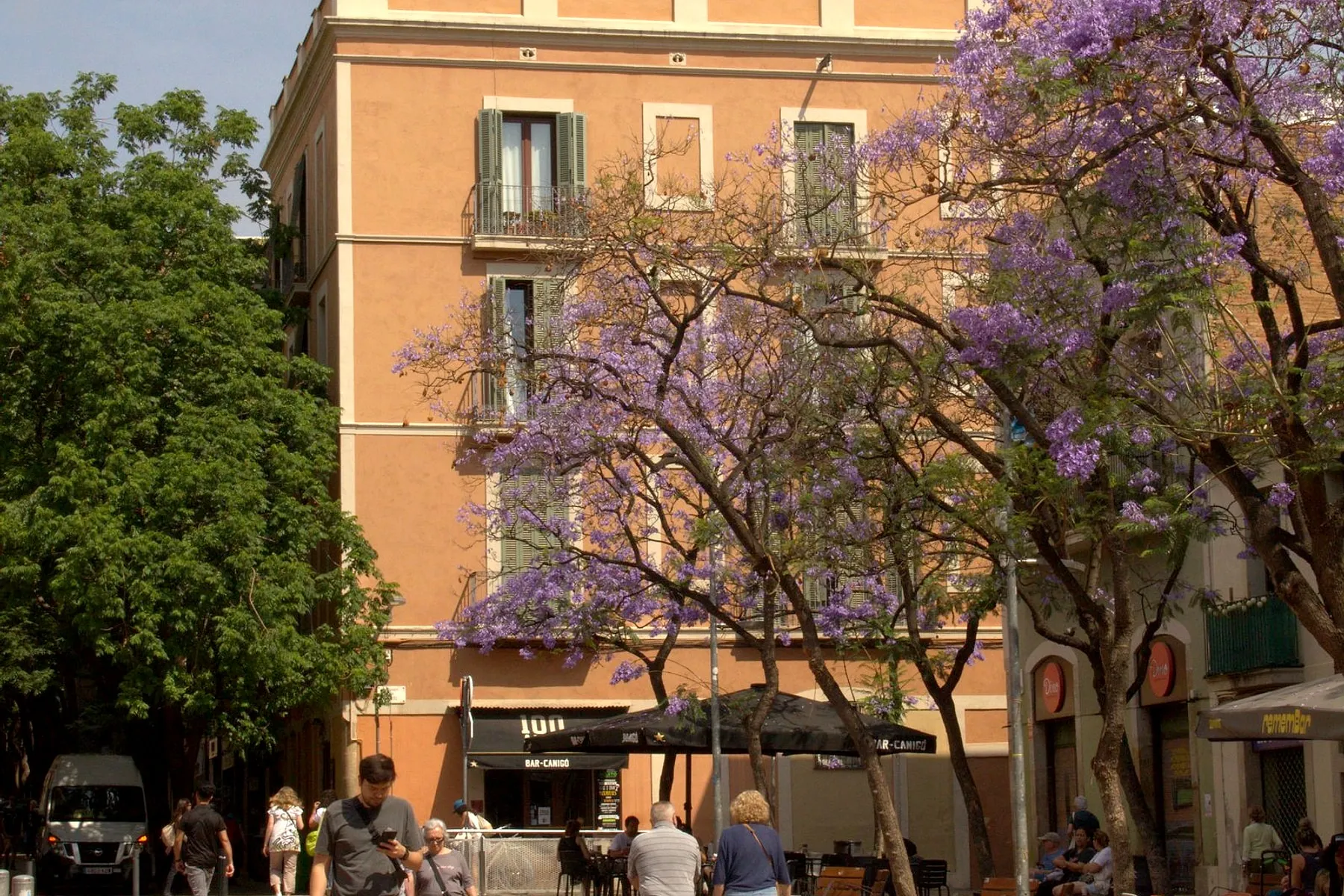
Gràcia — not measured at all. The observatory’s list includes the Turó de la Rovira and the Sant Antoni market, and does not include Gràcia, which was a separate municipality with its own mayor until Barcelona annexed it by royal decree on 20 April 1897. It begins ten minutes uphill from the Passeig de Gràcia axis that 78.8 % of visitors do reach, and it is not on the list itself — the street is measured, the neighbourhood is not. What is there is small squares, a brick factory chimney left standing after everything around it came down, and vermouth served out of a barrel on Sunday mornings. It is described street by street in what to see in Gràcia, hour by hour in a day in Gràcia, and the case against going is made in is Gràcia worth visiting.
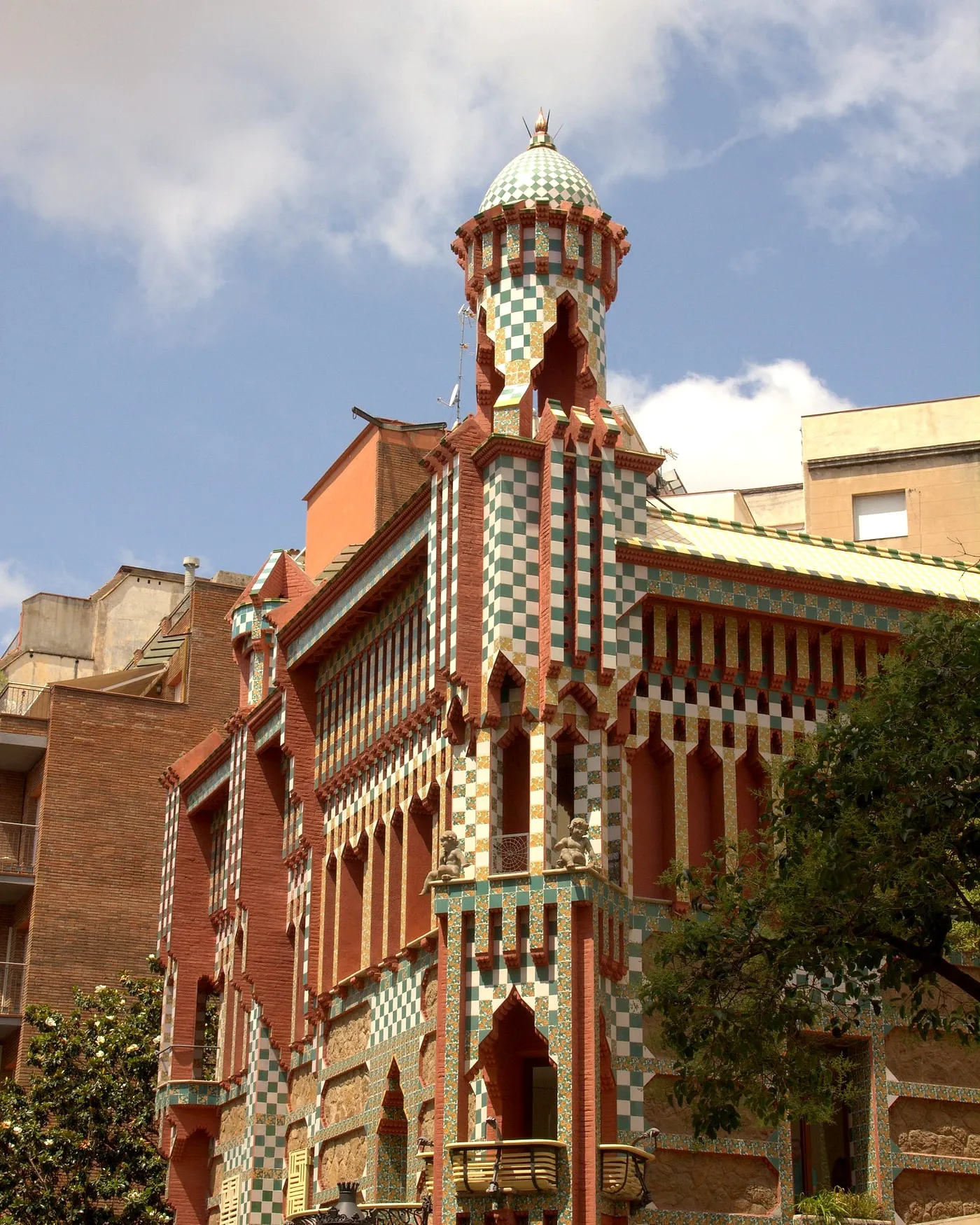
A second Gaudí day. Casa Vicens, the first house he ever built, is in Gràcia and had 262,600 visitors in 2024 — a 31 % rise on the year before, according to the house’s own press release. It is smaller than the famous ones and it does not queue like them. Whether it earns a slot is argued out in is Casa Vicens worth it, drawbacks first.
Rain. The museums. This is the only good reason to make day three a museum day, and there is no shame in it.
The mistake day three invites
Because it is the only day with a genuine choice in it, day three is the one that gets planned last, and it usually ends up holding whatever did not fit into days one and two. That produces a third day made of leftovers: a museum somebody half wanted, a beach hour, a shop.
The fork above is worth deciding before you fly, not on the second evening when everyone is tired. It is the only day of a three-day trip where two people can want genuinely different things, and that is much easier to sort out at home.
If your three days happen to be a Friday, Saturday and Sunday, the plan changes shape — Sunday in Barcelona behaves differently from a Tuesday, and that version is in a Barcelona weekend. With children, the deciding variable is distance between places to sit rather than distance walked, which is Barcelona with children. And if Park Güell is the item you keep moving between days, the argument for cutting it is in is Park Güell overrated.
On whichever day the basilica lands, the forty minutes round the outside is free and is where the building explains itself: how to look at the Sagrada Família from the street.
If you have four days, the fourth is where a day trip out of the city finally stops costing you the trip. If you have two, the plan is a different shape and it is set out in two days in Barcelona. If this is not your first visit, start from coming back to Barcelona a second time instead.
How much slack the third day really has depends on the month more than on the itinerary: when to go, with the hotel occupancy figures the city publishes.
Where this comes from
- Informe de resultats: perfil i hàbits dels turistes a Barcelona ciutat 2025 (PDF, table on p. 73)Observatori del Turisme a BarcelonaThe table of places visited, from a sample of 2,023 people: Sagrada Família 80.6 %, Plaça de Catalunya and Passeig de Gràcia 78.8 %, La Rambla 77.2 %, the seafront 75.1 %, the Barri Gòtic 65.3 %, the Boqueria 62.0 %, Montjuïc 55.3 %, Park Güell 49.4 %, the Camp Nou 21.5 %, the Sant Antoni market 21.0 %, the Turó de la Rovira 15.7 %. The Gràcia neighbourhood is not on it — the street named after it is.
Everything above that carries a date, a figure or a name is checked against these before it is published. Where we could not find a source, the page says so.
Quick answers
- Is three days enough for Barcelona?
- Three days is the first length where the trip stops being a list. Two days covers what everybody sees; the third is the one where you get to choose, and the choice is usually between a hill with a heavy history on it, a neighbourhood that behaves like a separate town, and a second museum day. All three are defensible and they are not the same trip.
- What should I do on the third day in Barcelona?
- If you want the city's twentieth century, Montjuïc: the castle, the 1929 Exposition buildings and the Fossar de la Pedrera, in that order, which is one continuous argument. If you want to see the city being lived in rather than exhibited, Gràcia. If it is raining, the museums, which is the only honest reason to make day three a museum day.
- Which day should I do the Sagrada Família?
- The first, on a morning slot. It is the fixed point of the whole trip and putting it late leaves you rearranging everything around it. It is also the thing most likely to make you change what you do with the rest of the days.
- Do I need a car or day trips for three days?
- No. Three days is not enough to leave the city without losing a third of the trip to travel. Montserrat, Girona and the Costa Brava are all good and all belong to a longer visit. The one exception is if you have already been to Barcelona before, in which case a day out makes more sense than a second lap.
- Where does Park Güell fit into three days?
- On day one or day two, in a morning, on its own timed ticket, and not on the same day as the Sagrada Família. It sits uphill and away from everything else, so it works as the start of a day rather than as something squeezed into the middle of one.
The tours this piece is about
Gràcia: the town that rang the bell
A bell, a bombardment, and a vermouth at the end of it.
- How long it lasts
- 3 h
- Runs in
- EN · ES
- Price
- 36 €
Never more than 10 people
Montjuïc: the hill with two names
Nobody agrees where the name comes from. That is where it starts.
- How long it lasts
- 2 h 30
- Runs in
- EN · ES · CA
- Price
- 15 €
Never more than 20 people
More in the journal
Planning your trip
- When to go to Barcelona, from the only two datasets that exist
- Barcelona rains about fifty-three days a year, and it does it all at once
- One day in Barcelona: the case for cramming, and why we argue with it
- Two days in Barcelona, planned backwards from the tickets
- A Barcelona weekend, arranged around what only happens at weekends
- Barcelona with children: a short list, with the drawbacks attached