
Barcelona
Getting around Barcelona: six trips in ten are made without a vehicle
The transport question people ask is which pass to buy. The more useful answer is that the city's own mobility survey says most journeys inside Barcelona are not made on transport at all, and that there is exactly one place where the ticketing will actually trap you.
Most articles about getting around Barcelona start with which ticket to buy. We are going to start somewhere else, because the transport authority’s own survey makes a better opening argument.
For journeys that both begin and end inside the city, in 2024:
Trips on foot, by bicycle and by personal mobility vehicle are the majority (60.1 %). The public transport share stands at 27.9 %.
Six in ten. That is not a slogan about sustainable cities; it is a measurement of what actually happens in a place where most destinations are within a couple of kilometres of most origins. The practical translation for a visitor is that the metro is what you use to change neighbourhood, and your feet are what you use inside one. Almost every plan that goes wrong here goes wrong by inverting that.
One precision, because it is the sort of thing that gets miscopied. The 60.1 % combines walking, cycling and scooters. The document does not publish a walking-only figure and we are not going to derive one. It does say separately that walks of more than five minutes account for 63.3 % of the city’s internal active-mode mobility.
The metro, in numbers that have a date on them
From the operator’s own annual data sheet, in a table headed with its reference date, 31 December 2025:
- 8 lines
- 165 stations
- 125.4 km
Line by line, in kilometres and stations: L1 20.2/30 · L2 12.8/18 · L3 17.8/26 · L4 16.5/22 · L5 18.6/27 · L9 and L10 north 10.4/12 · L9 and L10 south 26.1/23 · L11 2.3/5 · and the Funicular de Montjuïc, 0.7/2.
Yes — the funicular is a line of the metro. More on that below.
A wrinkle worth naming. The operator’s web page that links to this document is labelled with a different reference date from the document itself. We have used the dated table inside the PDF. If you find slightly different figures on the same operator’s site, that is why.
Accessibility. The operator states lifts in 156 of the 165 stations. It publishes no reference year for that figure, which is a genuine gap — the denominator is dated and the numerator is not. It does date the buses: since 2007, the bus network has been fully adapted for people with reduced mobility.
Driverless. The operator says 25 % of the metro network already runs without a driver. It does not name the lines in any text we could read without running its scripts, and the obvious candidates do not reconcile with the percentage arithmetic. So: twenty-five per cent, no list. If somebody hands you three line numbers, ask where they got them.
Four lines that are not the metro, and one that is
This is the thing that confuses more visitors than anything else on the network.
L6, L7, L8 and L12 appear on the map with metro-style numbers and are run by Ferrocarrils de la Generalitat de Catalunya, a different company. They are in the same integrated fare system, so a ticket works — but the stations feel different, the trains are different, and if you are following signs for “metro” you can end up on the wrong side of a concourse.
The Vallvidrera funicular is also FGC — its conditions of use list trains, the Vallvidrera and Gelida funiculars, the rack railway and the Montserrat funiculars as its services.
And the Montjuïc funicular is genuinely metro. It is a row in the operator’s own metro table, counted inside the 125.4 km and the 165 stations, and the fare position is explicit:
The funicular forms part of the integrated fare system and the ticket price is the same as a metro or bus journey. Multi-journey passes and Hola BCN! day passes are also valid.
Two stops: Paral·lel, connecting to L2 and L3, and Parc de Montjuïc. Which means the cheapest way up the hill is already in whatever ticket you were going to buy anyway — a point made at more length in how to get to Montjuïc.
The two cable cars, which are not the same cable car
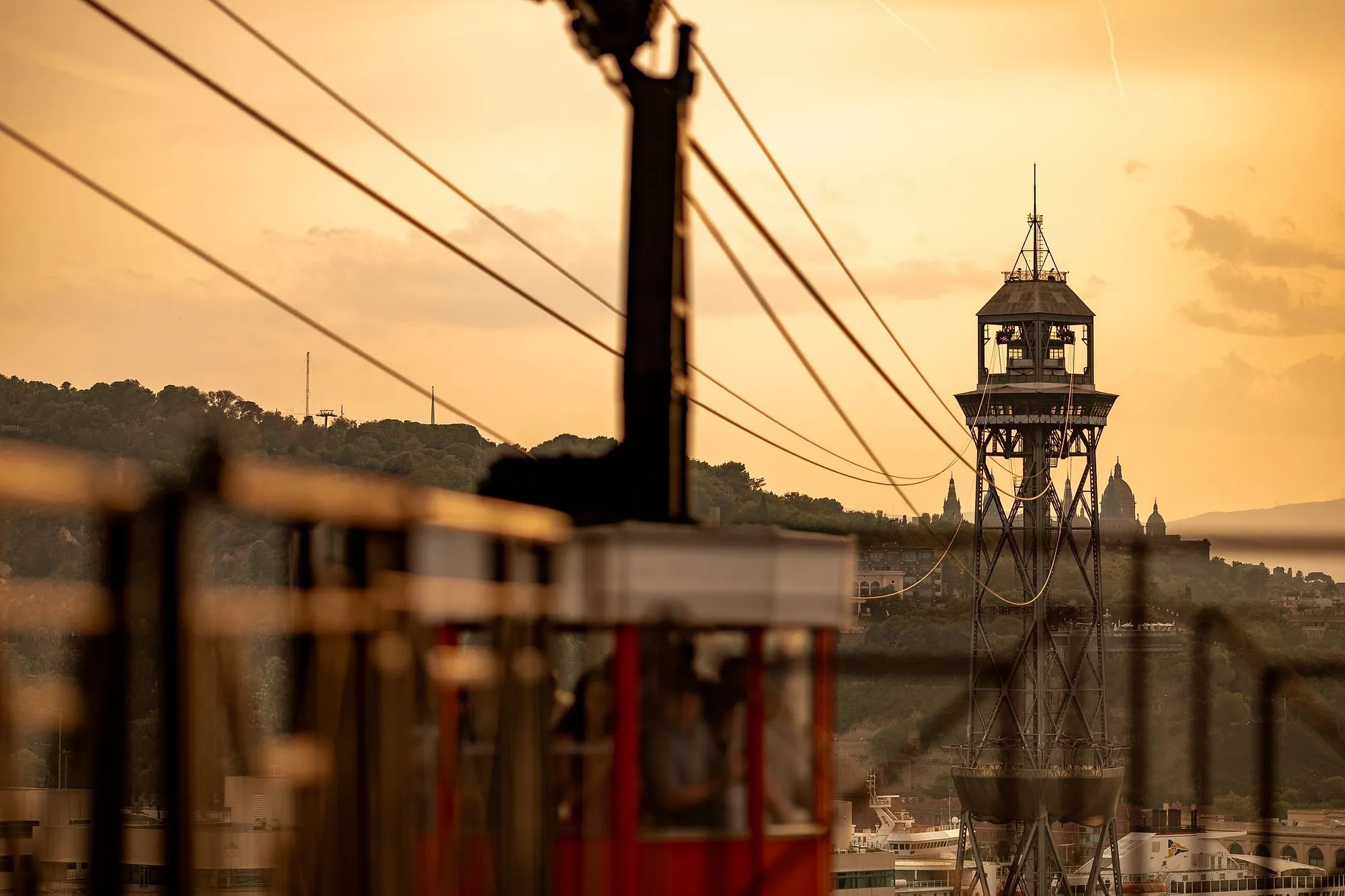
The Telefèric de Montjuïc goes up the hill towards the castle. It is run by Projectes i Serveis de Mobilitat, a company within the TMB group — not by TMB itself, and not by the city’s services company, both of which you will read.
The Transbordador Aeri del Port is the one that crosses the harbour from Barceloneta. Different installation entirely, and the Montjuïc operator says so in its own answers: the Telefèric de Montjuïc does not do that route. We could not establish who runs the port one from an official page, so we are not telling you.
On whether the Montjuïc cable car is in the integrated fare system: no official page states it either way. Searching the fare authority’s published list of integrated operators for it returns nothing, which is an absence rather than a statement. Treat it as a separately ticketed attraction and check before you assume your pass covers it.
The Tramvia Blau, since people keep looking for it
The blue tram up Avinguda del Tibidabo closed temporarily for works in January 2018 and, as of writing, has not come back.
In November 2025 the city announced it would be restored. The mayor’s stated plan was to include the project in the 2027 budget, so that it could be tendered and works begun at the end of that year. That is a commitment with a date on it, not a service.
Do not plan around it, and do not believe a page that shows it running.
The airport, and the one thing that will actually catch you
The metro line L9 Sud serves both T1 and T2, every 7 minutes, with a journey of 32 minutes into the city.
And then this, which is the single most useful sentence in this article:
These do not serve the airport: single ticket, T-casual, T-familiar, T-grup.
Plus the school pass, event tickets and the Montserrat titles. The airport stations need their own ticket.
The consequence is spelled out by the operator, and it is worse than a fare adjustment:
If you arrive at the Aeroport T1 or Aeroport T2 stations with an invalid ticket, you will have to buy the airport ticket there in order to leave the station.
You are through the barrier and inside, with your luggage, and the machine is the only way out. It is the classic first-morning mistake in this city. The Hola Barcelona travel card does work for the airport, both ways.
And the train does not go to T1. The suburban line runs down a short single-track branch that reaches T2. A new branch, in a newly built tunnel under the runways, which will serve both airport terminals, is described by the operator as a project. Anybody telling you there is a T1 rail station is describing something that has not been built.
Bicing, briefly, because it is asked about
The city’s bike share bars under-16s outright. It does not require you to be registered as a resident — a valid identity document is enough. Whether it is a sensible thing for a visitor to sign up to for two nights is a separate question and the answer is usually no.
Walking, and the block
The grid looks walkable on a map and is longer than it looks, because the Eixample was designed at a scale that flatters paper.
One thing we are not going to give you: the dimensions of a block. The figures everybody quotes are not published on the city’s own Eixample pages, and we could not find a municipal source for them. What the district does say is why the corners are cut:
The blocks were not quite square, because, in order to make visibility easier, the angles at the corners were cut into a chamfer.
For visibility. Not for cafés, not for turning circles — so that you could see what was coming. And that is why crossing an Eixample junction takes noticeably longer than crossing anywhere in the old city, where the streets were never planned at all.
The practical version
Inside a neighbourhood, walk. The old city and Gràcia are both about three kilometres end to end and both punish anybody trying to be efficient in them.
Between neighbourhoods, take the metro. It is the fastest thing in the city and it goes everywhere you are going.
Buy the airport ticket for the airport. Twice.
Check the month before you plan the walking. Six trips in ten on foot is a comfortable statistic in May and a different proposition in August, and both halves of that — heat and crowding — are measured in when to go to Barcelona.
And do not buy a travel pass before you have written down your days. If each day is anchored at one end of the city, as the two-day plan argues it should be, you may make three or four journeys in total. Fares and products change and we do not publish them; the fare authority’s own site does.
Getting to the two neighbourhoods we work in has its own pages, because both have a trap in them: how to get to Gràcia, where four of the recommended stations are in another district, and how to get to Montjuïc, where one of the six ways up is already in your ticket.
And the bit you do on foot with somebody talking
Our walks are walks. The Gothic Quarter route stays inside the old city and never gets on anything; the Gràcia walk covers three hours of short streets and finishes with a glass of vermouth.
Meeting points, days and languages are on those pages, which are current. This one is about a network, and networks change.
Where this comes from
- Dades bàsiques 2026 (PDF)Transports Metropolitans de BarcelonaThe network table headed 'Dades de les xarxes / Network data (31.12.2025)', whose total row reads 125,4 km and 165 stations across eight metro lines, and which gives the per-line breakdown quoted here, including the Funicular de Montjuïc at 0,7 km and 2 stations as a line of the metro network. Note that the operator's own web page linking to this PDF is labelled with a different reference date, 01.01.2025.
- Els transports de TMBTransports Metropolitans de BarcelonaThat 'el metro de Barcelona disposa de vuit línies, 165 estacions i 165 trens funcionant en hora punta'.
- Transport públic accessibleTransports Metropolitans de BarcelonaThat there are 'ascensors a la majoria d'estacions (156 de 165)' — lifts in most stations, 156 out of 165 — with no reference year published for that figure; and that 'des de l'any 2007, la xarxa d'autobusos està totalment adaptada per a persones amb mobilitat reduïda'.
- Metro automàticTransports Metropolitans de BarcelonaThat 'el 25% de la xarxa de metro de Barcelona ja funciona sense conductor'. The page carries no date and does not name the driverless lines in text that can be read without running its scripts, which is why this article gives the percentage and not a list.
- Funicular de MontjuïcTransports Metropolitans de BarcelonaThat 'el funicular forma part del sistema integrat de tarifes i el preu del bitllet és el mateix que el d'un viatge de metro o autobús. També són vàlids els abonaments multiviatge i els abonaments per dies Hola BCN!', and that it 'funciona com un metro i té dues parades: Paral·lel, que enllaça amb les línies L2 i L3 del metro, i Parc de Montjuïc'.
- El metro de l'aeroportTransports Metropolitans de BarcelonaThat the L9 Sud metro line connects terminals T1 and T2 with the city every 7 minutes and that the journey takes 32 minutes; that the following do not serve the airport — 'Bitllet senzill, T-casual, T-familiar, T-grup' along with the T-Escolar, event tickets and Montserrat titles; that 'si arribes a les estacions Aeroport T1 o Aeroport T2 amb un bitllet no vàlid, hauràs de comprar el Bitllet aeroport allà mateix per poder sortir de l'estació'; and that the Hola Barcelona Travel Card does allow travel to and from the airport by metro.
- Informació del telefèricTelefèric de MontjuïcThat the cable car 'està gestionat per l'empresa Projectes i Serveis de Mobilitat', and that 'PSM forma part del grup Transports Metropolitans de Barcelona (TMB)'; and, in its own questions, that 'el Telefèric de Montjuïc no realitza aquest recorregut' — the crossing over the port is a different installation.
- Condicions d'úsFerrocarrils de la Generalitat de CatalunyaThat FGC's transport services comprise 'trens, funiculars de Vallvidrera i Gelida, cremallera i funiculars de Montserrat' — so the Vallvidrera funicular is an FGC service, not a TMB one.
- Empreses de transport integratAutoritat del Transport MetropolitàThat Ferrocarrils de la Generalitat de Catalunya is one of the operators in the integrated fare system.
- Enquesta de mobilitat en dia feiner (EMEF) 2024 — resum executiu (PDF)Autoritat del Transport MetropolitàFor trips with origin and destination inside the city of Barcelona in 2024: 'són majoritaris els desplaçaments a peu, en bicicleta i VMP (60,1%). La quota d'ús del transport públic se situa en el 27,9%.' And that 'els desplaçaments a peu de més de 5 minuts representen el 63,3% de la mobilitat interna en mitjans de mobilitat activa de la ciutat de Barcelona.' The 60.1 % figure combines walking, cycling and personal mobility vehicles; the document publishes no walking-only share.
- Servei de rodalia de Barcelona — R2 NordRodalies de Catalunya · Generalitat de CatalunyaThat trains 'es deriven a un curt ramal de via única que arriba fins a la T2 de l'aeroport', and that 'actualment hi ha el projecte d'un nou ramal, amb un túnel de nova construcció sota les pistes, que servirà les dues terminals de l'aeroport' — a project, not a station.
- Barcelona recupera el Tramvia Blau (20/11/2025)Ajuntament de Barcelona · Servei de PremsaThat 'el tramvia blau tornarà a circular per l'avinguda del Tibidabo', and the mayor's statement about including the project in the 2027 budget so that it could be tendered and works begun at the end of that year. The service closed temporarily for works in January 2018 and, at the date of writing, has not returned.
- Coneixeu el districte — HistòriaAjuntament de Barcelona · Districte de l'EixampleThat 'les illes no eren ben bé quadrades, ja que, per facilitar la visibilitat, a les cantonades es tallaven els angles en forma de xamfrà' — the purpose of the chamfered corner. The city does not publish the block's dimensions on this page, and the figures usually quoted for them are not sourced here.
Everything above that carries a date, a figure or a name is checked against these before it is published. Where we could not find a source, the page says so.
Quick answers
- How many metro lines does Barcelona have?
- Eight, with 165 stations over 125.4 km, on the operator's own figures dated 31 December 2025. But four more lines with metro-style numbers — L6, L7, L8 and L12 — are run by the Catalan railway company, not by the city operator, which is why they look different underground and why the maps confuse people.
- Is the Montjuïc funicular included in a metro ticket?
- Yes. The operator says the funicular forms part of the integrated fare system and the ticket price is the same as a metro or bus journey, and multi-journey and day passes are valid. It appears as a line in the operator's own metro table, with two stops: Paral·lel, connecting to L2 and L3, and Parc de Montjuïc.
- Can I use a normal metro ticket to get to the airport?
- No, and this is the one that catches people. The operator lists the single ticket, the T-casual, the T-familiar and the T-grup as not valid for reaching the airport, and says that if you arrive at Aeroport T1 or T2 on an invalid ticket you will have to buy the airport ticket there in order to leave the station. The Hola Barcelona travel card does work.
- Does the train go to airport terminal 1?
- Not yet. The Rodalies line runs down a single-track branch to T2. A new branch in a tunnel under the runways to serve both terminals is described by the operator as a project. The metro line L9 Sud does serve both T1 and T2.
- Is the Tramvia Blau running?
- No. It closed temporarily for works in January 2018 and was still out of service as of August 2026. In November 2025 the city announced it would be restored, with the project to be included in the 2027 budget so that works could be tendered and begun late that year.
The tours this piece is about
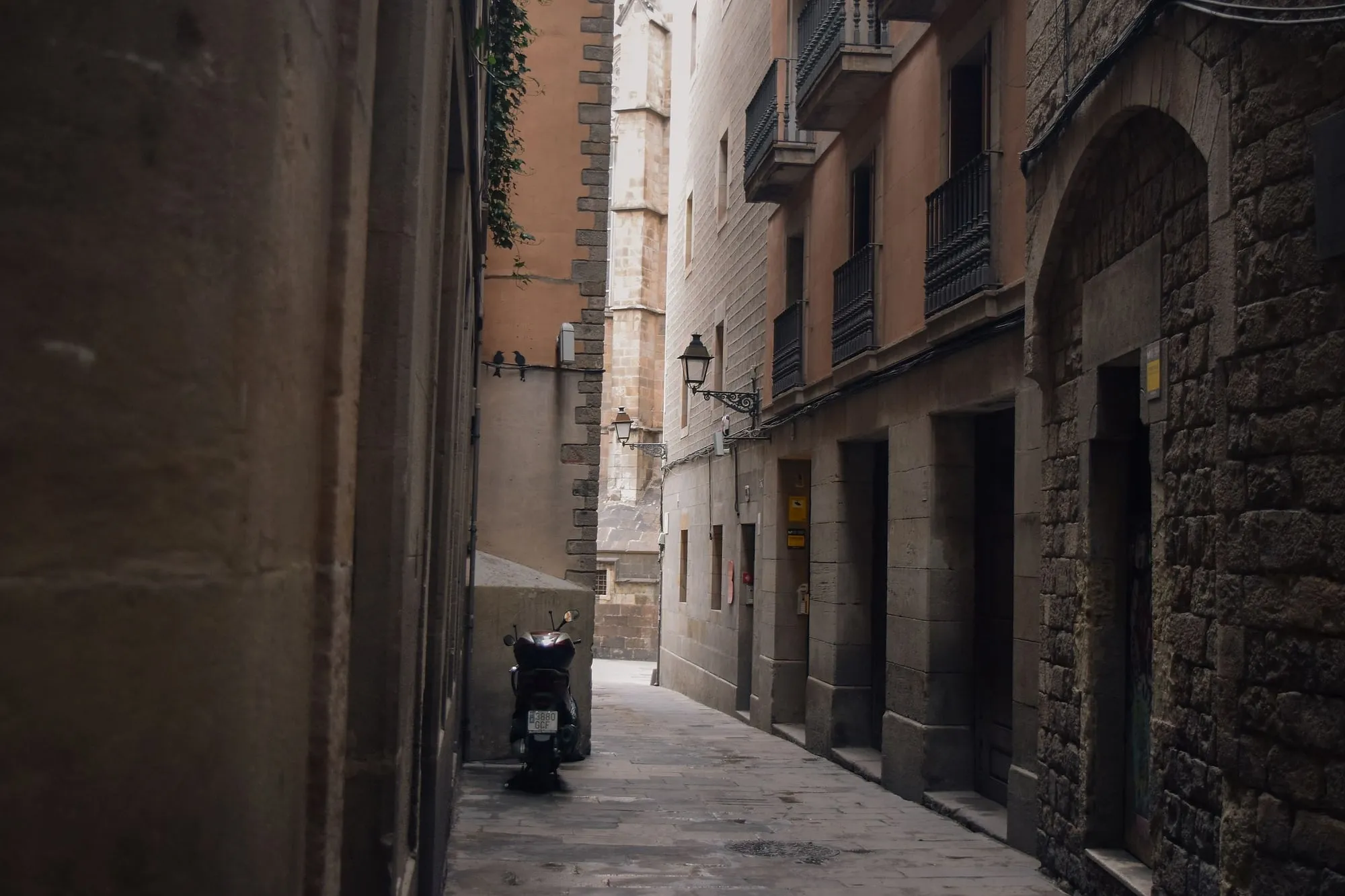
The Gothic Quarter: a neighbourhood that invented itself
Barcelona's most photographed bridge dates from 1928.
- How long it lasts
- 2 h
- Runs in
- EN · ES · CA
- Price
- 15 €
Never more than 20 people
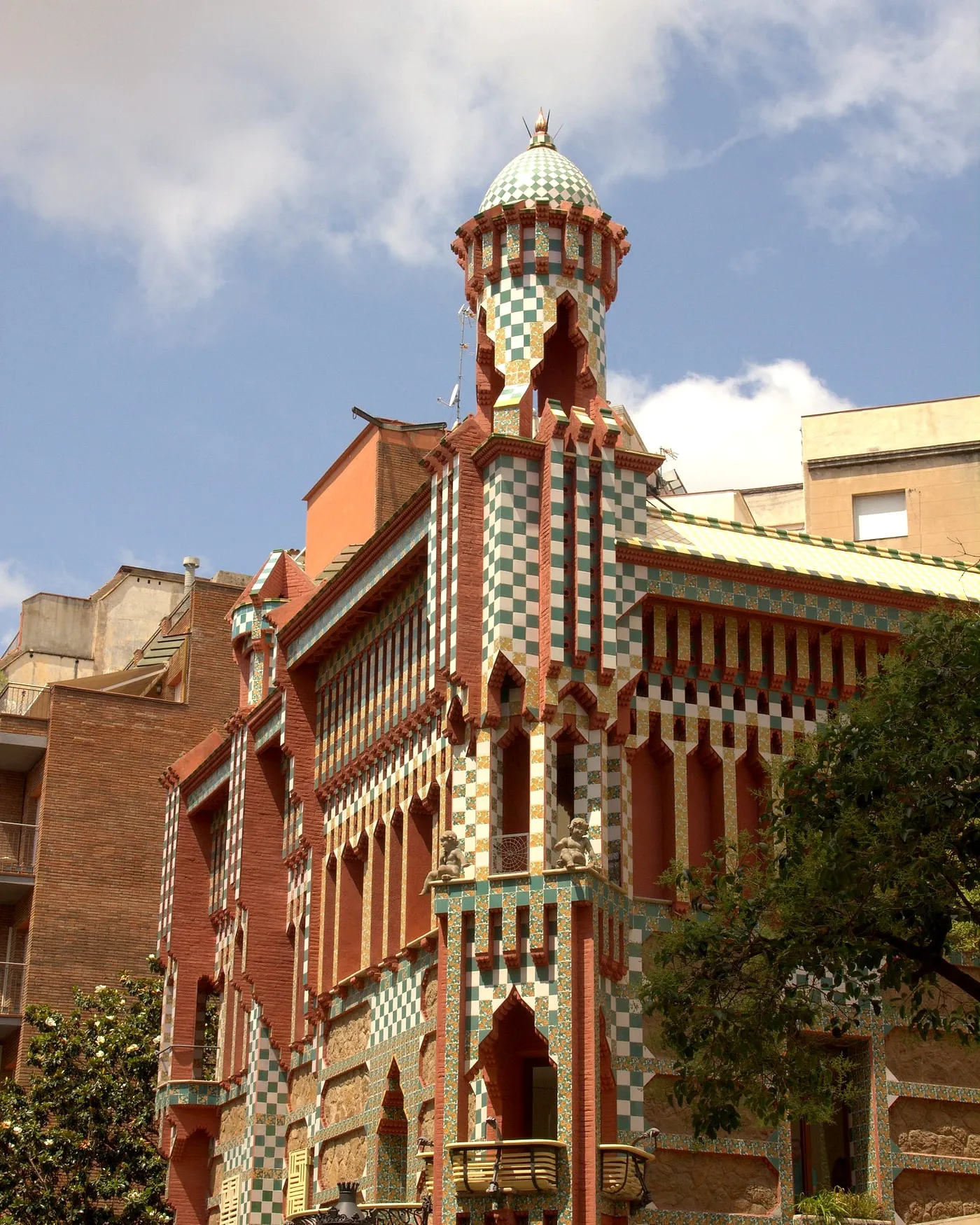
Gràcia: the town that rang the bell
A bell, a bombardment, and a vermouth at the end of it.
- How long it lasts
- 3 h
- Runs in
- EN · ES
- Price
- 36 €
Never more than 10 people
More in the journal
Planning your trip
- Three days in Barcelona, and what the third one is actually like
- A Barcelona weekend, arranged around what only happens at weekends
- Barcelona with children: a short list, with the drawbacks attached
- Coming back to Barcelona: what changes on a second visit
- Non-touristy Barcelona: a method, not a list of places
- What actually has to be booked in advance in Barcelona — it is a shorter list than you think