
Barcelona
Coming back to Barcelona: what changes on a second visit
On a first trip you go where everyone goes, and that is the right call. A second trip is the first time the list stops helping — and the mistake is to look for a new list.
First visit. The trip is decided before you arrive, and not by you. Barcelona’s tourism observatory measured where visitors got to in 2025: the Sagrada Família 80.6 %, the Plaça de Catalunya and Passeig de Gràcia axis 78.8 %, La Rambla 77.2 %, the seafront 75.1 %, the Barri Gòtic 65.3 %, the Boqueria 62.0 %, Montjuïc 55.3 %, Park Güell 49.4 %. Four fifths of visitors do the same four things. Following that list is not a failure of imagination — it is the correct way to spend a first trip, because those are genuinely the biggest objects the city has.
Second visit. The list is used up, and the instinct is to go looking for another one: the second-tier museums, the hidden-gem articles, a viewpoint somebody photographed. That produces a weaker version of the same trip.
What actually changes is the unit of planning. On a first trip the unit is a sight. On a second it can be a day.
First visit: Gaudí is a set of buildings you queue for.
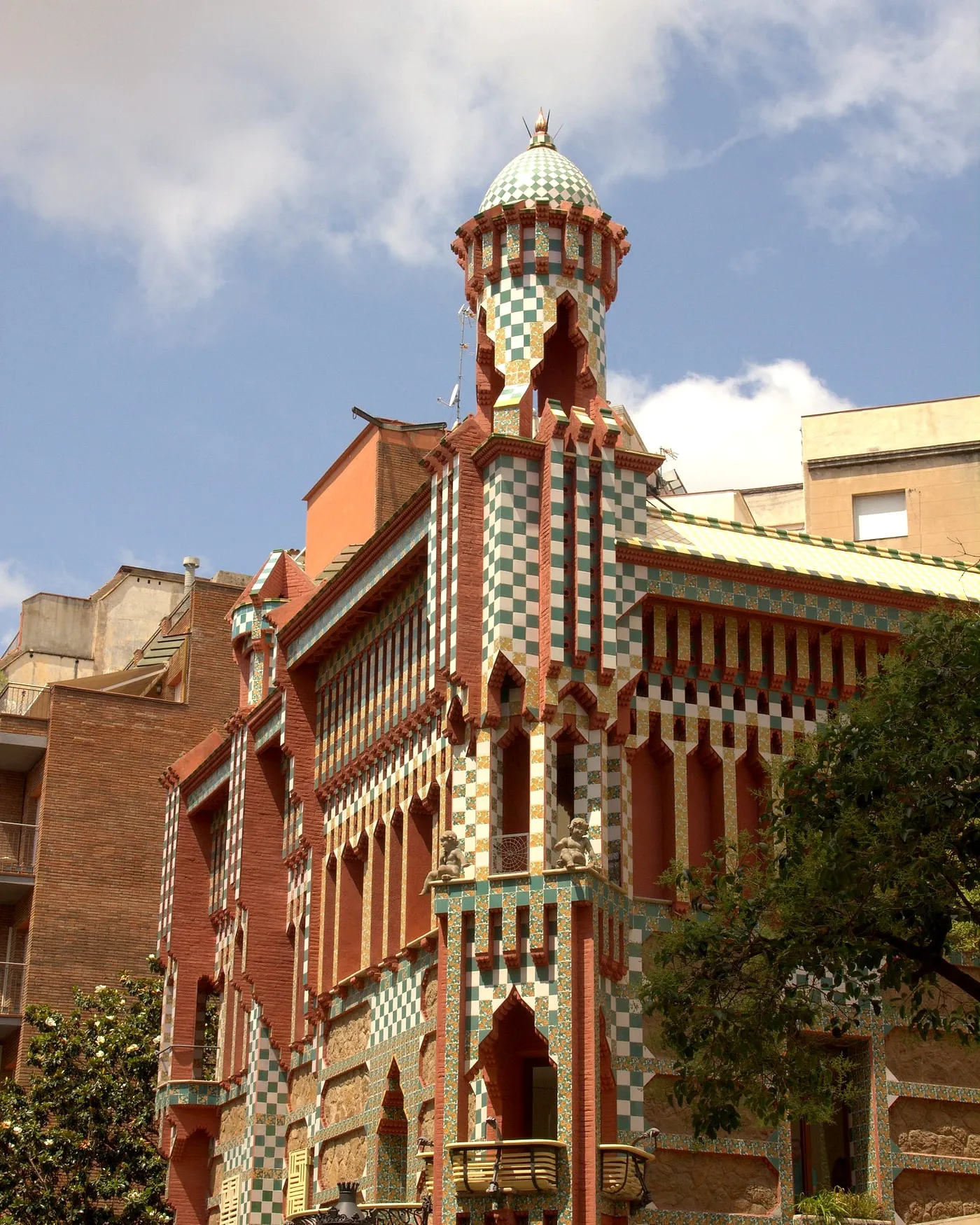
Second visit: Gaudí is a career with a beginning. Casa Vicens is the first house he ever built, before any of the famous ones, and it is in Gràcia rather than on the tourist axis. Its own press release put 262,600 visitors in 2024, up 31 % on 2023 and more than double 2022 — growing fast, and still a fraction of what the famous houses take. It is small, and it is the only one of them where you can see him working out what he was going to be. Whether it earns a slot on your particular trip is argued out, drawbacks first, in is Casa Vicens worth it. The full inventory of what he left in this city, including which parts are free from the pavement, is in every Gaudí building in Barcelona.
First visit: the Gothic Quarter is the old city.
Second visit: the Gothic Quarter is a design decision. The arched stone bridge on carrer del Bisbe, the most photographed object in the neighbourhood, was built in 1928 to a design by Joan Rubió i Bellver, at the request of the Diputació de Barcelona, in the run-up to the 1929 International Exposition. A good deal of what reads as fourteenth century in those streets was assembled, moved or invented in the twentieth, by a city that wanted a historic centre and set about building one. Once you know that, the second walk through is a completely different walk, and it is the one our Gothic Quarter tour is built on.
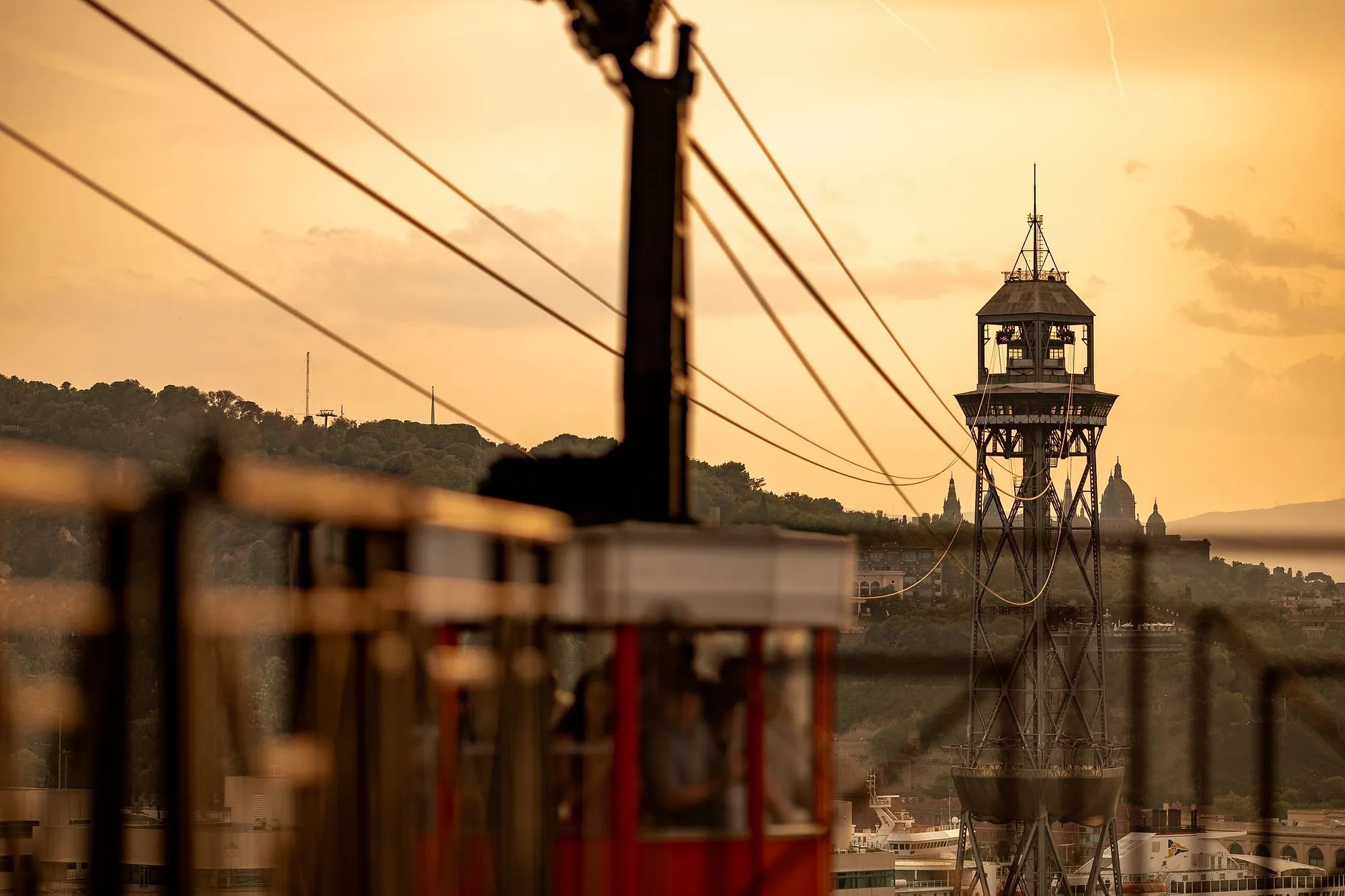
First visit: Montjuïc is a hill with a cable car and a view.
Second visit: Montjuïc is the city’s twentieth century in one afternoon. The castle was built by the city in thirty days in 1640 and then bombarded Barcelona from above in 1842, in 1843 and again in 1856. Lluís Companys, the president of Catalonia, was shot in its moat on 15 October 1940. Below, the 1929 Exposition left a set of buildings designed to look confident about the future, and the Fossar de la Pedrera is a worked-out quarry used as a common grave until 1979, where Companys has lain since 1985. In that order it is one argument rather than four stops, which is how we walk it in the Montjuïc tour, two afternoons a week.
First visit: Gràcia is a name on the metro map.
Second visit: Gràcia is a town Barcelona annexed. It was a municipality in its own right from 1850, with 33,000 inhabitants by 1877 and close to 62,000 when Barcelona took it in by royal decree on 20 April 1897. It still has its own squares, its own festival, and one brick factory chimney left standing among the flats — the only one the city’s heritage catalogue lists in the whole district, and the subject of a correction to our own pages. In 1870 it rang its alarm bell against military conscription and the army answered with artillery from Montjuïc — the story is in the revolt of the quintes, and the neighbourhood street by street is in what to see in Gràcia.
First visit: leaving the city costs you a third of the trip.
Second visit: it costs you nothing you needed. Montserrat, Girona, the wine country, the coast. On a first trip these compete with the Sagrada Família and lose. On a second there is nothing left for them to compete with, which is the single clearest argument for doing them now rather than then.
The one that does not change
Book the Sagrada Família in advance either way. It is the only fixed deadline in a Barcelona trip and it behaves the same on your fourth visit as on your first.
The one addition a second trip really does unlock, because it needs half a day and a train, is the unfinished crypt Gaudí left outside the city — the reasons to go and the reasons not to are in the Colònia Güell crypt.
If you are helping someone plan their first trip while you plan your second, the honest version of what fits into a short one is in three days in Barcelona and, more brutally, in one day in Barcelona.
One practical change worth making on a second visit: stop planning around the metro. Six trips in ten inside this city are made without a vehicle, and the network is smaller than it looks.
Where this comes from
- Informe de resultats: perfil i hàbits dels turistes a Barcelona ciutat 2025 (PDF, table on p. 73)Observatori del Turisme a BarcelonaThe table of places visited, from a sample of 2,023 people: Sagrada Família 80.6 %, Plaça de Catalunya and Passeig de Gràcia 78.8 %, La Rambla 77.2 %, the seafront 75.1 %, the Barri Gòtic 65.3 %, the Boqueria 62.0 %, Montjuïc 55.3 %, Park Güell 49.4 %, the Camp Nou 21.5 %, the Sant Antoni market 21.0 %, the Turó de la Rovira 15.7 %. The Gràcia neighbourhood is not on it — the street named after it is.
Everything above that carries a date, a figure or a name is checked against these before it is published. Where we could not find a source, the page says so.
Quick answers
- What should I do on a second trip to Barcelona?
- Two things a first trip cannot afford: a neighbourhood you stay in all day, and a day out of the city. Both need time you did not have the first time, and neither works as an item squeezed between two monuments.
- Is it worth going back to the Sagrada Família?
- Once, and for a different reason than the first time. The first visit is about the scale of it. A second is worth it if you go in at a different time of day, because the whole interior is a light effect and it is not the same building in the morning and in the late afternoon.
- What is there in Barcelona that most visitors miss?
- Whole districts. The city's own tourism survey measures which areas visitors reach, and Gràcia does not appear on the list at all, while the Turó de la Rovira and the Sant Antoni market do. That is not a secret, it is a measurement — the ordinary parts of the city are simply not on the circuit.
- Should I take a guided tour if I have already been to Barcelona?
- It works better the second time than the first, because you already know the shape of the city and a guide can spend the time on why things are the way they are instead of on where they are. The tours that suit a returning visitor are the thematic ones, not the highlights ones.
- Is a day trip worth it on a second visit?
- Yes, and it is the main thing that changes. On a first trip a day out of Barcelona costs you a third of everything you came for. On a second, the city is no longer competing for that day.
The tours this piece is about
Montjuïc: the hill with two names
Nobody agrees where the name comes from. That is where it starts.
- How long it lasts
- 2 h 30
- Runs in
- EN · ES · CA
- Price
- 15 €
Never more than 20 people
Gràcia: the town that rang the bell
A bell, a bombardment, and a vermouth at the end of it.
- How long it lasts
- 3 h
- Runs in
- EN · ES
- Price
- 36 €
Never more than 10 people
More in the journal
Planning your trip
- Three days in Barcelona, and what the third one is actually like
- A Barcelona weekend, arranged around what only happens at weekends
- Barcelona with children: a short list, with the drawbacks attached
- Non-touristy Barcelona: a method, not a list of places
- Getting around Barcelona: six trips in ten are made without a vehicle
- What actually has to be booked in advance in Barcelona — it is a shorter list than you think