
Gothic Quarter
It has three naves and can look like seven, and the cathedral and the Generalitat cannot agree on how many bays
The interior most visitors walk through in eleven minutes has 215 painted keystones, four organs, two tombs of the same saint, and a floor plan that the two institutions describing it count differently.
Most people are inside Barcelona’s cathedral for about eleven minutes. They go in at the front, walk up one side, look at the geese in the cloister, and come out.
Eleven minutes is enough to see the space. It is not enough to notice that the space is arguing with itself, that the ceiling was repainted by nobody — only cleaned — and that the saint in the crypt has two tombs.
The date the sources agree on, and the one they do not
The Gothic building was started on 1 May 1298, under bishop Bernat Pelegrí, in the reign of Jaume II. Both the cathedral and the Generalitat’s architectural inventory say so.
After that they diverge in an interesting way.
The cathedral describes three stages across the hundred and fifty years the works lasted: apse, crypt and radial chapels first; then the three naves prolonged with their side chapels as far as the back of the choir; then the basilica carried up to the façade line, which was provisionally closed with a plain wall (1417).
Sit with that word. Provisionally. The plain wall stayed there for four hundred and seventy years.
Then the cloister. The cathedral says it was finished in 1448. The Generalitat says the master Arnau Escuder — in charge from 1442 to 1463 — closed the last vault of the cloister in 1463.
Fifteen years, two institutions, both entitled to know. We are not choosing. What the disagreement tells you is more useful than either number: at the end, this was a building being finished vault by vault, and “finished” is a judgement about which vault counts.
⚠️ A number we have had to retract on this site. You will see the cathedral’s dates given as a single span running from 1298 to the cloister’s completion. That span merges the church and the cloister into one project and gives a false impression of a building completed in one push. The cathedral’s own page separates them. So do we, now.
Three naves that read as seven
Stand under the crossing and count. You will get three naves and be unsure why it feels wider.
The Generalitat’s inventory explains it in one sentence. As well as the three nave vaults, there are two further bays over each of the tribunes, and that treatment makes it possible for it to look like a temple of seven naves.
The galleries above the side chapels are vaulted like naves. Your eye reads seven parallel runs of vaulting and your brain reports a much bigger church than the plan contains. This is Catalan Gothic doing what it does best: buying interior volume without buying height.
The actual dimensions, from the cathedral: interior 79 metres long and 25 wide, not counting the chapels. Central nave 13 metres across and 26 high. Side naves 6 by 21. Piers 15 metres to the springing of the arches. Outside, 93 by 40, bell towers of 54 metres, and a cimborio 70 metres tall from the street and 41 from inside it.
And now the bays, where the two accounts simply do not match
The cathedral says: the naves have five bays; the one next to the façade is longer than the other three.
Read that again. Five, and then the other three. The sentence does not add up on its own page.
The Generalitat says: the naves consist of four bays.
We have no way to adjudicate this and no interest in pretending we do. What it is good for is this: when you are inside, count them yourself. It takes forty seconds and it is the most fun anybody has in a cathedral with a piece of institutional prose.
215 keystones, and nobody knew they were painted
The best fact in the building.
The Cathedral has in total 215 vault keystones, dating from the fourteenth and fifteenth centuries. They were restored in 1970, which made it possible to discover that they were polychrome.
Six hundred years of soot. Everyone assumed carved stone. They cleaned them and found colour.
The cathedral even lists what is up there in the central nave, working back from the presbytery: Christ crucified between the Virgin and Saint John with sun and moon; Santa Eulàlia with the arms of Blanca of Naples, Jaume II’s wife, dated 1320; a Virgin of Mercy sheltering a pope, a king, a cardinal, a bishop and a canon on one side and the queen, a nun and three more women on the other, from 1379; an Annunciation, also 1379; a bishop with deacons, thought to be Pere Planella; and an Eternal Father surrounded by angels, by the sculptor Pere Joan, 1418.
That is a signed, dated, datable ceiling that most visitors photograph as texture.
Two tombs of the same saint, four metres apart
Everyone is shown the crypt: the polychrome marble sarcophagus under the high altar, solemnly inaugurated in 1339, with the reliefs telling Eulàlia’s martyrdom and the moving of her relics.
Almost nobody is shown what is behind it.
Behind the Gothic tomb is the original tomb of Santa Eulàlia, found by bishop Frodoí in the year 878 in the cemetery of Santa Maria del Mar, and, on a broken piece of marble, the original inscription recording it.
So the crypt contains the fourteenth-century tomb and the ninth-century one it replaced, and the ninth-century one is the reason the cathedral is here at all. The relationship between this church and Santa Maria del Mar starts in that sentence: the cathedral’s patron saint was found in the other church’s graveyard.
⚠️ Who carved the Gothic tomb. The cathedral names Luppo di Francesco, on the reasoning that bishop Ponç de Gualba contracted an artist from Pisa in 1327, that Luppo is documented in Barcelona between 1330 and 1340, and that the style matches his work in Pisa. The Generalitat’s inventory says only Pisan sculptors. An attribution one institution makes and the other withholds is worth reporting as exactly that.
The five things to actually look at
The porta de Sant Iu, on the north arm. The inventory calls it the oldest element of the exterior. Everyone photographs the front, which is Victorian.
The chapel of Santa Llúcia, off the cloister — erected between 1257 and 1268 by bishop Arnau de Gurb, still Romanesque in tradition, and originally part of the bishop’s palace. It was swallowed by the cloister when the cloister was built. It is forty years older than the cathedral around it.
The stone choir in the middle of the nave, built in 1390-92. The stalls carry the arms of the Order of the Golden Fleece from the sixteenth century.
The lavabo templet in the corner of the cloister, 1448-49, with a relief of Saint George on its keystone by the Claperós.
The organs — all four of them. The great organ under the bell tower over the porta de Sant Iu, built 1537-39 and restored by Gabriel Blancafort across nine years, 1985 to 1994. A historic positive organ of 1712 attributed to Josep Boscà. Another positive acquired for the choir in 2021. And, five minutes away in the church of Sant Sever, Boscà’s 1721 baroque organ, which the cathedral itself calls without doubt the best preserved historic organ in Barcelona — one of the few instruments that survived the civil war.
What is new, and what we will not tell you
In July 2024 the restoration of the ambulatory windows and the roofs was completed, and a panoramic viewpoint on the roof was included in the works.
⚠️ We are not publishing opening times, ticket arrangements or which spaces are accessible on which day. Cathedrals change those constantly and a page that prints them is lying within months. The cathedral publishes its own. What we will say is that photography is not allowed in the chapel of the Sant Crist, so do not walk in with a raised phone.
And the geese in the cloister are their own subject, with their own unanswered question.
Where this sits on a walk
The cathedral is thirty seconds from Plaça Nova, where the Roman towers are, two minutes from the Pont del Bisbe, and four from Plaça de Sant Jaume. It is the anchor of any sensible order for the Gothic Quarter.
Our Gothic Quarter walk runs Monday and Wednesday afternoons and starts at Plaça Nova, in front of the towers; the after-dark version is Friday and Saturday nights. We are closed on 25 December and 1 January.
Where this comes from
- HistòriaCatedral de BarcelonaThat the Gothic works began «el dia 1 de maig de 1298, durant el pontificat del bisbe Bernat Pelegrí i el regnat de Jaume II d'Aragó, el Just»; that there were three stages «durant els cent cinquanta anys que duraren les obres»; that the basilica was carried up to the façade line, «que provisionalment fou tancada amb un simple mur (1417)»; that «el claustre fou acabat el 1448»; that Manuel Girona i Agrafel paid for the façade and its two side towers to plans by Josep O. Mestres; and that «els fills del senyor Girona completaren l'empresa del pare amb la construcció del cimbori, enllestit l'any 1913».
- Edifici — Arquitectura, dimensions i claus de voltaCatedral de BarcelonaThat the cathedral is of three naves with a single apse and ambulatory, and that «les naus tenen cinc trams; el tram immediat a la façana és més llarg que els altres tres»; that the chapels are «dues per a cada tram»; the interior dimensions «79 metres de llarg i 25 d'ample» without the chapels, a central nave «ampla de 13 metres i alta de 26», side naves of 6 by 21, and piers 15 metres high to the springing of the arches; the exterior 93 by 40 metres, bell towers of 54 metres and a cimborio of 70 metres outside and 41 inside; and that «la Catedral té en total 215 claus de volta, que daten dels segles XIV i XV. Van ser restaurades l'any 1970, cosa que va permetre descobrir que eren policromades».
- Catedral de la Santa Creu i Santa EulàliaGeneralitat de Catalunya · Inventari del Patrimoni Arquitectònic (Invarquit), fitxa 26That the vault treatment «fa que pugui semblar un temple de set naus» because there are two further bays over each tribune; that «les naus consten de quatre trams»; that the crypt sarcophagus was «tallat a Barcelona per escultors pisans (1339)», without naming the sculptor; that the porta de Sant Iu is «l'element més antic de l'exterior»; that the chapel of Santa Llúcia was «erigida entre 1257 i 1268 pel bisbe Arnau de Gurb» as part of the episcopal palace; that the stone choir was built in 1390-92 and the lavabo templet in 1448-49; the succession of master builders from Jaume Fabre (1317-1339) through Bernat Roca, Arnau Bargués (1394-1405, with an unbuilt façade project of 1402), the French master Carlí (1408, another unbuilt façade project), Bartomeu Gual (1413-1441) and Arnau Escuder (1442-1463), «que clogué la darrera volta del claustre el 1463»; that the façade was built in 1887-90 by Josep Oriol Mestres with Manuel Girona's patronage, based on Carlí's 1408 drawing, with two turrets added in 1896-98 and the cimborio taken on by August Font in 1906 and finished in 1913; and that in July 2024 the restoration of the ambulatory windows and the roofs was completed, including a panoramic viewpoint on the roof.
- Santa EulàliaCatedral de BarcelonaThat the Gothic tomb of polychrome marble was «inaugurada solemnement el 1339»; that bishop Ponç de Gualba contracted a Pisan artist in 1327 and that «a Barcelona Luppo di Francesco es trobava entre els anys 1330 i 1340»; and that «al darrere del sepulcre gòtic, s'hi troba el sepulcre original de Santa Eulàlia que fou trobat pel bisbe Frodoí l'any 878 al cementiri de Santa Maria del Mar, i, en un marbre partit, la inscripció original que ho rememora».
- Els Orgues de la CatedralCatedral de BarcelonaThat the cathedral has three organs in the basilica and one more in the church of Sant Sever; that the great organ, under the bell tower over the portal de Sant Iu, «fou construït entre els anys 1537 i 1539» and restored by Gabriel Blancafort in 1985-1994; that the chapel of the Santíssim keeps «un orgue positiu històric de 1712, atribuït a Josep Boscà»; that a positive organ was acquired for the choir in 2021; and that the Sant Sever organ, «construït l'any 1721 per Josep Boscà», is «sens dubte l'orgue històric millor conservat de Barcelona».
Everything above that carries a date, a figure or a name is checked against these before it is published. Where we could not find a source, the page says so.
Quick answers
- When was Barcelona Cathedral built?
- Work on the Gothic building began on 1 May 1298, under bishop Bernat Pelegrí and the reign of Jaume II. The cathedral's own history divides what followed into three stages «durant els cent cinquanta anys que duraren les obres», and notes that the façade line was provisionally closed with a plain wall in 1417. The cloister is a separate question with two answers — see below.
- When was the cloister finished?
- The cathedral says 1448. The Generalitat's architectural inventory says the master Arnau Escuder «clogué la darrera volta del claustre el 1463». Fifteen years apart, from two institutions that both ought to know. We are not going to smooth that into one date.
- Is the façade medieval?
- No. The inventory is explicit: «la façana no fou bastida fins a finals del segle XIX (1887-90) per Josep Oriol Mestres, gràcies al mecenatge del financer Manuel Girona», based on a drawing by the French master Carlí from 1408. Two side turrets were added between 1896 and 1898, and August Font took on finishing the cimborio in 1906, completing it in 1913.
- How many keystones does Barcelona Cathedral have?
- 215, from the fourteenth and fifteenth centuries. The cathedral adds the detail that makes it worth looking up: they were restored in 1970, «cosa que va permetre descobrir que eren policromades». Nobody knew they were painted until they were cleaned.
- Why does the interior feel bigger than three naves?
- Because of what is above the side chapels. The Generalitat's inventory says that as well as the three nave vaults there are two more bays over each of the tribunes, and that the treatment of the vaults «fa que pugui semblar un temple de set naus». Three naves that read as seven.
- How many organs are there?
- Four, on the cathedral's own count: three in the basilica and one in the church of Sant Sever. The great organ under the bell tower was built between 1537 and 1539 and restored by Gabriel Blancafort in 1985-94; there is a historic positive organ of 1712 attributed to Josep Boscà; a positive organ acquired in 2021 for the choir; and the 1721 Boscà organ at Sant Sever, which the cathedral calls «l'orgue històric millor conservat de Barcelona».
- Where is Santa Eulàlia buried?
- In the crypt under the high altar, in a marble sarcophagus inaugurated in 1339 — and behind it, the tomb she was in before. The cathedral says that «al darrere del sepulcre gòtic, s'hi troba el sepulcre original de Santa Eulàlia que fou trobat pel bisbe Frodoí l'any 878 al cementiri de Santa Maria del Mar», with the original inscription recording it on a broken piece of marble.
- Who carved the Gothic tomb?
- The cathedral names Luppo di Francesco, documented in Barcelona between 1330 and 1340, on the grounds that bishop Ponç de Gualba contracted an artist from Pisa in 1327 and that the style matches his work in Pisa cathedral. The Generalitat does not name him: its inventory says only «escultors pisans». One institution attributes, the other declines to.
The tours this piece is about
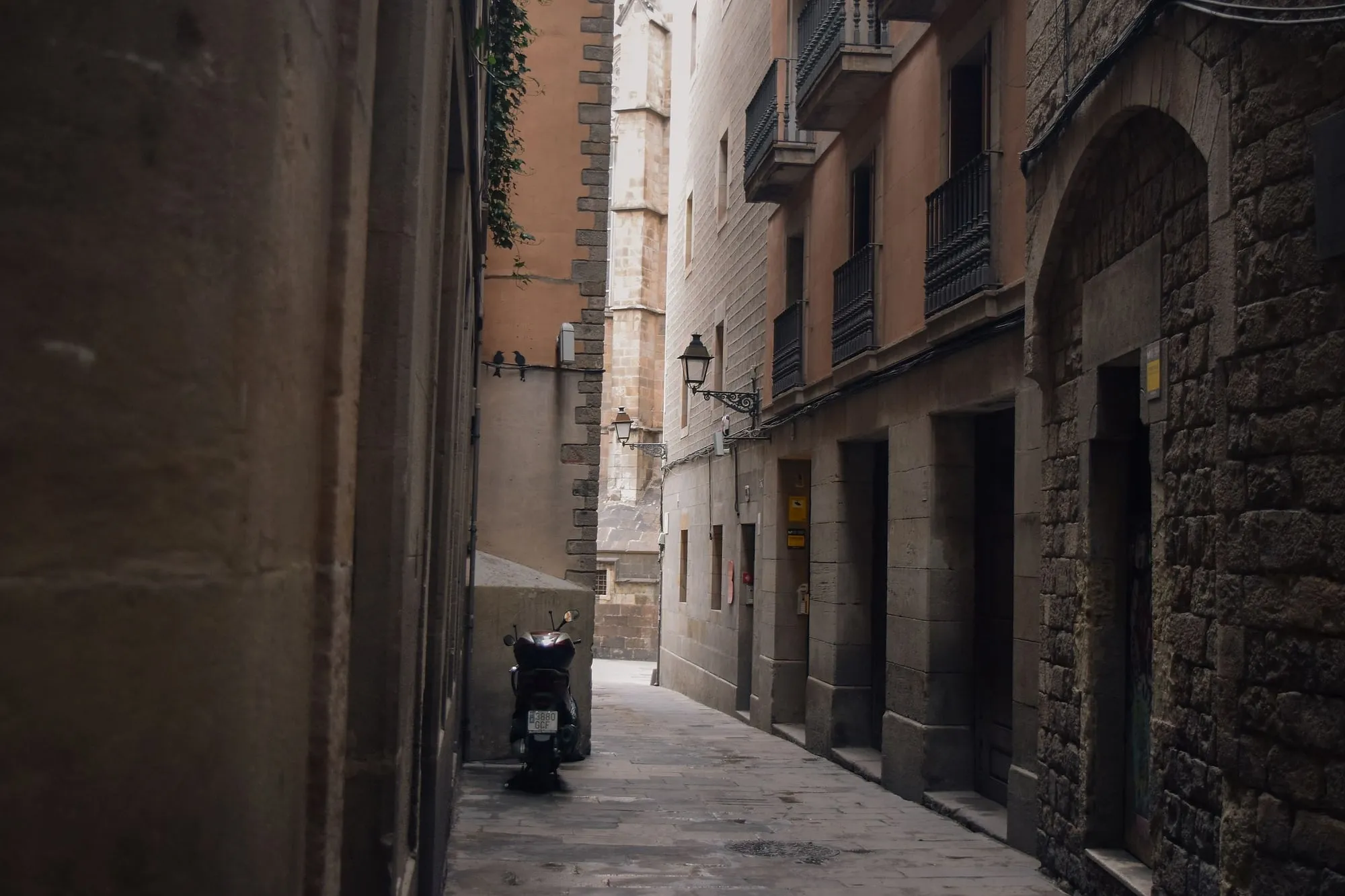
The Gothic Quarter: a neighbourhood that invented itself
Barcelona's most photographed bridge dates from 1928.
- How long it lasts
- 2 h
- Runs in
- EN · ES · CA
- Price
- 15 €
Never more than 20 people
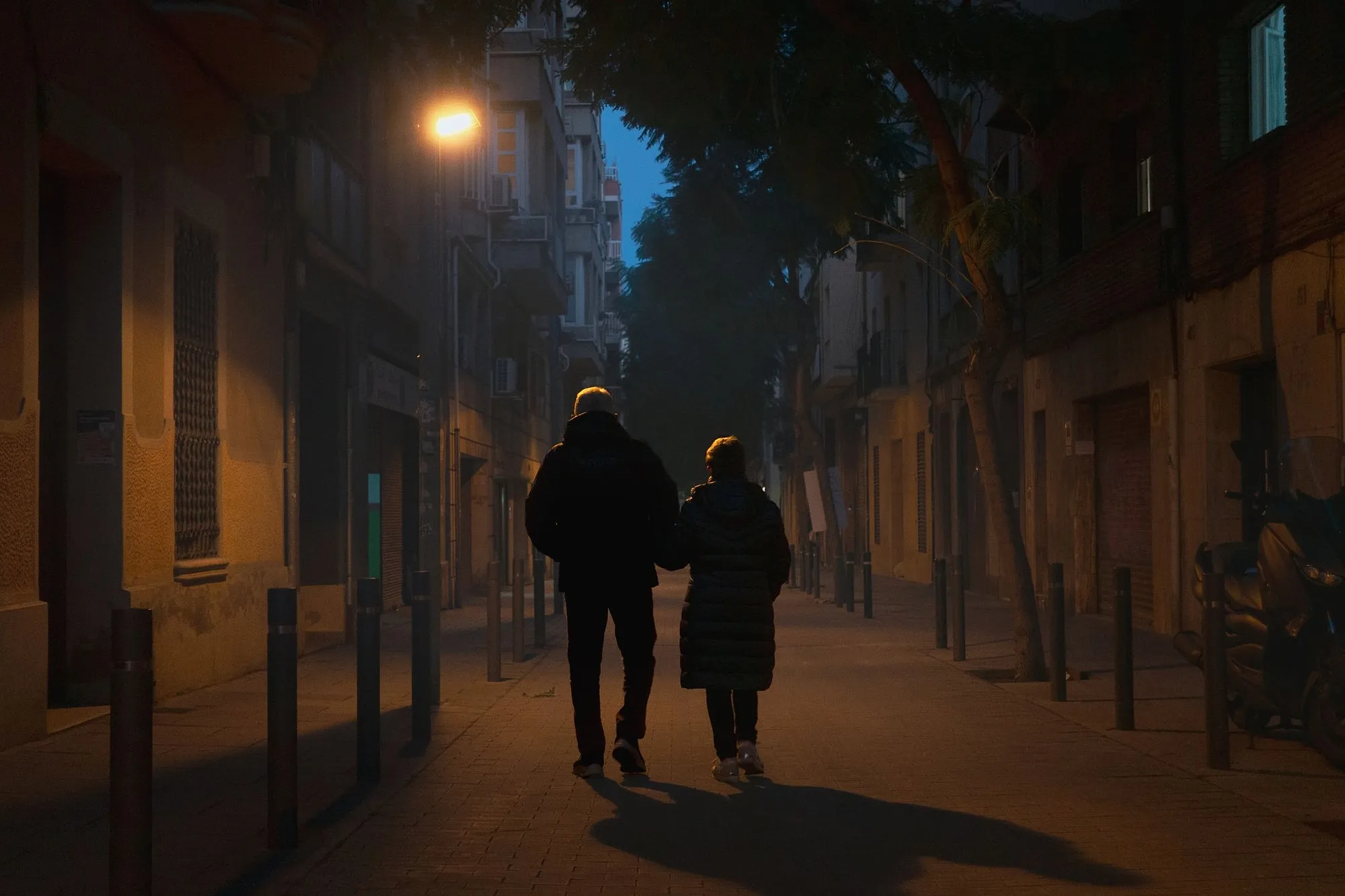
The Gothic Quarter after dark
By day it is a crowded stage set. By night it is a narrow city.
- How long it lasts
- 2 h
- Runs in
- EN · ES · CA
- Price
- 18 €
Never more than 20 people
More in the journal
The Gothic Quarter
- What to see in the Gothic Quarter, in an order that does not double back
- The Generalitat says the cathedral is not really Catalan Gothic. It says Santa Maria del Mar is
- There are thirteen geese in the cathedral cloister and nobody official will tell you why
- The street names are trades, and the city that keeps the register says do not trust them too far
- Europe's largest early-modern excavation is five per cent of what was demolished here, and it exists because somebody tried to build a library
- In one of these squares you can still swear a will out loud, under a procedure from the eleventh century