
Gothic Quarter
The Council of a Hundred had a hundred members for about ninety years, and kept the name for another four centuries
Two governments face each other across this square and neither of them shows you its front door. The square itself is younger than the Eixample's street grid, which is the last thing anyone expects.
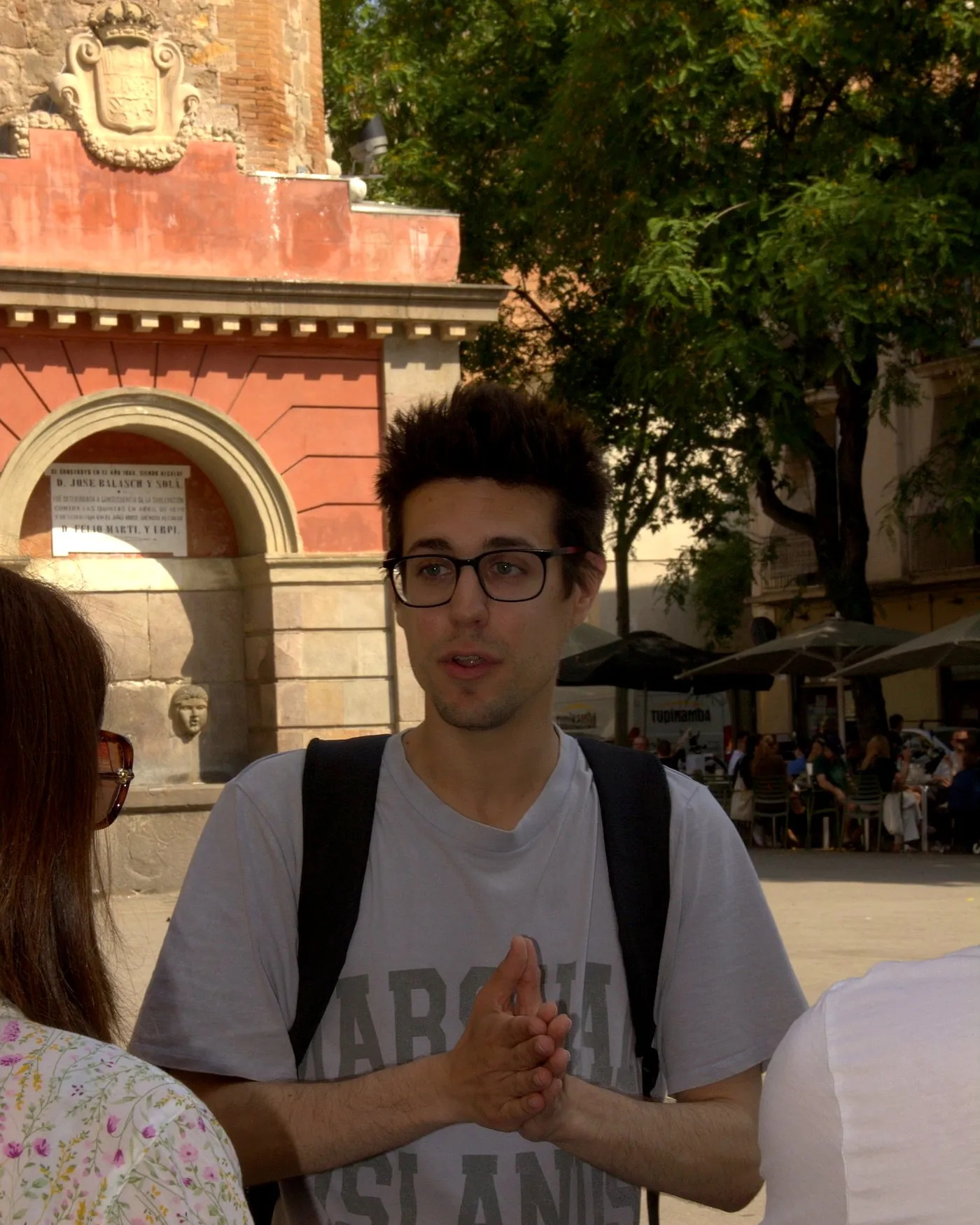
Stand in the middle of Plaça de Sant Jaume and you are between two governments. The Ajuntament de Barcelona on one side, the Generalitat de Catalunya on the other, about forty metres apart, both with balconies pointed at the same paving.
It is the most photographed civic space in the city and almost everything people assume about it is wrong, starting with its age.
The square is from the 1840s
This is the part that surprises everybody, including people who live here.
The Ajuntament’s own street register is clear about what was here before: a crossroads. Specifically, the intersection of the two axes that crossed the city north–south and east–west — Llibreteria–Escrivanies–Call one way, Bisbe–Ciutat–Regomir the other. The Roman grid, still legible in the street names.
There was a church of Sant Jaume, established in 1057, facing the junction by 1261. In the fourteenth century a porch was added to it, and the register notes what the porch was for: it was where the councillors of the city gathered when they had to attend a public act as a body. A covered assembly point for the municipal government, outside a church, on a corner.
Then in 1823 the council decided to knock the church down, along with the buildings attached to it, to form a great square, the present one. It opened in 1840, under the name plaça de la Constitució.
So the open square in front of the two oldest institutions in Catalonia is younger than the demolition of the city walls and roughly contemporary with Barcelona’s first railway. It is the same operation as Plaça de Sant Felip Neri and everything else in the Gothic Quarter that reads as medieval and is not: the buildings are old, the space between them was cleared later.
⚠️ And the register contradicts itself in one paragraph. Its present form dates from 1841, says the first line. It opened in 1840, says the last. One year apart, same entry, same institution. We use both and choose neither.
Five names since 1820
The register also keeps the list of what this square has been called, and it is a political history of Spain in six lines:
- San Jaime — before 1820
- Constitución — before 1865
- República — 24 April 1931
- Constitución — 7 March 1939
- Sant Jaume — 20 July 1940
Read the two 1939 and 1940 entries together. The square was renamed Constitución six weeks before the end of the Civil War, and then renamed again sixteen months later. Whoever was renaming things had time to change their mind twice.
Neither building shows you its front door
The Casa de la Ciutat. The façade you photograph from the square is nineteenth-century, put up when the square was made. Walk round the corner into the Carrer de la Ciutat and you find what the register calls the old main façade of the city hall, dated 1399–1402, by the master builder Arnau Bargués with the sculptors Jordi Joan and Pere Sanglada.
It takes forty seconds. Almost nobody does it, and it is the single best piece of civic Gothic in Barcelona that has no queue in front of it.
The Palau de la Generalitat. Same trick, other side. The grand Renaissance front on the square was begun in 1597 by Pere Blai — the encyclopaedia calls it one of the principal Catalan Renaissance monuments, in the tradition of the Italian palaces — and the Sant Jordi on it is by Andreu Aleu, 1866.
The old entrance is on the Carrer del Bisbe, and it was the door of the orchard. Marc Safont’s work, with a Sant Jordi medallion by Pere Joan, 1418, above it. The palace grew towards the square rather than facing it: the register records that in 1598 it was resolved to enlarge the palace as far as the little square by the church porch.
Inside, on the other side of that wall, is the courtyard the encyclopaedia calls one of the best Catalan Gothic courtyards, 1425, with Safont’s chapel of Sant Jordi off its gallery — and the Pati dels Tarongers, the orange-tree courtyard that marks the shift to the Renaissance, with classical porches by Gil de Medina, 1537–47.
⚠️ The chapel’s dates are a mess in one page. The text says 1432–34. The caption under the page’s own photograph says 1432–35. And the same sentence then says it was finished in 1535, a century later. We are reporting all three rather than picking the tidy one.
The Council of a Hundred was not a hundred
Inside the Casa de la Ciutat is the Saló de Cent, built in 1371. Before it existed, the assembly met first in the Dominican convent and then in the Franciscan one — the city government had no hall of its own for over a century after the council was created.
And then the number. The encyclopaedia’s account:
- 1258 — Jaume I limits the assembly to two hundred prohoms
- 1265 — reduced to one hundred, a form that lasted a long time and gave the institution its name
- fourteenth century — the number oscillates between eighty and two hundred and six
- 1455 — fixed at one hundred and twenty-eight, thirty-two from each estate
It was a hundred for about ninety years and then never again, and it went on being called the Council of a Hundred until 1714, when it was abolished by the decree of Nova Planta.
That is nearly four centuries of an institution named after a number it did not have. There is no better one-sentence description of how this city labels itself, and it is the same mechanism as the Gothic Quarter’s own name and the guild street names the register itself warns you about.
Two more details from the same entry, both good. The meeting hour was apparently not fixed until 1637 — for two hundred and sixty years the councillors turned up when they turned up. And because getting a hundred-odd men into a room was difficult, they had to invent a smaller standing council, the Trentenari. Every committee in the world has been reinvented since.
The murals somebody painted over
The Sala de Sant Jordi, behind Pere Blai’s façade, holds the best story in either building.
The Mancomunitat commissioned Joaquim Torres-García to paint the room, and he did, between 1913 and 1918, in the noucentista manner: Mediterranean, classical, deliberately Catalan.
Then, in the encyclopaedia’s own words, the politicians of the Dictatorship covered them with pompier murals in order to hide the noucentista ones.
They are not lost. The originals are today preserved in other rooms of the palace.
A government painted over the murals of a previous government, and both sets survive in the same building — one on the wall of the ceremonial hall, one moved elsewhere. If you want a single object that explains twentieth-century Catalonia to a visitor, it is a room with two layers of paint.
The bridge, and the street that dropped a number
The famous neo-Gothic bridge over the Carrer del Bisbe is Joan Rubió i Bellver, 1928, and the encyclopaedia is precise about what it joins: the palace and the Casa dels Canonges across the street. It has its own page, including who actually commissioned it, because that is one of the things we have had to correct.
And one street sign worth stopping at. The Carrer de Ferran, running down towards the Rambla, was dedicated to Ferran VII when it was opened, for his visit to the city. On 1 March 1910 the council resolved to change the name from Ferran VII to plain Ferran — a change, the register says with some satisfaction, that made the street stop honouring the absolutist king.
They did not rename it. They deleted a numeral, and let everyone go on saying the same word.
Walking it
The order that works, and it takes twenty minutes: the square first, from the middle, so you can see both balconies; then Carrer de la Ciutat for the 1399 façade; then Carrer del Bisbe for the orchard door, the 1418 medallion and the bridge; then down Carrer de Ferran.
You will pass the squares of the old city on the way, and if you keep going you reach what La Rambla actually is, which is a boundary rather than a destination.
Our Gothic Quarter walk starts up at Plaça Nova and comes through here on Monday and Wednesday afternoons; the after-dark version does it on Friday and Saturday nights, when the two façades are lit and there is nobody standing between them. We are closed on 25 December and 1 January.
If you want the full walkable order for the neighbourhood, it is here.
Where this comes from
- Plaça de Sant JaumeAjuntament de Barcelona · Nomenclàtor de les vies públiquesThat «la seva forma actual data de 1841»; that it was formerly «la petita cruïlla que formava la intersecció dels dos eixos viaris que travessaven la ciutat de nord a sud i d'est a oest: Llibreteria-Escrivanies-Call i Bisbe-Ciutat-Regomir»; that it already existed in 1261, when the church of Sant Jaume, established in 1057, faced it; that in the fourteenth century a porch was added «on s'ajuntaven els consellers de la ciutat quan havien d'assistir corporativament a un acte públic»; that «l'any 1598 es va resoldre engrandir el Palau de la Generalitat fins a la placeta que donava al porxo de l'església»; that «l'any 1823 l'Ajuntament acordà enderrocar l'església i altres edificis annexos per formar una gran plaça, l'actual, que s'obrí el 1840 amb el nom de plaça de la Constitució»; that the current name was approved on 20/07/1940; and the register's own list of former names — San Jaime, Constitución (07/03/1939), República (24/04/1931), Constitución (before 1865) and San Jaime (before 1820).
- Carrer de la CiutatAjuntament de Barcelona · Nomenclàtor de les vies públiquesThat onto this street gives «l'antiga façana principal de la casa de la ciutat, façana construïda el 1399 - 1402 pel mestre d'obres Arnau Bargués i els escultors Jordi Joan i Pere Sanglada».
- Carrer de FerranAjuntament de Barcelona · Nomenclàtor de les vies públiquesThat the street was initially dedicated to Ferran VII on the occasion of his visit to Barcelona and the opening of the road, and that on 1 March 1910 the council agreed to change the name from Ferran VII to plain Ferran, «nom que féu que el carrer deixés d'honorar el rei absolutista».
- palau de la Generalitat de CatalunyaGran Enciclopèdia CatalanaThat the palace was begun in the fifteenth century over an earlier building and has «un dels millors patis gòtics catalans (1425)», with the chapel of Sant Jordi (1432-34) by Marc Safont «acabada el 1535» — while the caption under the page's own photograph reads «(1432-35)»; that the side entrance on the Carrer del Bisbe is «la porta de l'antic hort», also by Safont, crowned by a Sant Jordi medallion by Pere Joan (1418); that the Pati dels Tarongers marks the transition to the Renaissance and is partly flanked by classical porches by Gil de Medina (1537-47), with the adjoining Daurada and Consistori Major rooms refitted in 1928; that the main façade, begun in 1597 by Pere Blai and carrying a Sant Jordi by Andreu Aleu (1866), is one of the principal Catalan Renaissance monuments; that in the Sala de Sant Jordi «els polítics de la Dictadura cobriren de murals pompiers per tapar els noucentistes que Joaquim Torres-Garcia hi havia fet per encàrrec de la Mancomunitat (1913-18) i que avui es conserven en unes altres dependències»; that «un complex arc neogòtic, de Joan Rubió i Bellver (1928), uneix el palau amb la casa dels Canonges»; and that it has been the seat of the Catalan government since 1977.
- Consell de CentGran Enciclopèdia CatalanaThat in 1258 Jaume I limited the assembly to two hundred prohoms and in 1265 to a hundred, «forma que perdurà molt de temps i donà nom a la institució»; that during the fourteenth century the jurats oscillated between eighty and two hundred and six, «fins que el 1455 restà fixat en cent vint-i-vuit jurat i constituït equitativament per 32 persones de cada estament»; that «fins el 1371, que fou construït el Saló de Cent a la casa de la ciutat, les sessions tingueren lloc, primerament, al convent de predicadors, i després, al de franciscans»; that the meeting hour «sembla que no fou fixada fins el 1637»; that a smaller standing council, the Trentenari, had to be created; that under Ferran II, between 1493 and 1510, the elective system was replaced by insaculació; and that it «fou abolit el 1714 pel decret de Nova Planta».
Everything above that carries a date, a figure or a name is checked against these before it is published. Where we could not find a source, the page says so.
Quick answers
- How old is Plaça de Sant Jaume?
- The open square is nineteenth-century. The Ajuntament's street register says its «forma actual data de 1841», that in 1823 the council agreed to demolish the church of Sant Jaume and its annexes «per formar una gran plaça, l'actual», and that it opened «el 1840» as the plaça de la Constitució. Note that those last two dates are a year apart, in the same paragraph, on the same page.
- What was here before the square?
- A crossroads and a church. The register describes it as «la petita cruïlla que formava la intersecció dels dos eixos viaris que travessaven la ciutat de nord a sud i d'est a oest: Llibreteria-Escrivanies-Call i Bisbe-Ciutat-Regomir» — the two Roman axes — and records that it already existed in 1261, when the church of Sant Jaume, established in 1057, stood facing it.
- Why is the Barcelona city hall's façade so plain?
- Because it is not the front. The original main façade of the Casa de la Ciutat faces round the corner onto the Carrer de la Ciutat, and the register dates it to 1399–1402, by the master builder Arnau Bargués with the sculptors Jordi Joan and Pere Sanglada. The frontage on the square is a nineteenth-century addition, built when the square itself was made.
- How many members did the Consell de Cent have?
- A hundred, briefly. The encyclopaedia records that Jaume I limited the assembly to two hundred prohoms in 1258 and to a hundred in 1265 — «forma que perdurà molt de temps i donà nom a la institució» — but that during the fourteenth century the number oscillated between eighty and two hundred and six, and that from 1455 it was fixed at a hundred and twenty-eight, thirty-two from each estate. The name outlasted the number by about four hundred years.
- When was the Consell de Cent abolished?
- «Fou abolit el 1714 pel decret de Nova Planta», in the encyclopaedia's words. What was demolished for the same war is the subject of our page on the Born archaeological site.
- What is the oldest part of the Palau de la Generalitat?
- The Gothic courtyard, which the encyclopaedia dates to 1425 and calls one of the best in Catalonia, and off its gallery the chapel of Sant Jordi by Marc Safont. The dating of the chapel is where the same page contradicts itself: the text says 1432–34, the caption under its own photograph says 1432–35, and the text then adds that it was «acabada el 1535», a century later.
- Can you go inside either building?
- Both institutions run their own visiting arrangements and both change them, so we do not print them — check each institution's own site. What is always available is the outside, which is where the argument on this page happens, and the Carrer de la Ciutat façade, which almost nobody walks round to.
The tours this piece is about
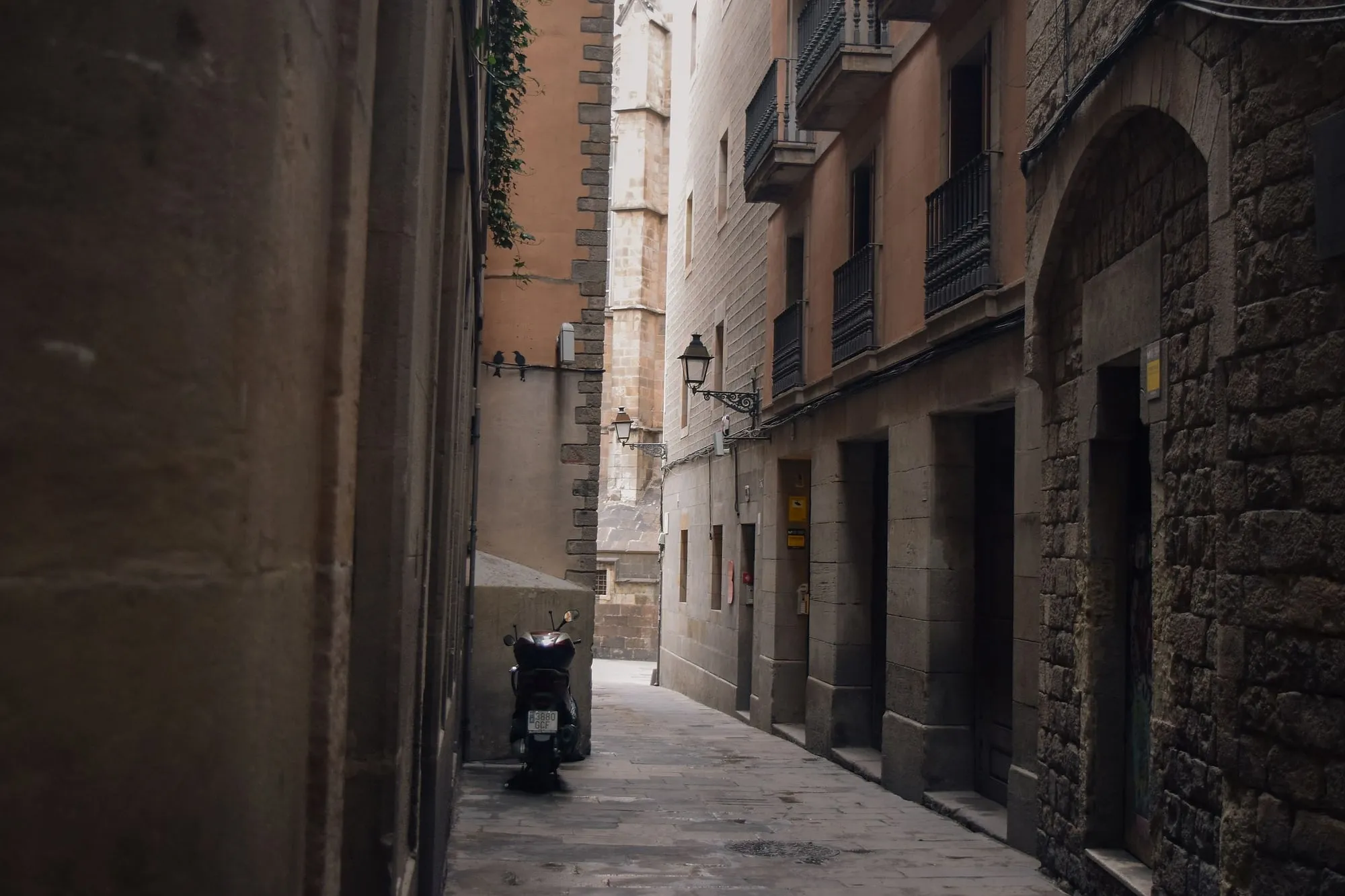
The Gothic Quarter: a neighbourhood that invented itself
Barcelona's most photographed bridge dates from 1928.
- How long it lasts
- 2 h
- Runs in
- EN · ES · CA
- Price
- 15 €
Never more than 20 people
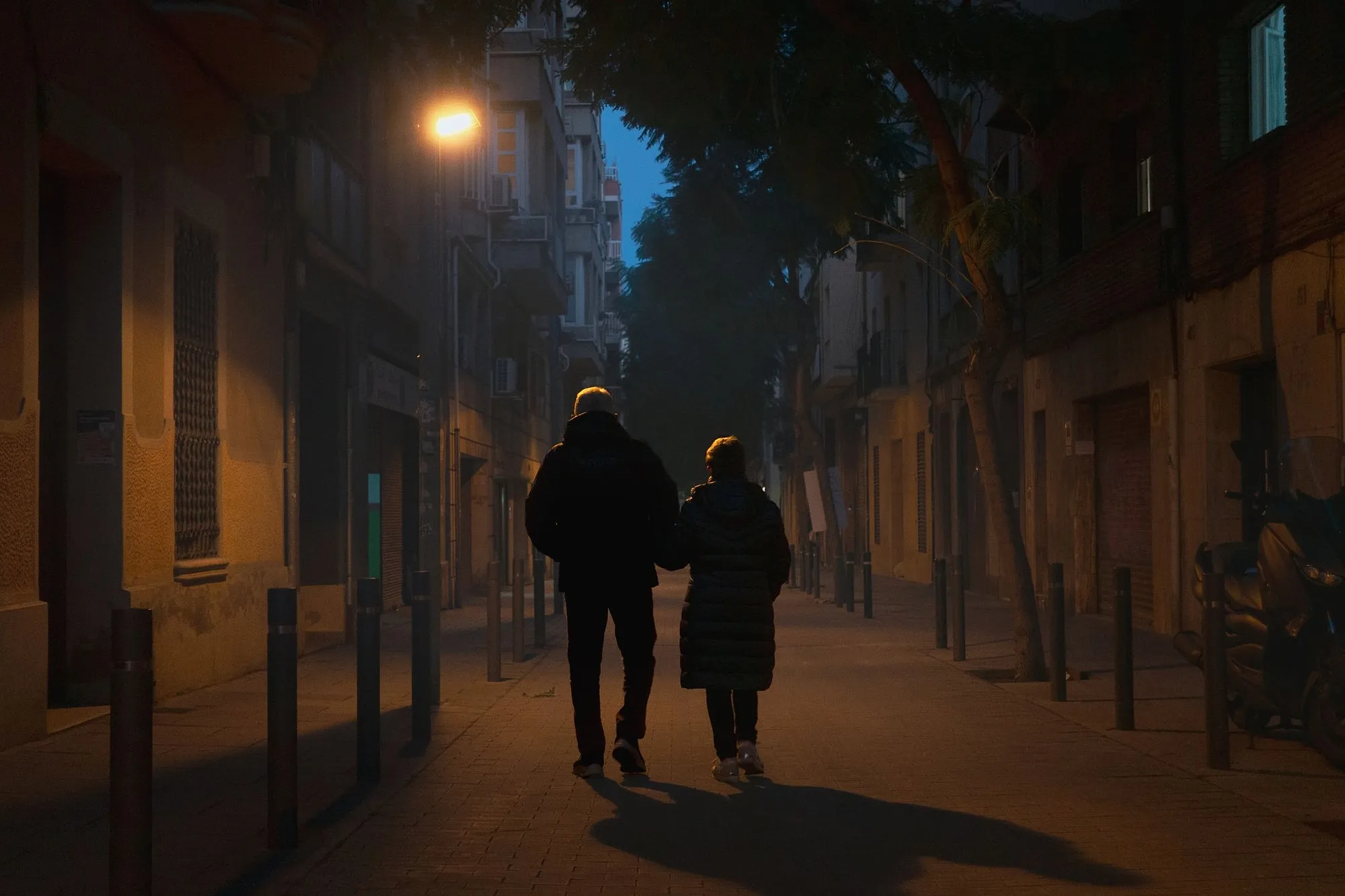
The Gothic Quarter after dark
By day it is a crowded stage set. By night it is a narrow city.
- How long it lasts
- 2 h
- Runs in
- EN · ES · CA
- Price
- 18 €
Never more than 20 people
More in the journal
The Gothic Quarter
- It has three naves and can look like seven, and the cathedral and the Generalitat cannot agree on how many bays
- There are thirteen geese in the cathedral cloister and nobody official will tell you why
- The street names are trades, and the city that keeps the register says do not trust them too far
- Europe's largest early-modern excavation is five per cent of what was demolished here, and it exists because somebody tried to build a library
- In one of these squares you can still swear a will out loud, under a procedure from the eleventh century
- Nobody walks across the Pont del Bisbe, and that is what it is for