
Gothic Quarter
There are thirteen geese in the cathedral cloister and nobody official will tell you why
The most-repeated explanation on the internet is not on any institutional page. What the cathedral does say is stranger, and it takes about four minutes to check for yourself.
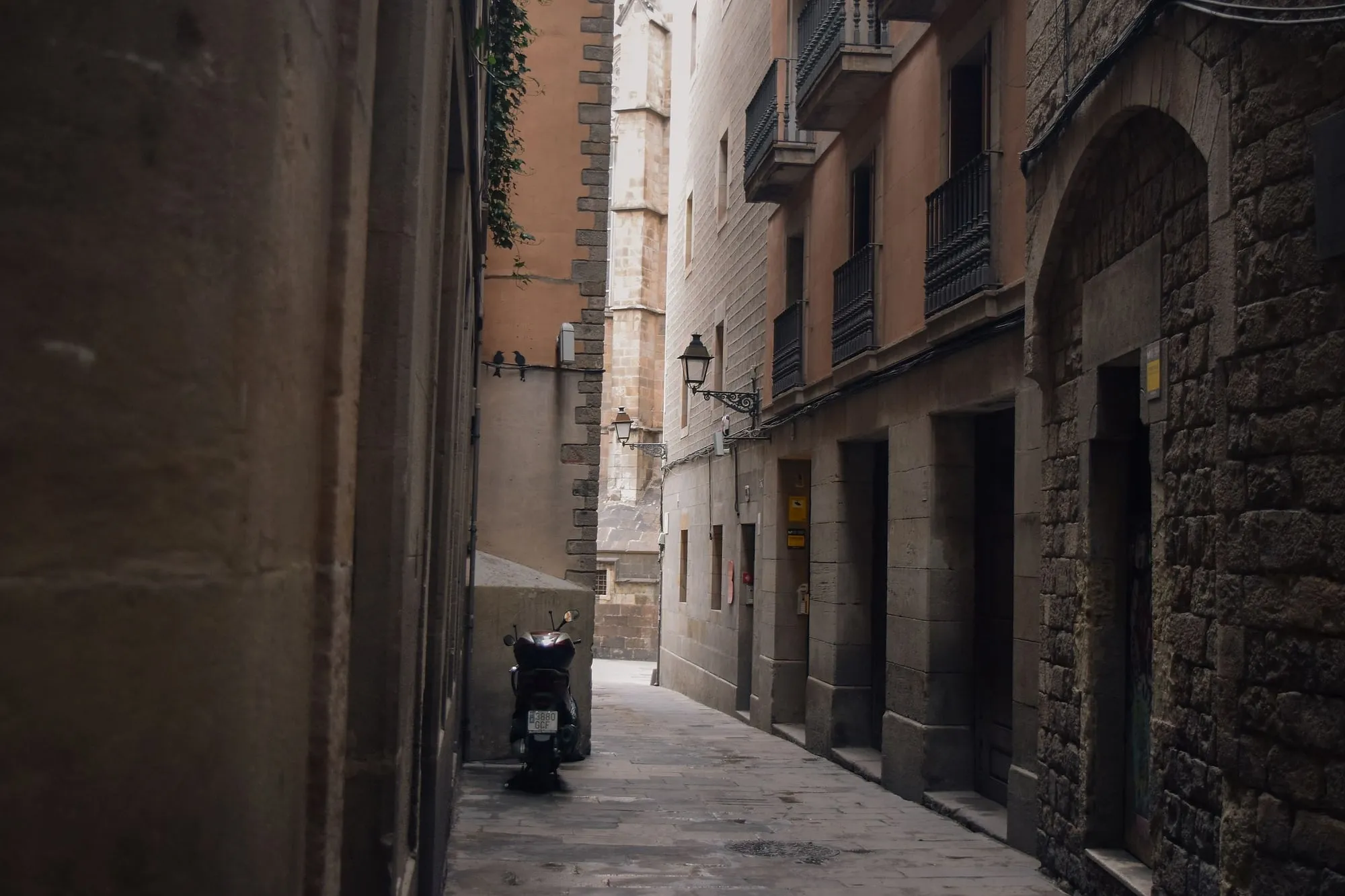
There is a pond in the cloister of Barcelona’s cathedral, and there are geese in it. Thirteen of them, white. The rest of the building is better documented than they are.
Every guide in the city has an explanation. Most of them are the same explanation, and it is not on any page that the cathedral, the Ajuntament de Barcelona or the Gran Enciclopèdia Catalana has published.
That is worth four minutes of your time, because the version you can actually source is better.
What the cathedral does say
Two sentences, on its own traditions page, in Catalan and in English.
The first is the number and the reason: thirteen white geese representing, according to tradition, the age of Saint Eulalia when she was martyred.
The second is the date: the presence of the geese in the Cloister has been documented since the 16th century.
Read those again, because they are carefully written and almost everyone flattens them.
«According to tradition» is the cathedral marking its own claim. It is not telling you thirteen is a historical fact about a real thirteen-year-old. It is telling you that is the story attached to the number.
And the sixteenth century dates the geese, not the thirteen. Nobody institutional says when the flock became thirteen. The cathedral says there have been geese there for four hundred years and that there are thirteen now, and lets you draw the line yourself.
What nobody says
Why geese.
The explanation that dominates every search result is that the geese descend from a Roman practice of keeping guard geese — the Capitoline story, the birds that raised the alarm — and that they are there as a living alarm system for the cathedral treasury.
We went looking for that on the cathedral’s site, on the Ajuntament’s cultural pages, in the street register and in the Gran Enciclopèdia Catalana. It is not on any of them. The cathedral explains the number and dates the presence, and stops. The Ajuntament never mentions the geese at all — not in its Santa Eulàlia legend microsite, not in its Cultura Popular section, not in the Nomenclàtor.
That does not make the guard-geese story false. It means no institution that would be accountable for it has written it down, and we would rather hand you that gap than fill it.
It is a fair thing to say out loud on a walking tour, too, and it is more interesting than the alternative: this is the most confidently repeated fact about this cloister and its source is nowhere.
The other thing in the same courtyard
While you are there: the fountain the geese swim beside is the one the ou com balla happens on, at Corpus.
An empty eggshell, balanced and spinning on the jet of water, in a fountain the cathedral dates to the middle of the fifteenth century. The cathedral says it was the first to present the dancing egg in Barcelona, going back at least to 1636.
The Ajuntament says the custom has marked the city at least since 1440.
Both cannot be quite right as written — the cathedral claims to have been first while giving a date two centuries later than the city’s — and the Ajuntament itself concedes the practice is d’origen discutit. We are printing both numbers rather than choosing, which is the honest position when two institutions disagree by two hundred years about their own tradition.
Who Eulàlia was, and the doubt the encyclopaedia publishes
She is the reason for the thirteen, so it is worth knowing what is documented and what is not.
The cathedral places her martyrdom in Diocletian’s persecution in Hispania, in the year 304, under the prefect Dacià — and writes it in the conditional, se situarien. The family in Sarrià and the age of thirteen come prefixed with segons la tradició.
The Gran Enciclopèdia Catalana goes further, and this is the most useful sentence anyone has published about her. The identical name of Eulalia of Mérida, the similarity of the two martyrdoms and the absence of early monuments, it says, han fet dubtar de la seva autenticitat — have caused her authenticity to be doubted. It then adds that recent studies have weakened the negative argument and make an early official cult plausible.
The documentary trail is later than most people assume. The GEC can only trace the cult from the end of the sixth century, and the written account of her life and martyrdom back to the second third of the seventh — around 635, when an abbot called Quirze gathered the oral tradition into written acts.
The cathedral is equally frank about its own early history: ens manquen, però, notícies històricament certes about the organisation of the diocese until 343.
Two institutions, both with an interest in the story, both saying the early evidence is thin. That is not a debunking. It is the shape of what is actually known.
Three different years for the same event
The relics were hidden, then found, then carried to the cathedral. Everyone agrees on the sequence. Nobody agrees on the year, and one of the disagreements is inside a single website.
- 877 — the cathedral’s history page: l’any 877, aquesta basílica acollí solemnement… les relíquies de santa Eulàlia. The Gran Enciclopèdia Catalana agrees: bishop Frodoí found them at Santa Maria de les Arenes at the instance of Sigebod of Narbonne.
- 878 — the cathedral’s own Santa Eulàlia page, describing the original sepulchre behind the Gothic tomb, trobat pel bisbe Frodoí l’any 878.
- 879 — the Ajuntament’s street register, in the entry for Plaça de l’Àngel, dating the miracle during the translation to l’any 879.
We use 877, because it is the reading two independent sources share. We are printing the other two because a page that quietly picks one date and hides the others is doing the thing this journal exists not to do.
The tomb, and an attribution that is an attribution
Down in the crypt under the high altar is a polychrome marble sarcophagus, solemnly inaugurated in 1339.
The sculptor is usually given as Luppo di Francesco, of Pisa. Look at how the cathedral gets there: it knew the sculptor came from the Pisa region; it knew bishop Ponç de Gualba contracted a Pisan artist in 1327; it knows Luppo di Francesco was in Barcelona between 1330 and 1340; and it finds the style matches his work in Pisa cathedral.
That is a reasoned attribution, not a signature. The Gran Enciclopèdia Catalana does not even give the name — just un sepulcre de marbre, obra d’un artista pisà. It also puts the deposit in the cathedral in 1327 rather than 1339, which looks like the contract date and the installation date collapsing into one.
Worth knowing before someone tells you flatly who carved it.
Patron, or co-patron
Here is where the city contradicts itself, and it is a useful contradiction because you will meet both versions in the same week.
The Nomenclàtor, the Ajuntament’s street register and the closest thing the city has to an official record of these things, is unambiguous: fou patrona de Barcelona i actualment n’és copatrona.
The Ajuntament’s Cultura Popular pages agree in substance — patrona de la ciutat fins al segle XVII.
And the Ajuntament’s own February festival microsite says, in the present tense, Santa Eulàlia és patrona i filla de la ciutat de Barcelona.
What happened in between is the Mare de Déu de la Mercè. After a locust plague the city council proclaimed her patron — and, the Ajuntament says, el Papa no va ratificar la decisió fins dos segles més tard, el 1868, under Pius IX. Which is why Barcelona’s big festival is in September and the older patron gets February.
If you want the safe formulation: Eulàlia is co-patron, the Mercè is patron, and the paperwork is from 1868.
The street that is not named for the barrel
You will be told, in the alley behind the cathedral, that the Baixada de Santa Eulàlia is called that because she was rolled down it in a barrel full of knives.
The Ajuntament tells that story too — on its festival microsite, in the legend section, where legends belong.
Its street register says something else entirely. The Baixada is named per la mateixa dedicació que el carrer de Santa Eulàlia — for the same dedication as the street of the same name — and it dates the name to the nineteenth century. No barrel. No rolling. A devotional naming, and a recent one.
Same institution, two documents, and only one of them is the register.
The register is also worth a detour for what it does say. In Plaça de l’Àngel, a bronze angel on a marble pyramid was placed in 1618 at the gate in the wall, pointing at an image of Eulàlia set above the arch in 1456, commemorating a miracle during the translation of her body. The square you cross on the way from the metro to the cathedral is named after a statue that was pointing at another statue.
Where the thirteen actually goes
Once you start counting, thirteen is everywhere in her story and it always resolves to the same claim.
Thirteen years old. Thirteen tortures, in the Ajuntament’s telling, perquè tretze era el nombre d’anys que tenia. Thirteen tumbles down the alley. Thirteen geese.
The age is the root; everything else is the number being repeated. That is a folklore mechanism, not a coincidence, and it is much more interesting to notice than to be told the geese are Roman.
What to do with this, on the ground
The cloister costs what the cathedral charges and that changes, so check it yourself. What does not change:
Plaça Nova, outside, is free, and it is where our walks start — in front of the two towers of the Roman gate, which is where the Roman city is easiest to read.
Carrer del Bisbe takes you past the bridge that everyone photographs and nobody crosses, finished in 1928.
The Baixada de Santa Eulàlia is thirty seconds off the standard route and almost always empty. Now you know it is named the way a nineteenth-century committee names things.
And 12 February is the day the city hangs the historic banner from the balcony of the Casa de la Ciutat — the modern festival, which the Ajuntament itself calls relativament recent, was rebuilt in 1983 and 1985 out of the giants’ associations of Ciutat Vella. If you want a version of Barcelona with almost no visitors in it, February is the answer, and the rest of the popular-culture apparatus turns out to be about the same age.
Why a walking tour cares about this
Because it is the clearest small example of what the neighbourhood does to people.
Somebody points at thirteen birds, tells you a story that sounds ancient, and you leave with a fact. Ours is not a better fact. It is the same one with the seams showing: the number is documented, the meaning is flagged as tradition by the people who keep the birds, and the reason for geese in the first place is a hole nobody has filled.
Our Gothic Quarter walk spends two hours on exactly that distinction — what is genuinely old, what was assembled later, and how to tell — and it is the same argument as the buildings that were moved a few streets away. The after-dark version gets the same streets with nobody in them.
If you are still deciding whether the neighbourhood earns your afternoon at all, that is its own page; and if you want the walkable order, what to see in the Gothic Quarter.
Where this comes from
- The Cathedral · TraditionsCatedral de BarcelonaThat there are «13 white geese representing, according to tradition, the age of Saint Eulalia when she was martyred», that «the presence of the geese in the Cloister has been documented since the 16th century», and that the cathedral «was the first to present the dancing egg in Barcelona, going back at least to 1636».
- La Catedral · TradicionsCatedral de BarcelonaThe Catalan wording of the same two claims: «tretze oques, tantes com, segons la llegenda, anys tenia Santa Eulàlia quan va ser martiritzada» and «la seva presència al Claustre està documentada des del segle XVI».
- Culte i pregària · Santa EulàliaCatedral de BarcelonaThat the martyrdom «se situarien» in Diocletian's persecution in Hispania in 304 under the prefect Dacià, and that «segons la tradició» her parents lived in Sarrià and she was thirteen; that the polychrome marble sarcophagus was «inaugurada solemnement el 1339» and that bishop Ponç de Gualba contracted a Pisan artist in 1327, the attribution to Luppo di Francesco resting on style and dates; and that behind the Gothic tomb stands the original sepulchre «trobat pel bisbe Frodoí l'any 878».
- La Catedral · HistòriaCatedral de BarcelonaThat «L'any 877» the basilica of Santa Maria de les Arenes received the relics of Santa Eulàlia; that «Ens manquen, però, notícies històricament certes» about the organisation of the diocese until 343; and that the cloister was finished in 1448.
- Visita turística · Espais visitablesCatedral de BarcelonaThat the cloister garden holds palms, magnolias and an orange tree and a fountain «que data de mitjans del segle XV», that the thirteen white geese live in the pond there, and that the cloister is Gothic, built across the fourteenth and fifteenth centuries by architects including Andreu Escuder.
- EulàliaGran Enciclopèdia CatalanaThat the identity of the name with Eulalia of Mérida, the similarity of the martyrdoms and the absence of early monuments «han fet dubtar de la seva autenticitat»; that the cult can only be traced documentally from the end of the sixth century and the written tradition from the second third of the seventh; that around 635 the abbot Quirze wrote the acts of the martyrdom from oral tradition; and that in 877 bishop Frodoí found the relics at the instance of Sigebod of Narbonne.
- Carrer de Santa EulàliaAjuntament de Barcelona · Nomenclàtor de les vies públiquesThe city register's own formulation of her status: «Verge i màrtir sota l'emperador Dioclecià. Fou patrona de Barcelona i actualment n'és copatrona».
- Baixada de Santa EulàliaAjuntament de Barcelona · Nomenclàtor de les vies públiquesThat the street is named «per la mateixa dedicació que el carrer de Santa Eulàlia» and that the register dates the name to the nineteenth century — with no mention of the barrel or of anyone being rolled down it.
- Plaça de l'ÀngelAjuntament de Barcelona · Nomenclàtor de les vies públiquesThat a bronze angel on a marble pyramid was placed in 1618 at the gate of the wall, pointing at an image of Santa Eulàlia set there in 1456, recalling a miracle during the translation of her body from Santa Maria del Mar to the cathedral «l'any 879».
- Festes de Santa EulàliaAjuntament de Barcelona · Cultura PopularThat the feast is on 12 February; that «la celebració de la festivitat de Santa Eulàlia a Barcelona és relativament recent» and the modern festival was founded in 1983 and 1985; that she was «patrona de la ciutat fins al segle XVII»; and that the gegantona Laia dates from 1998.
- La Mercè · HistòriaAjuntament de Barcelona · La MercèThat after the 1687 locust plague the Consell de la Ciutat named the Mare de Déu de la Mercè patron of Barcelona, and that «el Papa, però, no va ratificar la decisió fins dos segles més tard, el 1868», under Pius IX.
- Festivitat de Corpus ChristiAjuntament de Barcelona · Cultura PopularThat the ou com balla has distinguished the city «almenys des del 1440» during Corpus, that it is practised in the fountains of cloisters, courtyards and gardens, and that the custom is «d'origen discutit i es presta a diverses interpretacions».
Everything above that carries a date, a figure or a name is checked against these before it is published. Where we could not find a source, the page says so.
Quick answers
- Why are there geese in Barcelona Cathedral?
- The cathedral's own answer is about how many, not why. Its traditions page says there are thirteen white geese in the cloister pond, «representing, according to tradition, the age of Saint Eulalia when she was martyred», and that their presence in the cloister «has been documented since the 16th century». It does not explain why the birds are geese rather than anything else. Nor does the Ajuntament, which never mentions them at all.
- How many geese are in the cloister?
- Thirteen, white, in a pond beside a fountain. The cathedral gives the number twice on its own site, in Catalan and in English, and gives the same reason both times.
- Is the story about the geese as guard animals true?
- We could not find it in any institutional source. The version that circulates — that the geese are descendants of a Roman guard tradition and are there to raise the alarm — appears on no page of the cathedral, the Ajuntament de Barcelona or the Gran Enciclopèdia Catalana. That does not make it false. It means nobody who would be accountable for it has written it down, and we are not going to be the first.
- Who was Saint Eulàlia?
- A virgin martyr of Barcelona, third to fourth century, whose feast day is 12 February. The cathedral sets her martyrdom in Diocletian's persecution in Hispania in the year 304 — but writes it in the conditional and prefixes the family details with «according to tradition». The Gran Enciclopèdia Catalana goes further and publishes the doubt: the identical name of a martyr of Mérida, the similarity of the two martyrdoms, and the lack of early monuments «han fet dubtar de la seva autenticitat».
- Is Santa Eulàlia the patron saint of Barcelona?
- Co-patron. The Ajuntament's own street register is explicit: «Fou patrona de Barcelona i actualment n'és copatrona». The Mare de Déu de la Mercè took over — proclaimed by the city after a locust plague, but not confirmed by Rome, the Ajuntament says, until 1868 under Pius IX. You will still see «patrona» used for Eulàlia on the city's own February festival microsite, which is one of the reasons this page exists.
- Can you see the geese for free?
- The cloister is part of the cathedral and the building has its own admission arrangements, which change and which we do not print. What is free, always, is standing in Carrer del Bisbe and in Plaça Nova outside it.
The tours this piece is about
The Gothic Quarter: a neighbourhood that invented itself
Barcelona's most photographed bridge dates from 1928.
- How long it lasts
- 2 h
- Runs in
- EN · ES · CA
- Price
- 15 €
Never more than 20 people
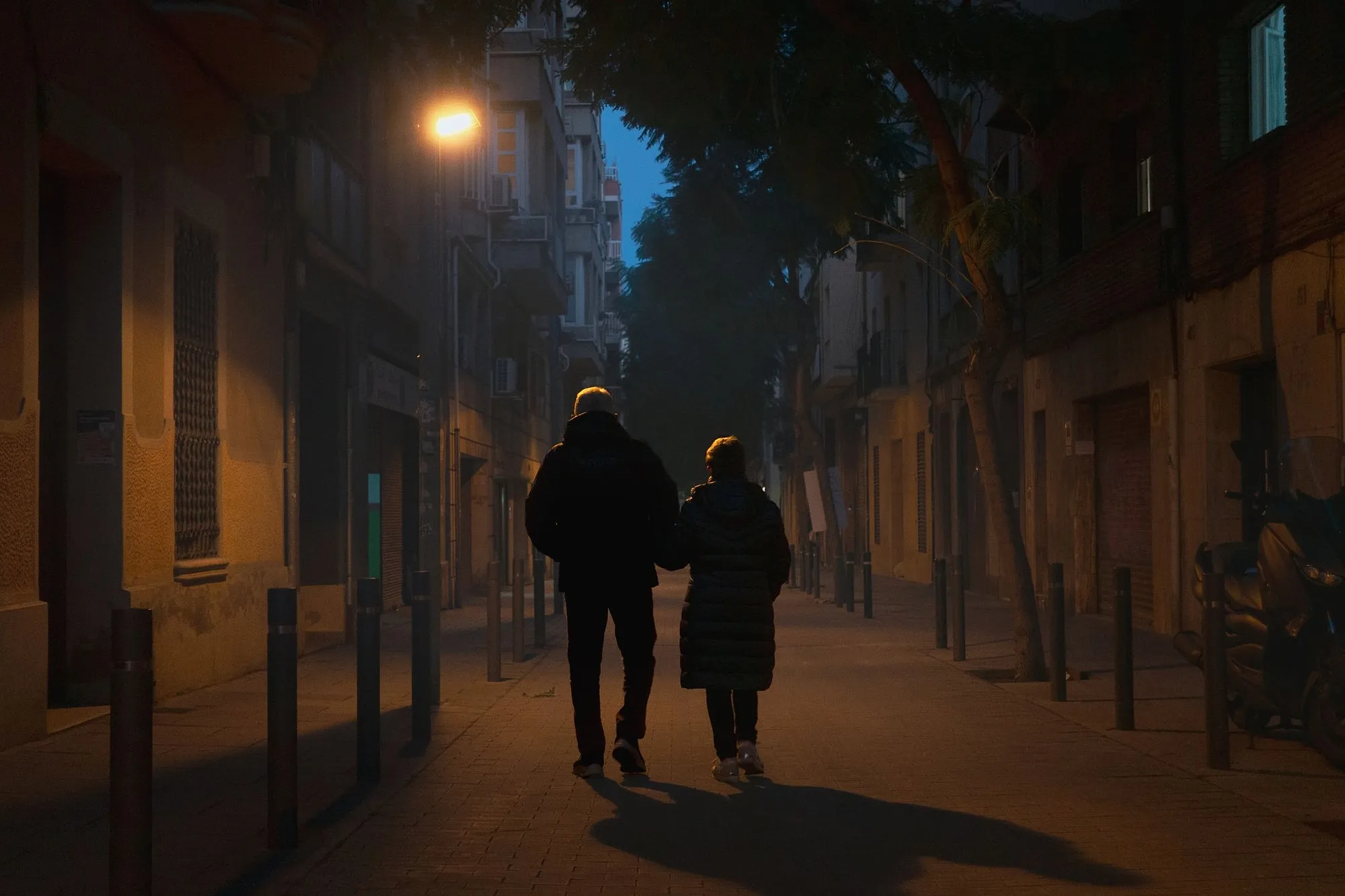
The Gothic Quarter after dark
By day it is a crowded stage set. By night it is a narrow city.
- How long it lasts
- 2 h
- Runs in
- EN · ES · CA
- Price
- 18 €
Never more than 20 people
More in the journal
The Gothic Quarter
- What to see in the Gothic Quarter, in an order that does not double back
- The Generalitat says the cathedral is not really Catalan Gothic. It says Santa Maria del Mar is
- It has three naves and can look like seven, and the cathedral and the Generalitat cannot agree on how many bays
- The street names are trades, and the city that keeps the register says do not trust them too far
- Europe's largest early-modern excavation is five per cent of what was demolished here, and it exists because somebody tried to build a library
- In one of these squares you can still swear a will out loud, under a procedure from the eleventh century