
Gothic Quarter
The street names are trades, and the city that keeps the register says do not trust them too far
You can read the medieval economy off the street signs of Ciutat Vella. What almost nobody tells you is that the Ajuntament publishes a caveat next to it, and the caveat is the interesting half.
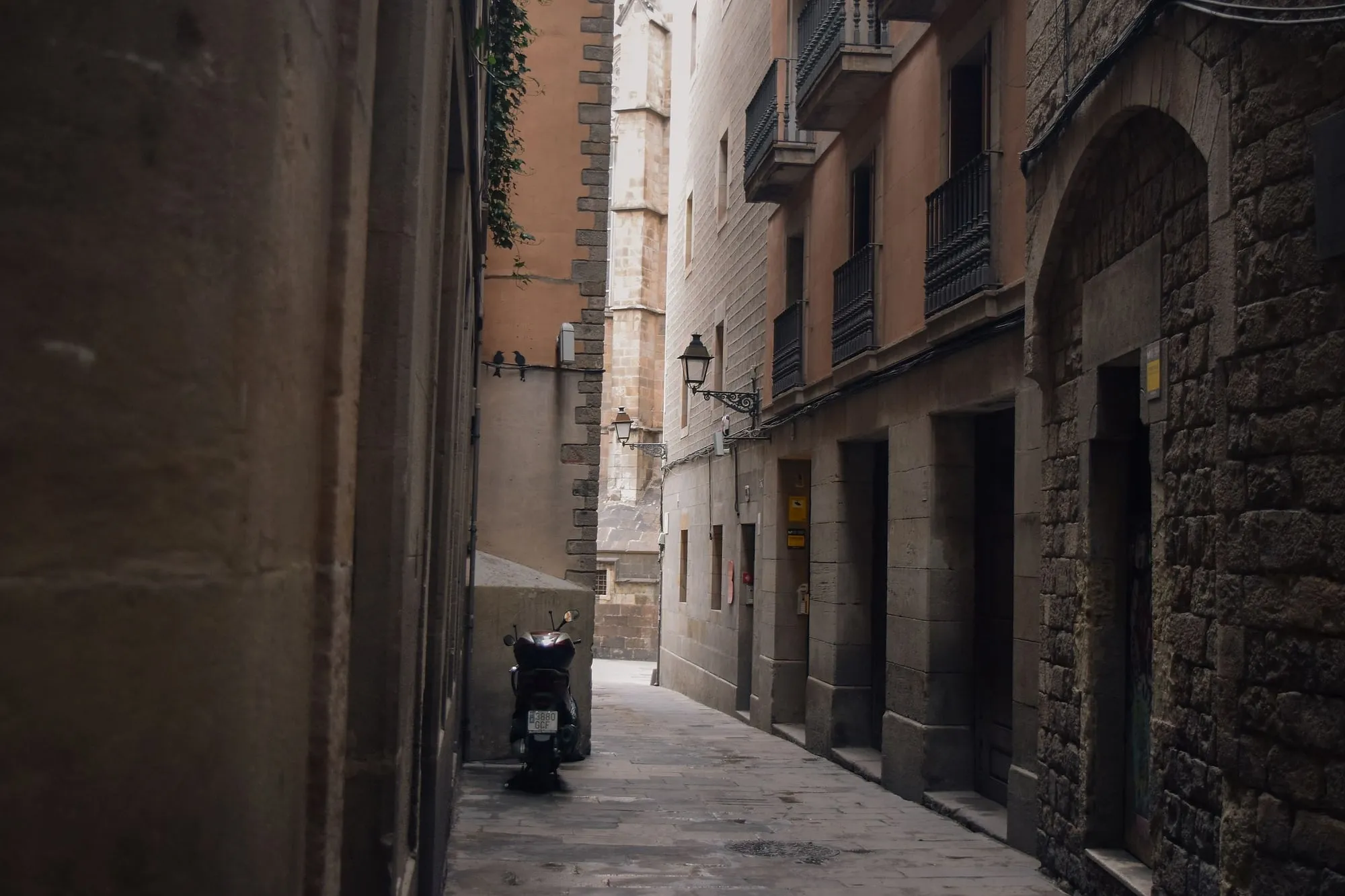
Walk from the cathedral towards the sea and the street signs stop being names and start being a job list. Silversmiths. Mirror-makers. Coopers. Blanket-makers. Money-changers. Needle-makers.
It is the best free thing to read in Barcelona, the city publishes the etymology of every one of them, and the same city publishes a warning underneath that almost nobody quotes.
We are going to do both, in that order.
The list, with the city’s own wording
Every entry below is from the Ajuntament’s Nomenclàtor, the official register of Barcelona’s street names, which gives an etymology for each of its 4,688 streets.
Carrer de l’Argenteria — the silversmiths. They settled here in greatest numbers. The street was already called this in 1423.
Carrer de Mirallers — the mirror-makers. In 1492 it was already known by this name. Note the form: de Mirallers, not dels.
Carrer de la Tapineria — and this is the one to know. Workshops making tapins: in the register’s own description, a kind of sandal of cork lined with leather with a cloth covering, formerly used by women.
That is the street the tallest surviving run of Roman wall stands on. Thousands of people photograph the wall every week and none of them know the street is named after women’s cork-soled shoes.
Carrer dels Assaonadors — the tanners, whose work needed running water, like that which passed along the street. The etymology contains the drainage plan.
Carrer de les Semoleres — the women who sold semolina. Feminine plural, deliberately. The street had the name by 1603, and the men’s confraternity, the Semolers, dates from 1611. The women got the street.
Carrer d’Escudellers — the potters, working the yellowish clays.
Carrer dels Corders — the rope-makers, guild confraternity founded 1404 — and a nuance the register bothers to make: they worked outside the city walls, because you cannot lay a rope in an alley. What they had here were the warehouses and the shops.
Carrer de Flassaders — the makers of flassades, blankets. Guild ordinances dated 1331.
Carrer dels Boters — the coopers. Guild house 1448, first ordinances 1441.
Carrer de Freneria — the freners, who worked the leather for riding saddles and bridles.
Carrer de la Dagueria — the dagger-makers. The name is earlier than the sixteenth century.
Carrer dels Canvis Vells and Carrer dels Canvis Nous — the money-changers of the thirteenth century, and the taula del canvi, the public exchange bank, of 1401.
Carrer de la Llibreteria — the booksellers, and the register’s phrasing is worth keeping: the sale of books had centralised here, a great novelty of that time, at the beginning of the sixteenth century.
Carrer dels Cotoners — the cotton workers, constituted as a guild in 1433, and already represented in the first municipal council of 1257.
Carrer dels Agullers — makers of needles and fishing tackle. Ordinances 1786; the street name is older, pre-1778.
Carrer de la Vidrieria — the glaziers, established here in the thirteenth century.
Carrer dels Sombrerers — the hatters, and this one shows the machinery moving. The guild’s 1545 ordinances call them capellers; by 1658 the guild calls itself barreters; and the name sombrerers was probably adopted towards the end of the seventeenth century. Three words for hat-maker in one street name over 150 years.
And a few more the register confirms in the same terms: Abaixadors (cloth-shearers, ordinances 1456), Blanqueria (where the tanners cured the skins), Carders (wool-carders, confraternity 1372, with the guild house still standing at numbers 45–49), Espaseria (swordsmiths, guild known from 1390, ordinances 1413) and Brocaters (brocade-makers, originally Broquerers, makers of small shields).
Three that look like trades and are not
Carrer del Vidre. Not the glaziers. The register says it is named after a glass kiln that gave its name to an estate, l’Hort del Vidre. The glaziers are one street away, on the Vidrieria.
Carrer dels Vigatans. Not a trade at all. It was an inn used by merchants from Vic, and the register explicitly rejects the beam-makers reading that circulates.
Carrer dels Banys Nous. Baths, not a guild — and rather older than the guilds. The register records a contract by Ramon Berenguer IV with the alfaquí Abraham in 1160, and that the baths subsisted until 1716. It is the western edge of El Call, and the name is the reason that boundary is where it is.
Now the warning, which is the good part
The Ajuntament’s own page on the memory of the guilds opens by saying exactly what every guidebook says: street names are the trace of the guilds we recognise most easily today.
And then, in the next paragraph, it does something guidebooks never do:
The existence of a relation between the names of the streets and the location of the trades could come to seem, at first glance, clear. But some qualifications would have to be raised.
The qualifications it raises:
- Streets changed names repeatedly. A trade reference could be lost, swapped for another, or — the interesting one — introduced at a later renaming. A street can be named after a guild by people who were nostalgic for it, not by the guild.
- There were far more trades than streets. The hearth census of 1516 records 195 different trades in Barcelona. The street signs give you a couple of dozen. What you are reading is not a map of the medieval economy. It is a very partial index of it.
There is a second, sharper version of the same objection published by the city, and it is in a book the Ajuntament itself put out about Carrer de Montcada, the grandest street in the quarter. Its verdict on the neighbourhood: no radical separations are observed, neither by trades nor by social groups.
Which is to say: the tidy picture — one street, one guild, everybody living over the shop with their own kind — is a nineteenth-century way of imagining the Middle Ages, and the institution that keeps the register is the one telling you so.
A trap for anyone who goes and checks
The register’s entries carry a field labelled Segle — century. It is not the age of the street or of the trade.
Mirallers shows Segle XIX while its own text dates the name to 1492. Llibreteria shows Segle XX with an approval date of 1958. The register never documents what the field means, and almost every trade street shows the nineteenth century — which is when the modern register was formalised, not when the hatters arrived.
If you go and read these entries yourself, which you should, ignore that column.
The street that is not a trade at all
Carrer de Montcada, on the far side of Via Laietana, is the counter-example that makes the rest legible.
The Generalitat lists it as a Conjunt històric, register 45-CH, by decree of 26 December 1947. It was laid out from the mid-twelfth century, has been known by its present name since 1283, and became the centre of Barcelona’s seigneurial life in the fourteenth to eighteenth centuries — until the opening of Carrer de la Princesa cut it in two in 1853.
Five of its palaces are the Museu Picasso, which describes them itself: Palau Aguilar, Palau del Baró de Castellet, Palau Meca, Casa Mauri and Palau Finestres, originals of the thirteenth and fourteenth centuries, a good example of Catalan civil Gothic.
And even here the city argues with itself. The street register credits the name to the noble Montcada lineage; the Ajuntament’s own published study says that attribution is falsely made, and that the street is named after Martí de Montcada, a citizen who entered the Consell de Cent in 1258 and owned land there. One arm of the city says aristocrats, the other says a man who bought some plots.
We are not resolving that. We are telling you it is open, which is the honest state of it.
How to walk it
Do not make a route out of this. Make it a habit for two hours.
The trade streets are almost all between the cathedral and the sea, on both sides of Via Laietana, and you will cross a dozen of them following any sensible route through the old city. The change is that you stop reading the signs as decoration.
The best sequence, if you want one: come down Argenteria from Plaça de l’Àngel — you are on the eleventh-century road to the sea, which is why it runs at that angle — and it delivers you to the door of Santa Maria del Mar, the church the silversmiths’ street was built towards. Then Mirallers, Sombrerers, Assaonadors, Flassaders. Fifteen minutes, no tickets, and every sign is a source.
And when the trade streets run out, you have reached the edge: the ring roads are where the wall was.
The version with someone reading them out
Our Gothic Quarter walk works the cathedral side of Via Laietana and spends two hours on what is genuinely old, what was assembled in the twentieth century, and how to tell. The street names belong to the first category and are one of the few things in that neighbourhood nobody moved — see the buildings that did move.
The after-dark version has an unfair advantage here: the signs are lit and there is nobody standing in front of them.
Both are told by an actor rather than recited, and neither will tell you that one street held one guild, because the city that keeps the register does not say that either.
The same guilds sent animals into the Corpus procession — the tanners a lion, the cloth-dressers a mule, the butchers an ox — and almost every one of those figures in the street today was carved after 1987. That is the giants and the bestiary.
Where this comes from
- Carrer de l'ArgenteriaAjuntament de Barcelona · Nomenclàtor de les vies públiquesThat the silversmiths settled there in greatest numbers and «the street was already called this in 1423»; and the register's own list of its former names — Plateria, Santa Maria, Passamaners, Mar, Arenas, Mar (12th–14th c.) and Via del Mar (11th c.) — together with the note that its route corresponds to the old road to the sea leaving the Portal Major, and that by 998 there were buildings on both sides.
- Carrer de la TapineriaAjuntament de Barcelona · Nomenclàtor de les vies públiquesThat the street is named for the workshops making «tapins, a kind of sandal of cork lined with leather with a cloth covering, formerly used by women».
- Carrer de les SemoleresAjuntament de Barcelona · Nomenclàtor de les vies públiquesThat the street is named «for the women who sold semolina», that it already had the name in 1603, and that the Confraria dels Semolers dates from 1611.
- La memòria dels gremisAjuntament de Barcelona · Barcelona Cultura PopularThat street names are the most easily recognised trace of the guilds — and, immediately afterwards, the city's own warning that «the existence of a relation between the names of the streets and the location of the trades could come to seem, at first glance, clear. But some qualifications would have to be raised»; that the guilds were fundamental «from the Middle Ages to the beginnings of the nineteenth century»; and that the 1516 hearth census records 195 different trades in the city. The page's list of thirty-seven trade streets is a curated itinerary, not a census.
- Fitxa 49 — Carrer de MontcadaGeneralitat de Catalunya · Inventari del Patrimoni ArquitectònicThat the street is listed as a Conjunt històric, register 45-CH, by decree of 26 December 1947; that it «became the centre of Barcelona's seigneurial life in the fourteenth to eighteenth centuries»; that it was laid out from the mid-twelfth century and known by its present name since 1283; and that it was cut in two by the opening of Carrer de la Princesa in 1853.
- Els edificisMuseu Picasso de BarcelonaThat the museum occupies five palaces on Carrer de Montcada — Palau Aguilar, Palau del Baró de Castellet, Palau Meca, Casa Mauri and Palau Finestres — whose originals «date from the thirteenth and fourteenth centuries» and are «a good example of Catalan civil Gothic».
Everything above that carries a date, a figure or a name is checked against these before it is published. Where we could not find a source, the page says so.
Quick answers
- Why are Barcelona's old streets named after trades?
- Because the guilds were, in the Ajuntament's words, fundamental to the urban social structure from the Middle Ages to the beginning of the nineteenth century, and their names stuck to the streets they worked in. The city's street register says most of Ciutat Vella's names come from the Middle Ages.
- What does Carrer de la Tapineria mean?
- It is named for the workshops that made tapins — the city register describes them as a kind of sandal of cork lined with leather with a cloth covering, formerly worn by women. It is the street where the tallest run of Roman wall stands, and almost nobody who photographs the wall knows the street is named after women's shoes.
- Is every trade street really where that trade worked?
- Not necessarily, and the Ajuntament says so itself. Its own guilds page warns that the connection could seem clear at first glance but needs qualifying: streets changed names repeatedly, a trade reference could be lost, swapped or introduced at a later renaming, and a 1516 hearth census records 195 different trades in the city — far more than the street names suggest.
- How many guild streets are there in Barcelona?
- Nobody publishes a number. The street register has no trade category to count with, and the nearest thing to a list is the Ajuntament's cultural itinerary, which names 37 — a curated route, not a census. The register holds 4,688 streets in total.
- Which streets are not what they look like?
- Carrer del Vidre is not a glaziers' street — the register says it is named after a glass kiln that gave its name to an estate. Carrer dels Vigatans is not a trade at all: it was an inn used by merchants from Vic, and the register explicitly rejects the beam-makers reading. And Carrer dels Banys Nous is baths, not a guild.
- Was Carrer de l'Argenteria always called that?
- No. The register lists its former names as Plateria, Santa Maria, Passamaners, Mar, Arenas, Mar in the twelfth to fourteenth centuries, and Via del Mar in the eleventh. It follows the old road to the sea out of the main gate, and by 998 there were buildings on both sides that eventually got their own church — the one now called Santa Maria del Mar.
The tours this piece is about
The Gothic Quarter: a neighbourhood that invented itself
Barcelona's most photographed bridge dates from 1928.
- How long it lasts
- 2 h
- Runs in
- EN · ES · CA
- Price
- 15 €
Never more than 20 people
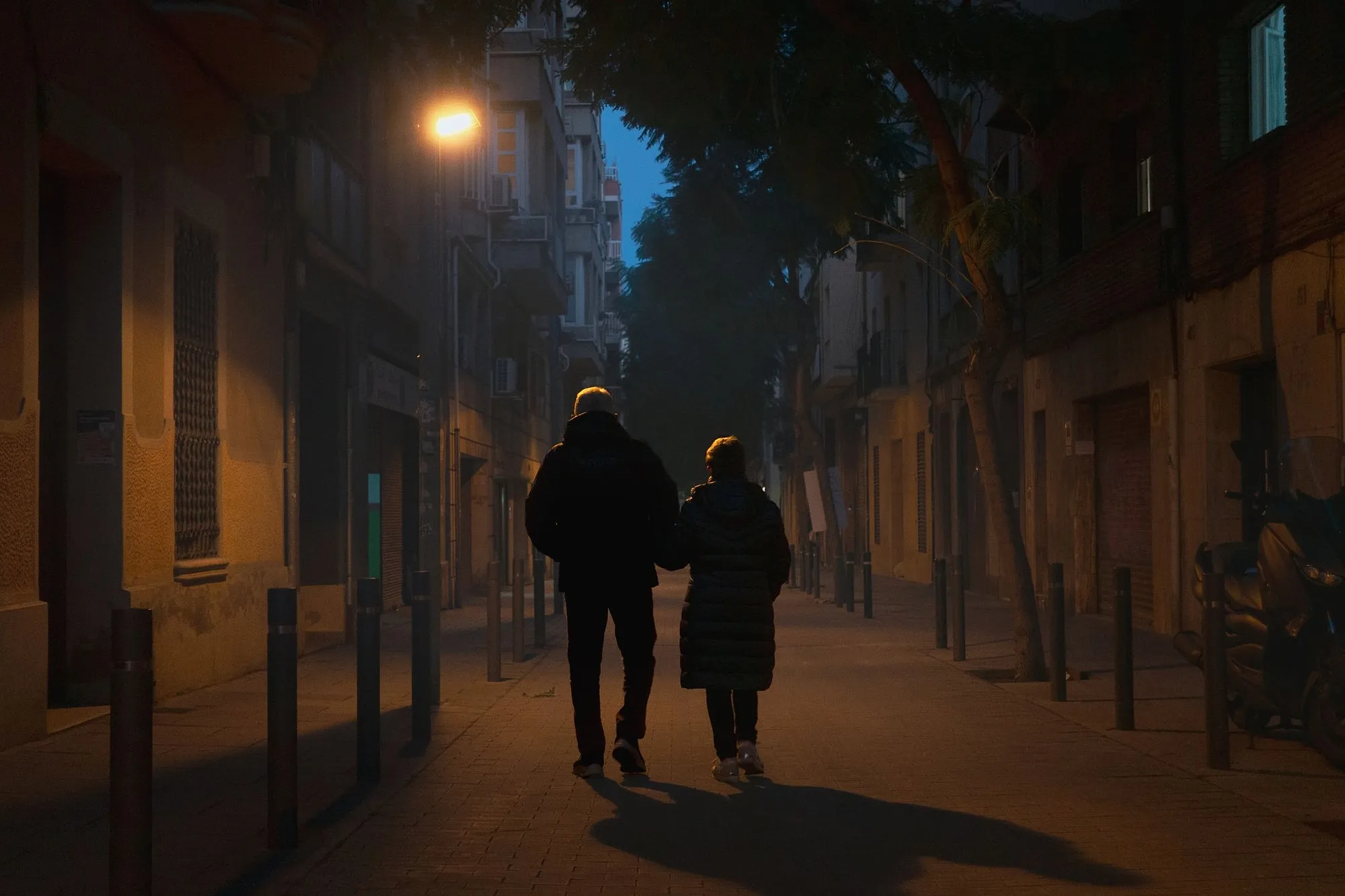
The Gothic Quarter after dark
By day it is a crowded stage set. By night it is a narrow city.
- How long it lasts
- 2 h
- Runs in
- EN · ES · CA
- Price
- 18 €
Never more than 20 people
More in the journal
The Gothic Quarter
- What to see in the Gothic Quarter, in an order that does not double back
- The Generalitat says the cathedral is not really Catalan Gothic. It says Santa Maria del Mar is
- It has three naves and can look like seven, and the cathedral and the Generalitat cannot agree on how many bays
- There are thirteen geese in the cathedral cloister and nobody official will tell you why
- Europe's largest early-modern excavation is five per cent of what was demolished here, and it exists because somebody tried to build a library
- In one of these squares you can still swear a will out loud, under a procedure from the eleventh century