
Gothic Quarter
Barcelona has written down, to two decimal places, how much of this market is allowed to be a snack bar
It is the most visited municipal market in Barcelona and the only one with a published quota against becoming a food court. Both of those numbers come from the same municipal document, and one of them tells you when not to go.
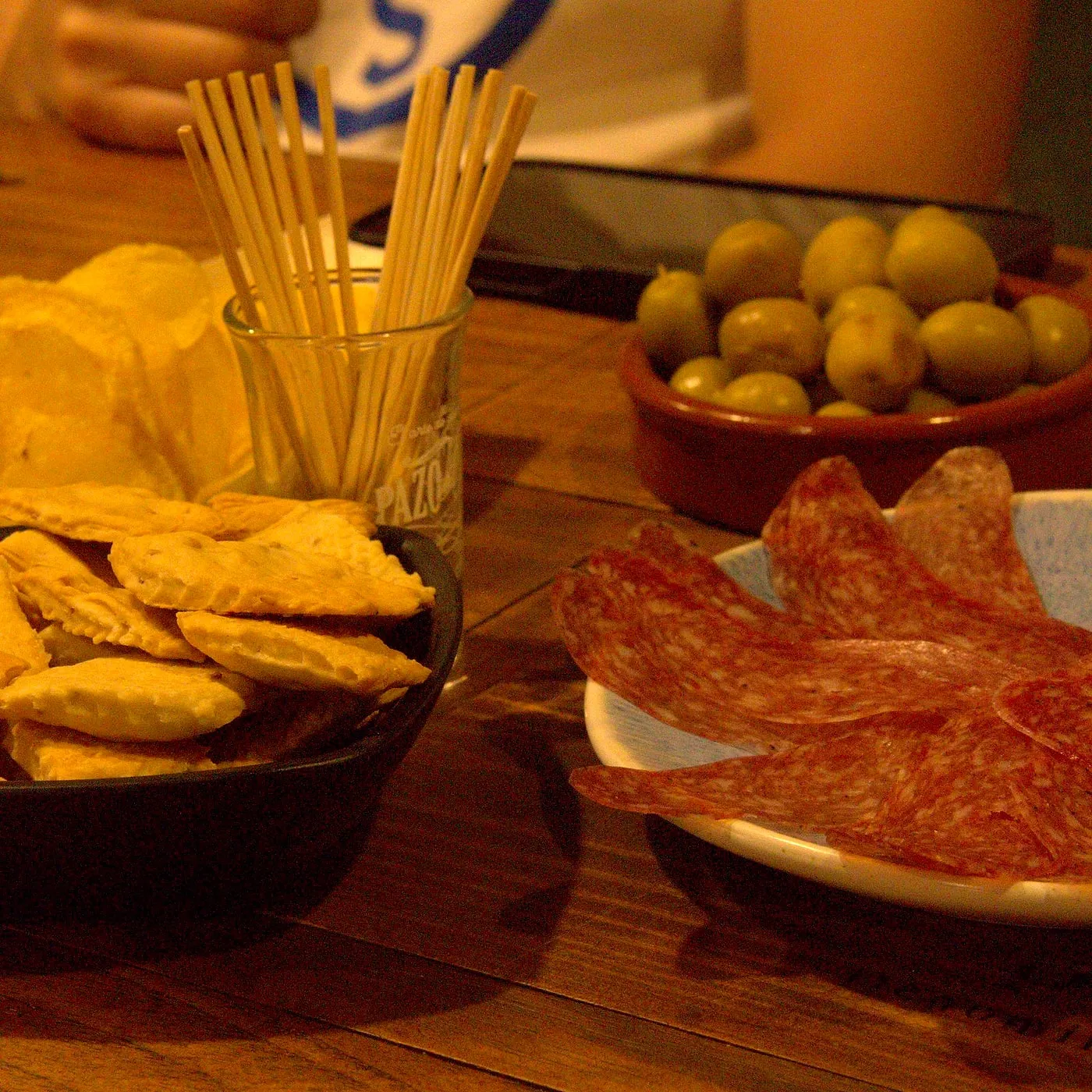
There is a sentence in a municipal press release of 25 September 2025 that does more to explain this market than anything written about it in English.
It says the market will keep a commercial mix of 53.73 % traditional produce and 46.27 % prepared food, under a general rule of a minimum of 50 % traditional and a maximum of 50 % prepared.
Two decimal places. On the question of whether a food market is still a food market.
What that rule is actually doing
Every famous market in Europe has the same slow accident happen to it. A fishmonger retires. The stall is worth more to someone selling paper cones of fried things to people passing through than to another fishmonger. Repeat for twenty years and the market is a food court with a nice roof.
Barcelona has decided to stop that with a number rather than with a lament, and it has published the number.
The agreement, approved in September 2025 by more than 90 % of the stallholders’ association, sets the floor and the ceiling, keeps all twelve trade sectors — fish and shellfish, butchers, offal, cured meats, fruit and vegetables, poultry and eggs, bakery, pulses and cereals, salt fish and preserves, frozen, colonial specialities, food and drink — and attaches an inventory of products that must be present for each of them. Some basic specialities can go to 60 % prepared, provided the whole balances.
You can disagree with where they drew the line. You cannot say nobody drew one, which is the usual state of affairs.
The rule that affects you directly
Buried in the same document, and almost never quoted:
Since 2017 the Boqueria restricts entry to organised visitor groups of fifteen or more people, on Fridays and Saturdays, between April and October, and has civic agents inside the market.
That is nine years old, it is municipal, and it is the reason a large group with a flag does not come through the main arch on an October Saturday.
The scope matters less than what the scope tells you. The city has looked at its own footfall and concluded that Friday and Saturday, in season, is when this building stops working. That is free advice about when not to go, from the people who have to manage it.
Along the same lines, the market and the adjacent plaça de la Gardunya have been designated one of the city’s Espais de Gran Afluència, the municipal category for places where crowding is managed on purpose — extra civic agents, works on the surrounding squares, a push to change what the Gardunya is used for.
Sixteen of them, and this one was in the first three. The founding note of 5 June 2024 says the council has defined the existence of 16 Espais de Gran Afluència in the city, and that the plan began with three priority ones: Sagrada Família, Park Güell and Gardunya – Boqueria. Thirty-three concrete actions and a stated investment of at least 44.2 million euros over the mandate.
⚠️ A correction we owe you, because the wrong number is in wide circulation and it was briefly in ours. The figure often quoted is fifteen, and the list of the touristic ones often includes the Turó de la Rovira. Both are wrong. The council’s own note gives sixteen, and names the eight touristic ones: Park Güell, Sagrada Família, Boqueria – Gardunya, Passeig de Gràcia – Plaça Catalunya, Barri Gòtic, La Rambla, Sant Pere – Santa Caterina – La Ribera i la Barceloneta. The Turó de la Rovira is an EGA, but it is not one of the eight.
The visitor number, and the one that does not exist
23,273,738 visits in 2023.
That is the Ajuntament’s figure, and it makes the Boqueria the most visited market in the municipal network by a distance: 370 % more than Sant Antoni, 722 % more than Santa Caterina.
Now hold that next to something we have written about before. The city publishes a footfall figure for this market, to the individual visit — and publishes no footfall figure at all for La Rambla, the street it opens onto. Every number you have ever read about how many people walk down La Rambla was invented by whoever printed it. That is its own story, and this market is the closest thing to a measurement anyone has of that stretch of the city.
The tourism survey adds the other half. In 2025 the Boqueria appears for the first time in the list of places visitors say they went to, at 62.0 % — above Montjuïc, above Park Güell, just under the Gothic Quarter itself.
It is bigger than you think, and that is measured too
178 stalls. Three times Sant Antoni’s 54, three times Santa Caterina’s 60.
1,493.69 linear metres of selling frontage, which the Ajuntament says makes it the largest market in the city.
Those numbers are worth carrying in your head because they change how you use the building. Most visitors walk about sixty metres in from the Rambla, photograph a wall of cut fruit, and leave. The market extends a long way past that, it gets quieter with every metre, and the far end towards the plaça de la Gardunya is where the people who live in the Raval actually shop.
The Gardunya side is not an accident of geography either. The city’s stated aim is to open the market towards the natural access of the Raval neighbourhood, and the deputy mayor for Ciutat Vella calls it, flatly, the great market of the Raval. The famous entrance is the back door with the good sign on it.
What is being rebuilt, and the honest caveat about dates
At least 12 million euros, municipal, covering the central fish island, accessibility and comfort, the toilets and the ground-floor office building, the Gardunya façade, and the replacement of the asbestos-cement roof along with structural reinforcement and a photovoltaic system.
The city’s own timetable, as published: preparatory studies done, works possibly starting in summer 2026, the first phase perhaps finished at the end of 2027, and the heaviest interventions — the roof, the structure, the façade — running beyond this mandate.
⚠️ We are printing that because it is what the institution said on a dated document, not because we believe a construction schedule. It is running in parallel with the reurbanisation of La Rambla, which has already slipped because of what came out of the ground. Check the current municipal page before you plan an afternoon around any particular part of the hall.
The name, and what it is standing on
The official designation is Mercat Boqueria - Sant Josep, because it occupies the site of the convent of Sant Josep. The market’s own history dates the first documents recording meat tables at the Pla de la Boqueria to 1217 — and is careful to describe that as evidence of itinerant open-air trading, not as a foundation. The stallholders moved onto the cleared convent site on 28 March 1836, the first stone went down on 19 March 1840, the modernista arch is 1913 and the iron roof 1914.
That sequence, and what happened to the convent in between, is in the La Rambla piece, because it is really the same story as the promenade’s.
What belongs here is the consequence: this is a nineteenth-century municipal hall built on a burned convent, not a medieval market that survived. The thing that is genuinely old about it is the pitch, not the building.
How to use it, in four lines
Not Friday or Saturday midday between April and October. The city has written down that this is the problem window. Take the hint.
Walk past the fruit. The first sixty metres are the part that is photographed and the part that has drifted furthest towards prepared food. The percentages above are an average of the whole hall, and the average is not evenly distributed.
Come out at the Gardunya. It is a different building from that side, and it is the side the reform is aimed at.
Buy something that needs a bag. The 50 % floor exists because people still shop here. It only keeps existing for the same reason.
Where this sits on a walk
Our Gothic Quarter walk does not go inside — twenty people is our legal ceiling in Ciutat Vella and fifteen is the market’s, and we would rather spend the two hours on streets where standing still is possible. What the walk does is the argument this market is an example of: what in the old city is genuinely old, and what was assembled later and is none the worse for it.
If you want the market at its best, that is the after-dark version’s hours rather than ours — the hall is shut, and the streets around it belong to the neighbourhood again.
And for the rest of the food question: Santa Caterina is the market with the roof everyone quotes the wrong number about, and the places residents have actually stopped going to is the survey that puts all of this in order.
Where this comes from
- El Mercat de la Boqueria valida per majoria la reforma per revitalitzar-se com a mercat alimentari singular (25/09/2025)Ajuntament de Barcelona · Servei de PremsaThat «des del 2017, per exemple, la Boqueria restringeix l'entrada als grups organitzats de visitants de 15 persones o més els divendres i dissabtes entre els mesos d'abril i octubre, i compta amb agents cívics a l'interior del Mercat»; that the market and the adjacent plaça de la Gardunya have been defined as one of «els 16 Espais de Gran Afluència (EGA) identificats a la ciutat»; that «la Boqueria també és el mercat municipal que rep més visitants: 23.273.738, el 2023, un 370 % més que el Mercat de Sant Antoni i un 722 % més que el de Santa Caterina»; that with 178 establishments it has three times as many as Sant Antoni (54) or Santa Caterina (60); that it keeps «els 1.493'69 metres lineals d'oferta comercial -que el configura com el mercat més gran de la ciutat-»; that the agreed commercial ordering gives «un 53'73 % de producte tradicional i un 46'27 % d'elaborat», with a general rule of «un mínim de 50 % de producte tradicional i un màxim de 50 % de producte elaborat» and flexibility to 60 % in some basic specialities; that the stallholders approved the reform with «més del 90 %» support; that the planned municipal investment is «d'un mínim de 12 milions d'euros»; that the first mention of the market's existence dates from the thirteenth century; and that the heaviest works — the asbestos roof, the structural reinforcement and the Gardunya façade — are expected to run «més enllà del mandat».
- L'Ajuntament posa en marxa aquest estiu un model pioner per gestionar les zones més turístiques de la ciutat (05/06/2024)Ajuntament de Barcelona · Servei de PremsaThe founding note of the programme: that «el consistori ha definit l'existència de 16 Espais de Gran Afluència (EGA) a la ciutat i un model d'actuació integral i transversal per a tots ells, tot i que el desplegament s'inicia ara a tres EGA prioritaris: Sagrada Família, Park Güell i Gardunya – Boqueria»; and that those three plus the city plan start with «33 accions concretes» and «una inversió de com a mínim 44,2 milions d'euros durant aquest mandat».
- Barcelona encara la reforma de la Boqueria per mantenir-ne l'essència de mercat alimentari i el caràcter singular (01/10/2024)Ajuntament de Barcelona · Servei de PremsaThe earlier statement of the same plan, with the municipal word for what it is trying to do — «renaturalitzar la Boqueria perquè mantingui el seu valor principal de mercat alimentari» — the requirement to modify both the Ordenança Municipal de Mercats and the market's internal regulation, and the councillor for Ciutat Vella describing it as «el gran mercat del barri del Raval».
- Mercat Boqueria - Sant JosepAjuntament de Barcelona · Institut Municipal de MercatsThe market's official municipal designation, its public ownership, and that it occupies the space of the former convent of Sant Josep, which is why it is also known as the Mercat de Sant Josep.
- Història del mercatMercat de la BoqueriaThe market's own account of its origin: that 1217 is the date of the first documents recording meat tables at the Pla de la Boqueria, within a context of itinerant open-air markets on the Rambla rather than a foundation; that the stallholders moved onto the site of the demolished convent on 28 March 1836; that the first stone was laid on 19 March 1840; and that the modernista entrance arch is of 1913 and the metal roof of 1914.
- Informe de resultats: perfil i hàbits dels turistes a Barcelona ciutat 2025 (PDF)Ajuntament de Barcelona · Oficina Municipal de DadesThat the Mercat de la Boqueria enters the survey's list of places visited for the first time in 2025, at 62.0 % — above Montjuïc (55.3 %) and Park Güell (49.4 %) and just below the Gothic Quarter (65.3 %). The question is put to half the Barcelona-city sample of 2,023.
Everything above that carries a date, a figure or a name is checked against these before it is published. Where we could not find a source, the page says so.
Quick answers
- Can a tour group go into La Boqueria?
- Not a large one, at the busiest times. Since 2017 the market restricts entry to organised visitor groups of fifteen or more people on Fridays and Saturdays between April and October, and it has civic agents inside the hall. That is the Ajuntament's own wording, in a press release of 25 September 2025. Outside that window there is no published restriction, but the rule tells you something more useful than its own scope: those are the hours the market itself considers unmanageable.
- How many people visit La Boqueria?
- 23,273,738 in 2023, on the Ajuntament's figure. It is the most visited market in the municipal network — 370 % more than Sant Antoni and 722 % more than Santa Caterina. It is worth noticing that the city publishes a precise footfall figure for the market and publishes no footfall figure at all for La Rambla, thirty metres away.
- How big is La Boqueria?
- 178 stalls, three times as many as Sant Antoni (54) or Santa Caterina (60), and 1,493.69 linear metres of selling frontage, which the Ajuntament says makes it the largest market in the city.
- Is La Boqueria still a real market or is it just for tourists?
- The city has answered that with an arithmetic rule rather than an opinion. The remodelling agreement approved by the stallholders in September 2025 sets, as a general rule, a minimum of 50 % traditional produce and a maximum of 50 % prepared food, with the agreed distribution at 53.73 % traditional against 46.27 % prepared and some basic specialities allowed to reach 60 % provided the overall balance holds. Whatever you think of the answer, it is a published, checkable one.
- What is the real name of the market?
- Mercat Boqueria - Sant Josep. It occupies the site of the convent of Sant Josep, which is why it carries both names, and the municipal markets institute uses the double form. There is more on how the convent got there and what happened to it in our page on La Rambla.
- Is La Boqueria being renovated?
- The Ajuntament and the stallholders' association agreed a remodelling in September 2025, approved by more than 90 % of the association, with a stated municipal investment of at least 12 million euros. It covers the central fish island, accessibility, the office building, the Gardunya façade and the replacement of the asbestos-cement roof. Construction schedules move, so treat any date you read — including the city's own — as an intention and check the current municipal page before planning an afternoon around a particular corner of the hall.
- Is La Boqueria worth visiting?
- Yes, at the right hour and with the right expectation. It is a working food market with an unusual amount of theatre in it, not an attraction with food in it. The city's own crowd-management measures — the group restriction, the civic agents, the Espai de Gran Afluència designation — are a fair guide to when it is at its worst: Friday and Saturday, in the season, in the middle of the day.
The tours this piece is about
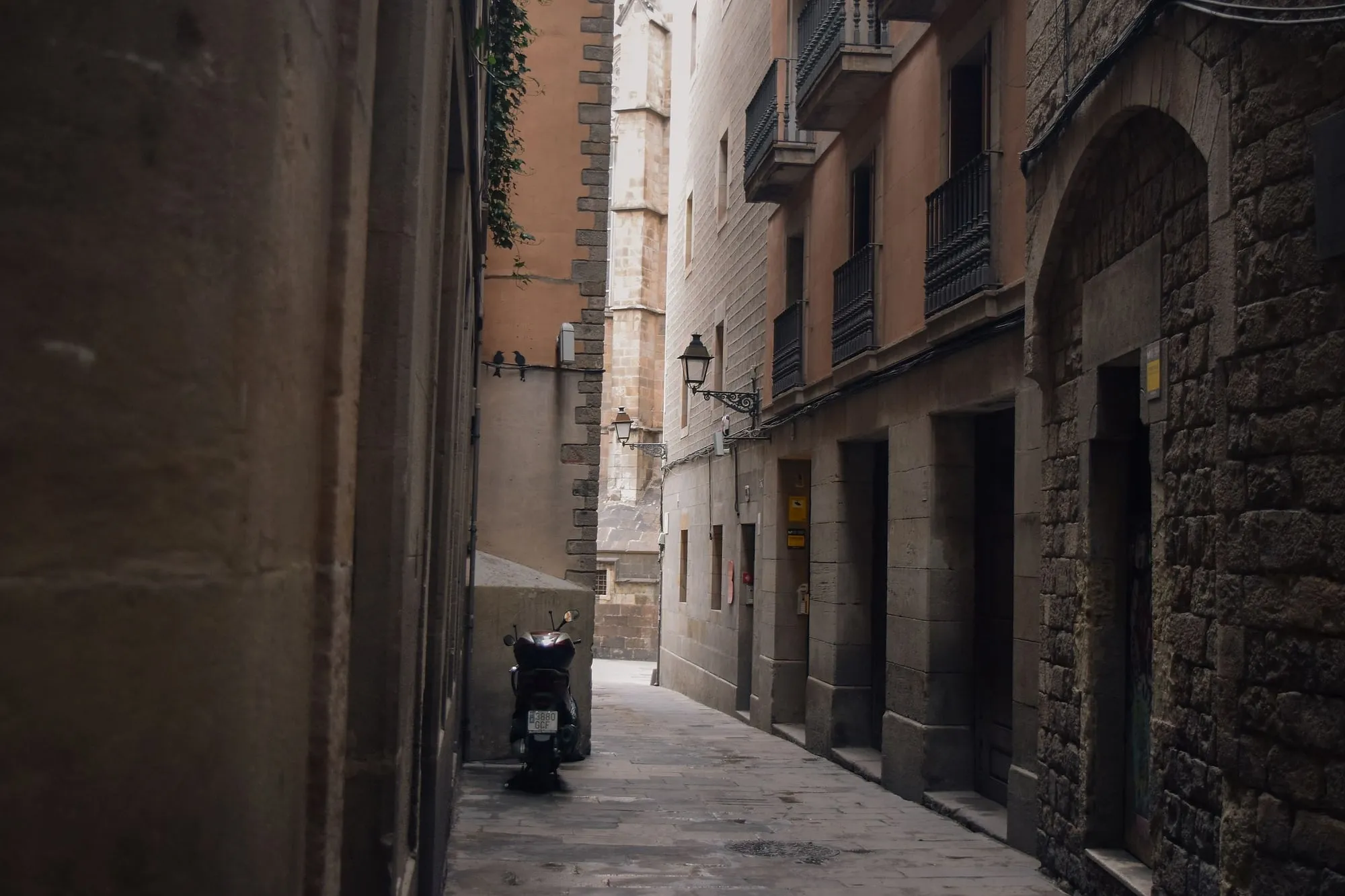
The Gothic Quarter: a neighbourhood that invented itself
Barcelona's most photographed bridge dates from 1928.
- How long it lasts
- 2 h
- Runs in
- EN · ES · CA
- Price
- 15 €
Never more than 20 people
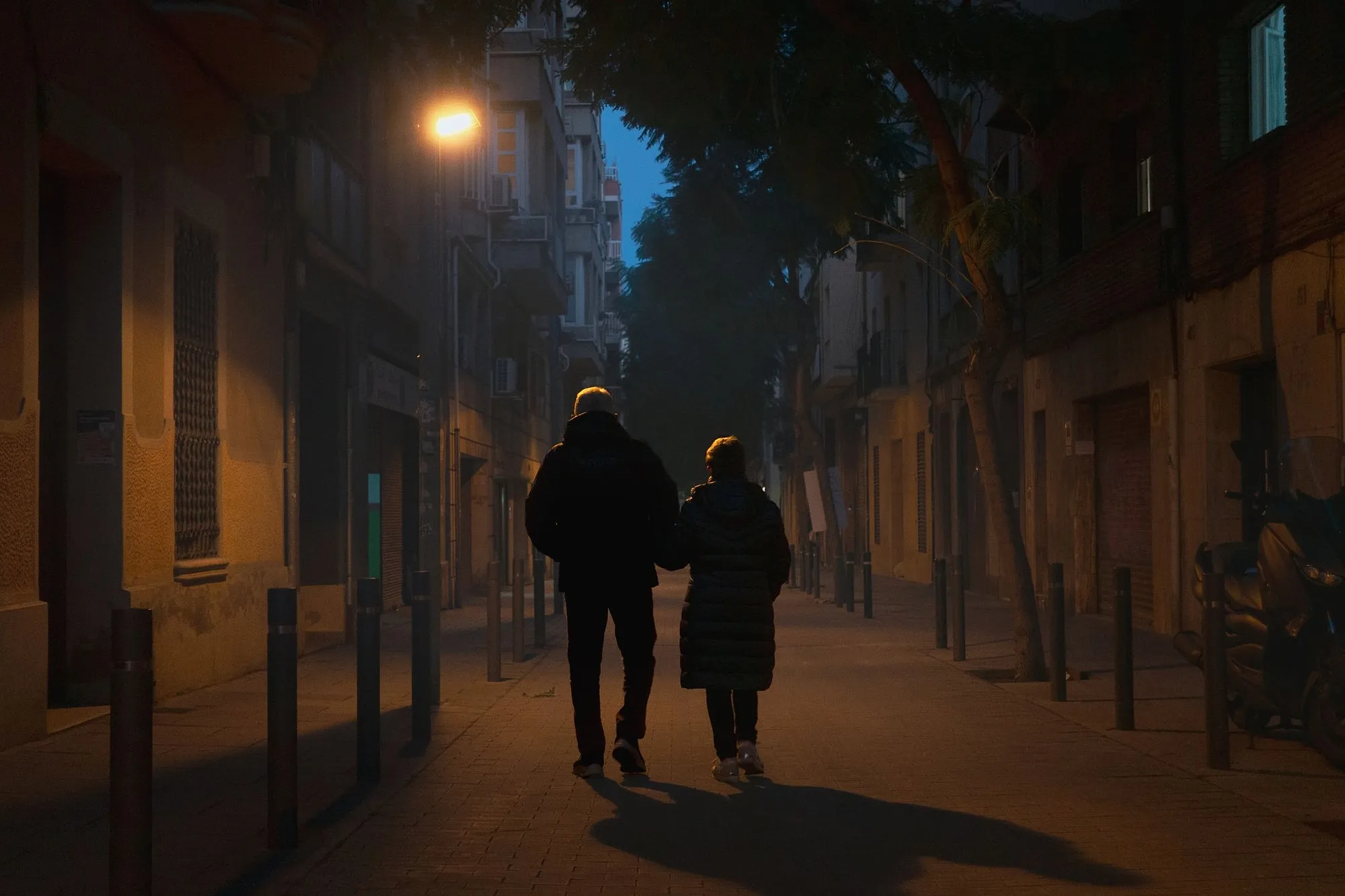
The Gothic Quarter after dark
By day it is a crowded stage set. By night it is a narrow city.
- How long it lasts
- 2 h
- Runs in
- EN · ES · CA
- Price
- 18 €
Never more than 20 people
More in the journal
The Gothic Quarter
- One of these houses was taken apart and rebuilt somewhere else
- Last month the state declared one building on this street a site of democratic memory
- The number everyone quotes about this roof is not published by anyone who would have to stand behind it
- The Roman city is still there, and most of it is free to look at
- The city history museum has eighteen buildings and most visitors have been to one
- The ring roads are the wall, and the city dates the same wall twice, twelve years apart