
Gothic Quarter
Last month the state declared one building on this street a site of democratic memory
It is the road every visitor crosses without looking, between the Gothic Quarter and the Born. It is also the newest piece of officially recognised memory in Barcelona — the declaration is dated last month.
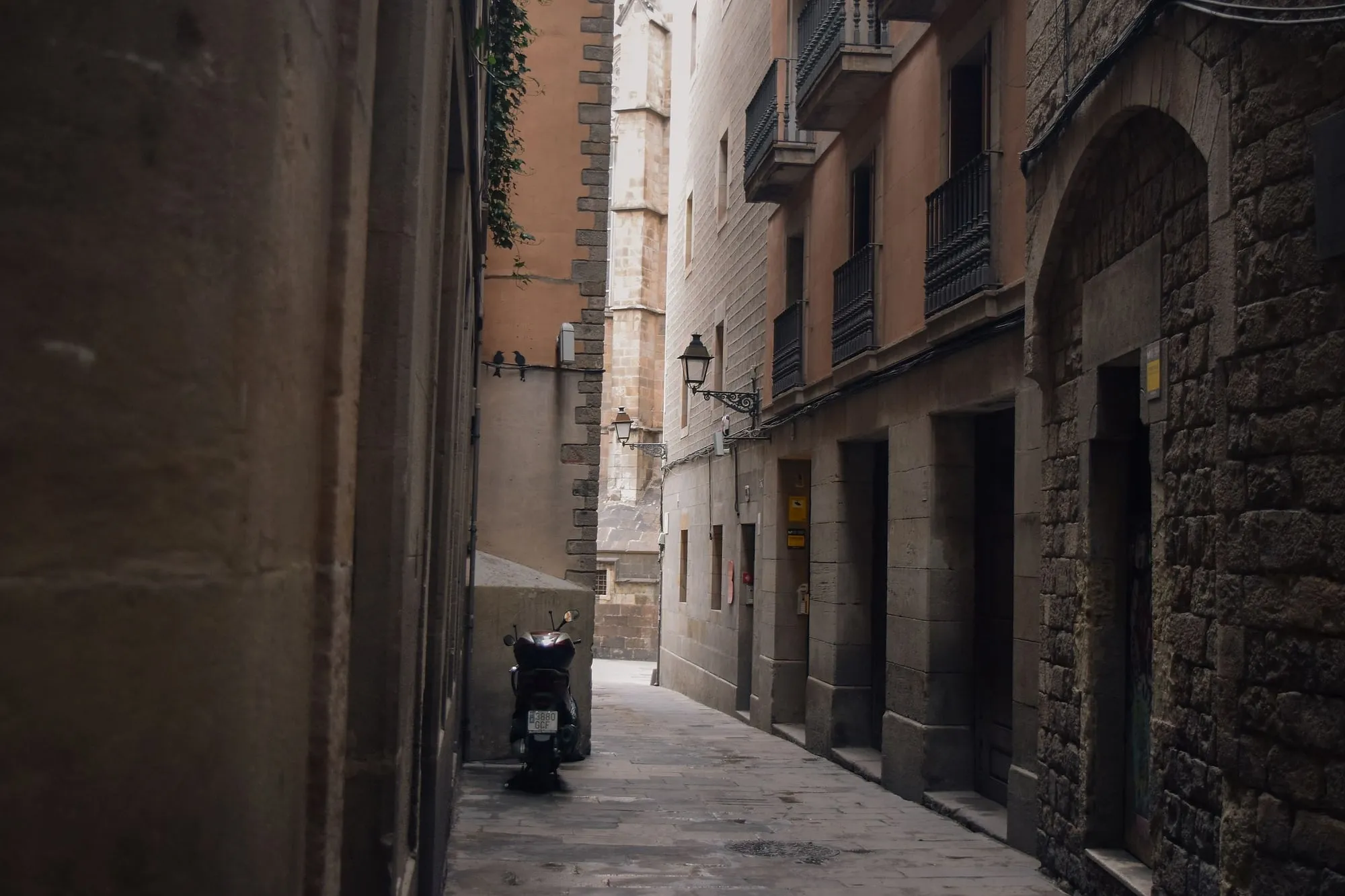
Every visitor to the old city crosses this street, twice, without thinking about it. It is the road between the Gothic Quarter and the Born, four lanes of traffic and a lot of banks, and it reads as the boring bit between two interesting bits.
It is the most recently declared site of official memory in Barcelona. The paperwork is dated last month.
First, what the street is
Via Laietana was cut straight through the medieval fabric of the old town. The city archive’s account of the opening ceremony, on 10 March 1908, has the king there in person:
The reform was solemnly inaugurated on 10 March 1908, in the presence of King Alfonso XIII, accompanied by the prime minister, Antonio Maura, and the mayor, Domingo Sanllehy.
And then the cost, in the archive’s own words:
The demolitions lasted five years and finished off 2,200 dwellings. The owners were compensated, but the immense majority of the inhabitants were tenants who had to leave for other parts of the city without receiving any compensation.
The urban operation meant demolishing more than 200 buildings and evicting 10,000 people.
Read the unit on the first figure. Dwellings, not houses — a tenement is one building and many homes, which is why 200-odd buildings held 2,200 of them. And read the second sentence twice, because it is the one that never makes it into a caption: the owners were paid and the ten thousand people who actually lived there were not.
Two internal wobbles in the same source, said out loud: its introduction says hundreds of buildings where its body says more than 200, and it describes the street as 900 metres long and almost a kilometre while the city’s street register gives 1,037.6 metres.
That is the wound the rest of the old town is still arranged around. It is why a fifteenth-century house had to be taken apart and rebuilt on Plaça del Rei, why the Roman wall on Carrer de la Tapineria is suddenly visible in photographs from the 1940s when it was not in 1917, and why Santa Maria del Mar feels like it is in a different neighbourhood from the cathedral. It is: this street made it one.
We are not going to give you a completion year for the street. Two separate rounds of looking failed to find one that an institution publishes, and the demolitions and the buildings that replaced them ran on for decades.
What the city’s street register does record is that the name has moved around. The current name Via Laietana was approved on 7 March 1939, and the register’s list of former names reads: Layetana, Claris, Buenaventura Durruti, Bilbao, Núm. 30, Gran Vía Layetana, Lletra A. It started life as a letter on a plan — street A — and it has been named after an anarchist militia leader and, later, after a seventeenth-century Catalan president. If you have read that it was once Avinguda d’Alfons III, that is not in the register.
Number 43
On the west side, a heavy stone building with a police sign on it.
On 13 July 2026 the Secretaría de Estado de Memoria Democrática signed a resolution declaring it a Lugar de Memoria Democrática. It was published in the Boletín Oficial del Estado on 17 July 2026 and took effect that day. The file had been opened a year earlier, on 18 July 2025, under the Ley 20/2022, and reports were commissioned from the contemporary history departments of the Universitat Autònoma de Barcelona and the Universitat de Barcelona.
The BOE’s own account of the building runs like this. It has been in police use since 1929, as the provincial police headquarters. During the Republic it housed the Generalitat’s Comissaria General d’Ordre Públic. From 1941 it was the Francoist Jefatura Superior de Policía and the seat of the Brigada Político-Social, the political police.
In labour circles it had a name: el molino sangriento, the bloody mill.
For the scale, the BOE gives a figure and frames it carefully: a minimum of 4,143 people detained for political activities in Barcelona during the dictatorship, a good part of them taken there.
And the resolution does something that is worth noticing, because it is the sort of thing that gets dropped in the retelling: it explicitly separates the democratic period, stating that since the recovery of democracy the building carece de cualquier vinculación con las prácticas represivas — has no connection whatever with repressive practices.
What the declaration does, and what it does not
This is where most accounts of it go wrong, so plainly:
- The building belongs to the Ministry of the Interior and is still an operational police headquarters. The declaration does not change that, and says so.
- It imposes no specific protection measures. What it brings is signage and interpretation.
- It is an act of the Spanish state, not of the Generalitat and not of the city. A municipal espai de memòria and a Lugar de Memoria Democrática under the Ley 20/2022 are two different things, and only the second is a formal legal declaration. Do not let anyone tell you the city did this.
There has been talk of a memorial space inside the building. What exists is a stated intention and this declaration, which expressly does not change the use. Anything more definite than that, we could not source.
The two institutions do not use the same word
Here is a small discrepancy that says a lot.
The city’s interpretative lectern outside the building and the state’s resolution reproduce what is substantially the same paragraph about the anti-Francoists detained and tortured there. The city says desenes — dozens. The BOE says centenares — hundreds.
Same passage, two orders of magnitude apart, published by two arms of the same set of institutions. We are not resolving it and neither has anybody else. Where the numbers are solid is the BOE’s 4,143 detentions across the city, which is a floor and is described as one.
What there is to see
The building is a working police station. You are not going in.
What is public is the pavement. The Ajuntament installed an interpretative lectern outside on 26 March 2019, titled El 43 de la Via Laietana. Memòria de la repressió. That is the whole visit and it takes two minutes, and it is on the direct line between the cathedral and Santa Maria del Mar, so you will be walking past it anyway.
Reading a sign on a pavement is a strange, undramatic thing to recommend. It is also the only way most people will ever stand still on this street.
The street was rebuilt again, and finished last year
If you were here before 2022 you saw a different road.
Works began on 1 March 2022. The second phase ran from September 2023, twenty-one months, on the stretch between Colom and Antoni Maura. The remodelled street was inaugurated on 29 June 2025: three years of works, at a cost the city gives as 38.16 million euros.
What changed: pavements widened to 4.05 metres, from stretches that had been 2.6 metres, and the traffic cut from five lanes to three, with a segregated cycle lane.
Two honest notes. The design shifted during the works — a 2023 municipal announcement described a single downhill lane, and what was delivered in 2025 has two. And there was a court ruling about the reform; we have not read it, so we are not going to tell you that the project went through unopposed, which is the impression an official-figures-only account leaves.
Why a walking tour cares
Because Via Laietana is the exact seam where the two arguments this neighbourhood runs on meet.
On one side, the invented Gothic Quarter: a historic centre assembled, moved and monumentalised in the twentieth century, largely between 1908 and the 1960s. Via Laietana is the cut that made that operation necessary and possible.
On the other, number 43: the twentieth century in the same street, in a building nobody moved, monumentalised only last month and only with a sign.
Our Gothic Quarter walk starts at the Roman gate and finishes on Plaça del Rei, so it works the west side of this street for two hours. The after-dark version does the same ground when the traffic has thinned and you can hear how much of the neighbourhood’s noise is this one road.
Both are told by an actor rather than recited, and neither of them dramatises this particular building, because the BOE does that job better than we could.
If you are working out what else is in these streets: what to see in the Gothic Quarter. If you want the same subject at the other end of the city, the shelters people dug under their own squares are the civilian half of the same twenty years.
One of the façades displaced by this street was rebuilt twice and ended up four hundred metres away, on Plaça de Sant Felip Neri. And the same operation, two centuries earlier and on a far larger scale, is under the old Born market: the streets of 1700.
Where this comes from
- Resolución de 13 de julio de 2026 (BOE núm. 173, ref. BOE-A-2026-15658)Boletín Oficial del Estado · Secretaría de Estado de Memoria DemocráticaThe declaration of Via Laietana 43 as a Lugar de Memoria Democrática, with effect from its publication on 17 July 2026; that the building belongs to the Ministerio del Interior and houses the Jefatura Superior de Policía in Catalonia; that the declaration does not change the use of the building and imposes no specific protection measures; the building's sequence — provincial police headquarters from 1929, then the Generalitat's Comissaria General d'Ordre Públic, and from 1941 the Francoist Jefatura Superior and seat of the Brigada Político-Social; the name it carried in labour circles, «el molino sangriento»; a minimum of 4,143 people detained for political activities in Barcelona under the dictatorship; and the explicit statement that after the recovery of democracy the building «carece de cualquier vinculación con las prácticas represivas».
- Incoación del expediente, 18 de julio de 2025 (BOE de 22 de julio de 2025, ref. BOE-A-2025-15210)Boletín Oficial del Estado · Secretaría de Estado de Memoria DemocráticaThat the file was opened on 18 July 2025 under articles 49 to 53 of the Ley 20/2022 de Memoria Democrática, and that reports were requested from the contemporary history departments of the Universitat Autònoma de Barcelona and the Universitat de Barcelona.
- El 43 de la Via Laietana. Memòria de la repressióAjuntament de Barcelona · Programes de Memòria DemocràticaThe municipal interpretative lectern installed outside the building on 26 March 2019 — and the wording that differs from the state's: the city says «desenes» of anti-Francoists where the BOE, reproducing the same passage, says «centenares».
- Via Laietana — registre municipal de vies públiquesAjuntament de Barcelona · Nomenclàtor dels carrers (dades obertes)That the current name was approved on 7 March 1939; the street's length of 1,037.6 m; and its list of former names — Layetana, Claris, Buenaventura Durruti, Bilbao, Núm. 30, Gran Vía Layetana and Lletra A — which does not include «Avinguda d'Alfons III».
- La construcció de la Via LaietanaAjuntament de Barcelona · Arxiu Municipal (Arxius Oberts)The ceremonial start of 10 March 1908 with Alfonso XIII present, the five years of demolitions, the 2,200 dwellings they took, and that the owners were compensated and the tenants were not.
Everything above that carries a date, a figure or a name is checked against these before it is published. Where we could not find a source, the page says so.
Quick answers
- What is Via Laietana?
- The wide street cut straight through Barcelona's medieval fabric between the Gothic Quarter and the Born. The city archive dates the ceremonial start to 10 March 1908, with King Alfonso XIII present, and records five years of demolitions that took 2,200 dwellings — noting that the owners were compensated and the tenants, who were most of the people living there, were not.
- What is Via Laietana 43?
- The headquarters of the Spanish police in Catalonia, and a documented site of repression. On 13 July 2026 the Secretaría de Estado de Memoria Democrática declared it a Lugar de Memoria Democrática; the resolution was published in the Boletín Oficial del Estado on 17 July 2026. The building has been in police use since 1929 and became the seat of the Francoist Brigada Político-Social in 1941.
- Does the memory declaration change what the building is used for?
- No. The resolution is explicit that it does not alter the use of the building, which belongs to the Ministry of the Interior and remains an operational police headquarters. What the declaration brings is signage and interpretation, not protection measures or a change of function.
- Why does Via Laietana look so different from the streets around it?
- Because it is a hundred years younger than they are and it was cut through them. Everything on either side is medieval street plan; the road itself, and the blocks that line it, filled in through the twentieth century. The mismatch you feel crossing it is the point at which two different centuries meet.
- Has Via Laietana been rebuilt recently?
- Yes. Works began on 1 March 2022 and the remodelled street was inaugurated on 29 June 2025 — three years of work, at a cost the city gives as 38.16 million euros. The pavements were widened to 4.05 metres, from stretches that had been 2.6 metres, and the traffic lanes were cut from five to three with a segregated cycle lane.
- Can you visit Via Laietana 43?
- It is a working police station, so no. What is public is the pavement outside: the city installed an interpretative lectern there on 26 March 2019, titled «El 43 de la Via Laietana. Memòria de la repressió». That is what there is to see, and it takes two minutes.
The tours this piece is about
The Gothic Quarter: a neighbourhood that invented itself
Barcelona's most photographed bridge dates from 1928.
- How long it lasts
- 2 h
- Runs in
- EN · ES · CA
- Price
- 15 €
Never more than 20 people
The Gothic Quarter after dark
By day it is a crowded stage set. By night it is a narrow city.
- How long it lasts
- 2 h
- Runs in
- EN · ES · CA
- Price
- 18 €
Never more than 20 people
More in the journal
The Gothic Quarter
- Neither of the Renaissance façades on this square was rescued from a bomb, and the city's own page implies they were
- One of these houses was taken apart and rebuilt somewhere else
- The number everyone quotes about this roof is not published by anyone who would have to stand behind it
- Barcelona has written down, to two decimal places, how much of this market is allowed to be a snack bar
- The Roman city is still there, and most of it is free to look at
- The city history museum has eighteen buildings and most visitors have been to one