
Gothic Quarter
One of these houses was taken apart and rebuilt somewhere else
Not a scandal and not a secret: a list of what the twentieth century did to the old town, building by building, with the years attached.
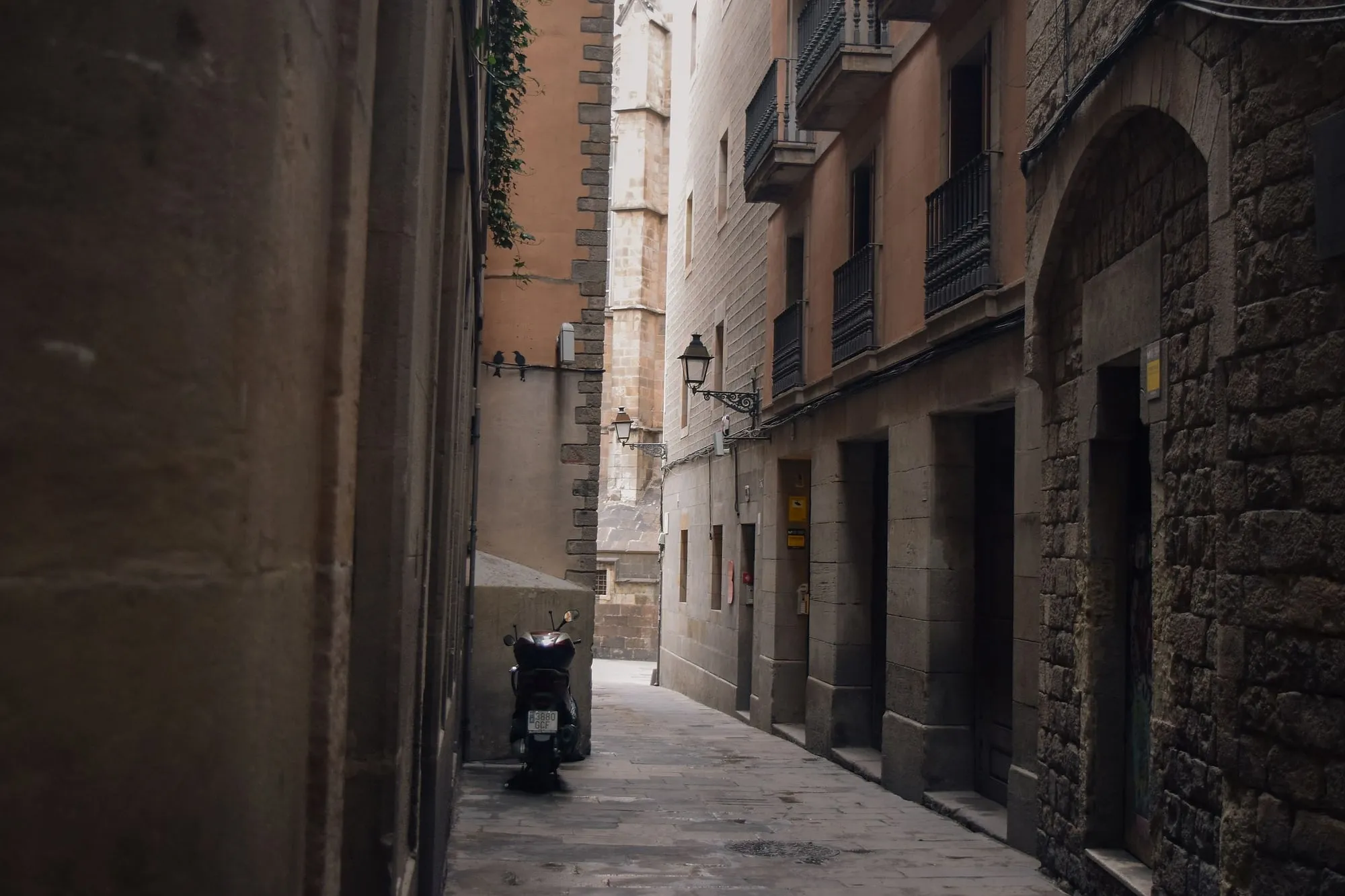
The Gothic Quarter is often described as though it had simply survived. It did not simply survive. Parts of it were cut through, parts were dug out from inside later buildings, one house was carried across the neighbourhood, and the front of the cathedral is younger than the London Underground.
None of this is a revelation. All of it is documented by the city that did it. It is just never in the caption.
First, the wound: Via Laietana
You cannot understand any of the rest without this. Between the cathedral quarter and the Born, the city drove a wide new street straight through the medieval fabric. The works began in 1908 — the ceremonial start was in March of that year, with the king present — and the street was substantially open by 1913, with its buildings filling in through the twenties and thirties.
Watch the unit on the numbers here. The figure that circulates — 1,990 — belongs to the encyclopedia and is for the whole three-street interior-reform plan, not for Via Laietana on its own. The city archive does publish a figure for this street: the demolitions ran for five years and took 2,200 dwellings with them. Dwellings, not houses — a tenement is one building and many homes, and the archive is careful to add that the owners were compensated and the tenants, who were most of the people living there, were not.
What is documented is better than a number anyway. So many old façades were being taken down and stacked in municipal warehouses that as early as 1908 the architect Jeroni Martorell was proposing that all of it could be reassembled somewhere near the cathedral.
That is the engine of everything below. Once you cut a street like that, you are left with buildings standing in the wrong place, façades in crates, and a city that has to decide what to do with the pieces. The street itself has its own page now, including the building on it that the Spanish state declared a site of democratic memory in July 2026.
The house that was carried
The Casa Clariana-Padellàs is a late-Gothic merchant’s house of the fifteenth and sixteenth centuries. It stood on Carrer dels Mercaders, and Via Laietana was coming through it.
So it was taken apart and rebuilt on Plaça del Rei around 1930 and 1931. Stone by stone — the city’s own report uses the phrase pedra a pedra — onto a square where it had never stood. Its foundations stayed behind on Carrer dels Mercaders and were dug up again later.
Then the story does something better than either half of it deserves. Digging the foundations for a fifteenth-century house on its new site is how the city found the Roman city underneath Plaça del Rei — the streets, the dyeing works, the wine cellar, the garum factory, all of which are now the oldest layer of Barcelona you can visit. The building has been the entrance to the city’s history museum since 1943.
A relocated Gothic house is the reason anybody knows what is under the square. Barcelona is full of this sort of thing.
The face of the cathedral is from 1887
The cathedral itself is real and it is medieval: works began on 1 May 1298 and the cathedral says the building was practically finished by the middle of the fifteenth century. The 1448 that circulates as its end date is not the body of the church — it is the year the cloister was finished, and the Generalitat’s heritage record leaves the end date open altogether. We had that wrong here until we went and read it.
The front of it — the one in your photograph, the one with the spire — is neo-Gothic and it is from the turn of the twentieth century. In 1886 the banker Manuel Girona i Agrafel decided to pay for it himself; the project by Josep Oriol Mestres and August Font was approved the following year; by 1890 the façade was essentially finished; and Font’s spire was completed in 1912. The architects’ own institute titled its exhibition on the subject the façade of Barcelona cathedral, 1887–1913, which is where the dates you usually see come from.
The city archive’s account is emphatic on one point: unlike the great cathedral campaigns elsewhere in Europe, this one had no public money at all. A medieval church wearing a nineteenth-century face, financed entirely by one banker and finished by his children. That is a better fact than “the cathedral is Gothic”.
The façade that travelled, and the city’s own word for it
The Casa Clariana-Padellàs is not the only one, and the Ajuntament has a name for this category of building: edificis viatgers — travelling buildings.
The guild house of the shoemakers, a Renaissance building of around 1565, stood on Carrer de la Corríbia. That street was demolished in its entirety in 1943 to open the Avinguda de la Catedral.
The façade was taken down and kept in a municipal warehouse. It was not recovered until the 1950s, when it was re-erected on Plaça de Sant Felip Neri — enlarged and remodelled by the architect Adolf Florensa, the same man who was clearing and restoring the Roman wall a few streets away.
So of that building, only the front is old. The interior is 1950s. It is standing on a square it never stood on, having spent a decade in storage.
A second façade on the same square has a contested origin — one municipal account sends it from Corríbia too, a university source says it came out of the Via Laietana clearance. We are naming the one we can source.
The hall that was inside a convent
On the same square, the Saló del Tinell — the great fourteenth-century hall of the royal palace — is genuinely medieval, and for centuries you could not see it. It had been built over and enclosed by the convent of Santa Clara, which occupied the palace.
It was rediscovered in 1937 and the later fabric was stripped away. Nobody moved it and nobody faked it. What happened was an editorial decision about which century the building was allowed to be from.
While you are on that square: the Mirador del Rei Martí, the tall arcaded tower that looks like the most medieval object in Barcelona, is sixteenth century, not fourteenth.
The bridge, and the gate
Two more, briefly, because each has its own page.
The arched, carved bridge on carrer del Bisbe was finished in 1928, and it is the emblem of the whole neighbourhood — what it is actually for, and what the skull is doing under it.
And the Roman gate on Plaça Nova, which is genuinely Augustan, lost the curtain of wall that joined its two towers — demolished in 1823 — acquired Romanesque-looking windows at the top of those towers in 1909 and 1920, was freed from the houses around it between 1942 and 1957, and stands beside an aqueduct arch that the city’s own conservation report calls a recreation made last century. The full account is here.
Even the name is new
Nobody in the Middle Ages called this the Gothic Quarter. The area was known as the cathedral quarter, and the new name arrived with the ambition.
It is in print by 1911, in a magazine article by Ramón Rucabado titled, literally, A Gothic quarter in Barcelona — which argued that between the venerable buildings and new ones strictly subjected to their style, the city could form a true Gothic quarter. By 1930 the tourist press was using the phrase as though it had always been the name of the place.
That is worth pinning down, because the story usually told is that a 1920s tourism campaign coined it. The phrase beats the campaign by a decade, and it began as a proposal rather than a description. The standard academic study of the whole operation is Agustín Cócola Gant’s El Barrio Gótico de Barcelona: planificación del pasado e imagen de marca.
What we have deliberately left out
Because it circulates, sounds good, and we could not find an institution saying it:
- That the Casa de l’Ardiaca was moved back to widen the street. It was not. The city bought it in 1919, the houses outside the wall came down after the Civil War to open the Avinguda de la Catedral, and its façades were remodelled in place between 1955 and 1962 under Florensa.
- A house count for Via Laietana. The 1,990 in circulation is for a different, larger plan. The city archive’s own figure, 2,200, counts dwellings.
- That the guild house of the coppersmiths was also moved to Plaça de Sant Felip Neri. It is named on a schools’ dossier with no origin street and no date, and nowhere else we could reach.
- A list of façades transplanted into Plaça de Sant Iu. The campaign reworked that corner; a specific inventory of relocated fronts is not something we could source.
- That Rubió i Bellver submitted a grand plan for the quarter and had it rejected. What is documented is that he exhibited his visions of the Tàber in the cathedral cloister in 1927 and published a pamphlet on them. The rejection, and the tower said to have been cut from it, we could not source.
- Anything about the skull on the bridge beyond its being part of the design. The stories attached to it belong to folklore and are attributed to nobody.
We would rather have a shorter list that holds.
The version with somebody in it
This is the argument our Gothic Quarter walking tour is built on, walked in the order the streets allow, told by an actor instead of read out. It starts at the Roman gate and finishes on Plaça del Rei, which is roughly the same journey this page just made.
If you would rather work out where any of it fits into a trip: is the Gothic Quarter worth it is the honest yes-and-no, what to see in the Gothic Quarter is the walkable order, and Gràcia or the Gothic Quarter is the one people actually mean when they ask which neighbourhood to pick.
And the clearest single case, which we have since given its own page: the two guild façades on Plaça de Sant Felip Neri, moved here from Via Laietana and from the avinguda de la Catedral — and recomposed on the way.
Where this comes from
- Fitxa 934 — Casa Clariana-PadellàsAjuntament de Barcelona · Carta Arqueològica de BarcelonaThat the house stood at Carrer dels Mercaders 25 and was moved stone by stone to its present site on Plaça del Rei in 1930.
- La construcció de la Via LaietanaAjuntament de Barcelona · Arxiu Municipal (Arxius Oberts)The opening ceremony of 10 March 1908 with Alfonso XIII present, the five years of demolitions, the 2,200 dwellings they took, and that the tenants were not compensated.
- La Catedral — HistòriaCatedral de BarcelonaManuel Girona paying for the façade and its two towers, to Josep Oriol Mestres's plans, and the lantern tower finished in 1913.
- El Barri Gòtic: la construcció d'un nomArxiu Municipal de Barcelona · «BCN Quaderns d'Història» (RACO)Ramon Rucabado's 1911 article in «La Cataluña» proposing a «verdadero barrio gótico», and Florensa's later verdict that the name caught on for tourist reasons.
Everything above that carries a date, a figure or a name is checked against these before it is published. Where we could not find a source, the page says so.
Quick answers
- Is the Gothic Quarter in Barcelona real or fake?
- Both, and the proportions vary street by street. The Roman gate is Augustan, the cathedral behind its face is fourteenth and fifteenth century, and the royal hall on Plaça del Rei is genuinely medieval. The cathedral's front went up between 1886 and 1912, the bridge on carrer del Bisbe is from 1928, one house on Plaça del Rei was carried there from another street around 1930, and a guild façade on Plaça de Sant Felip Neri spent the 1940s in a municipal warehouse.
- Which building in the Gothic Quarter was moved?
- The Casa Clariana-Padellàs, a late-Gothic merchant's house that stood on Carrer dels Mercaders. It was dismantled and re-erected on Plaça del Rei around 1930 and 1931 because the cutting of Via Laietana had put it in the path of the new street. It is now the entrance to the city history museum. The city calls buildings like this edificis viatgers, travelling buildings, and there is more than one.
- When was the Barcelona cathedral façade built?
- Six centuries after the building behind it. The banker Manuel Girona i Agrafel decided in 1886 to pay for it himself, the project was approved the following year, the façade was essentially finished by 1890 and the central spire was completed in 1912. There was no public money in it at all.
- How old is the name Barri Gòtic?
- The name is modern, and it started as a proposal rather than a description. The area was known as the cathedral quarter; the phrase appears in print in 1911, in a magazine article arguing that Barcelona could go and form a true Gothic quarter. The usual story that a 1920s tourism campaign coined it is out by a decade.
- Does knowing this ruin the neighbourhood?
- It has the opposite effect for most people. A street that was simply old is a backdrop; a street that somebody assembled on purpose, and you can say when and why, is a decision you can argue with. It gets more interesting, not less.
The tours this piece is about
The Gothic Quarter: a neighbourhood that invented itself
Barcelona's most photographed bridge dates from 1928.
- How long it lasts
- 2 h
- Runs in
- EN · ES · CA
- Price
- 15 €
Never more than 20 people
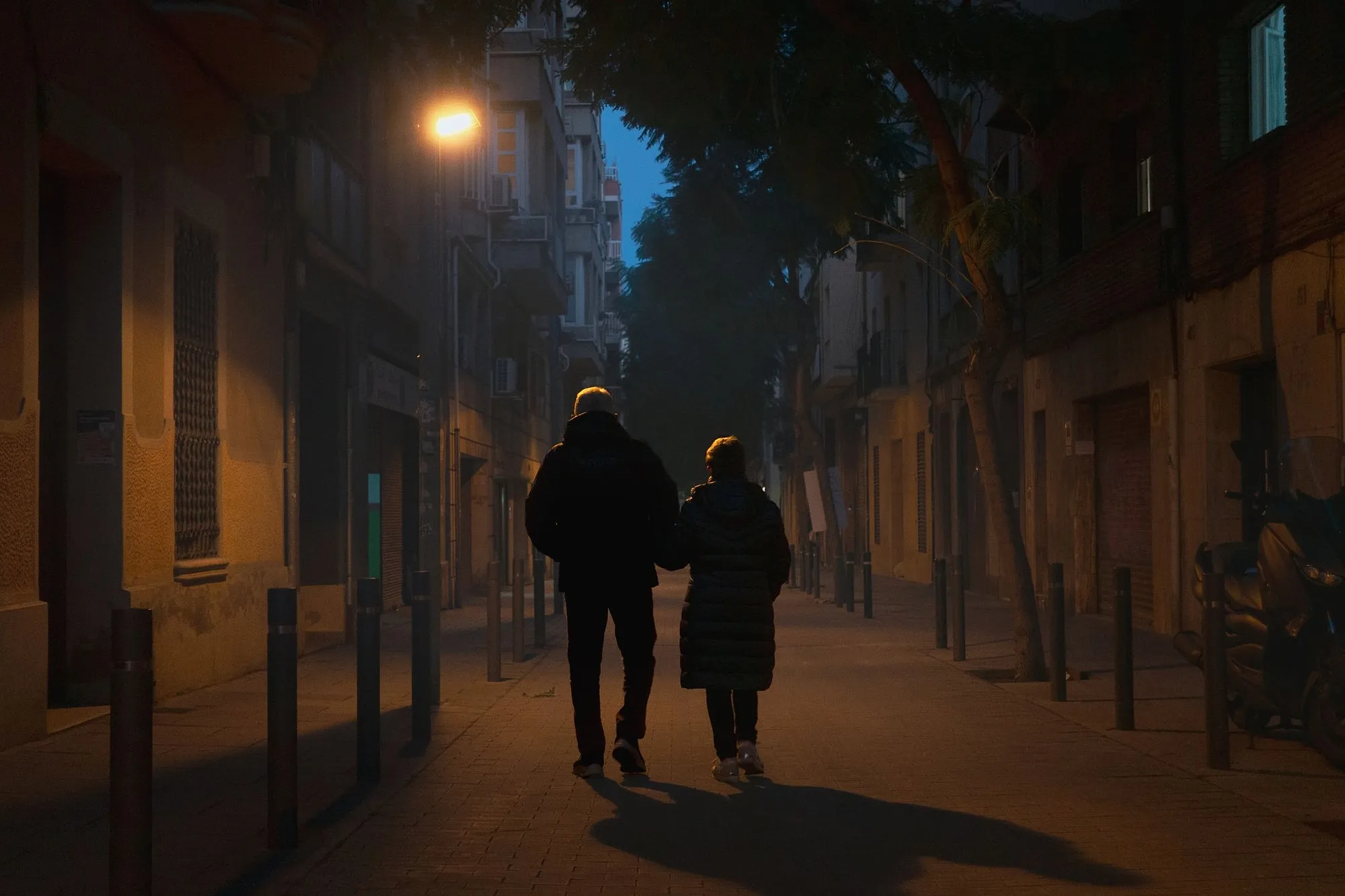
The Gothic Quarter after dark
By day it is a crowded stage set. By night it is a narrow city.
- How long it lasts
- 2 h
- Runs in
- EN · ES · CA
- Price
- 18 €
Never more than 20 people
More in the journal
The Gothic Quarter
- Nobody walks across the Pont del Bisbe, and that is what it is for
- Neither of the Renaissance façades on this square was rescued from a bomb, and the city's own page implies they were
- Last month the state declared one building on this street a site of democratic memory
- The number everyone quotes about this roof is not published by anyone who would have to stand behind it
- Barcelona has written down, to two decimal places, how much of this market is allowed to be a snack bar
- The Roman city is still there, and most of it is free to look at