
Gràcia
A baker in Gràcia made a promise in 1828, and the neighbourhood has been throwing sweets at itself ever since
Tonnes of boiled sweets thrown from horses and lorries at a crowd holding out buckets and upturned umbrellas, on a working weekday in March, because of a baker's private vow.
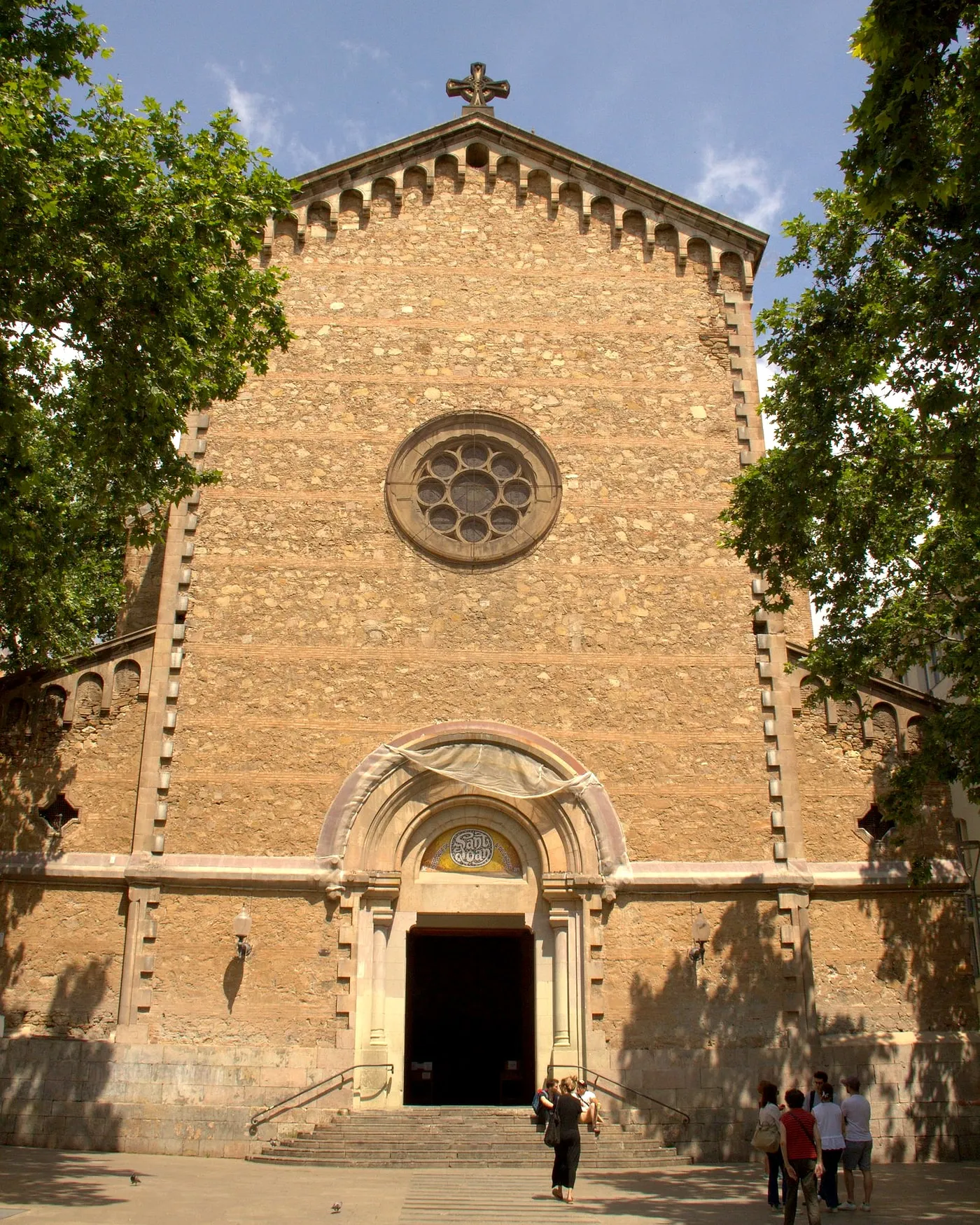
Barcelona has a festival where people stand in the street holding out buckets and upturned umbrellas while riders on horseback throw industrial quantities of boiled sweets at them.
It happens in Gràcia, on 3 March, on a weekday, and almost no visitor has heard of it — partly because it is in the wrong month for a city break, and partly because the Gràcia festival everyone has heard of is the one in August.
They are not the same thing and they are not even the same kind of thing.
It started with one man’s private vow
The Ajuntament’s cultural pages trace it exactly:
The origin of the festival of Sant Medir is found in Gràcia, and specifically in a promise made in 1828 by the baker Josep Vidal i Granés, who had his business on carrer Gran.
He said that if a health problem was resolved, he would go on pilgrimage to the hermitage of Sant Medir every year.
He started that year. Then, in the city’s own phrasing, relatives, friends and more groups of people gradually joined, and they later organised themselves into colles.
That is the whole origin. Not a guild, not a parish, not a municipal decision. One baker on the main street of what was then an independent town, keeping a promise, and the town joining in until it became institutional.
Gràcia does this. It is the same instinct that built the neighbourhood’s clubs and its choral societies when it joined Barcelona in 1897 with almost no public buildings: something needs doing, so a group of neighbours does it and gives itself a name.
The beans
Here is the detail that makes the whole thing make sense.
On the first parades home from the pilgrimage, the baker
threw broad beans at the public as a homage to the saint, who — according to the legend — sowed them.
Because the legend is about beans. Sant Medir, in the version the Ajuntament tells, was a farmer living in the Collserola hills near Sant Cugat. In the year 303, during Diocletian’s persecution, the bishop Sever of Barcelona was fleeing the city, came across Medir sowing broad beans, explained why he was hiding and — determined to die rather than renounce his faith — asked him to tell the truth if anyone asked. After the bishop had gone, the beans grew miraculously. When the pursuers came upon Medir he told them the truth: Sever had passed by a while ago, while he was sowing beans. They assumed he was mocking them and protecting the bishop, and took him away. Both were imprisoned and martyred.
So the sweets thrown at your head in Gràcia in March are broad beans, four times removed. Over the years the beans were replaced by sweets —
to the point that today the celebration is called the sweet festival.
What actually happens
Morning. The colles come out and parade through the streets of the neighbourhood, in order of seniority, before setting off on the pilgrimage.
Midday. The colles of Gràcia, Sarrià and la Bordeta reach the hermitage of Sant Medir, where a mass is held.
Eight in the evening. The colles come back, and this is the big one — the Ajuntament calls it the busiest procession, with adults and children filling the streets of the neighbourhood to see the colles and collect as many sweets as they can, equipped with bags, buckets and umbrellas.
The umbrella is not a joke. It is the standard tool.
Every colla is organised identically, by protocol: led by the cos de bandera, which is three riders on a horse and the banner that identifies the colla, carried by the standard-bearer.
The rule that tells you whose festival it is
The tradition is that Sant Medir is celebrated on a working day, both in Gràcia and in Sarrià - Sant Gervasi, so that if 3 March falls on a Sunday, the festival is moved to the 4th.
Read that twice. Most festivals move towards the weekend. This one moves away from it.
A festival that insists on being on a Tuesday is a festival for the people who live there. Nobody is scheduling this for visitors, and the effect is that Sant Medir has stayed what it was: a neighbourhood doing something for itself on a day off work that most of them have had to take.
It is the clearest single answer to a question this journal keeps circling — what makes Gràcia different from the rest of Barcelona, and why residents there score their own neighbourhood the way they do.
What to do if you are here in early March
Do not plan a route. Stand on a main street of Gràcia in the evening and wait. The Ajuntament’s own description of the eight o’clock procession is the plan.
Bring something to catch with. Everyone else will have.
Go and look at the monument first. In plaça de Trilla there is a monument to the Sant Medir colles by Núria Tortras, from 1969, and on the third Sunday of February there is a floral offering there. Most people who watch the parade have never noticed the statue.
And know that it is not only Gràcia. Sarrià-Sant Gervasi and la Bordeta have their own colles and their own parades — la Bordeta always on the Sunday after the feast day. Gràcia is where it started and where it is biggest.
⚠️ We are not printing a timetable. The times shift, the route shifts, the colles decide. The Ajuntament’s own page is the place to check the year you come, and it is linked at the foot of this one.
And a note on what a festival is for
The two Gràcia festivals answer each other. The Festa Major in August is the one that gets photographed, and it has grown to a scale that the neighbourhood argues about every year. Sant Medir is on a Tuesday in March, in the cold, and nobody has ever had to write an article about how to survive the crowds at it.
If you want to understand why Gràcia behaves like a town rather than a district, the baker’s promise is a better starting point than the annexation date.
Where this sits on a walk
The festival runs along carrer Gran de Gràcia — the old main street, where the baker had his shop — and through the squares that organise the neighbourhood.
Our Gràcia walk runs daily, morning and evening, in a group of no more than ten. We are closed on 25 December and 1 January.
Where this comes from
- Sant MedirAjuntament de Barcelona · Cultura PopularThat «la festa de Sant Medir és una de les més arrelades a la vila de Gràcia»; that the day is 3 March and that «la tradició és que Sant Medir se celebri un dia feiner, tant a Gràcia com a Sarrià - Sant Gervasi, per la qual cosa si el dia 3 de març s'escau en diumenge, la festa es trasllada al dia 4», while in la Bordeta the parade is always the Sunday after; that «l'origen de la festa de Sant Medir el trobem a Gràcia, i concretament en una promesa que va fer el 1828 el forner Josep Vidal i Granés, que tenia el negoci al carrer Gran», who vowed to make the pilgrimage every year if a health problem was resolved; that in the first parades he «llançava faves al públic com a homenatge al sant, que –segons la llegenda– en sembrava», and that the beans were replaced by sweets «fins al punt que avui la celebració s'anomena dolça festa»; that it is known «principalment per les tones de caramels i llaminadures que es llancen al públic des de cavalls, carrosses i camions»; that in Gràcia the colles parade in order of seniority in the morning before setting off on the pilgrimage, and that at eight in the evening there is the busiest procession, with people collecting sweets «amb bosses, galledes i paraigües»; that at midday the colles of Gràcia, Sarrià and la Bordeta reach the hermitage, where a mass is held; that all colles are led by the «cos de bandera, compost de tres genets dalt d'un cavall i la bandera que identifica la colla, portada pel banderer»; that on the third Sunday of February there is a floral offering at the monument to the colles «(Núria Tortras, 1969) a la plaça de Trilla»; that the Colla Monumental organises an annual walk from Gràcia to the hermitage; that a castellers day brings together the Castellers de la Vila de Gràcia, the Castellers de Sants and those of Sant Cugat; and the legend of Sant Medir, a farmer of Collserola who in the year 303, during Diocletian's persecution, was sowing broad beans when the bishop Sever of Barcelona passed by in flight, and who told his pursuers the truth and was imprisoned and martyred with him.
Everything above that carries a date, a figure or a name is checked against these before it is published. Where we could not find a source, the page says so.
Quick answers
- What is Sant Medir?
- A pilgrimage and a street parade in which colles on horseback, on floats and on lorries throw enormous quantities of sweets to the public. The Ajuntament calls it «una de les més arrelades a la vila de Gràcia» and describes it as being known «principalment per les tones de caramels i llaminadures que es llancen al públic des de cavalls, carrosses i camions».
- When is Sant Medir?
- 3 March. The Ajuntament notes a specific rule: «la tradició és que Sant Medir se celebri un dia feiner, tant a Gràcia com a Sarrià - Sant Gervasi, per la qual cosa si el dia 3 de març s'escau en diumenge, la festa es trasllada al dia 4». A festival that deliberately keeps itself on a working day tells you something about whose festival it is.
- Where did it come from?
- From one man's vow. The Ajuntament: «l'origen de la festa de Sant Medir el trobem a Gràcia, i concretament en una promesa que va fer el 1828 el forner Josep Vidal i Granés, que tenia el negoci al carrer Gran». He said that if a health problem was resolved he would make the pilgrimage to the hermitage of Sant Medir every year. He started that year, and relatives, friends and then whole groups joined him.
- Why sweets?
- Because of beans. On the first parades back from the pilgrimage the baker «llançava faves al públic com a homenatge al sant, que –segons la llegenda– en sembrava». Sant Medir was, in the legend, a farmer sowing broad beans when he met the fleeing bishop Sever. Over the years the beans were replaced by sweets, «fins al punt que avui la celebració s'anomena dolça festa».
- Is Sant Medir the same as the Festa Major de Gràcia?
- No, and confusing them is the standard visitor error. The Festa Major is in August and is about decorated streets. Sant Medir is on 3 March, is about a pilgrimage and thrown sweets, and involves neighbourhoods beyond Gràcia — Sarrià-Sant Gervasi and la Bordeta also have their own colles and parades.
- What is a colla?
- The organised group that makes the pilgrimage and throws the sweets. All of them are structured the same way by protocol: they are led by the «cos de bandera», made up of three riders on horseback and the banner that identifies the colla, carried by the standard-bearer. In Gràcia the colles parade in order of seniority.
- Is there anything to see before the day itself?
- The Ajuntament records that on the third Sunday of February there is a floral offering at the monument to the Sant Medir colles in plaça de Trilla — a work by Núria Tortras of 1969 — and that the Colla Monumental organises a walk from Gràcia up to the hermitage each year.
The tours this piece is about
More in the journal
Gràcia
- Vermouth in Gràcia: how to find it, how it is served, and why we won't give you a list
- Festa Major de Gràcia: instructions, from someone who has to walk through it
- Gràcia imported a Mallorcan bonfire festival and the neighbourhood now treats it as its own
- Gràcia has five festes majors, and the city's page for one of them gives two different months
- Is Gràcia a good place to stay in Barcelona?
- A day in Gràcia, by the clock rather than by the map