
Gràcia
Festa Major de Gràcia: instructions, from someone who has to walk through it
One week in mid-August, whole streets in Gràcia dress themselves from the pavement to the fourth floor, by hand, and compete against each other. It is free, it is extraordinary, and it is not a set.
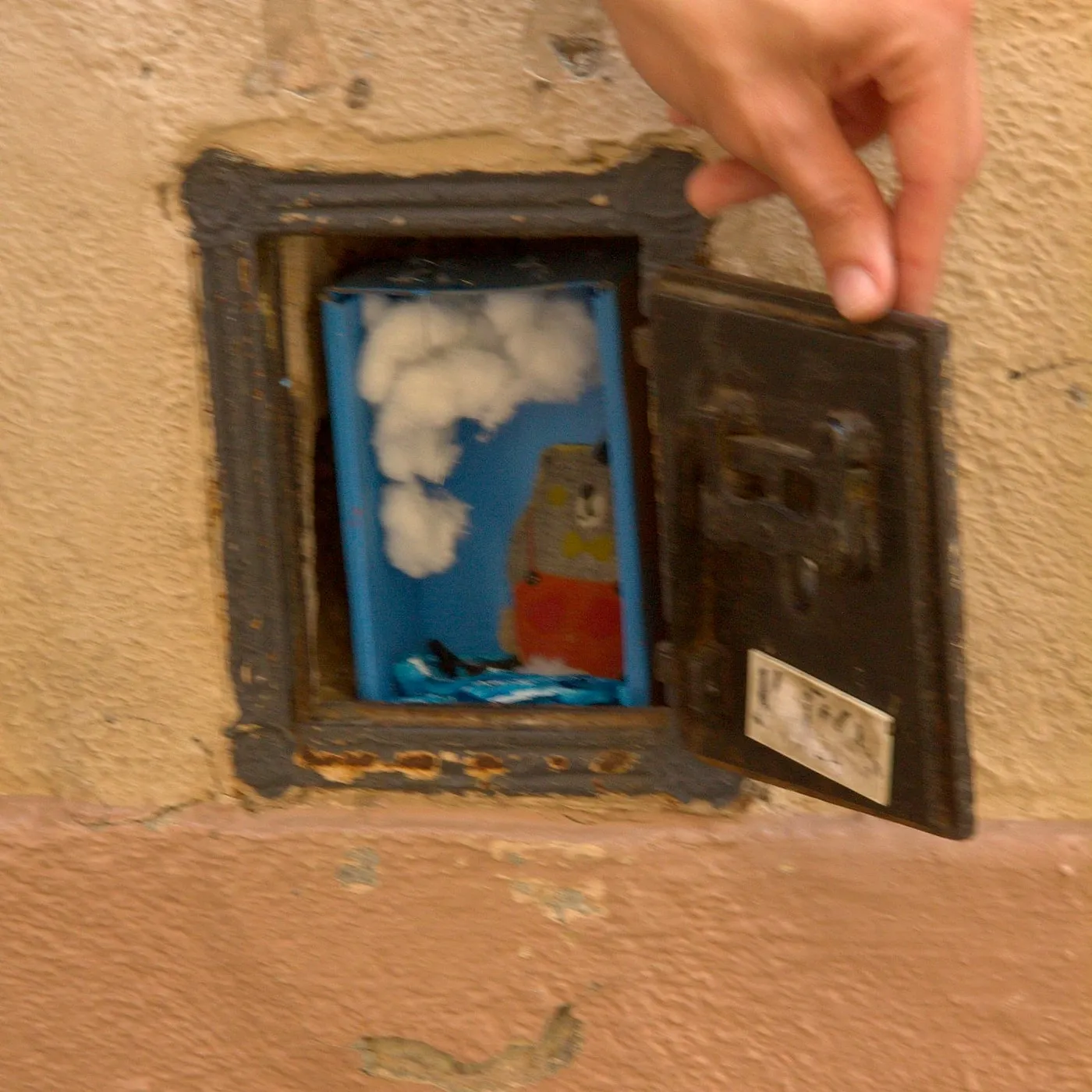
Mid-August, a week, free, in the street. Whole streets in Gràcia cover themselves from the pavement to the fourth floor — a ceiling of hand-made scenery hung across the road — and then compete against the street round the corner. It is not hired in, it is not sponsored scenery, and it is not made by a production company. The people who live in the street make it.
What follows is a set of instructions, in the order you will need them.
Check the dates before you book anything. They sit around 15 August and they move. We are not printing this year’s on a page that will still be here in three years.
Go during the day at least once. The decoration is the point and it is built to be looked at from directly underneath, which you cannot do in a crowd of three deep at midnight. Late morning is empty. Six in the evening is manageable.
Start at the top and walk down. Gràcia slopes. Coming up from Diagonal in August, in that heat, through that many people, is a decision you will regret by the second street.
Look up, then look at the joins. From a distance it reads as spectacle. Close up you can see what it is made of, which is mostly things that were something else first, and that is the part that is genuinely hard to believe.
Expect to queue to enter a street. The busy ones get regulated in single file. This is not bureaucracy, it is the only way the street stays passable.
Do not plan to eat quickly. Everything is full. Everything has been full since two o’clock.
Remember what is above the decoration. The fourth-floor windows behind that ceiling of scenery are bedrooms, and the people in them have a week of noise ahead. They built the thing you are photographing. There is a line between being welcome and being a problem and it is drawn at about the volume of your own voice at one in the morning.
Do not judge Gràcia by this week. Festa Major is the neighbourhood turned up to maximum with the whole city inside it. Charming, exhausting, and a very poor sample. If you want to know what the place is like when it is being itself, that is what to see in Gràcia and the squares, on an ordinary Tuesday — and an ordinary Tuesday, hour by hour, which is the neighbourhood the other fifty-one weeks run on.
Why a town holds a festival like this
Because Gràcia was a town. It was an independent municipality with its own mayor from 1850 until Barcelona annexed it by royal decree on 20 April 1897, and a festa major is what a town holds: its own festival week, organised by the streets themselves and judged against each other. The city grew around it and the format never changed hands.
The long version of how that town worked, and how badly it took the annexation, is in why Gràcia was its own town.
What we have left out on purpose
The exact dates, the winning streets, and the programme. All three change every year, all three are published by the organisers shortly beforehand, and a stale version of any of them is worse than none.
Our Gràcia walking tour runs the rest of the year as well as this week, and in August it goes through a neighbourhood that is busy being a village. Ten people, three hours, ending with vermouth in a celler.
The city’s own official version of the same apparatus — giants, big-heads, a bestiary and a written protocol for who walks in what order — is down in Ciutat Vella, and almost every figure in it was carved between 1987 and 1998: the giants and the correfoc.
If you are weighing up August against the rest of the year, the numbers on both sides — heat, rain, thunderstorms, hotel occupancy — are in when to go to Barcelona.
Where this comes from
- Gràcia (barri de Barcelona)Gran Enciclopèdia CatalanaGràcia as a municipality in its own right from 1850 until the 1897 annexation, with 61,935 inhabitants by then.
Everything above that carries a date, a figure or a name is checked against these before it is published. Where we could not find a source, the page says so.
Quick answers
- When is Festa Major de Gràcia?
- Mid-August, around the week of the 15th, and it runs for several days. Check the year's exact dates before you book flights around it — we deliberately do not publish them here, because a page that is a day out is worse than a page that sends you to look.
- Do you need tickets?
- No. The whole thing happens in the street and it is free. What it costs you is patience: the decorated streets are entered in single file when they are busy.
- Is it good for children?
- During the day, very. The decorations are built to be looked up at and there is a daytime programme in the squares. After about ten at night the streets belong to a different crowd.
- Where do you actually go?
- The decorated streets are scattered across the neighbourhood and the list changes every year, because it depends on which streets have organised themselves. Follow the crowd, or pick up the programme, which appears shortly before.
- Is the rest of the year a bad time to see Gràcia?
- The opposite. Festa Major is Gràcia at maximum volume with the whole city inside it. The neighbourhood the tours are about is the one that exists the other fifty-one weeks.
The tours this piece is about
More in the journal
Gràcia
- The square is not named after the novel, and the statue of the novel spent six years in a different square
- Vermouth in Gràcia: how to find it, how it is served, and why we won't give you a list
- A baker in Gràcia made a promise in 1828, and the neighbourhood has been throwing sweets at itself ever since
- Gràcia imported a Mallorcan bonfire festival and the neighbourhood now treats it as its own
- Gràcia has five festes majors, and the city's page for one of them gives two different months
- Is Gràcia a good place to stay in Barcelona?