
Gràcia
Gràcia imported a Mallorcan bonfire festival and the neighbourhood now treats it as its own
Bagpipes from Mallorca, sung glosses, a correfoc and a bonfire in a Gràcia square, on the coldest weekend of the year — for a saint from a town four hundred kilometres away.
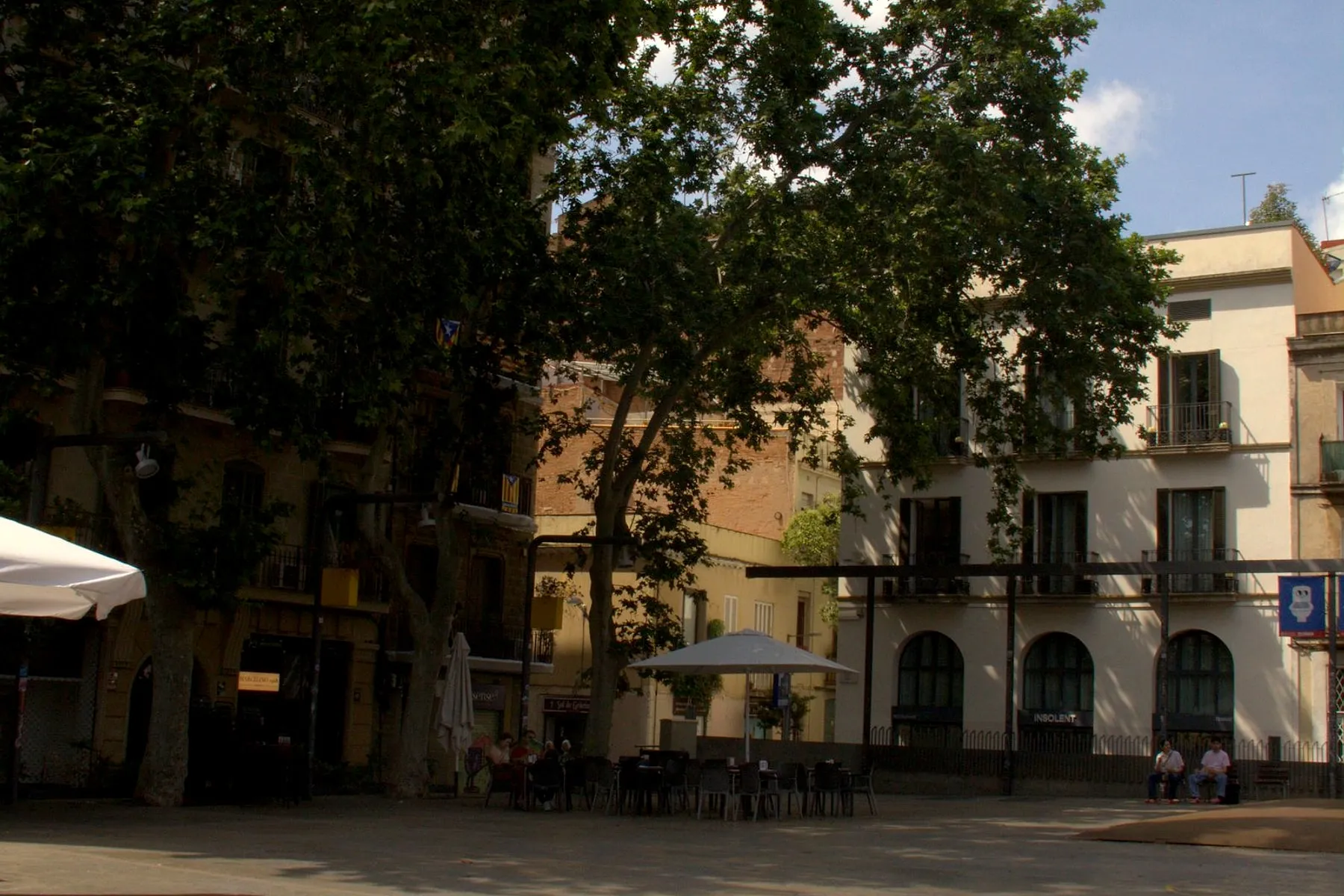
At the end of January, in a square in Gràcia, they light a bonfire and a group of Mallorcan bagpipers plays while people improvise sung verse at each other.
None of that is a Barcelona tradition. All of it is now a Gràcia one, and the city says so in writing.
What it is
The Ajuntament’s description is unusually direct:
The festival of the foguerons of Sant Antoni in the neighbourhood of Gràcia is a Mallorcan celebration transferred to the Barcelona neighbourhood.
It comes from sa Pobla, a town in the north of Mallorca. What happens in Gràcia is a mix: displays of popular culture from both the Principat and the island — balls de capgrossos, sonades de xeremiers, castellers i colles de diables. Big-head dances, Mallorcan bagpipes, human towers, devil troupes.
And then the sentence that makes this worth a page of its own:
Despite being an imported tradition, it has taken root fully in the neighbourhood of Gràcia and the neighbours feel it as their own.
Municipal culture departments do not usually adjudicate on authenticity. This one did, and came down on the side of adoption.
Three days, and what happens on each
Thursday evening. A glosada — improvised sung verse, which is one of the living oral forms of Mallorca — and a tasting of island products at the Centre Artesà Tradicionàrius, Gràcia’s folk-music centre.
Friday. The same centre hosts a concert and a dance with Mallorcan groups, which the city describes, nicely, as warming up the engines for the next day.
Saturday evening. The main event: a great procession with a correfoc of popular culture groups from sa Pobla and from Gràcia, and sometimes an invited group as well. The procession accompanies the authorities and organisers from the district hall to plaça de la Virreina, where they light a great fogueró and open
a night of torrada, popular dancing and singing of gloses with Mallorcan denomination of origin.
A torrada is a grill: things cooked over the fire everyone is standing around. That is the whole festival, and it is a January festival in the proper sense — you go because there is a fire.
Why Sant Antoni
The feast is that of Sant Antoni Abat, who, in the Ajuntament’s phrase, is given by tradition
the patronage of domestic animals, especially those with round feet.
Hoofed animals. Which is why Barcelona also has the Tres Tombs, the horse-and-cart processions around the same date, and why a saint associated with livestock ends up presiding over bonfires in a dense urban neighbourhood that has not had a working animal in it for a century.
What it tells you about Gràcia
This site keeps arriving at the same finding from different directions. Gràcia joined Barcelona in 1897 with almost no public buildings, so its clubs built their own. Its biggest sweet-throwing festival started as one baker’s private vow in 1828. Its streets are decorated every August by the streets themselves, competing.
The foguerons are the same instinct pointed outwards. A community of people from sa Pobla in Barcelona wanted their festival; Gràcia had the halls, the devil troupes and the squares; and thirty-odd years later the city writes that the neighbours feel it as their own.
That is a functioning neighbourhood, and it is the reason Gràcia is worth half a day even though it has no monument in it.
If you are in Barcelona in January
This is the reason to be. Late January is the flattest week of Barcelona’s year — the Christmas cycle is over, the terraces are cold, and most of what a visitor comes for is indoors and busy. A correfoc and a bonfire in a Gràcia square is a genuinely better evening than a queue.
Dress for fire. A correfoc is not a parade you watch from a distance if you do not want it to be. Natural fibres, a hat, closed shoes, nothing you mind sparks on. That applies here exactly as it does to the correfoc in the city’s other festivals.
Go to plaça de la Virreina for the end. It is one of the squares that organise the neighbourhood, and it is where the bonfire is.
And expect Mallorcan, not Catalan, on the microphone. The gloses are sung in the island’s variety, at speed, and half the jokes will go past you. So they will past most of the audience.
⚠️ We are not printing this year’s programme. The dates move within that last January weekend, the acts change, and the organisers and the district publish it themselves. Our link at the foot of the page goes to the city’s own.
Where this sits on a walk
The festival runs between the district hall on plaça de la Vila and plaça de la Virreina, which is the spine of any walk through old Gràcia. The Centre Artesà Tradicionàrius, where the first two nights happen, is one of the neighbourhood’s long line of association-run halls.
Our Gràcia walk runs daily, morning and evening, in a group of no more than ten. We are closed on 25 December and 1 January.
Where this comes from
- Foguerons de Sant Antoni de sa Pobla a GràciaAjuntament de Barcelona · Cultura PopularThat the festival takes place on «dijous, divendres i dissabte de l'últim cap de setmana de gener»; that it is «una celebració mallorquina traslladada al barri barceloní»; that it consists mainly of displays of popular culture from both the Principat and Mallorca, «com ara balls de capgrossos, sonades de xeremiers, castellers i colles de diables, entre més»; that «tot i ser una tradició importada, ha arrelat plenament al barri de Gràcia i els veïns la senten com a pròpia»; that Thursday evening opens with «una glosada i una degustació de productes illencs al Centre Artesà Tradicionàrius», that Friday the same centre hosts «un concert i un ball amb grups mallorquins», and that on Saturday evening there is «una gran cercavila amb correfoc de grups de cultura popular poblers i graciencs», accompanying the authorities and organisers «des de l'ajuntament fins a la plaça de la Virreina, on encenen un gran fogueró i obren la porta a una nit de torrada, balls populars i cantades de gloses amb denominació d'origen mallorquina»; and that the festival is held for the feast of Sant Antoni Abat, «a qui la tradició atorga el patronatge dels animals domèstics, especialment els de peu rodó».
Everything above that carries a date, a figure or a name is checked against these before it is published. Where we could not find a source, the page says so.
Quick answers
- What are the Foguerons de Sant Antoni in Gràcia?
- A Mallorcan festival held in a Barcelona neighbourhood. The Ajuntament describes it as «una celebració mallorquina traslladada al barri barceloní», consisting mainly of displays of popular culture from both Catalonia and Mallorca — «balls de capgrossos, sonades de xeremiers, castellers i colles de diables», among others.
- When does it happen?
- The Ajuntament gives it as the Thursday, Friday and Saturday of the last weekend of January. We are not printing a programme: the dates and the acts are published each year by the organisers and the district, and a page that prints them goes stale.
- Is it really a Gràcia festival if it comes from Mallorca?
- The city answers that itself: «Tot i ser una tradició importada, ha arrelat plenament al barri de Gràcia i els veïns la senten com a pròpia» — despite being an imported tradition, it has taken root fully in Gràcia and the neighbours feel it as their own. That is about as clear an institutional statement of adoption as you will find.
- What happens on each of the three days?
- Thursday evening opens with a glosada — sung improvised verse — and a tasting of island products at the Centre Artesà Tradicionàrius. Friday the same centre hosts a concert and a dance with Mallorcan groups. Saturday evening is the big one: a procession with a correfoc of popular culture groups from sa Pobla and from Gràcia, which accompanies the authorities and organisers from the district hall to plaça de la Virreina, where a great bonfire is lit.
- Why Sant Antoni?
- The Ajuntament says the festival is held for the feast of Sant Antoni Abat, «a qui la tradició atorga el patronatge dels animals domèstics, especialment els de peu rodó» — the patron of domestic animals, and particularly of hoofed ones.
- What is a glosada?
- Improvised sung verse, a Mallorcan tradition, and it is one of the things that makes this festival different from anything else in the Barcelona calendar. The evening at the end of the festival includes «cantades de gloses amb denominació d'origen mallorquina», in the city's phrase.
- Is this the same as the Festa Major de Gràcia?
- No. The Festa Major is in August and is about decorated streets; this is at the end of January and is about fire, bagpipes and sung verse. Gràcia's calendar is fuller than the one festival everybody knows — the district alone has five festes majors as well.
The tours this piece is about
More in the journal
Gràcia
- Vermouth in Gràcia: how to find it, how it is served, and why we won't give you a list
- Festa Major de Gràcia: instructions, from someone who has to walk through it
- A baker in Gràcia made a promise in 1828, and the neighbourhood has been throwing sweets at itself ever since
- Gràcia has five festes majors, and the city's page for one of them gives two different months
- Is Gràcia a good place to stay in Barcelona?
- A day in Gràcia, by the clock rather than by the map