
Gràcia
Vermouth in Gràcia: how to find it, how it is served, and why we won't give you a list
If you do one thing in Gràcia that is not looking at a building, make it vermouth on a Sunday morning. It costs a few euros, it takes twenty minutes, and it is the only part of the neighbourhood that has a fixed timetable.
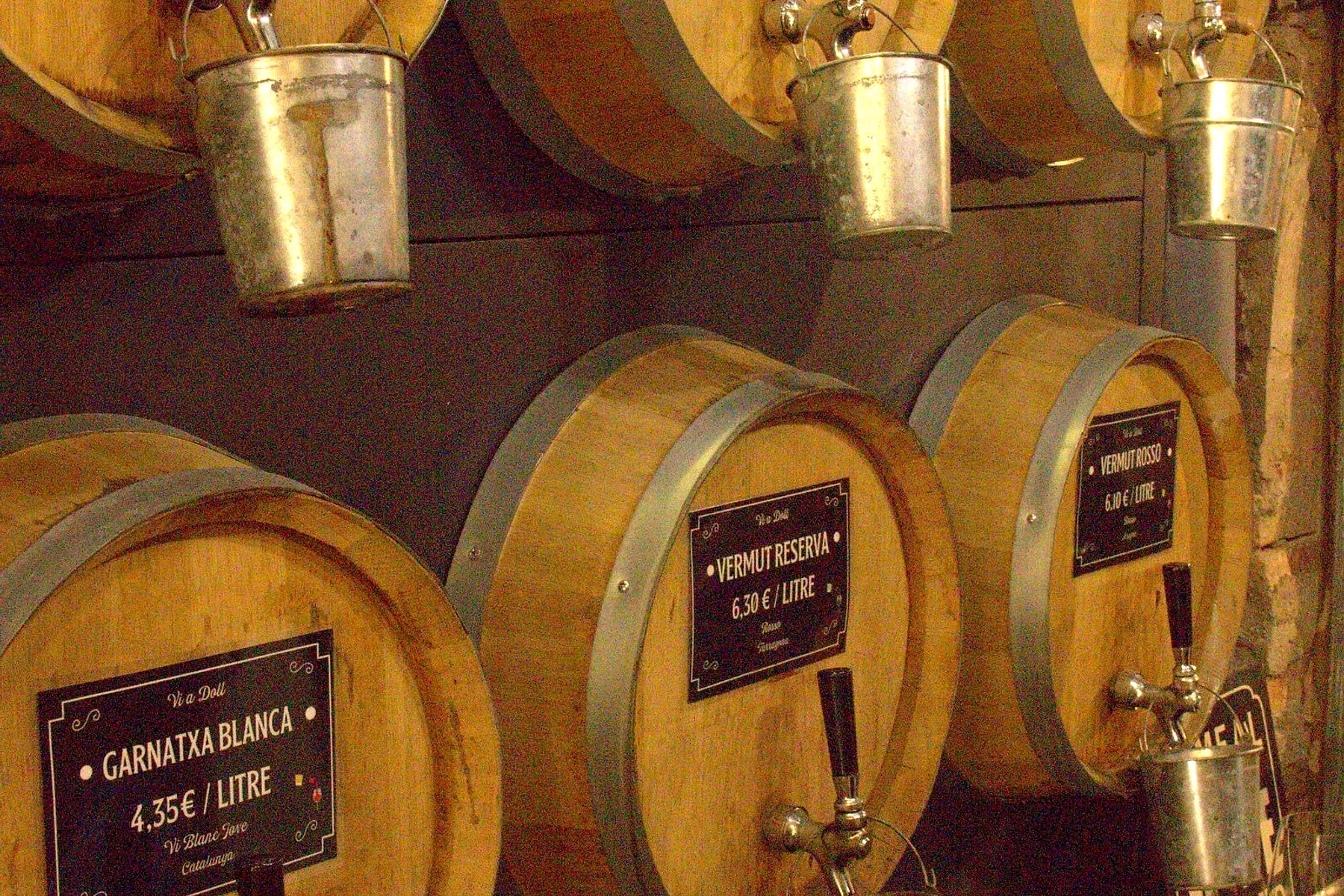
If you do one thing in Gràcia that is not looking at a building, make it vermouth on a Sunday before lunch. This is a recommendation with a conflict of interest attached, so that goes first: our Gràcia walk finishes in a celler and the glass is included in the price. Which is exactly why the rest of this page is about how to find one without us.
What fer el vermut actually is
It is the hour before lunch, standing up, usually on a Sunday, with a small drink and something salty. Not a meal, not a night out, not a tasting. The whole thing lasts as long as it takes to have a glass and argue about something.
The neighbourhood does it because Sunday lunch is late here and the gap has to be filled by something. Visitors sometimes arrive expecting a cocktail scene with a story behind it. It is closer to the pub at half past twelve.
How it comes
A short glass. Ice. Red vermouth, sweet, herbal, considerably less strong than it tastes. An olive, sometimes on a stick with an anchovy and a pickled pepper. Often a slice of orange. And in the places that still keep a siphon, a splash of soda over the top, which is not dilution — it opens the thing up.
Alongside: olives, crisps, and tins. Anchovies, mussels in escabeche, cockles, tuna belly. Tinned food is not what a Catalan bar serves when it has run out of ideas; it is what it serves on purpose, and the good tins cost real money.
How to spot a celler that still does it
Look behind the bar for a wooden cask lying on its side with a brass tap in the end, and for a jug next to it. That is the tell. The vermouth is drawn from the cask into the jug and from the jug into your glass, and a bar that has gone to the trouble of keeping one has decided this matters.
Other signals, in rough order of reliability: a marble counter with the top worn concave; a fridge with tins in it rather than bottles of imported beer; a handwritten price for the vermut somewhere; and, decisively, people over seventy standing at the bar at midday on a Sunday.
The covered iron market on the edge of the neighbourhood, the Mercat de la Llibertat, has a bar inside it and is a reasonable first attempt if you are nervous — it is stop 3 on what to see in Gràcia.
The drawbacks, since nobody publishes them
The timetable is narrow. Turn up at four in the afternoon and the cellers are shut or serving coffee. This is a midday thing and it does not bend.
The good ones are small and full. By one o’clock on a Sunday you will be standing outside on the pavement with your glass, which is fine, and is what everybody else is doing, but it is not a sit-down plan.
It is not a “scene”. There is no menu of forty vermouths, no tasting flight, no explanation from the person serving you. If you want that, it exists in Barcelona and it is somewhere else.
Sunday is the day. A vermouth on a Tuesday is a drink. A vermouth on a Sunday is the thing.
The rest of the neighbourhood’s clock — when the shops shut, when lunch starts, when the squares fill — is in a day in Gràcia. What to do about the meal that follows the vermouth is in eating in Gràcia.
Why there is no list of bar names on this page
Because a list is what ruins them. Six names published in English is how a celler with eleven stools ends up with a queue outside it and a menu in four languages, and the version you would have come for stops existing about a year later.
Also because we would be lying by omission. We take groups to one specific place, we have a relationship with it, and a “top five” written by us would have that place at number one. Better to hand over the tell — cask, tap, jug — and let you find your own.
If you want the walk with the glass at the end of it
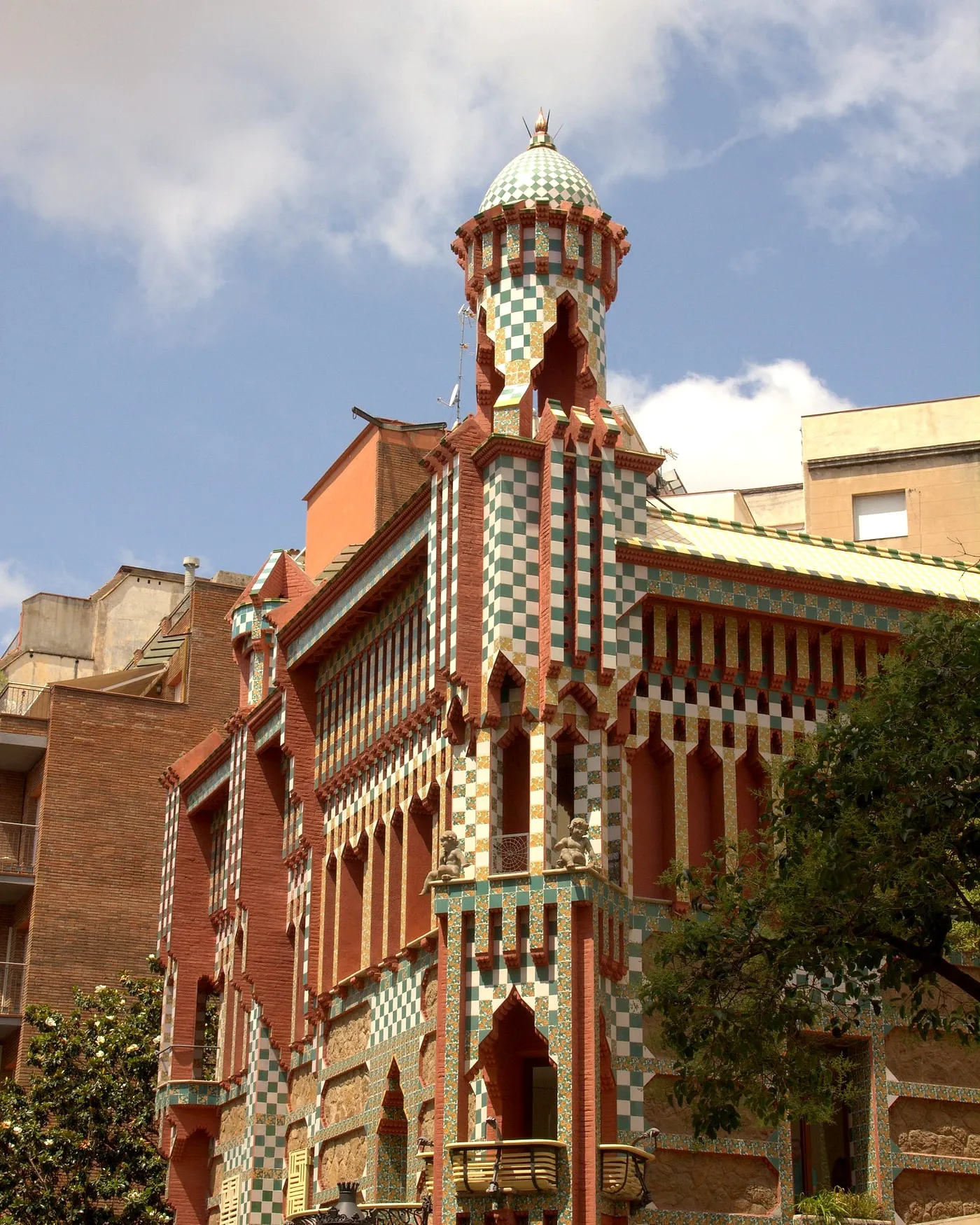
Our Gràcia walking tour spends three hours on the squares, the chimney and the front of Casa Vicens and then finishes in a celler with the vermouth included, because that is how a Gràcia Sunday finishes. Whether the neighbourhood is worth your half day in the first place is dealt with in is Gràcia worth visiting.
Quick answers
- What time is vermouth in Barcelona?
- Late morning to about two o'clock, and Sunday is the day. It is an appetiser before lunch, not an evening drink. Ordering one at nine at night marks you out more clearly than anything else you could do.
- How is it served?
- In a short glass, over ice, with an olive and often a slice of orange, and a splash of soda from a siphon if the bar keeps one. Red and sweet unless you ask otherwise.
- What do you eat with it?
- Olives, crisps, and tinned things: anchovies, mussels, cockles, tuna. This is not a limitation of the format, it is the format.
- How do I know a bar draws it from the barrel?
- Look behind the bar for a wooden cask lying on its side with a tap in the end, and for a jug used to fill from it. Bottled vermouth can be excellent; the barrel simply tells you the place has committed to it.
- Is vermouth expensive in Gràcia?
- It is one of the cheapest things you can order in Barcelona, which is part of why it survived. A glass with an olive costs a fraction of a cocktail, and nobody expects you to have more than two.
The tours this piece is about
More in the journal
Gràcia
- Gràcia built a bell tower with no church attached, and put the signs of the zodiac on it to make the point
- The squares of Gràcia, and what each one is actually for
- The square is not named after the novel, and the statue of the novel spent six years in a different square
- Festa Major de Gràcia: instructions, from someone who has to walk through it
- A baker in Gràcia made a promise in 1828, and the neighbourhood has been throwing sweets at itself ever since
- Gràcia imported a Mallorcan bonfire festival and the neighbourhood now treats it as its own