
Gothic Quarter
Is the Gothic Quarter worth it? Yes, and the hour matters more than the map
Two hours, no ticket, and the oldest streets in the city. The reason people come away disappointed is almost never the neighbourhood. It is the hour they chose.
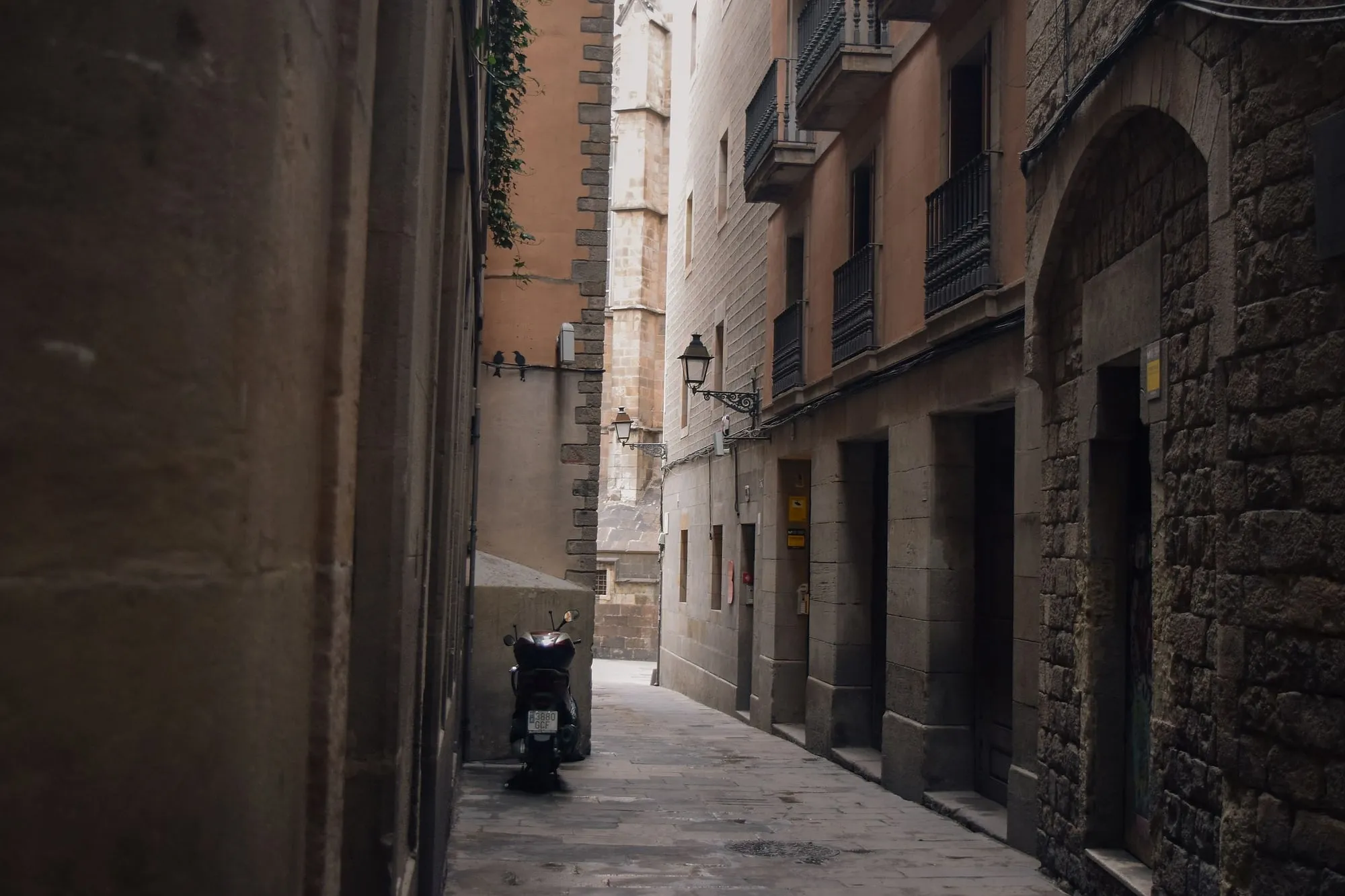
Yes. It is the densest two hours in Barcelona, it needs no ticket and no booking, and it is the only major thing in the city you can decide to do fifteen minutes beforehand.
Now the part that decides whether you enjoy it.
The crowd is real and it is measurable
Barcelona’s tourism observatory asks visitors which parts of the city they actually reached. 65.3 % get into the Barri Gòtic and 77.2 % walk La Rambla, which runs along one side of it.
Two thirds of everyone who comes to this city walks these streets, and the streets are three metres wide. That is not a complaint about tourists — you and we are part of that number — it is a physical fact about a medieval street plan meeting a modern arrival rate.
The city has legislated about it. Since 1 March 2023, under a by-law published in the provincial gazette on 25 November 2022 and extended to 2028, guided groups inside Ciutat Vella — the Gothic Quarter, El Raval, Sant Pere–Santa Caterina–la Ribera and la Barceloneta — are capped at twenty people, with fines running to 1,500 € and to 3,000 € for a repeat. Loudspeakers and megaphones are banned outright.
When a neighbourhood needs a by-law to regulate how many people may stand in it at once, it is telling you something about midday.
So: the hour
Before about half past nine in the morning. The shops are shuttered, the deliveries are being made by hand because nothing wider than a trolley fits, and the streets belong to people going to work. This is the version that makes people fall in love with it.
After about ten at night. The coaches have gone. The squares empty out. The streets go back to the width they were built at and you can finally hear the echo, which turns out to be the whole point of a street this narrow. It costs nothing and almost nobody plans for it — the argument for doing it deliberately is the Gothic Quarter at night.
Between eleven and seven. Shoulder to shoulder, with a flag in front of you. Doable, and the least rewarding version of a good place.
What is genuinely there
- The Roman wall. Not a fragment — a substantial run of it, with towers, standing in the open on Carrer de la Tapineria beside a public square, and more of it in eight other places. All free, and usually empty. What is Augustan, what was completed between 1917 and 1962, and what the four columns on Carrer del Paradís are doing in a hikers’ club is in its own piece.
- The cathedral, begun on 1 May 1298 and, in its own words, practically finished by the middle of the fifteenth century — the 1448 in circulation is the date of its cloister — and whose neo-Gothic front was paid for by one banker, essentially finished by 1890 and topped out in 1912. Why the Generalitat’s heritage record calls it closer to northern Gothic than to Catalan Gothic is in its own piece.
- Plaça del Rei, the royal square, under which the city history museum offers what it calls a four-thousand-square-metre walk through the subsoil — Roman and late-antique streets, two city walls, and a third-century fish-sauce works. That museum turns out to be eighteen buildings, not one.
- El Call, the medieval Jewish quarter: four narrow streets, almost no signage, and almost nothing above ground, because it was destroyed in August 1391 and never allowed to re-form.
- Plaça de Sant Felip Neri, where the damage on the church wall comes from an air raid on 30 January 1938, and where the city says the bombing went on without pause while people tried to evacuate. It gives the toll as forty-two killed and over a hundred wounded, some twenty of them children sheltering in the church basement. For decades the marks were explained as a firing squad; the city calls that Francoist propaganda and corrected it publicly. It is the quietest square in the neighbourhood and it should stay that way. The wider story of what people dug under these squares is here.
What is not there, and you should know before you go
No single unmissable object. Nothing in the Gothic Quarter functions the way the Sagrada Família functions — there is no one thing you stand in front of and understand why you came. The neighbourhood is the exhibit, which is a harder sell and a better afternoon.
No view. It is flat and enclosed. If your trip is organised around panoramas, this is not where you get one.
And it is not La Rambla. The promenade is the western edge of the quarter, not part of it, and confusing the two is why some people think they have seen the Gothic Quarter when they have walked down a former watercourse with a market on it.
No obvious route. The streets are the attraction and they do not arrange themselves. Some people find that liberating and some find it two hours of low-grade anxiety about whether they are missing something. If you are the second kind, what to see in the Gothic Quarter puts it in a walkable order.
A lot of it is younger than it looks. The most photographed bridge in the city was finished in 1928. That is not a con; it is a design decision by a city that wanted a historic centre and built one, and the list of what was moved, rebuilt or finished late is the most interesting reading you can do before walking in.
Who should skip it
Almost nobody, honestly — it is central, it is free and it takes two hours. But:
- Anyone with one day in Barcelona who has not seen the Sagrada Família. Go there first. The old city can be the evening, when it is better anyway. See one day in Barcelona.
- Anyone who cannot manage uneven ground. It is flat, but it is all worn stone, cobbles and the occasional narrow step. Shoes matter here more than anywhere else in the city.
- Anyone who arrives at noon in August with a low tolerance for crowds. Come back at ten at night. Same streets, different city.
If you would rather be told than read
Our Gothic Quarter walking tour runs two afternoons a week, takes twenty people because that is the legal cap here, and is told by an actor rather than recited. The after-dark version uses the empty hour, on the two nights of the week when there are enough people awake to fill it.
Both are one way of spending the two hours. Doing it yourself with this page open is another, and it costs nothing — which is a strange thing for a tour company to write down and is also true.
And if what you are really choosing is between neighbourhoods rather than between hours, that comparison is Gràcia or the Gothic Quarter.
And four things in this neighbourhood we have written up since: the thirteen geese in the cathedral cloister and why nobody can say what they are for; the square with the shrapnel, whose Renaissance façades were carried here from two other streets; the squares almost nobody stops in, one of which is where wills are still legally sworn; and the streets of 1700 under the old Born market.
Two measurements we have added since writing this, both from municipal surveys: how safe the district actually is, where Ciutat Vella turns out to be the only district in Barcelona whose residents rate their own neighbourhood below the city; and which parts of Barcelona residents have stopped going to, where La Rambla is first and the cathedral is eleventh. And if you want the square where the two governments face each other, it is younger than you think.
Where this comes from
- Informe de resultats: perfil i hàbits dels turistes a Barcelona ciutat 2025 (PDF, table on p. 73)Observatori del Turisme a BarcelonaThe 65.3 % who get into the Barri Gòtic and the 77.2 % who walk La Rambla.
- Comença el control dels grups turístics a Ciutat Vella (3-3-2023)Ajuntament de Barcelona · Sala de premsaThe decree in force since 1 March 2023: guided groups capped at twenty in Ciutat Vella, loudspeakers banned, fines up to 1,500 € and 3,000 € for a repeat.
- Plaça de Sant Felip NeriAjuntament de Barcelona · Programes de Memòria DemocràticaThe bombing of 30 January 1938 — forty-two killed, some twenty of them children — and the propaganda version of the marks on the wall.
Everything above that carries a date, a figure or a name is checked against these before it is published. Where we could not find a source, the page says so.
Quick answers
- Is the Gothic Quarter in Barcelona worth visiting?
- Yes, and it is the one part of central Barcelona that costs nothing and needs no booking. Give it two hours. Go before about half past nine in the morning or after about ten at night, because in the middle of the day it is one of the most crowded places in the city.
- How long do you need in the Gothic Quarter?
- Two hours covers it properly. It is small — Plaça Nova to Plaça del Rei is three hundred metres in a straight line — so the time goes on doubling back and standing still rather than on distance.
- Is the Gothic Quarter safe?
- Yes, with the ordinary caution of any dense, busy tourist area in a large European city: pickpocketing is the real risk and it happens in crowds, not in dark corners. At night the central streets are well lit and busy.
- Is the Gothic Quarter actually gothic?
- Partly. The Roman wall is Roman, the body of the cathedral is medieval and so is the royal hall on Plaça del Rei. The cathedral's front is from the turn of the twentieth century and the famous arched bridge is from 1928. That mixture is the most interesting thing about the place once you can tell which is which.
- Do you have to pay for anything?
- No. The streets, the squares, the Roman wall and the outside of everything are free. The cathedral, the history museum under Plaça del Rei and the other indoor sites each have their own admission arrangements, and none of them is required to make the walk work.
The tours this piece is about
The Gothic Quarter: a neighbourhood that invented itself
Barcelona's most photographed bridge dates from 1928.
- How long it lasts
- 2 h
- Runs in
- EN · ES · CA
- Price
- 15 €
Never more than 20 people
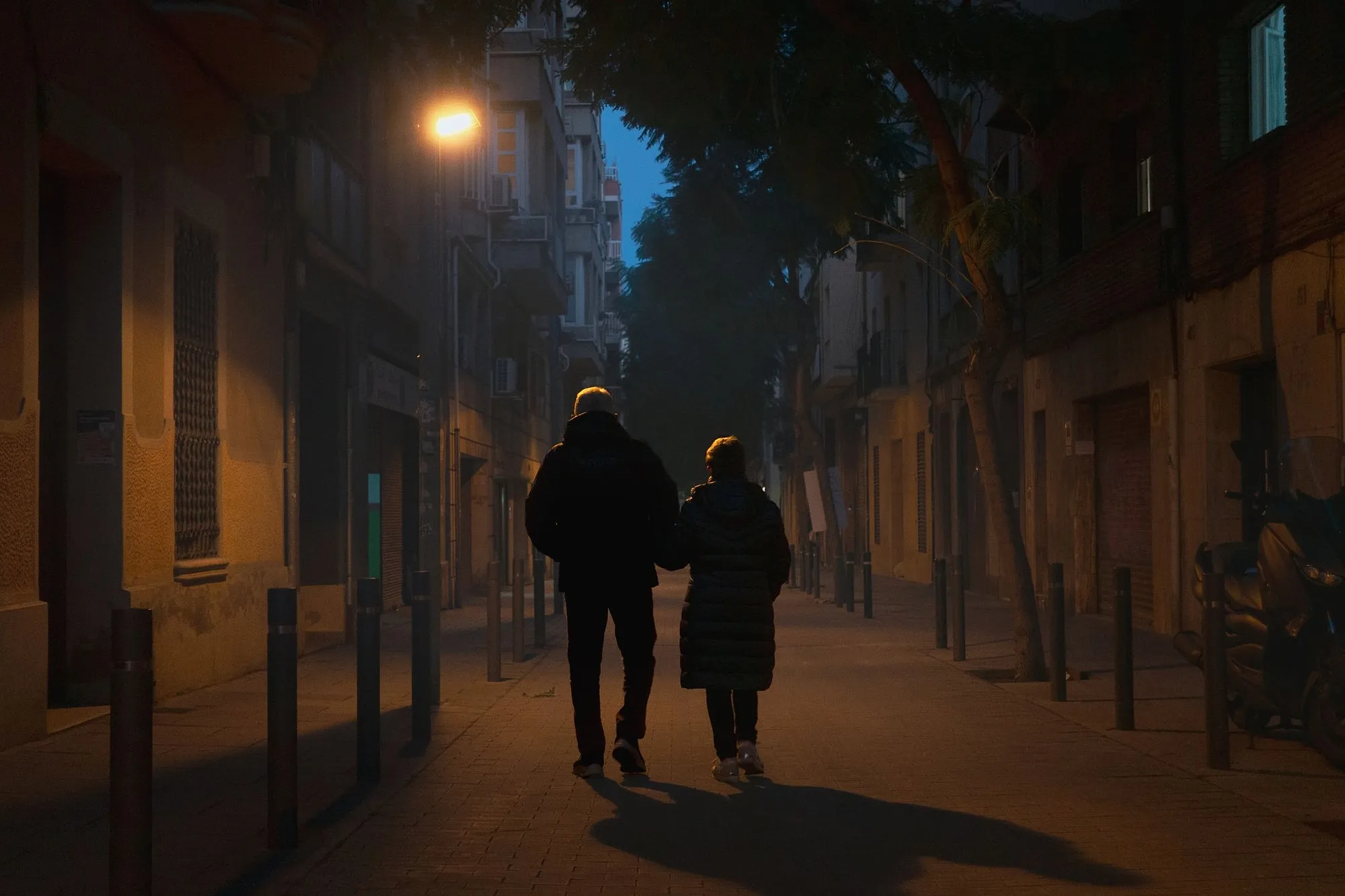
The Gothic Quarter after dark
By day it is a crowded stage set. By night it is a narrow city.
- How long it lasts
- 2 h
- Runs in
- EN · ES · CA
- Price
- 18 €
Never more than 20 people
More in the journal
The Gothic Quarter
- Ciutat Vella is the only district in Barcelona whose residents score their own neighbourhood below the whole city
- What to see in the Gothic Quarter, in an order that does not double back
- The Generalitat says the cathedral is not really Catalan Gothic. It says Santa Maria del Mar is
- It has three naves and can look like seven, and the cathedral and the Generalitat cannot agree on how many bays
- There are thirteen geese in the cathedral cloister and nobody official will tell you why
- The street names are trades, and the city that keeps the register says do not trust them too far