
Gothic Quarter
Barcelona has the first documented giant in Europe, and almost everything that walks today was carved after 1987
The giants are genuinely medieval. The giants in the street are not, and the city says so in its own files. Knowing which is which is the difference between watching a parade and reading one.
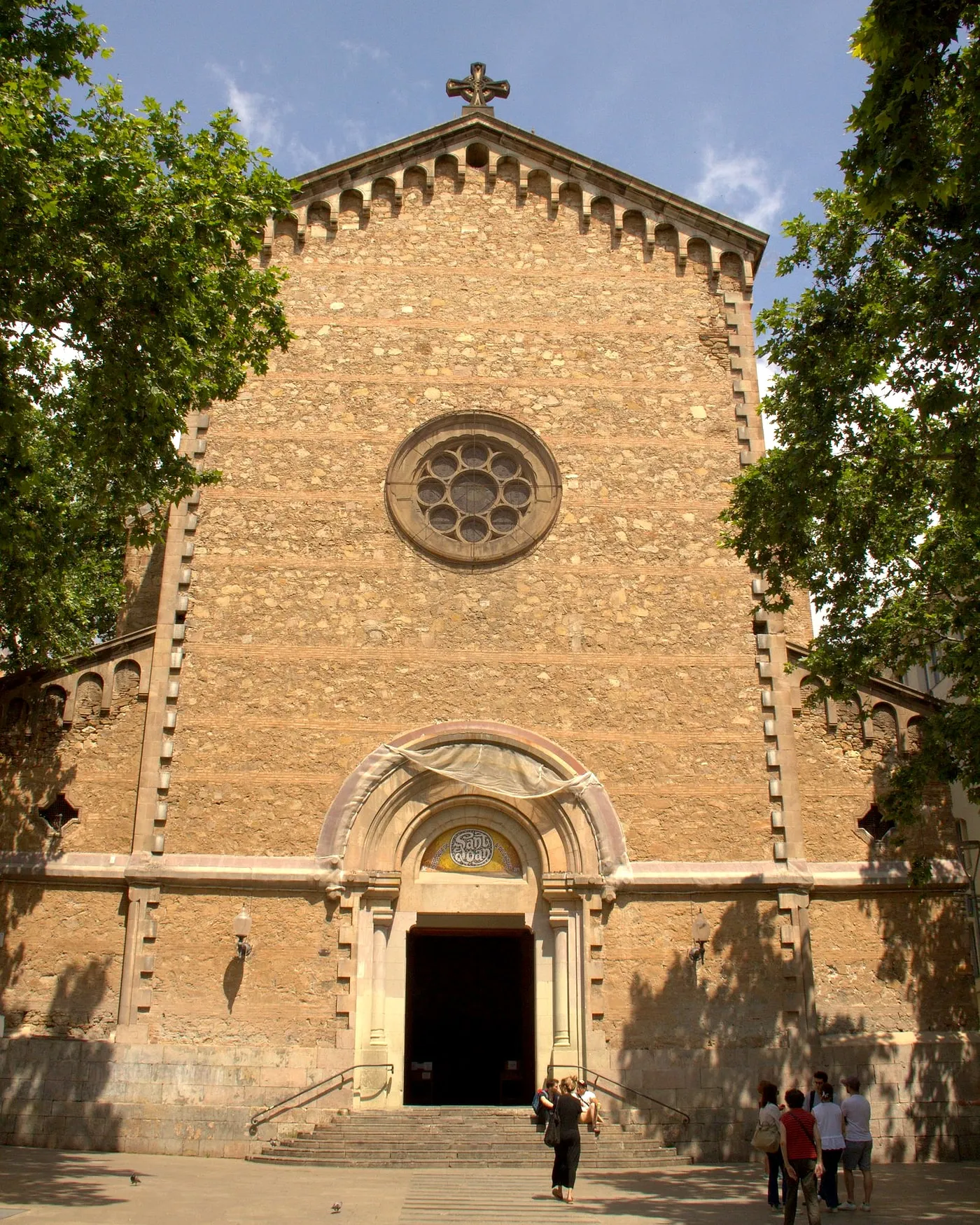
If you are in Barcelona on the right weekend you will see a lion, an ox, a mule, a wyvern, a dragon, an eagle and several three-metre figures of kings come down a street in a fixed order, followed by drums.
It looks like something that has been happening for six hundred years. Part of it has. The specific objects in front of you almost certainly have not, and the Ajuntament publishes the dates of every one of them.
The city’s cast is a closed list
This is not a loose folk tradition that varies with who turns up. Barcelona’s festival procession has a protocol document, and it names the cast.
The Seguici Popular de Barcelona is fourteen elements: the Àliga de la Ciutat and the Gegants de la Ciutat as municipal imagery, then the Gegants del Pi, the Gegants de Santa Maria del Mar, the Capgrossos Macers, and the seven figures of the Bestiari Històric — the Lleó, the Mulassa, the Bou, the Víbria, the Drac de Ciutat Vella, the Cavallets Cotoners and the Tarasca.
The same document fixes the order they walk in, the route through Ciutat Vella, and the three occasions on which the Seguici must appear: Santa Eulàlia in February, Corpus, and the Mercè in September.
Once you know the list is closed, the parade stops being a crowd and becomes a sentence with a grammar.
1424, and the giant that was Goliath
Now the genuinely old part, and it is a good one.
The Ajuntament’s file on the Gegants de la Ciutat records that in 1424, among the entremesos in the Corpus procession, there was a representation featuring lo rei David ab lo Jiguant. A David and a Goliath. The giant was paid for by the municipality, and the city calls it — flatly, in its own words — el primer gegant documentat a Europa.
The first giantess in Barcelona is documented in 1568.
That same year 1424 turns up twice more. It is the first documentary reference to the Cavallets Cotoners, which the file says were property of the Consell de Barcelona and only afterwards ceded to the cotton-makers’ guild. And the Generalitat’s heritage file on the Barcelona Corpus notes that a document of 1424 lists 105 representations taking part in the procession.
A hundred and five. The fourteen that walk today are the survivors of a fifteenth-century cast that would fill an afternoon.
The oldest reference of all is earlier still: the Generalitat traces the Barcelona Corpus to a pregó of 1320, held in the city’s Llibre del Consell, announcing that there would be a procession.
And now the dates on the objects
Here is the part nobody tells you while the drums are going.
- Drac de Ciutat Vella — 1987. The first references to a dragon are from the start of the fifteenth century. The dragon in the street was commissioned in 1987 from the imatger Manel Casserras i Boix, and the city says it plainly: it was la primera figura d’allò que havia de ser el Bestiari Històric de Barcelona. The reconstruction started with him.
- Mulassa — 1988. Documented from 1568, when it came out for a reception for Felipe II, belonging to the paraires. After 1812 the record goes silent. The present one is Casserras, 1988.
- Àliga de la Ciutat — 1998. The city dates the figure’s history to the fourteenth century but gives no year, and says the last historical reference is 1807, by which point it was molt decadent. The eagle you see is by Xavier Jansana, 1998, after an earlier reconstruction of 1989.
- Lleó, Bou, Víbria, Tarasca — all 1993.
- Gegants de la Ciutat — 1992. Casserras again, in fibreglass and polyester.
- Gegants de Santa Maria del Mar — 2002, by Toni Mujal, rebuilt from figures of 1880.
- Capgrossos Macers — 1985.
Four figures out of the Bestiari Històric in a single year, and the whole reconstruction inside about a decade. This is not a criticism of anybody. It is a remarkable piece of cultural engineering that the city documents openly, and it is far more interesting than pretending the objects are medieval.
The exception is the Gegants del Pi, and even there the city is careful. The faces probably date from 1772; some documents point to Ramon Amadeu as the sculptor, but the Ajuntament writes that the attribution encara no es pot considerar segura. They survived 1936–1939 because the Generalitat’s historic-heritage archive section and Agustí Duran i Sanpere got them out of the burning parish, and they came back on 12 June 1960.
Their names, Mustafà and Elisenda, are from 1985. So are Jaume I and Violant, the names of the city giants. Two of the most-photographed characters in Barcelona were christened in the mid-eighties by an association of geganters.
The guilds are still in the streets
The figures and the street names are the same story told twice, which is why they are worth doing on the same walk.
The Mulassa belonged to the paraires — cloth-dressers. The Lleó to the blanquers — tanners. The Bou to the carnissers — butchers. The Cavallets to the cotoners — cotton-makers.
Those are the trades that gave Ciutat Vella the street names you walk over without reading. The animals are what those same guilds sent into the Corpus procession. The neighbourhood’s economy is written twice over: once on the signs, once in the parade.
And the Gegants de Santa Maria del Mar are named for the church they came out of — the one the Generalitat’s heritage inventory says sums up Catalan Gothic better than the cathedral does.
The correfoc is younger than most people watching it
This is the one that surprises people, and it comes from the Ajuntament itself.
Its Cultura Popular page: diuen que el correfoc va néixer a Barcelona espontàniament per les festes de la Mercè del 1978. The intention was a classic ball de diables; the crowd joined in, and by joining in gave it the thing that defines it — movement.
Its own Protocol Festiu says 1979, calls it a Mostra de Bèsties Fantàstiques, and adds a detail the web page omits: in the first editions all the participating groups came from outside Barcelona.
We are not going to pick between two municipal documents that disagree by a year about an event within living memory. The safe statement is: about fifty years old, born at the Mercè, and imported before it was local. The city’s own phrasing — diuen que, “they say” — is itself a tell that this is oral history, not archive.
What is old is the ball de diables underneath it. The Ajuntament traces the devils to medieval theatrical forms and the balls parlats, records devils in the Barcelona procession in the fifteenth century, and says the form decayed, was forgotten, and only came back with democracy and the recovery of the street as a festive space.
And here is the distinction almost every retelling drops: the diables are not part of the Seguici Popular. They open the Mercè’s inaugural procession, but the city’s own list of Seguici music files the ball de diables under altres melodies d’elements que no formen part del Seguici Popular.
Human towers, and where they actually stand
The castells are the other thing people come for. UNESCO put them on the Representative List of Intangible Cultural Heritage in 2010 — 16 November 2010, per the Ajuntament — and describes their traditional setting precisely: the square in front of the town hall balcony.
In Barcelona that square is Plaça de Sant Jaume, and the Mercè’s diada castellera happens there.
Two things worth knowing before you plan around it. Barcelona has eight colles and the city’s oldest surviving one, the Castellers de Barcelona, was founded in 1969 — the tradition is Catalan, but its Barcelona chapter is comparatively recent, with records of colles here only from the end of the nineteenth century. And none of the eight is based in Ciutat Vella: the Castellers de Barcelona rehearse in the Clot, the Colla Jove in Sant Andreu. What the old city hosts is the performance, not the club.
The two festivals with national status are both here
The Generalitat keeps a register of Catalonia’s festive heritage, and Barcelona has exactly two entries at the top tier of festa patrimonial d’interès nacional.
The Corpus de Barcelona — the procession this whole apparatus was built for.
And the Festes de Sant Roc de la Plaça Nova, which the Generalitat calls, without hedging, les més antigues que es celebren a Barcelona: a vow made by the Consell de Cent in 1563 asking protection against the plague, still kept every August in a square about forty metres across.
That square is Plaça Nova. It is where our walks start, in front of the Roman gate, and most days it is a place people cross on the way to something else.
Where to see any of this without a festival
The Casa dels Entremesos, Plaça de les Beates 2, five minutes from Santa Maria del Mar. A municipal building holding a permanent display of una cinquantena de figures — giants, big-heads, bestiary — with the associations that carry them based in the same house.
The institution has a pedigree of its own, and a small disagreement attached. The Ajuntament says the Consell de la Ciutat established a Casa dels Entremesos in 1439 to keep and maintain the figures and their dances. The Generalitat’s Corpus file says the council rented a building in 1422 for the same purpose and enlarged it in 1447, creating the post of administrator of the entremesos. Those are not necessarily contradictory — renting, instituting and enlarging are three things — but the round number you will see quoted is 1439 and it comes from one of the two.
Either way: the city has been running a warehouse for its own imaginary animals for six hundred years, and it is open.
What this is worth on a walk
Everything above sits within about a twelve-minute radius of the cathedral, and none of it is a monument.
The value is in the correction. You arrive expecting either “ancient tradition” or “tourist show”, and the truth is a third thing: a documented medieval practice, an almost total collapse — the eagle’s last sighting in 1807, the mule’s in 1812 — and a deliberate, dated, credited reconstruction carried out mostly by two workshops in the eleven years between 1987 and 1998.
That is a better story, and it is the same argument as the buildings in this neighbourhood that were taken apart and rebuilt, and as the thirteen geese in the cathedral cloister whose meaning the cathedral itself flags as legend. Barcelona is unusually good at making things and unusually honest, in its files, about when it made them.
For the version of a giants’ festival where the neighbourhood is doing it for itself rather than for a protocol, that is the Festa Major de Gràcia, up the hill in August.
Our Gothic Quarter walk starts in Plaça Nova — the Sant Roc square — and spends two hours on what is genuinely old here and what was assembled later, told by an actor rather than recited. The after-dark version covers the same ground with the streets empty, which is when the Corpus route is easiest to picture.
And if you want the walkable order through everything named on this page, it is what to see in the Gothic Quarter.
Where this comes from
- Protocol Festiu de la Ciutat de BarcelonaAjuntament de Barcelona · Institut de CulturaThe closed composition of the Seguici Popular — «l'Àliga de la Ciutat i els Gegants de la Ciutat» as municipal imagery plus the Gegants del Pi, the Gegants de Santa Maria del Mar, the seven figures of the Bestiari Històric and the Capgrossos Macers; the fixed order of the Mercè's inaugural procession; the days on which the Seguici must appear (Santa Eulàlia, Corpus, the Mercè); the statement that the correfoc «va néixer el 1979 com a Mostra de Bèsties Fantàstiques» and that the first editions' groups were all from outside Barcelona; and the annex attributing the Àliga to the Associació de Festes de la Plaça Nova.
- Gegants de la CiutatAjuntament de Barcelona · Cultura PopularThat in 1424 the Corpus procession included «lo rei David ab lo Jiguant», a Goliath paid for by the municipality, «el primer gegant documentat a Europa»; that the first giantess dates from 1568; that the 1929 renewal was directed by Francesc Labarta with figures by the Tallers Renart; and that the pair now dancing was built by Manel Casserras i Boix in 1992 and that the names Jaume I and Violant were given in 1985 by the Coordinadora de Geganters de Barcelona.
- Àliga de BarcelonaAjuntament de Barcelona · Cultura PopularThat the figure «es remunta al segle XIV» with no year given; that «l'última referència que en tenim és del 1807»; that the eagle in use was built by Xavier Jansana in 1998, after an earlier one of 1989 by Manel Casserras i Boix; that it joined the Seguici Popular in 1993 and was formally ceded to the city in 1999; and that the dance melody was recovered from the parish archive of Santa Maria del Pi.
- Drac de Ciutat VellaAjuntament de Barcelona · Cultura PopularThat the first references to the dragon figure are from the beginning of the fifteenth century, and that in 1987 the imatger Manel Casserras i Boix was commissioned to build «la primera figura d'allò que havia de ser el Bestiari Històric de Barcelona: el drac».
- Mulassa de BarcelonaAjuntament de Barcelona · Cultura PopularThat the figure «es remunta al 1568, quan va sortir amb motiu d'una rebuda al rei Felip II», that it belonged to the paraires guild, that after 1812 no further reference is found, and that the present figure was built by Manel Casserras i Boix in 1988.
- Cavallets Cotoners de BarcelonaAjuntament de Barcelona · Cultura PopularThat the first documentary reference is from 1424, that they were the property of the Consell de Barcelona and ceded to the cotoners guild, that the figures in use date from 1932, and that they joined the Seguici Popular in 1994.
- Gegants del PiAjuntament de Barcelona · Cultura PopularThat the first references are 1601 and 1624; that the present faces probably date from 1772 and that the attribution to Ramon Amadeu «encara no es pot considerar segura»; that the figures were saved during 1936–1939 by the Generalitat's historic-heritage archive section and Agustí Duran i Sanpere; that they were recovered on 12 June 1960; and that they were named Elisenda and Mustafà in 1985.
- CorrefocAjuntament de Barcelona · Cultura PopularThat «diuen que el correfoc va néixer a Barcelona espontàniament per les festes de la Mercè del 1978», out of an intended classic ball de diables that the audience joined, giving it movement.
- DiablesAjuntament de Barcelona · Cultura PopularThat the balls de diables have roots in medieval theatrical forms and belong to the balls parlats; that fifteenth-century sources record devils taking part in the Barcelona procession; and that the form was forgotten and only revived with democracy and the recovery of the street as festive space.
- La Casa dels EntremesosAjuntament de Barcelona · Cultura PopularThat the address is Plaça de les Beates 2, Ciutat Vella; that «el Consell de la Ciutat (Ajuntament) va instituir, l'any 1439, la Casa dels Entremesos» to keep and maintain the figures and dances; that it reopened in 2009; and that it holds a permanent display of «una cinquantena de figures».
- CastellsAjuntament de Barcelona · Cultura PopularThat on 16 November 2010 UNESCO added the castells to the Representative List of the Intangible Cultural Heritage of Humanity; that Barcelona has records of colles from the end of the nineteenth century and that the Castellers de Barcelona were founded in 1969; that there are eight colles in the city today; and that Plaça de Sant Jaume hosts the Mercè's castell diadas.
- Human towers — Representative List of the Intangible Cultural Heritage of HumanityUNESCOThat the human towers were «inscribed in 2010 (5.COM)» on the Representative List, and the description of castells as towers built by amateur groups whose traditional setting is the square in front of the town-hall balcony.
- Corpus de BarcelonaGeneralitat de Catalunya · Patrimoni Festiu de CatalunyaThat the first documentary reference to the Barcelona Corpus is a pregó of 1320 announcing a procession, held in the Llibre del Consell; and that a document of 1424 lists 105 representations taking part in the procession.
- Festes de Sant Roc de Barcelona a la Plaça NovaGeneralitat de Catalunya · Patrimoni Festiu de CatalunyaThat «les festes de Sant Roc són les més antigues que es celebren a Barcelona», going back to a vow made by the Consell de Cent in 1563 for protection against the plague; and that the seguici includes the Gegants de Sant Roc, the Àliga de la Ciutat and the Lleó de Barcelona.
- Festes i elements festius inscrits al CatàlegGeneralitat de Catalunya · Patrimoni Festiu de CatalunyaThe official register listing the Corpus de Barcelona (ACORD GOV/86/2021) and the Festes de Sant Roc de Barcelona a la Plaça Nova (ACORD GOV/33/2017) as «festa patrimonial d'interès nacional», the only two in the city.
Everything above that carries a date, a figure or a name is checked against these before it is published. Where we could not find a source, the page says so.
Quick answers
- Where does the tradition of giants come from?
- Barcelona has the earliest documented one. The Ajuntament's own file records that in 1424, among the entremesos in the Corpus procession, there was a representation with «lo rei David ab lo Jiguant» — a Goliath, paid for by the municipality — and calls it «el primer gegant documentat a Europa». The first giantess in the city is documented in 1568.
- How old are the giants you actually see in Barcelona?
- Mostly recent. The Gegants de la Ciutat currently dancing were built by Manel Casserras i Boix in 1992; the eagle by Xavier Jansana in 1998; the lion, the ox, the wyvern and the tarasca in 1993; the mule in 1988; and the dragon of Ciutat Vella in 1987, the first piece of the reconstructed Bestiari Històric. The oldest figures still in use are the Gegants del Pi, eighteenth-century, and even their attribution the Ajuntament calls unproven.
- What is the Seguici Popular de Barcelona?
- The city's official festival cast, fixed in the Ajuntament's Protocol Festiu: the Àliga and the Gegants de la Ciutat as municipal imagery, plus the Gegants del Pi, the Gegants de Santa Maria del Mar, the Capgrossos Macers and the seven figures of the Bestiari Històric — the Lleó, the Mulassa, the Bou, the Víbria, the Drac de Ciutat Vella, the Cavallets Cotoners and the Tarasca. Fourteen elements. The protocol also fixes when it must appear: Santa Eulàlia, Corpus and the Mercè.
- Is the correfoc an ancient tradition?
- No, and the Ajuntament does not claim it is. Its Cultura Popular page says the correfoc was born spontaneously at the Mercè of 1978, out of an attempt at a classic ball de diables that the audience joined in. Its own Protocol Festiu says 1979 and adds that in the first editions all the participating groups came from outside Barcelona. The devil groups themselves are medieval in origin; the correfoc as a form is about fifty years old.
- Are the diables part of the Seguici Popular?
- No — although they open the Mercè's inaugural procession. The Ajuntament's own list of Seguici music separates out «altres melodies d'elements que no formen part del Seguici Popular», and the ball de diables is on that second list. It is the kind of distinction almost every retelling loses.
- Where can you see the figures when there is no festival?
- At the Casa dels Entremesos, a municipal facility at Plaça de les Beates 2 in Ciutat Vella, which holds a permanent display of «una cinquantena de figures». The Ajuntament traces the institution back to 1439, when the Consell de la Ciutat set up a house to keep and maintain the figures and their dances.
- Which Barcelona festivals have national heritage status?
- Two, and both are in the old city: the Corpus de Barcelona and the Festes de Sant Roc de la Plaça Nova, both listed by the Generalitat as «festa patrimonial d'interès nacional». Sant Roc is, in the Generalitat's words, the oldest festival celebrated in Barcelona, going back to a vow made by the Consell de Cent in 1563 against the plague.
The tours this piece is about
The Gothic Quarter: a neighbourhood that invented itself
Barcelona's most photographed bridge dates from 1928.
- How long it lasts
- 2 h
- Runs in
- EN · ES · CA
- Price
- 15 €
Never more than 20 people
The Gothic Quarter after dark
By day it is a crowded stage set. By night it is a narrow city.
- How long it lasts
- 2 h
- Runs in
- EN · ES · CA
- Price
- 18 €
Never more than 20 people
More in the journal
The Gothic Quarter
- El Call: four streets, a stone that is a copy, and an argument about one building
- Asked which visitors they would like more of, Barcelona picked the ones who come to learn something
- It was a watercourse with a city wall on one side and convents on the other
- The city counted 1,322 shelters, and says the people dug most of them themselves
- The square is called Royal because of a monument that was never put up
- The engineer everyone credits with the Barceloneta designed a neighbourhood that was never built