
Gràcia
What to see in Gràcia, in the order that walks well
Gràcia has no single monument that justifies the trip. It has a chain of small squares, which is a thing you walk rather than a thing you queue for.
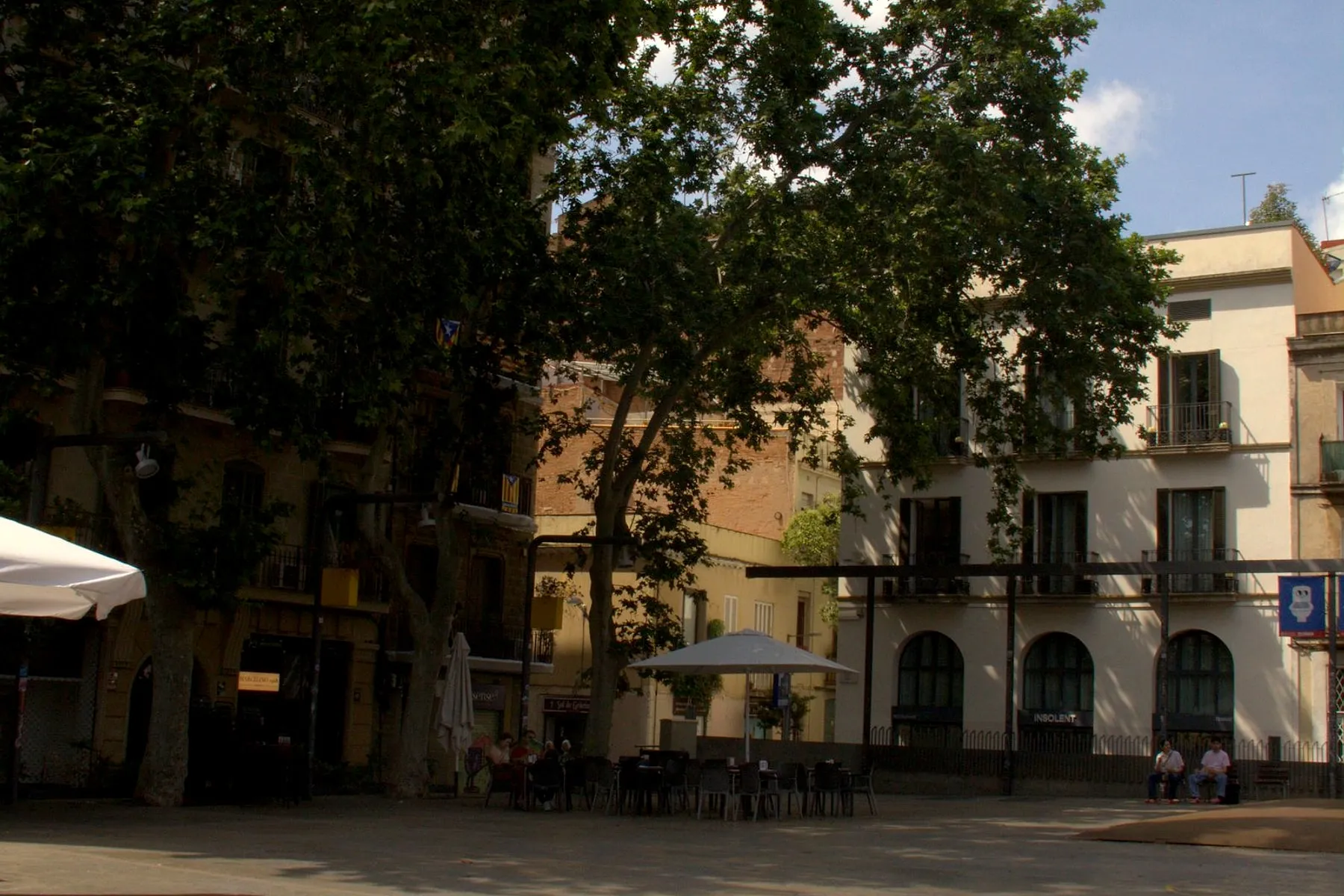
Gràcia covers about three kilometres on foot, flat the whole way, with not a single queue in it. What follows is the order that works: south to north, then across to the east, so you never repeat a street and you finish near where people drink. This page is the what and the sequence; the when matters just as much and is a separate page — a day in Gràcia sets out what the neighbourhood is doing at each hour, including the two hours in the afternoon when it is doing nothing at all.
One fact organises everything else. Gràcia was an independent municipality from 1850 until 20 April 1897, when Barcelona annexed it by royal decree with almost 62,000 inhabitants. That is why the streets are narrow, the squares are small and there is no ceremonial avenue anywhere: nobody designed this to be admired, it accumulated in order to be lived in.
The long version of that — what being a town meant, what the annexation changed and what it could not — is why Gràcia was its own town. If you are still deciding whether any of this earns a half day, that is answered first in is Gràcia worth visiting.
1. Jardinets de Gràcia
Where Passeig de Gràcia dies and the neighbourhood starts. It works as a door and as a warning: behind you, luxury shops and the two Gaudí houses that appear in every guidebook; ahead, a different street grid with short blocks.
2. Casa Vicens — carrer de les Carolines
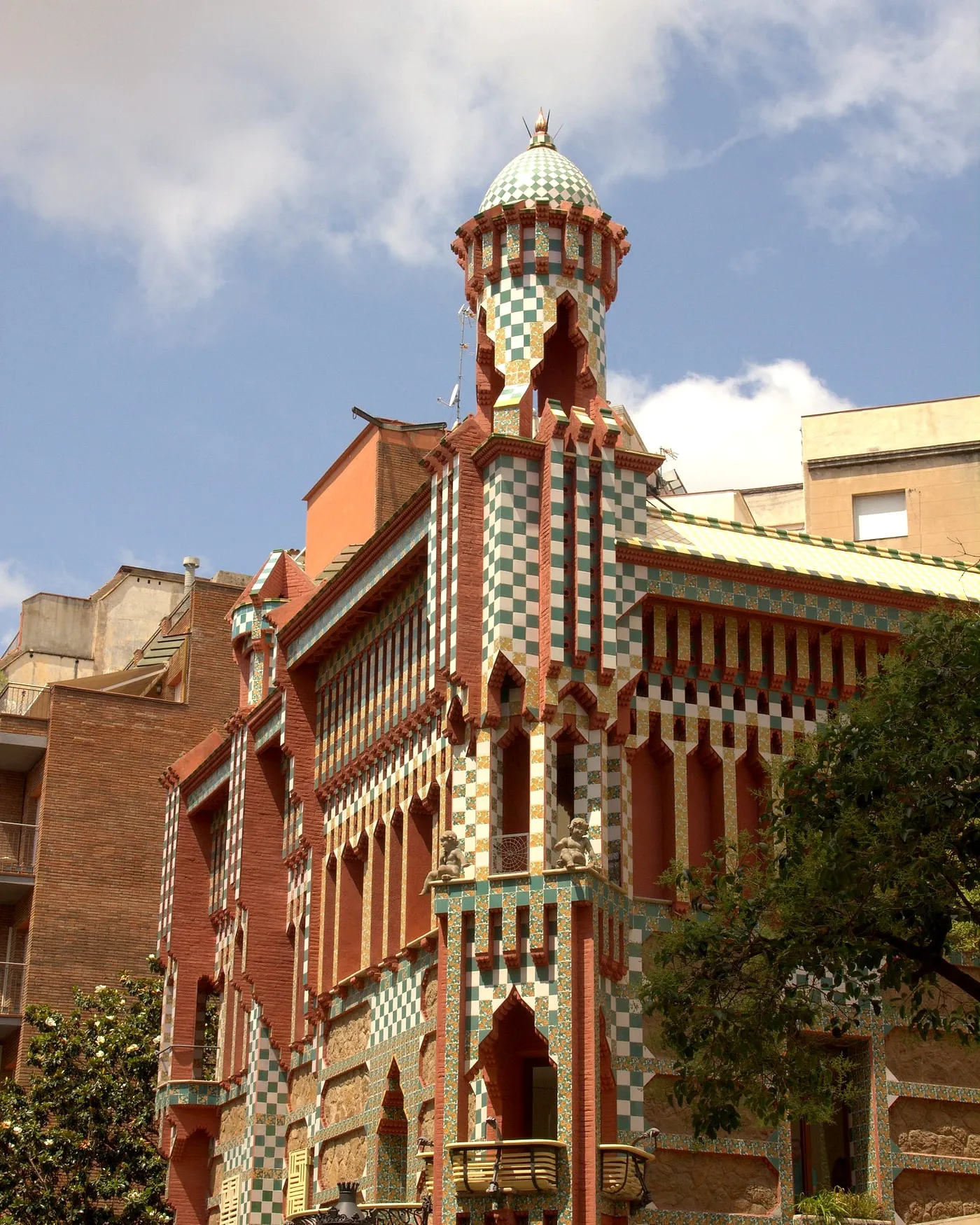
Three minutes uphill. The first house Gaudí ever built, between 1883 and 1885, and you can see the whole of it from the street without paying anything. If you are undecided about the ticket, that is answered with the drawbacks first in is Casa Vicens worth it.
3. Mercat de la Llibertat
A covered iron market with fish counters and a bar inside. It is the fastest way to establish that Gràcia is still a neighbourhood where people do their shopping, rather than a set. It is also a piece of nineteenth-century iron architecture that almost everybody walks through without looking up, and it has its own page.
4. Plaça de la Vila de Gràcia
The town hall square of the town it used to be, presided over by the clock tower. That tower has an episode attached. On 4 April 1870, during the draw for military conscription, its bell was rung as an alarm and Gràcia rose. The army answered with artillery from Montjuïc; a shell cracked the bell and the bell went on ringing. Six weeks later a weekly paper called La Campana de Gràcia — the Bell of Gràcia — appeared in Barcelona.
Sit down here for a while. This is the square that makes the rest legible. That afternoon in 1870 has its own account, with the municipal plaque that still records it in stone, in the revolt of the quintes.
5. The brick chimney
On carrer de Siracusa, a few streets east of Plaça de la Vila, a cylindrical brick chimney stands among the flats with no factory underneath it. It belonged to the Puigmartí mill, also called El Vapor Nou, which the city records as gathering five hundred workers in 1861 — and the city’s heritage catalogue calls it the only surviving indicator of the industrial zone that grew up around it. Gràcia was a factory town of textiles, spinning and dyeing, and this is very nearly all that is left of it above ground. We used to write chimneys, in the plural, and the correction is set out in the chimneys of Gràcia.
6. Plaça de la Virreina
The most photographed square in the neighbourhood, with the church of Sant Joan closing one end and terraces around the rest. It also shows the pattern best: nobody laid it out as a main square, it stayed a square because people used it as one.
7. Plaça del Diamant
Small, square, with the Colometa sculpture in one corner — the heroine of Mercè Rodoreda’s novel, which takes its name from this square. Underneath it there is a Civil War air-raid shelter, dug by the residents, which can be visited if you book.
8. Plaça del Sol and Plaça de la Revolució
A minute apart and put to the same use: this is where the neighbourhood comes down when it wants something. Afternoons belong to children and dogs, nights to people sitting on the ground. If you can only see one Gràcia square, make it Plaça de la Vila. If you can see two, this is the second.
All five of them, and what each is doing at which hour, are in the squares of Gràcia.
9. The A les Dones del 36 memorial — carrer Gran de Gràcia
A plaque and a photograph of women around a table, on a street everybody walks down without noticing it. The quietest stop on the route and the one most people carry away with them.
10. A celler, and vermouth from the barrel
Finish in one of the neighbourhood cellers, where vermouth is drawn from a tapped barrel and served short, with ice, an olive and a splash of soda. It is not a tradition reinvented for visitors: it is what the neighbourhood does on Sunday before lunch, which is why Sunday is the best day to do this walk.
How to tell a celler that still draws it from the cask from one that does not — and why there is no list of names on this site — is in vermouth in Gràcia.
What you will not find
No large monument, no ticket office, no panoramic view. Gràcia does not appear on the list of visited areas published by Barcelona’s tourism observatory — a list that does include the Turó de la Rovira and the Sant Antoni market — and that absence is precisely what keeps the squares in the hands of the people who live around them.
Which has one practical consequence. People live behind the windows you are photographing, and a loud group is far more conspicuous here than it is on La Rambla.
If you are here in August, or thinking of sleeping here
Mid-August is Festa Major, when whole streets cover themselves from the pavement to the fourth floor by hand and compete against each other. It is free, it is extraordinary and it is a very poor sample of the neighbourhood. And if the plan is to base yourself up here rather than visit for an afternoon, the metro lines, the noise and the honest drawbacks are in staying in Gràcia.
Most of what you walk past up here is modernista and unlabelled, by architects whose names nobody prints on a tea towel. Who they were, and the two enormous buildings of theirs that are not in Gràcia at all, is in modernisme beyond Gaudí.
If you would rather be told than read
Our Gràcia tour walks this route with a working actor for a guide — telling it, not playing it — passes the front of Casa Vicens, and ends with the barrel vermouth included.
And if you are still deciding where this fits in the trip: it is a third-day thing, not a first-day thing. The days are laid out in three days in Barcelona, the weekend version in a Barcelona weekend, and the general method for getting off the visitor circuit in non-touristy Barcelona.
One more thing about where you are standing: the top of this neighbourhood runs into the bottom of Park Güell. Coming down the hill into Gràcia, rather than back to the metro, is the best-value half hour of that visit — and what the ticket up there does and does not include is in Park Güell without a ticket.
Two things this route deliberately skips. The modernisme that is not Casa Vicens, which in this neighbourhood was largely built by a man who was not allowed to sign his own drawings. And the second century-old market, which has been in a marquee since 2019 with a cotton mill underneath it.
Where this comes from
- Punt d'Informació Urbanística — patrimony search (record 2672)Ajuntament de Barcelona · Catàleg del Patrimoni ArquitectònicRecord 2672, the chimney of the former Puigmartí factory (El Vapor Nou) at carrer de Siracusa: 'important centre que l'any 1861 aplegava 500 treballadors' and 'l'únic indicador subsistent de la potent zona industrial' around it. It is the only chimney catalogued in the district of Gràcia.
- Informe de resultats: perfil i hàbits dels turistes a Barcelona ciutat 2025 (PDF, table on p. 73)Observatori del Turisme a BarcelonaThat the survey measures the Turó de la Rovira and the Sant Antoni market as visited areas, and does not measure Gràcia.
Everything above that carries a date, a figure or a name is checked against these before it is published. Where we could not find a source, the page says so.
Quick answers
- How long does the walk take?
- Around two and a half hours if you stop, twice that if you sit down. Roughly three kilometres, flat throughout, though several stretches are cobbled. What matters more than the length is the hour you start it at.
- How do you get there?
- Fontana on the green line (L3) to start at the top, Diagonal (L3 and L5) to start at the Jardinets, or Joanic (L4) to come in from the east. From Passeig de Gràcia it is a ten-minute walk uphill. The full version, including the way in from the airport, is in [how to get to Gràcia](/journal/how-to-get-to-gracia/).
- Which day is best?
- Sunday around midday, for the vermouth and because the squares fill with residents rather than groups. For the extreme version, the Festa Major falls in mid-August and the streets are decorated by hand, street against street.
- Is Gràcia worth it if I only have three days in Barcelona?
- Yes, as a half day rather than a full one, and best paired with Casa Vicens. It is the closest thing to a normal neighbourhood you can reach on foot from the tourist strip.
- Is it a good area to stay in?
- It is quieter and more residential than the Gothic Quarter, and it is well connected by the green line. The trade-off is that you walk or ride ten minutes to reach the famous sights instead of stepping out into them.
The tours this piece is about
More in the journal
Gràcia
- Is Gràcia worth visiting? Half a day, and here is the measurement
- Chillida hung fifty-four tonnes of concrete over a quarry pool, and said the water made half of it
- Gràcia is five neighbourhoods, and three of them used to belong to Horta
- Gràcia was its own town until 1897, and the street plan never forgave it
- April 1870: the bell of Gràcia cracked, and went on ringing
- Gràcia built a bell tower with no church attached, and put the signs of the zodiac on it to make the point