
Barcelona
Is Park Güell overrated? The case against it, made properly first
We do not sell Park Güell, we do not get a commission on it, and we have no reason to talk you into it. So here is the case against, stated as well as we can state it, and then the one place where it falls down.
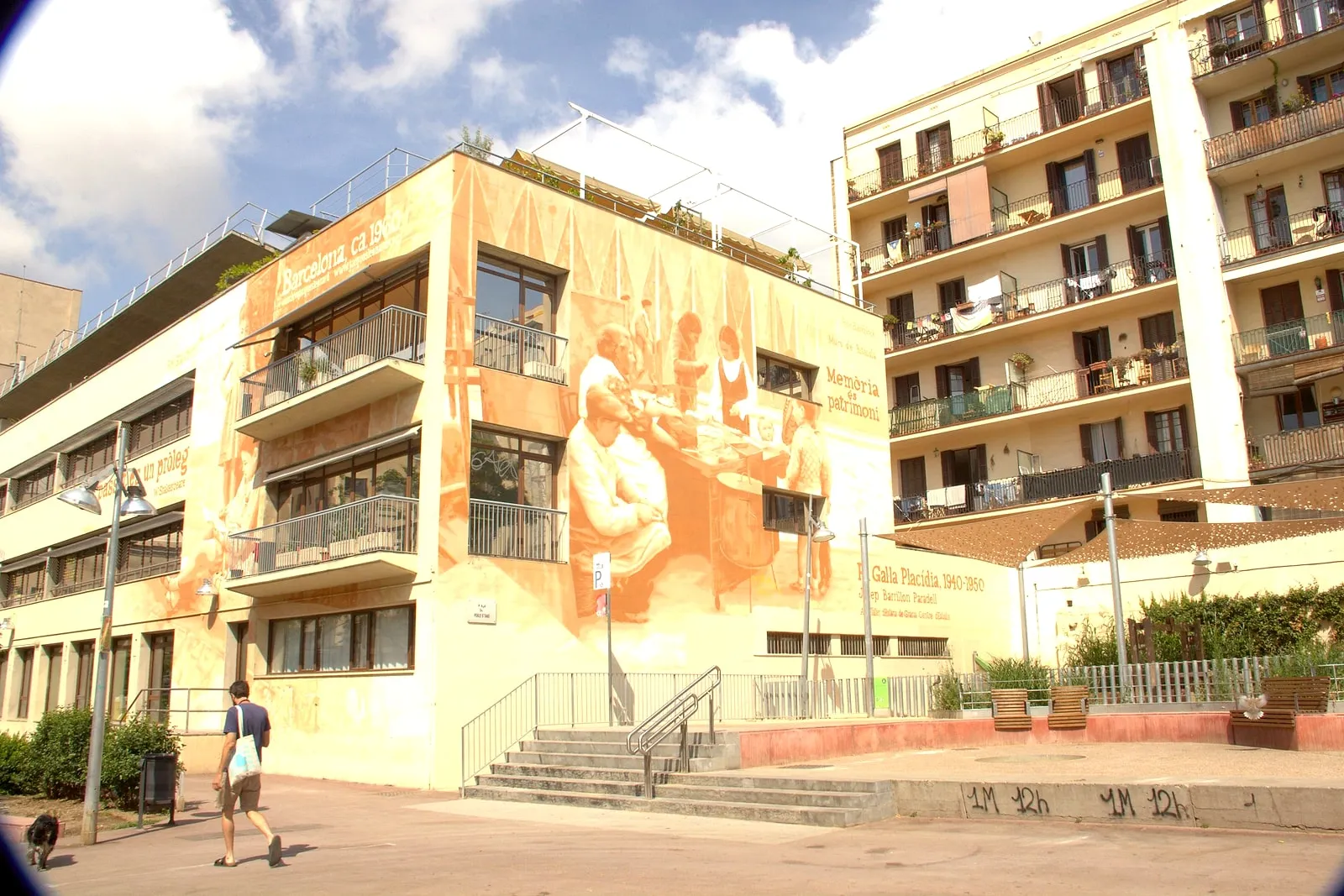
Here is the case against Park Güell, made as strongly as we can make it.
It is a long way from everything else you came for, and it is uphill from the metro that gets you nearest. The central part is ticketed and sold by timed slot, so it introduces a second deadline into a trip that already has one. The photographs everyone recognises come from a single terrace, and once you are on that terrace you have essentially seen the thing you came to see. The undulating bench is beautiful and it is also a bench you queue to sit on. And the whole visit costs the better part of a morning, in a city where the better part of a morning buys you an entire neighbourhood.
Add to that the arithmetic of a short trip. Barcelona’s tourism observatory measured that 49.4 % of visitors reach Park Güell, against 80.6 % for the Sagrada Família. Half the people who come to this city already decide it is not worth the climb, and nothing has gone wrong in their trip as a result.
That is a good argument. On a one or two-day visit we think it wins.
Where it stops working
It falls down on one point, and it is not a point about beauty.
Park Güell is the only place in Barcelona where you can see Gaudí working on a landscape instead of on a building. Everything else he left here is a façade, an interior, or a roof. This is a whole hillside where the paths, the retaining walls, the viaducts and the planting were all part of one design, and the walls were built out of the stone dug out from beside them so that the structure looks like it grew there. You cannot get that from Casa Batlló or from the basilica, and no photograph of the terrace shows it, because the terrace is the least characteristic part of the place.
It also failed. It was conceived as a housing estate — a garden-city development for buyers who never turned up — and hardly any of the plots ever sold. The city ended up with it and turned it into a public park. What you are walking through is a commercial disaster that survived because it was too good to demolish, and that is a more interesting thing to be standing in than a monument that worked.
So: overrated as a highlight, underrated as an argument. The people who come away disappointed are usually the ones who came for the bench.
The practical part, which decides it more often than taste
- The free park and the ticketed zone are different things. A large area of hillside around the Monumental Zone is open and costs nothing. If what you want is a walk under pines with the city laid out below, you may not need a ticket.
- Timed entry means the visit has an appointment. On a short trip, an appointment is expensive.
- Do not put it on the same day as the Sagrada Família. Two timed entries in one day, at two ends of the city, is how a day turns into transport.
- Go first thing. Every reason for this is obvious and everybody ignores it.
The rule nobody puts on a booking page
If you are booking a guided visit inside Park Güell, the group is set at between eight and thirty people, and the guide must hold a licence issued by the Generalitat de Catalunya. Inside the Sagrada Família the range is ten to thirty, on the same licensing condition.
Out in the open city the rules are different in both directions. Guiding in a public street in Catalonia is a free activity under Llei 13/2002 and needs no licence. But in Ciutat Vella — the Gothic Quarter, El Raval, Sant Pere–Santa Caterina–la Ribera and la Barceloneta — a city by-law in force since 1 March 2023 and extended to 2028 caps guided groups at twenty people, with fines to 1,500 € and 3,000 € for a repeat. Loudspeakers and megaphones are banned; radio receivers, whatever an operator tells you, are not compulsory.
None of that appears on the product page you are about to buy from, which is the reason it is on this one. The full version, including what each format of tour actually costs you beyond the price, is in how to choose a Barcelona walking tour.
What we would send you to instead, if you only get one
We do not run anything in Park Güell and we have no ticket to sell you there, so take this as it is meant.
If your interest is Gaudí, the ninety minutes in front of the Sagrada Família does more for less of your day — that is the Gaudí walk, and it happens on the pavement with no ticket involved. If your interest is a hillside with the city underneath it, Montjuïc is the other hill and it has a heavier story on it: castle, 1929 Exposition, and the Fossar de la Pedrera, walked in that order in the Montjuïc tour, which now runs two afternoons a week. Whether that hill is a better use of your day than this one is is Montjuïc worth it.
And if the reason you were considering Park Güell is that you wanted a part of Barcelona that is not a monument, the answer is not a park at all. It is Gràcia, which is at the bottom of the same hill and which the observatory does not even count as a visited area.
One thing worth knowing before you go up, because it changes what you are looking at: it was never meant to be a park. It was a housing estate, about sixty plots were laid out, two houses were built, and the works were abandoned in 1914. That and ten other corrections are in things you will be told about Gaudí that are not true — including who actually planned the famous bench, which was not Gaudí.
One more thing has changed since we wrote this, and it is practical rather than aesthetic: the ticket does not put you straight in front of the bench. There is a second controlled access point inside the paid area, on a one-way route, and the free woodland next door is eight hectares that the official site never draws a boundary around. That, and the fact that the house Gaudí lived in is a separate admission, is in Park Güell without a ticket.
Where this hill belongs in a single Gaudí day — and it is not at lunchtime — is Gaudí in one day.
And if the question is why any of it is up there at all, the answer changes the visit: it was laid out as a housing estate for sixty families and two plots sold.
Where this comes from
- Informe de resultats: perfil i hàbits dels turistes a Barcelona ciutat 2025 (PDF, table on p. 73)Observatori del Turisme a BarcelonaThe 49.4 % who reach Park Güell against the 80.6 % who reach the Sagrada Família, and the absence of Gràcia from the list.
Everything above that carries a date, a figure or a name is checked against these before it is published. Where we could not find a source, the page says so.
Quick answers
- Is Park Güell worth visiting?
- It is worth a morning if you have three days or more, and it is the first thing we would cut from a two-day trip. It is uphill, away from everything else, and its central area runs on a timed ticket, so it costs more of the day than the map suggests. What it gives back is the only place where you can see what Gaudí did with a whole landscape rather than a façade.
- Do you have to pay to enter Park Güell?
- The Monumental Zone — the terrace, the mosaic bench, the staircase, the hall of columns — is ticketed and runs on timed entry. A large part of the surrounding park is not. If your interest is a walk among trees with a view over Barcelona, you may not need a ticket at all; if it is the photographs everyone has seen, you do.
- How many people can be in a guided group inside Park Güell?
- Between eight and thirty, and the guide has to hold a licence issued by the Generalitat de Catalunya. The Sagrada Família sets its own range of ten to thirty on the same terms. That is different from the street: out in the open city, guiding in Catalonia is a free activity and no licence is required.
- Is Park Güell better than the Sagrada Família?
- No, and the city's own visitor survey shows people behaving accordingly: 80.6 % reach the basilica and 49.4 % reach Park Güell. If you only have time for one, this is not a close call.
- What is the best time of day to go to Park Güell?
- The first slot of the day, for the same reason as everywhere else in Barcelona: the light is better and the terrace is emptier. It is also the only version of the visit where you can go on somewhere else afterwards instead of coming down the hill exhausted.
The tours this piece is about
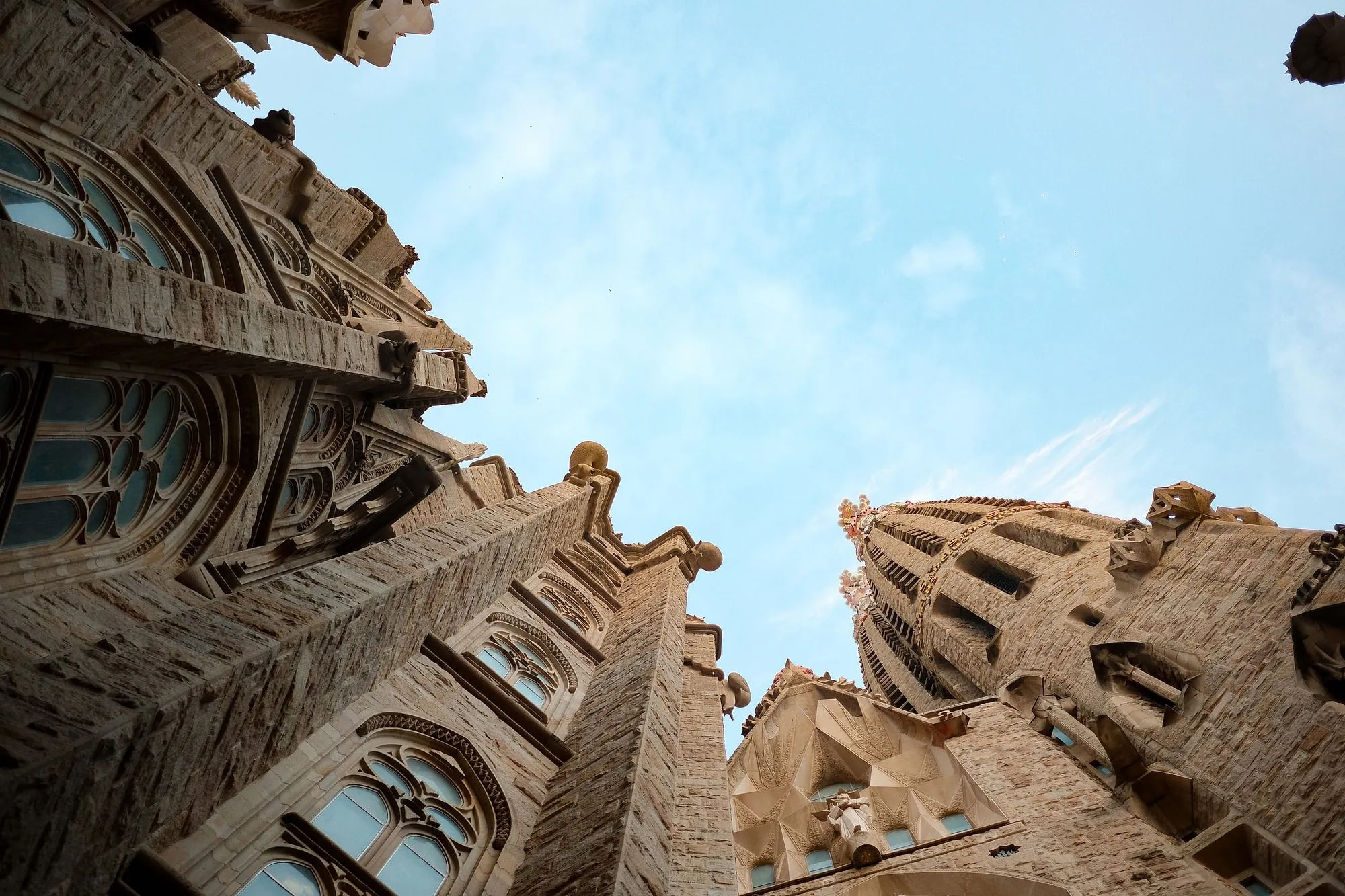
Gaudí comes alive
You will recognise the guide because he will be Antoni Gaudí.
- How long it lasts
- 1 h 30
- Runs in
- EN · ES · CA
- Price
- 30 €
Never more than 15 people
Gràcia: the town that rang the bell
A bell, a bombardment, and a vermouth at the end of it.
- How long it lasts
- 3 h
- Runs in
- EN · ES
- Price
- 36 €
Never more than 10 people
More in the journal
Gaudí and Modernisme
- Just under one visitor in five does not go to the Sagrada Família
- Part of Park Güell is free, and nobody will tell you where the line is
- Park Güell was a housing estate for sixty families. Two plots sold.
- Every Gaudí building in Barcelona, and which ones are free
- One day of Gaudí is two timed tickets at opposite ends of a city, unless you plan it backwards
- Casa Batlló or La Pedrera: one is a refit, the other is a building